
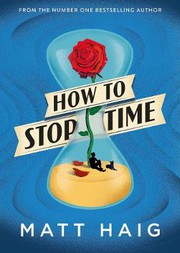
How to Stop Time
2,597-word summary 12 min read 336 pages in the book
- First published
- 2017
- Publisher
- Viking
- Pages
- 336
- ISBN
- 9780525522874
Reading options
What's inside (8 sections)
I came to How to Stop Time sideways. I had read The Midnight Library first and expected another gentle fable about regret. A friend said this earlier book was stranger and less tidy, about a man who cannot die properly and keeps messing up the art of living. Matt Haig first published the novel in the UK in 2017 with Canongate, and the American edition came from Viking in 2018. The facts here follow that Viking hardcover, 336 pages, ISBN 9780525522874. It is a standalone novel, not part of a series, though it shares Haig's usual interests in time, sorrow, and second chances.
The hook is simple. Tom Hazard looks forty-one. He was born in 1581. A rare condition called anageria makes him age about one year for every fifteen, so centuries pass while his face barely changes. He has played for Shakespeare's crowds, sailed with Captain Cook, and poured drinks through the Paris years with F. Scott Fitzgerald somewhere in the background. Now he wants something small. He moves back to London, rents a flat, and takes a job teaching history to teenagers. He tells himself that a classroom is the perfect cover for a man who remembers the past firsthand. He plans to keep his head down.
What pulls him out of hiding is exactly what he was told to avoid. People. A French teacher who notices too much. A lost daughter who may still be alive. A society that claims to protect him and keeps tightening its grip.
A history teacher with too much history
Present day London opens the book. Tom rents rooms, learns the bus routes again, and stands in front of classes where students stare at phones and ask why dates matter. He knows why dates matter. He was there for some of them. He tries to teach the past as something lived rather than memorized, and mostly the kids think he is odd in a kindly way.
At school he meets Camille, who teaches French. She is sharp, warm, and tired of small talk. She asks Tom direct questions. He deflects with jokes. She keeps talking to him anyway. There is a staff room, bad coffee, a head teacher with rules, and the slow build of someone actually seeing you. Haig writes this part with ease. The flirting feels adult. Two people circling, testing, retreating.
Tom narrates in short chapters that jump between now and then. Memory arrives the way it does in life, triggered by a street name or a song. One page he is worrying about lesson plans. The next he is in Elizabethan London smelling smoke and sewage. I liked the jumps at first. They give the London scenes extra weight because Tom keeps comparing the city with older versions of itself. Later the jumps come so often that the present story stalls, which I will come back to.
The present also has rules hanging over it. Tom belongs to the Albatross Society, a hidden network for people with his condition, led by a man called Hendrich. The rules are plain. Move on every eight years. Take the assignments you are given. Tell no one what you are. Above all, do not fall in love. Tom has followed those rules for a long time because Hendrich once promised to help him find someone. That promise is the leash.
Early on, a small crack appears. Camille sees an old photograph from Paris in the 1920s and recognizes Tom in it. He laughs it off, but the moment sits between them. You can feel the book shift. A man who has spent centuries practicing goodbyes is about to try staying.
The boy who stopped changing
Tom was born in France in 1581 and brought to England as a child when his family fled religious trouble. His father died in that persecution. His mother wanted quiet. She got the opposite. Villagers noticed that Tom reached his teens and then stopped altering at the normal pace. Friends grew tall and lined. Tom stayed the same.
Suspicion settled on his mother. She was accused of witchcraft, the standard charge when neighbors need someone to blame. She was drowned in the trial that was supposed to prove innocence. Tom was left alone, young in years but already marked. He drifted toward London because crowds hide what villages expose.
In London he met Rose. She took him in with her family. They married young. For a while Haig lets this section breathe. Rose is not a symbol. She laughs, works, argues, grows tired. She accepts Tom's story slowly, the way you accept something impossible because the person telling it keeps showing up. They have a daughter, Marion. The name carries the whole book after this. Rose ages. Tom does not. Gossip starts again, the same whispers that killed his mother in a new street with new faces.
They decide Tom must leave to protect them. It is 1617. He walks away from a wife who still loves him and a small daughter who does not understand. He tells himself it is temporary. He learns later that Rose fell sick with plague and died. By the time he returns, Marion is gone. Worse, she may have inherited his condition. A girl who ages one year in fifteen, alone, in a century that burns women for less. That fear drives the next four hundred years.
This early stretch is the strongest writing in the novel for me. The scenes are concrete. A kitchen table. A child asking why father looks the same in every season. A husband watching his wife's hands change. Haig keeps the language plain. Grief does the work without decoration.
Centuries of looking
Tom spends the middle of the book searching. He travels because staying still means questions, and because each port might hold news of Marion. The chapters visit one century after another, at least one long stay per hundred years, which gives the novel its shape.
He performs in Shakespeare's London. Haig clearly enjoyed this part. Tom remembers the smell of the crowd, the actors shouting over drunks, Shakespeare himself as a working writer rather than a statue. Tom plays music, runs errands, watches plays take shape. The famous man appears as a person with deadlines. I found these pages charming, though they read a little neat. Everyone speaks in clear lines. The dirt is mentioned more than felt.
He sails the South Seas with Captain Cook and meets Omai, a man from the Pacific who shares Tom's slow aging. Omai becomes important because he lives differently. Where Tom hides and apologizes for existing, Omai stays put for decades in one place and dares neighbors to mind. Their talks plant doubts that Hendrich later tries to pull out. If Omai can live openly without disaster, what is the Society actually protecting?
Paris in the 1920s brings jazz, drink, and F. Scott Fitzgerald at a party, playing piano while people talk too loud. Tom likes the music and hates the waste. He takes the famous photograph that will trouble him centuries later in a London staff room. He also learns how shallow endless novelty feels. Cities change costumes. Loneliness keeps its face.
In 1860 he makes a mistake born of hope. He visits a doctor, Jonathan Hutchinson, the physician known for work on progeria, the condition that ages children fast. Tom wonders if the opposite condition might be understood. Instead the doctor tries to have him sent to Bedlam. Tom flees. The lesson sticks. Doctors, governments, and crowds are dangerous. Only the Society can be trusted. That is what Hendrich keeps telling him, anyway.
Through these centuries Marion stays missing. Tom follows rumors to ports and colonies. He writes letters that cannot be delivered. He keeps her small comb or remembers her laugh in a market. The repetition is deliberate. Haig wants the reader to feel time as Tom feels it, not as adventure but as waiting. Some readers will find this stretch slow. I did in places. Yet the slowness makes a point. A life that long turns even joy into something you hold lightly because you know you will outlast it.
Hendrich and the rules
Hendrich enters properly after Tom's disaster with the doctor. Older than Tom by centuries, polite, controlled, and certain, Hendrich runs the Albatross Society as protector and warden. The group takes its name from the old belief that albatrosses live unusually long. Members get money, papers, and clean exits when neighbors start staring. In return they move every eight years, accept jobs Hendrich assigns, and stay apart from deep ties.
Loyalty in this arrangement means obedience. Tom accepts work across continents. He watches other slow agers, carries messages, keeps his mouth shut. Hendrich promises his people are searching for Marion. That promise keeps Tom loyal long after he stops believing most of Hendrich's speeches. It is a sharp portrait of how control works. The offer is safety. The price is love.
The rules sound sensible until you live them. Never fall in love means never letting anyone stay long enough to notice. Change your name and town means no burial plots, no old friends, no classroom where students remember you year to year. Tom follows all of it while quietly breaking it in small ways. He keeps a list of Shakespeare's phrases. He remembers Rose's recipes. He teaches history because he cannot stop returning to the past, even when the Society tells him the past is the danger.
The book is good on the cost of this bargain. Tom is safe and empty. He has seen continents and cannot name a neighbor. He has survived plagues and wars and cannot say what his days are for. Hendrich calls this protection. A reader starts to hear it as fear passed down from old man to younger ones. Hendrich himself rarely seems happy. He seems managed, like a museum guard who no longer looks at the paintings.
London again, Camille, and the break
Back in the present, Tom tries to be ordinary and fails in the best way. Teaching forces him into contact. Students ask blunt questions. One boy wants to know if history is just rich men killing poor men. Tom almost answers from memory before catching himself. Camille invites him for coffee, then for more than coffee. She tells him about her own losses without making them into lessons. He starts to imagine a life where he stays past the eight year mark.
Then Hendrich calls. There is an assignment. Go to Australia and bring Omai back into line, or worse. Omai has lived in one place for decades, openly, breaking every rule. Hendrich frames it as danger to them all. Tom goes because disobedience has always felt impossible, and because part of him wants to see the one person who made the rules look foolish.
What he finds changes him. Omai is fine. Neighbors know him, accept the oddness, leave him be. No mob, no lab, no headlines. The great threat Hendrich warned about looks like an ordinary street where a man gardens and talks over fences. Tom starts to add up the lies. If openness works here, what else was false?
The answer lands hard. Hendrich found Marion years earlier and turned her against Tom. She was told her father abandoned her by choice and never looked back. When father and daughter finally meet, the meeting is raw rather than sweet. Marion is angry. She has lived centuries too, with her own grief and her own hardness. She does not fall into his arms. She accuses him. Tom has to hear that leaving to protect someone still felt like leaving to the child left behind.
The last stretch turns toward thriller pace. Orders, confrontations, flight. Marion, in rage at Hendrich's manipulations, kills him. The Society loses its center. Tom, Marion, and Omai are left to decide what comes next without instructions for the first time in centuries. Tom returns to London with Marion. He starts to repair the bond in small steps, showing up rather than promising. He tells Camille the truth about what he is, all of it, and waits to see if she stays. The book closes not with a cure or a grand reunion but with a choice. Tom decides to live in the present, to risk love knowing loss will come.
I will not spell out the final pages beat by beat. The shape is enough. A man who treated time as an enemy tries treating it as weather. You do not stop rain by hiding. You carry an umbrella and keep walking.
What holds and what slips
The strongest thread here is grief. Haig writes about loss the way someone who has sat with it writes, not as a lesson but as a fact. Tom outlives his mother, his wife, friends in every port, and almost his daughter. He learns that more time does not dilute sorrow. It multiplies the chances to feel it. That idea gives the fantasy its weight. Long life sounds like a prize until you watch everyone you love keep ordinary time while you do not.
The love stories work because they stay specific. Rose mending clothes by poor light. Camille marking essays at a kitchen table while Tom pretends to grade. Marion as a child asking questions Tom cannot answer, then as a grown woman with centuries of armor asking harder ones. These scenes carry more force than the famous encounters. Shakespeare, Cook, and Fitzgerald pass through like bright boats. The family scenes are the harbor.
Fair criticism, since the book invites it. Tom's memory is too tidy. He recalls dialogue from four hundred years ago with stage clarity, while the rest of us lose last Tuesday. Haig never quite explains how a mind stores that much without blurring. The history can feel polished too. Elizabethan streets get their stink mentioned, then everyone speaks in clean, quotable lines. Paris glitters without much menace. A reader who wants grain and friction may find these chapters smooth.
The Society's menace also wobbles. Hendrich is frightening in conversation and vague in method. How does a small secret group move money and papers across centuries without leaving traces. How does it find every slow ager but miss Omai living openly for thirty years. The book gestures at answers and moves on. The final confrontation resolves fast after hundreds of pages of waiting. Marion's long absence ends in a rush, and some readers may wish the reunion had more room to breathe.
None of that spoiled the core for me. I finished feeling the book had earned its title. Stopping time is not living longer. It is paying attention while time moves. Tom learns to stay in a classroom, to tell one true thing to one person, to let the future stay unwritten. Readers who liked the regret theme in The Midnight Library will recognize it here in rougher form. Readers who want hard rules for the condition should look elsewhere. This is a romance and a fable about showing up, dressed in historical clothes.
If you pick it up, give it fifty pages. The jumps settle into a rhythm. Keep an eye on the dates at chapter heads. Forgive the neat memories and watch instead for the small domestic details, which are where Haig does his best work. The past chapters supply color. The London chapters supply the pulse. By the end they meet in one plain decision. Love someone knowing you will lose them. Teach the next lesson. Stay.
FAQ
When was How to Stop Time published and who published it?
It was first published in the UK in 2017 by Canongate, and in the US in 2018 by Viking. The facts here follow the Viking hardcover, which runs 336 pages with ISBN 9780525522874.
Why does Tom Hazard live so long?
He has anageria, a rare condition that makes him age about one year for every fifteen. He looks forty-one but was born in 1581 and must keep changing identities.
Is How to Stop Time part of a series?
No. It stands alone. It shares themes with The Midnight Library, including regret and second chances, but the stories and characters are separate.
Similar books
The Buried Giant
An old couple crosses a misty post Arthur Britain searching for a son.
2,593-word summary · 12 min read
The Midnight Library
Matt Haig's The Midnight Library retold: Nora between lives, Mrs Elm, regrets tried on, and choosing to live.
2,410-word summary · 11 min read

Ivanhoe
A disinherited Saxon knight, a great tournament, a besieged castle and a trial by combat. Scott's most famous novel, set in England in 1194.
2,834-word summary · 13 min read
Euphoria
Three anthropologists in 1930s New Guinea turn fieldwork into a love triangle, and a real history breathes behind them.
2,048-word summary · 9 min read
By the River Piedra I Sat Down and Wept
Pilar, 29, meets her childhood friend again in Madrid and finds a rumored miracle worker. One winter week through the Pyrenees to the river Piedra, and the…
2,845-word summary · 13 min read
Grave Mercy
Convent assassin Ismae spares Gavriel and hunts traitors in Brittany.
2,357-word summary · 10 min read
Chain of Gold
Cordelia and James hunt demons in Edwardian London while hearts tangle.
2,364-word summary · 11 min read
The Rules of Magic
Franny, Jet, and Vincent Owens test strict family rules and a love curse in 1960s Manhattan and Massachusetts in Alice Hoffman's warm prequel about love, loss,…
2,686-word summary · 12 min read
The English Patient
In a ruined Italian villa in 1945, a burned man, a nurse, a thief, and a sapper trade pasts shaped by desert love and war.
2,006-word summary · 9 min read

Daughter of Fortune
Eliza Sommers flees Chile for California gold rush San Francisco, disguised and searching for her lover, finding freedom with Tao Chi'en.
2,009-word summary · 9 min read

Brooklyn
Eilis Lacey leaves Enniscorthy for Brooklyn boarding house work, love with Tony, then a home death forces divided choice.
2,143-word summary · 10 min read
The Invisible Life of Addie LaRue
Addie trades her soul for freedom in 1714 France and lives forgotten for 300 years, until a Brooklyn bookseller remembers her name.
3,480-word summary · 15 min read

Outlander
Nurse Claire Randall slips through Craigh na Dun from 1945 to 1743 Scotland, torn between Frank and Jamie Fraser as clan politics, war and witch trials close…
2,190-word summary · 10 min read

The Time Traveler's Wife
Niffenegger's Time Traveler's Wife retold: Henry's jumps, Clare waiting, art, and a marriage in two tenses.
1,932-word summary · 9 min read
The Song of Achilles
Song of Achilles retold: Patroclus and Achilles from boys to Troy, love and war in Miller prose.
1,925-word summary · 9 min read
The Humans
An alien borrows Andrew Martin's life to erase a proof, then a dog, peanut butter, and a tired family win him over.
2,959-word summary · 13 min read

Violeta
A woman born in 1920 writes her life story to her grandson, from one pandemic to another, through wealth, ruin, passion, and dictatorship in South America.
2,555-word summary · 11 min read
The Stationery Shop
Two teenagers fall in love in a Tehran stationery shop in 1953, are separated by the coup and a family deception, and meet again sixty years later.
2,024-word summary · 9 min read

The Japanese Lover
A Polish refugee and the son of a Japanese gardener fall in love in San Francisco in 1939, then keep the affair secret for nearly seventy years.
2,286-word summary · 10 min read

Six Scorched Roses
A dying scholar bargains with a reclusive vampire for blood, and six roses turn a transaction into a slow, dangerous romance.
2,663-word summary · 12 min read

Anatomy: A Love Story
In 1817 Edinburgh, a noblewoman who wants to be a surgeon disguises herself to study anatomy and falls for the grave robber who supplies her with bodies.
2,031-word summary · 9 min read

Alone With You in the Ether
Two people in Chicago agree to six conversations, and the experiment becomes a love affair that is also a study of bipolar disorder, obsession, and the shape…
2,713-word summary · 12 min read

Vow of Thieves
Kazi and Jase return to Tor's Watch to find it occupied, and their marriage is tested by captivity, betrayal, and a war for the town of Hell's Mouth.
2,059-word summary · 9 min read

The Shadow Sister
Star D'Apliese steps out of her sister's shadow and follows a bookshop clue into the Edwardian life of Flora MacNichol, a woman who gave up love for duty.
2,260-word summary · 10 min read

The Lost Sisters
Taryn Duarte writes a letter to her twin, Jude, explaining how she fell for Locke and why she stayed silent while he used them both.
1,914-word summary · 9 min read

Magic Burns
A magic flare hits Atlanta, and mercenary Kate Daniels must recover stolen maps, find a missing witch, and keep a teenage girl alive while Celtic gods try to…
2,021-word summary · 9 min read
At Grave's End
Cat and Bones face Max, a zombie-raising ancient vampire, and a prophecy that ties their marriage to Patra's death in the third Night Huntress novel.
2,061-word summary · 9 min read
The Once and Future Witches
Three estranged sisters bring witchcraft back to an 1893 city where magic hides in nursery rhymes and the fight for the vote is also a fight for power.
2,132-word summary · 9 min read

Blood Bonds
Oleander is chained in a Resistance camp, and her five Bonds have to find her before Silas Davies finishes what he started in this third Bonds that Tie book.
2,018-word summary · 9 min read

Archenemies
Nova steals for the Anarchists while Adrian hides his Sentinel identity, and a serum that erases prodigy powers puts them both at risk.
2,485-word summary · 11 min read