
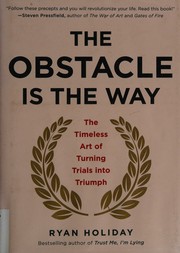
The Obstacle Is the Way: The Timeless Art of Turning Trials into Triumph
2,669-word summary 12 min read 224 pages in the book
- First published
- 2014
- Publisher
- Portfolio
- Pages
- 224
- ISBN
- 9781591846352
Reading options
What's inside (10 sections)
I picked this up because a friend kept quoting it at me during a rough stretch at work. He meant well. What got under my skin was how calmly he said it, as if the book had handed him a switch he could flip whenever things went bad. I read it expecting a glossy motivational pitch. What I found was stranger and leaner: a short argument built almost entirely on other people's lives, stitched together from Roman philosophy and a long catalogue of comebacks. The edition described here is the 2014 US first edition from Portfolio, 224 pages, published on May 1, 2014. Holiday sold it in 2012, and the wait between sale and release shows in how carefully the examples are arranged.
The book has a reputation for being a locker-room manual, and that reputation came later. On the page it reads more like a series of case studies with a rule attached to each one. That structure won me over more than the slogan did.
The boulder and the note
The introduction tells a story about a king whose people had grown comfortable and a little entitled. To shake them out of it, the king had a huge boulder dragged into the middle of the main road into the city and watched what happened. Most people came along, looked at the rock, and either turned back or pushed at it halfheartedly before giving up. It stayed there for days. Then a peasant arrived from outside the town. He tried the same futile shove, went into the forest, cut a branch, and used it as a lever to roll the stone aside. Underneath, he found a purse of gold coins and a note from the king. The message was that the obstacle in the path becomes the path, and that inside every obstacle sits a chance to improve your condition.
I have thought about that story more than I expected to. It is neatly engineered, obviously, and no real king ever did quite this. But it sets out the book's wager better than any abstract definition could. The problem is not only the rock. The problem is the habit of staring at the rock and treating it as a verdict. The peasant wins because he changes the question from how do I move this to what tools do I have. Holiday returns to that shift again and again, in different costumes.
He opens the preface in the year 170, with Marcus Aurelius writing down a formula for getting through rough situations. Holiday reads that formula as advice for thriving because of difficulty rather than in spite of it. That is the strongest version of his idea, and also the one that needs the most care. A Roman emperor writing private notes to himself is not the same thing as a modern productivity system. Holiday knows this, mostly, but the marketing around the book has often blurred the line.
The three disciplines
Everything rests on three disciplines: perception, action, and will. The title comes from a line Holiday translates from Aurelius, that the impediment to action advances action and what stands in the way becomes the way. He repeats that line until it becomes a drumbeat. The three sections then try to show what it means in practice.
Perception is about seeing the obstacle as it is rather than as your fear paints it. Action is about moving toward it with intent instead of waiting for perfect conditions. Will is the capacity to keep going when the movement does not pay off right away. The order matters to him. You cannot act well if you have already decided the situation is hopeless, and you cannot sustain effort if every small result feels like a referendum on your worth.
It is a clean frame, and I can see why it traveled. It gives a reader somewhere to stand when a problem feels formless. It also risks making every difficulty sound like a puzzle with a tidy solution, which is where my reservations begin. More on that later.
Perception: seeing the thing clearly
The first section argues that your reading of events shapes what you can do about them. Holiday takes a strongly Stoic position here: an objective mind can resist excitement or temptation no matter how seductive the situation, and that steadiness is a practical advantage. He uses John D. Rockefeller as his model. Rockefeller stayed grounded by paying close attention to the turbulence of the market and invested when he judged the moment right, which let his business survive several economic crises. The point is not that Rockefeller felt no fear. It is that he kept the fear from doing his thinking for him.
Holiday writes a lot about stress triggering old, primal reactions that are badly matched to modern problems. His answer is a pair of skills he calls grace and poise. When pressure arrives, those skills buy you a moment in which you can choose a response instead of merely performing one. I liked this part. It is less grand than the book's reputation suggests, and it is usable. A person who can pause for one beat before reacting is already in better shape than a person who cannot.
He borrows a question from Gavin de Becker's The Gift of Fear: when you worry, ask what you are choosing not to see right now, and what important thing you are missing because you picked worry over alertness or wisdom. Holiday uses it to show that an unhelpful emotion can be taken apart. Worry is not a false signal so much as a signal pointed at the wrong object. Asked properly, it can tell you what you are avoiding. This was one of the few passages I wrote in the margin.
He then splits perspective into context and framing. Context is where the obstacle sits in the larger picture of your life and the world. Framing is the meaning you personally attach to it. He lists what a person actually controls: emotions, judgments, creativity, attitude, perspective, desires, decisions, and determination. Notice what is missing from that list. Reputation, outcomes, other people, and luck are all outside it. The list is not original, but it is a useful sort of inventory when you are spiraling.
Two examples carry the rest of the section. He points out that a number of companies started during economic depressions, and argues that their founders succeeded because they focused on the product rather than the timing. He brings in Steve Jobs to make a similar point about how our sense of our own capability shapes what we attempt. I found the depression-era companies the more convincing example and the Jobs story the thinner one, because success stories told backward always look inevitable. Still, the underlying claim is hard to argue with: where you place your attention changes what you can see.
Action: moving before the feeling arrives
The second section is where the book earns its practical reputation. Holiday's concern is that people wait for conditions to line up before they act. His answer is what he calls directed action, movement aimed at a real obstacle rather than motion for its own sake. The word directed does a lot of work. Plenty of busy activity is not directed at anything.
His best example is Amelia Earhart. She was offered a chance to fly on a flight after the first choice backed out. The men on the flight would be paid; she would not. Holiday does not read this as a story about settling for less. He reads it as a story about someone with firm faith in herself taking the chance to fly, because the chance itself was the point. That reading convinced me more than it should have, I think, because I suspect we only remember Earhart the way we do because she later became famous. But the small truth inside it stands: waiting for the respectful offer can cost you the opportunity.
He turns to the way startups ship a minimum viable product instead of a finished one. They put something small in front of customers to learn what people actually want, rather than spending months building something nobody asked for. Holiday's line is that failure can be an asset when what you are trying to do is improve, learn, or make something new. This is the most transferable idea in the book for ordinary work. The trick is to make the next step small enough that you can take it before you feel ready.
Nick Saban shows up here too. Holiday writes about Saban's insistence on the process, his refusal to be pulled toward a future championship or a past loss, his focus on the next game, the next day, the next hour. The famous explanation after a painful playoff loss was that the decision was right even though the outcome was terrible, and that the process would stay the same. I have mixed feelings about this example. As a description of how elite coaches manage attention, it is sharp. As a model for the rest of us, it can slide into caring only about method and never about consequence. Holiday mostly keeps the sharper version.
There is a small personal note in reporting about the book that I liked. While writing it, Holiday lived in New Orleans and was learning Brazilian jujitsu. He struggled to escape from a mount until he remembered Saban's lesson and broke the move into single steps, the way a lineman runs a play one step at a time. It is a nice illustration because it is unglamorous. No crowd, no trophy, just a person stuck under another person and a way out that only appears if you stop panicking.
Will: staying in it
The third discipline is the one hardest to fake. Will is what keeps a person in the room after the clever reframe has stopped working. Holiday reaches for endurance stories here, and the ones that stick are Ulysses S. Grant and Winston Churchill. Grant, in an account the Seattle Seahawks' general manager later singled out, was having his picture taken when a giant chandelier fell right beside him and he did not flinch. Churchill stands in for a different kind of staying power, the ability to keep a course while the world reads every day as a final verdict.
I wish this section were longer and less dependent on famous names. The shift from a Roman emperor to presidents and commanders can start to feel like a parade of people who were already remarkable. The book never quite proves that will is a skill a reader can build the way perception can be trained. It gestures at the Stoic idea of consenting to what happens, of treating difficulty as material rather than interruption, but it does not stay with the hard question of what that looks like for someone whose obstacle is illness, poverty, or discrimination rather than a bad quarter at work.
Even so, I take the point. Some problems do not resolve on a timeline. The only available move is to keep showing up and to refuse the story that says the delay is the same as defeat. Holiday says this more plainly than most writers in the genre, and he avoids promising that the pain will vanish. He promises only that you can meet it with less waste.
The locker-room afterlife
The strangest chapter in this book's history is not in the book. It happened afterward. According to a Sports Illustrated account from 2015, the book sold more than 100,000 copies and was translated into 17 languages, and it found an audience in professional sports that Holiday himself called a happy accident. He had once worked as a research assistant to Robert Greene, author of The 48 Laws of Power, and had seen that book get taken up by hip hop artists. Something similar happened here.
The list of readers is almost absurd: Arnold Schwarzenegger, LL Cool J, an Irish tennis pro, an NFL lineman, a sideline reporter, an Olympic skier, a performance coach, a baseball manager, and a college basketball coach. Michael Lombardi, working with the Patriots, recommended it around the league. Bill Belichick and his staff distributed copies on the way to the 2014 Super Bowl. A year later Pete Carroll and John Schneider passed it through the Seahawks locker room. Schneider wanted his scouts to notice how prospects had responded to injuries, suspensions, and family trouble.
The reason it landed is not mysterious. Athletes already talk about controlling what they can control, staying in the moment, and taking things one game at a time. Holiday gave that language an ancient pedigree and a few good stories. He describes Stoicism as a set of spiritual exercises for managing unhelpful emotion, not a code of ethics, which is a defensible reading and probably why coaches found it useful. Nearly everyone who loved the book, he says, listened to it rather than read it. That detail explains a lot about the style: short chapters, strong rhythms, sentences built to be heard.
What the book overstates
Here is where I part company with my friend at work. The book's engine is the anecdote, and anecdotes are chosen because they ended well. Every person Holiday quotes survived the obstacle and later became famous enough to be quoted. That is survivorship bias in its purest form. For every executive who stayed calm and built a company during a depression, there are many who stayed calm and still lost everything. The book does not dwell on them, because they make poorer stories.
That gap matters. Read carelessly, the argument can become a way of blaming people for their circumstances: if you had only perceived the problem correctly, you would have flipped it. Holiday is better than that in tone, but the title and the marketing keep pushing the reader toward a promise he cannot honestly make. Some difficulties are structural, some are random, and some do not turn into triumph no matter how graceful your framing.
The prose also repeats itself. Three sections each deliver a version of the same instruction, and after a while the aphorisms blur together. If you read self-help for a living this will feel familiar. If you have never encountered Stoicism before, it may feel like a revelation, which is partly why the book succeeded. It is also worth saying that the ideas are not new. Marcus Aurelius said them first, and Holiday is a popularizer rather than an original thinker. That is fine work when it is done well, and here it is done well enough.
Who should read it
I would hand this to someone who is stuck in the early minutes of a bad situation, when the feeling of being overwhelmed is worse than the situation itself. The perception chapters are the ones I would mark up. They give a person something concrete to do with a spiraling mind, and the boulder story is a better tool than most longer explanations.
I would be careful with it for someone facing a crisis that needs material help rather than mental reframing. A job loss, an illness, or an unfair system calls for plans and people, not a change of attitude. Read the book as a set of prompts about where your attention goes, not as proof that effort always pays. The title is a claim about possibility, and possibility is not the same as certainty. Holiday's best pages admit that much, even when the jacket copy does not.
What I took from it, in the end, was smaller and more durable than the pitch. When something blocks me, I now ask what part of this is mine to move and what part I am simply staring at. That question does not make the rock disappear. It does make the branch in the forest easier to see.
FAQ
What are the three disciplines in The Obstacle Is the Way?
Perception, action and will. Holiday presents them as a sequence: see the obstacle clearly, act deliberately, then sustain the effort through difficulty.
Is this a work of Stoic philosophy or a self-help book?
It is self-help built on Stoic ideas rather than a scholarly study of them. Holiday adapts Marcus Aurelius for a modern audience and leans on history and sports examples.
What is the main criticism of the book?
Its examples are chosen after the fact, so success can look like proof that the method works. Some readers also find the aphoristic style repetitive.
Similar books
Everything is F*cked: A Book About Hope
Manson argues that hope, built on control, values, and community, keeps despair at bay, then takes apart the stories and diversions we use to sustain it.
2,789-word summary · 12 min read
12 Rules for Life
Twelve essays on responsibility from posture to truth to petting cats.
2,045-word summary · 9 min read
The Power of Your Subconscious Mind
Joseph Murphy argues that the subconscious accepts whatever the conscious mind repeats, so worry and confidence quietly grow into very different lives.
2,259-word summary · 10 min read
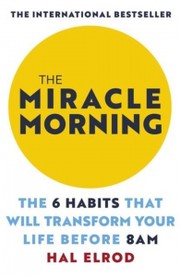
The Miracle Morning
Hal Elrod argues that the first hour of the day sets its tone, and offers six short practices, silence, affirmations, visualization, exercise, reading and…
2,240-word summary · 10 min read
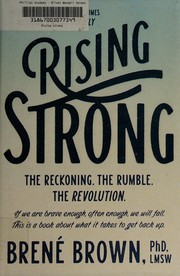
Rising Strong: The Reckoning. The Rumble. The Revolution.
Brené Brown's 2015 book asks what happens after we fall, and argues that examining the stories we invent about failure and heartbreak is the path to getting…
2,271-word summary · 10 min read

Ikigai: The Japanese Secret to a Long and Happy Life
Two Spanish writers explain the Japanese idea of a reason for being, drawing on Okinawan centenarians, flow, friendship and the acceptance of imperfection.
2,030-word summary · 9 min read
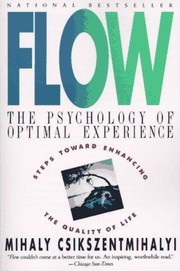
Flow: The Psychology of Optimal Experience
Csikszentmihalyi's 1990 study of optimal experience asks when people feel most alive and finds the answer in a balance of challenge and skill. Drawing on…
3,073-word summary · 14 min read
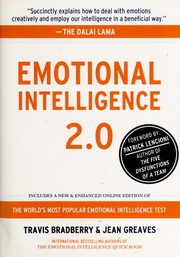
Emotional Intelligence 2.0
Bradberry and Greaves turn emotional intelligence into four learnable skills, a self-assessment and dozens of strategies, while their headline numbers rest on…
3,276-word summary · 15 min read
Digital Minimalism: Choosing a Focused Life in a Noisy World
Cal Newport argues that willpower cannot beat an attention economy designed against you, and offers a thirty day reset to rebuild your digital habits around…
2,701-word summary · 12 min read
The Light We Carry: Overcoming in Uncertain Times
Michelle Obama's follow-up to Becoming offers ten practical habits for meeting fear, self-doubt and uncertainty, told through stories of her family,…
2,327-word summary · 10 min read
Extreme Ownership: How U.S. Navy SEALs Lead and Win
Two retired Navy SEALs turn their Ramadi combat experience into a blunt leadership creed: the leader owns everything, and the team follows when the why is…
2,368-word summary · 11 min read
As a Man Thinketh: A book that will help you to help yourself
In seven short chapters, James Allen argues that character and circumstance grow from thought, and that changing how you think is the practical route to…
2,673-word summary · 12 min read
The Courage to Be Disliked: The Japanese Phenomenon That Shows You How to Change Your Life and Achieve Real Happiness
A philosopher and an angry young man argue over five nights about Adlerian psychology, trauma, approval, and the freedom to be disliked.
2,054-word summary · 9 min read
Don't Sweat the Small Stuff ... and It's All Small Stuff: Simple Ways to Keep the Little Things from Taking Over Your Life
Richard Carlson’s 1997 bestseller offers one hundred short chapters on lowering the volume on daily irritations, and it is more pragmatic than its title…
2,502-word summary · 11 min read
Four Thousand Weeks: Time Management for Mortals
Oliver Burkeman turns the whole productivity project on its head, arguing that a human lifespan of roughly four thousand weeks is not a problem to optimize…
2,447-word summary · 11 min read
The Magic of Thinking Big
Schwartz's 1959 self-help classic argues that success follows from the size of your thinking, supported by sales anecdotes, vocabulary drills and goal setting.
2,579-word summary · 11 min read
The Road Less Traveled: A New Psychology of Love, Traditional Values and Spiritual Growth
M. Scott Peck argues that maturity begins with accepting difficulty, then builds discipline, love, and spiritual growth through honest, often painful work.
2,200-word summary · 10 min read
The War of Art
Pressfield names Resistance and urges daily professional work.
2,565-word summary · 11 min read
How to Stop Worrying and Start Living
Carnegie offers day-tight routines for worry built from interviews and worker stories.
2,505-word summary · 11 min read

The Untethered Soul
Singer names the noisy inner voice and shows how watching thoughts, loosening old hurt, and keeping the heart open through surrender can ease daily suffering…
2,752-word summary · 12 min read
The Power of Positive Thinking
Peale's 1952 guide to faith, affirmations, picturing success, prayer, and worry control, retold chapter by chapter with stories, limits, and small daily habits…
2,742-word summary · 12 min read
The Art of Happiness
The Dalai Lama and psychiatrist Howard Cutler link lasting happiness to training the mind, human warmth, compassion, and basic spiritual values for daily life.
3,394-word summary · 15 min read
Make Your Bed: Little Things That Can Change Your Life...And Maybe the World
SEAL lessons from bed making to never ringing the bell, from McRaven's 2014 Texas speech and 144 page book.
2,974-word summary · 13 min read

A New Earth
Tolle maps ego pain and shows how presence can loosen roles, thoughts, and suffering.
1,909-word summary · 8 min read
The Defining Decade: Why Your Twenties Matter - and How to Make the Most of Them Now
A clinical psychologist argues that the twenties are not a holding pattern and urges readers to build skills, ties, and commitment now.
2,443-word summary · 11 min read
How to Change Your Mind
Pollan blends the history of psychedelic research, his own guided trips, and current neuroscience to ask what these drugs reveal about consciousness.
2,466-word summary · 11 min read

Eating Animals
A new father's question about what to feed his son becomes a wide-ranging investigation of factory farming, food labels, and the stories we tell about meat.
2,100-word summary · 9 min read
Brief Answers to the Big Questions
A short posthumous collection in which Hawking answers ten big questions about God, the universe, time, and humanity's future.
2,464-word summary · 11 min read

Alive: The Story of the Andes Survivors
After a rugby team's plane crashes in the Andes in 1972, Piers Paul Read tells the survivors' 72-day fight to live, drawn from interviews with the men and…
2,179-word summary · 10 min read
You Can Heal Your Life
Louise Hay's 1984 bestseller argues that thoughts and beliefs shape the body, pairing a mirror-and-affirmation workbook with an A to Z list of ailments and…
3,672-word summary · 16 min read