

The Next Always
2,242-word summary 10 min read 341 pages in the book
- First published
- 2011
- Publisher
- Berkley
- Pages
- 341
- ISBN
- 9780425243213
- Series
- Inn BoonsBoro Trilogy (#1)
Reading options
What's inside (8 sections)
Why a romance about a construction site caught me
I picked this one up for a slightly odd reason. Nora Roberts owns an inn in Boonsboro, Maryland, and this trilogy grew out of the town she knows and the business she runs there. The first book opens not with a kiss or a confession but with a building. Its opening line is plain and almost stubborn: "The stone walls stood as they had for more than two centuries, simple, sturdy, and strong." That is where the story starts, with a hotel that has survived wars, changes of ownership, and rumors of ghosts. I like that choice. It tells you, before anything else happens, that the renovation at the center of the novel matters as much as the people doing the renovating.
The book appeared in 2011 from Berkley, and it is the first of three Inn BoonsBoro novels. Reading it now, it feels less like a romance with a construction subplot than a love letter to a specific stretch of a small Maryland town. The author's note in the publisher material calls the trilogy inspired by the inn she owns and the town she loves, and that shows on nearly every page. That is both the charm of the book and its limitation, and I will get to the limitation later.
I also came to it curious about how a writer handles a second-chance romance when both people have been widowed. That is a harder emotional setup than the genre usually attempts. A first love interrupted by circumstance is one thing. Two people in their thirties or forties, each carrying a dead spouse and a house full of children, deciding to risk it again, is another. Roberts takes the harder version seriously, and that decision shapes almost everything good in the book.
The Montgomery family takes on the old hotel
The Montgomery siblings arrive in Boonsboro with a plan and a great deal of noise. Beckett is the architect, the one who reads the building in terms of load-bearing walls and sight lines and the kind of life that could happen inside it. His brothers, Ryder and Owen, are pulled into the work in their own ways, and their mother, a lively, sharp-tongued woman with an opinion about everything, is never far away. Roberts writes this family as a unit that talks over itself. They finish each other's sentences, argue about materials over pizza and beer, and treat a family dinner like a strategy meeting with extra shouting.
The job they have taken on is the old hotel across the street from the town bookstore. It is a real place in spirit: worn floors, rooms with history, a structure patched and neglected for decades that is now going to become an inn. Roberts spends genuine time on the work. There are measurements, disputes over what to save, discoveries behind plaster, and the slow physical transformation of a derelict property into somewhere a guest would actually want to sleep. If you have ever watched a renovation crawl from demolition to reveal, the pace will feel familiar. If you have not, the book makes a surprisingly good case for why anyone should care about a load-bearing wall.
What holds my attention is that Beckett is not a swaggering hero. He is a widower and the father of three young boys, and, as the jacket copy puts it, his social life consists mostly of talking shop over pizza and beer. He is good with his hands and careful with other people's feelings, which is a welcome combination in a genre that often rewards men for being reckless. The boys are a constant presence. They turn up at the work site, ask the questions children ask, get hungry at inconvenient moments, and complicate any attempt at a quiet conversation. Roberts understands that a romance involving a single parent is never only two people on a date. It is two households trying to fit around each other without either one breaking.
The mother deserves a mention too. She is written as a force rather than a fixture, a woman who has raised three sons and is not about to stop running things because they are all grown. Her presence keeps the male-heavy cast from tipping too far into one note. When the brothers bicker, she cuts through it. When Beckett gets too deep into his own head, she is the one who says so. It is a familiar type, the eccentric matriarch, but Roberts gives her enough timing and bite that she never feels like a device.
Clare Brewster, across the street
Clare Brewster runs the bookstore across from the hotel. She is a widow, back in her hometown, raising three sons of her own. The publisher's summary describes her settling into that life, and that is exactly the register Roberts uses. Clare is not a woman waiting to be rescued. Her days are already full. The bookstore gives the novel one of its best recurring settings. Clare among the shelves, handling customers and stock and the small rhythms of a town store, feels lived in rather than decorative. It is the kind of workplace a writer only gets right when she has thought about what people actually do there all day.
The connection between Clare and Beckett is not a meet-cute. They grew up in the same place, and he has been carrying one particular memory for years: she is the girl he has wanted to kiss since he was sixteen. That detail gives the romance a long fuse. When they start circling each other again, the book is not asking whether they are attracted. It is asking whether two people who have both lost a spouse can build something new without feeling they are betraying the life they had. That is a more interesting question than this kind of book usually bothers with, and Roberts handles the hesitation carefully. Clare's guardedness reads as grief mixed with practicality, not as a contrivance to hold the first kiss back until chapter twenty.
The two households keep running into each other, because this is a small town and because their children are close in age. There are shared meals, school runs, and conversations that begin with lumber and end somewhere else entirely. Roberts is very good at the ordinary texture of a life being rebuilt: the way a boy asks an awkward question at dinner, the way a widow measures a new man against the one she lost, the way a town watches two people getting closer and quietly decides it approves. Some of this is familiar territory, but the familiarity is part of what the book is selling. Readers come to a story like this for the warmth of recognition as much as for the outcome.
Clare's late husband is present in the book without being a specter to defeat. That is a delicate balancing act. Roberts does not ask us to forget him, and she does not set up a contest between the dead and the living. The past gets its due, which in turn makes the possibility of a future feel less like a cheat. When Clare finally allows herself to want something, the moment has weight because the cost of wanting it is real to her.
The slow burn, and the ghost in the walls
The courtship unfolds in small increments. Beckett offers help, Clare resists a little, and the hotel pulls her across the street because it is right there and because watching it come back to life is genuinely interesting. Their conversations move from the building to the boys to the years between. When the physical relationship finally arrives, it feels earned by accumulation rather than by one charged scene. Roberts lets attraction build through competence and shared work. Beckett noticing how Clare handles a difficult customer does more for the romance than any amount of brooding would.
The supernatural element is light. The hotel has a reputation for hauntings, and the book treats that reputation the way a town treats a good story: with affection and a little skepticism. There are odd moments and local lore, but nothing here swells into a full ghost plot. The hauntings work as atmosphere, a way of saying that a building holds the lives of everyone who passed through it. That fits the larger interest in second chances. The inn is a place where old things get a new use, and so are the people who walk through its doors.
There is also a mild trouble subplot connected to the property, the kind of low-grade conflict that keeps a contemporary romance from being purely conversational. I found it serviceable rather than gripping. The suspense never seriously threatens anyone, and the book is fairly honest about its own scale, so this did not bother me as much as it might elsewhere. You are not reading The Next Always for a twist. You are reading it to watch a family finish a job and two people decide to try again.
The children, though, are where the book quietly succeeds. They are not props placed in the background while the adults have the real story. Beckett's boys and Clare's sons have their own rhythms, their own complaints, and their own views of the growing attachment between their parents. Roberts knows that for widowed parents, a new romance is also a negotiation with three small people who still remember the way things used to be. The best scenes are the ones where the adults are trying to be discreet and the children are plainly wise to it.
What works, and what feels too neat
The strongest thing here is the setting as an active presence. Boonsboro is not a backdrop you could swap for any other town. The hotel, the bookstore, the streets between them, and the fact that everyone knows everyone's business are specific enough to feel reported rather than researched. Roberts writes small-town life with a mixture of fondness and clear eyes. She knows the closeness can be suffocating, and she lets Clare feel that even while the same closeness is what makes the story so comfortable to inhabit.
The family dialogue is the other real strength. The Montgomery brothers bicker like people who have known each other all their lives, which of course they have. The children speak with their own logic rather than in the bright, rehearsed way children speak in weaker books. When the two families begin to merge, the mess is believable. Six adults and a handful of kids around one table is not a scene you can tidy up in a paragraph, and Roberts does not try.
The fairness problem is the flip side of the same strengths. Because the world is so carefully arranged, the conflicts resolve with a neatness that can feel manufactured. People apologize at exactly the right moment. Misunderstandings last precisely as long as the plot needs them to. The trouble at the construction site wraps up without leaving a real mark. If your tolerance for tidy emotional arithmetic is low, the last stretch will feel too easy. There is also some repetition: the characters revisit the same worries about loyalty and risk more times than the story requires. Roberts is a remarkably prolific writer, and this book carries the faint trace of a formula being executed very well rather than invented anew. That is not a fatal flaw, but it is worth naming.
This is also not the book for a reader who wants a heroine with a large independent arc outside the romance. Clare has a job, a history, a town, and a family, but her story is structured around whether she will let Beckett in. If that limitation irritates you, none of the warmth will save it. Likewise, anyone looking for a page-turner will be disappointed by the pacing. This is a book that moves through conversations and small decisions, and its pleasures are correspondingly quiet.
Where it fits, and what to notice
As the opening of a trilogy, The Next Always does its job by making you want the next two. It establishes the hotel, the three Montgomery brothers, and the town thoroughly enough that later books can focus on other pairings without rebuilding the world from scratch. The sequels, The Last Boyfriend and The Perfect Hope, share the same series name, so the connections are meant to be read in order.
What I would tell a friend going in: pay attention to the building. The romance is the headline, but the real subject is restoration, of a hotel and of two families. Notice how often a conversation about a floor plan turns into a conversation about grief, and how often a joke at the dinner table is doing the work of a confession. That is the book's best trick, and it is quiet enough that you might miss it if you are only waiting for the next kiss.
I finished it sympathetic to the project rather than swept away. It is warm, well made, and a little too pleased with its own tidy world. For a cold evening and a reader who likes small towns, competent heroes, children who talk back, and second chances that arrive without too much bloodletting, it does very nearly what it promises. Just do not expect the walls to keep any real secrets.
FAQ
Is The Next Always part of a series?
Yes. It is book 1 of the Inn BoonsBoro Trilogy, followed by The Last Boyfriend and The Perfect Hope, all set in the same Maryland town.
Is this a slow-burn romance?
Yes. Beckett and Clare knew each other growing up, and their relationship develops through the hotel renovation, their children, and small shared moments rather than an early whirlwind.
Does the book contain much supernatural content?
No. The old hotel has a reputation for hauntings and a few odd moments, but the ghostly element stays in the background as atmosphere rather than becoming a paranormal plot.
Similar books
More from Inn BoonsBoro Trilogy first, then related titles.

Kiss the Sky
Rose Calloway signs her family up for a reality show to save her fashion line, and her old rival Connor Cobalt keeps pace.
2,178-word summary · 10 min read

Love Her or Lose Her
Rosie Vega wants more from life than a perfume counter and a silent marriage, so she asks her stoic husband Dominic to try therapy.
2,433-word summary · 11 min read

Beautiful Oblivion
Cami tends bar and keeps her long distance boyfriend a secret, until a night at the Red Door puts Trenton Maddox in her way.
2,322-word summary · 10 min read
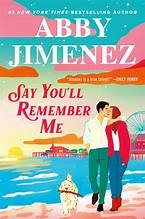
Say You'll Remember Me
A vet who writes off a sick kitten falls for the woman who saves it, then follows her into the hard, funny work of caring for a mother with dementia.
2,293-word summary · 10 min read
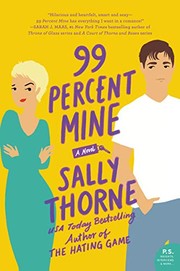
99 Percent Mine
Darcy Barrett has wanted her twin brother's best friend since she was eight. When they inherit their grandmother's cottage, Tom Valeska arrives with power…
2,391-word summary · 11 min read

Act Your Age, Eve Brown
Eve Brown crashes into a Lake District bed and breakfast, breaks the owner's arm, and talks her way into his kitchen. A grumpy-sunshine romance about work,…
2,474-word summary · 11 min read

At First Sight
Jeremy and Lexie are married and expecting a baby when anonymous emails tell him the child may not be his.
2,317-word summary · 10 min read

Delilah Green Doesn't Care
Delilah returns to Bright Falls to photograph her stepsister's wedding and falls for Claire, a bookstore owner and single mother, while a cruel bet threatens…
2,315-word summary · 10 min read

Vision in White
Wedding photographer Mac Elliot does not believe in lasting love. Steady teacher Carter Maguire plans to change her mind. First in the Bride Quartet.
2,167-word summary · 10 min read

Pretend You're Mine
A broke stranger agrees to pose as a National Guard captain's girlfriend in Benevolence, Maryland, only to find his locked basement holds a grief that could…
2,260-word summary · 10 min read
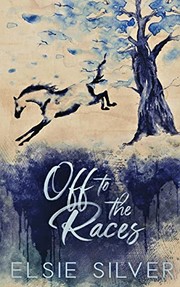
Off to the Races
A disgraced politician's daughter takes a job training a difficult racehorse at Gold Rush Ranch, where her new boss carries a family scandal of his own.
2,318-word summary · 10 min read

The Rom-Commers
A stalled screenwriter leaves her Texas caretaker life for six weeks in Los Angeles to fix a famous writer's terrible rom-com script, and finds far more than a…
2,356-word summary · 10 min read

Our Perfect Storm
Two lifelong best friends, one canceled engagement and a paid honeymoon in Tofino. George takes Nate's place, and Frankie must decide what they are.
2,393-word summary · 11 min read

Great Big Beautiful Life
Two rival journalists chase the biography of a reclusive media heiress on a Georgia island, only to find her family history holds a secret bigger than either…
2,394-word summary · 11 min read

The Japanese Lover
A Polish refugee and the son of a Japanese gardener fall in love in San Francisco in 1939, then keep the affair secret for nearly seventy years.
2,286-word summary · 10 min read

The Bookshop on the Corner
A Birmingham librarian loses her job, buys a van, and moves to the Scottish Highlands to run a mobile bookshop. Warm and bookish, with uneven pacing.
2,557-word summary · 11 min read

Ricochet
Lily Calloway tries to stay celibate for ninety days while Loren is in rehab, leaning on Rose, Connor, and Ryke as therapy forces her to face her childhood.
2,575-word summary · 11 min read
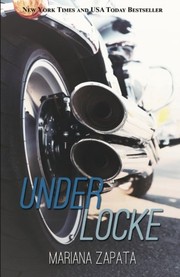
Under Locke
Iris Taylor moves to Austin broke and wary, takes a front-desk job at a tattoo shop, and spends the book learning that Dex Locke’s blunt cruelty and unexpected…
2,591-word summary · 12 min read

Sam's Letters to Jennifer
A grieving journalist reads her grandmother's letters and finds a decades-long love affair that changes how she sees her family.
2,310-word summary · 10 min read

Two by Two
Sparks's twentieth novel turns from first love to a marriage breaking up: Russell Green loses his wife and his job, then rebuilds his life around his…
2,192-word summary · 10 min read

Indigo Ridge
A new police chief in a Montana town meets the founding family's eldest son in a bar, and one night later a body turns up under their cliff.
2,763-word summary · 12 min read

2 States: The Story of My Marriage
A Punjabi boy from Delhi and a Tamil Brahmin girl from Chennai meet at IIM Ahmedabad, and turn a love marriage into a campaign to convince two families.
2,634-word summary · 12 min read
True Believer
Jeremy Marsh, a science journalist who debunks paranormal claims, comes to a small North Carolina town and falls for a librarian who believes in things he…
2,125-word summary · 9 min read

Juniper Hill
Fleeing New York with her baby, Memphis takes a housekeeping job above Knox Eden's garage, and the grumpy chef becomes the first person she can rely on.
2,021-word summary · 9 min read
The Bridges of Madison County
A four-day affair between an Iowa farm wife and a photographer asks what a brief happiness is worth against family duty.
2,487-word summary · 11 min read
The Road Trip
Two exes squeeze into one small car for the drive to a Scottish wedding, with four years of history and one photograph between them.
2,418-word summary · 11 min read
Garden Spells
Two sisters reunite in their family home in Bascom, North Carolina, where an apple tree shows anyone who eats from it the biggest event of their life.
2,030-word summary · 9 min read
Every Breath
Two strangers share one week at Sunset Beach in 1990, part for duty, and reunite decades later at the mailbox that started it all.
2,357-word summary · 10 min read
The Finish Line
Tobias King seeks forgiveness from Cecelia as the Ravenhood past closes in.
2,868-word summary · 13 min read
The Exception to the Rule
A typoed Valentine's email turns into yearly notes between two strangers who wonder if they should meet.
2,226-word summary · 10 min read