
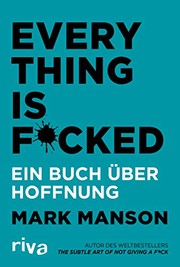
Everything is F*cked: A Book About Hope
2,789-word summary 12 min read 288 pages in the book
- First published
- 2019
- Publisher
- Harper
- Pages
- 288
- ISBN
- 9780062888433
Reading options
What's inside (9 sections)
I picked this up expecting a louder version of The Subtle Art of Not Giving a F*ck, another punchy self help book with a swear word in the title and a lot of shoulder shrugging about expectations. What I found was closer to a profane, sprawling introduction to philosophy, with Nietzsche, Kant, Buddhism, and a fair amount of psychology pressed into service of one stubborn claim: life is painful, nothing arrives with a cosmic guarantee, and most of what we call hope is a story we tell to keep moving. Mark Manson published it with Harper, an imprint of HarperCollins, in 2019. The first hardcover runs 288 pages with ISBN 9780062888433. It debuted at number one on the New York Times advice list, which says something about how badly the argument landed with readers tired of being told to visualize their dreams.
The book has nine chapters in two halves. The first five, gathered under "Hope," work through why we need hope and why it keeps failing us. The last four, under "Everything Is Fucked," try to describe what a life without hope might look like. That structure is the book in miniature: a diagnosis that takes real aim, followed by a prescription that is thinner and more arguable. I found the diagnosis sharp and the prescription uneven, sometimes in the same chapter.
The uncomfortable truth and the three legs of hope
Manson opens with a claim he admits most readers will resist. The universe does not care about any of us. We care intensely about our own lives, and we take the fact that we care as evidence that something out there must care too. He calls this the uncomfortable truth, and he thinks nearly every human institution is a way of avoiding it. We invent purposes, raise children, join churches, chase money, follow sports, all to keep the void from feeling quite so empty.
This is not cheery material, and the profanity in the title is doing real work. Manson is arguing against the idea that progress should have made us content. He points at the paradox that material conditions have improved on almost every measure while anxiety and depression have not fallen with them. Education rises, violence declines, extreme poverty shrinks, diseases vanish, and people live longer, yet the mood in the developed world is one of dread. The better things get, he writes, the more we seem to have to lose, and the less we find to hope for.
His useful move here is to define hope in a way that is narrower than everyday usage. Hope is not a vague optimism about tomorrow. It is the belief that something is worth pursuing, and it requires three things to stay upright: a sense of control over your own life, a value or values worth working toward, and a community that shares those values. Lose any one of the three and hope wobbles. Lose all of them and you get what he calls hopelessness, which he describes as the opposite of happiness, an endless grey horizon of resignation. He treats chronic anxiety as a crisis of hope rather than a surplus of it.
That framing is clarifying. It explains why a person with a good job and a loving family can still feel adrift: the community may be thin, the values inherited, and the sense of control an illusion. He is on weaker ground when he claims hopelessness sits beneath every depression and addiction, a sweeping thing to say about clinical conditions. I read that as metaphor, not medicine.
Two brains, one messy negotiation
The second chapter argues that willpower is mostly a story we tell after the fact. Manson calls the idea that reason should dominate emotion the Classic Assumption, the belief that people fail because they lack the discipline to override their impulses. Under that view, an addict or an overweight person is simply someone who did not try hard enough, while an athlete or a CEO is someone who did. He finds that assumption both cruel and wrong.
His model splits the mind into a Thinking Brain and a Feeling Brain. The Thinking Brain handles language, reasoning, and slow deliberate thought. It is accurate but expensive to run. The Feeling Brain handles impulse, intuition, and emotion. It is fast but crude. The surprising part of the argument is that the Feeling Brain is not an obstacle to action but the source of it. Without emotion, nothing matters enough to do. The Thinking Brain cannot simply order the Feeling Brain around; more often it invents reasons for whatever the Feeling Brain already decided. Choose the couch over the gym and your reasoning will promptly explain why recovery was the wiser choice. Manson names this the self-serving bias, and he is right that it makes people skilled at justifying what they already want.
What follows is practical. You do not argue an emotion into submission. You ask uncomfortable questions until the Feeling Brain answers with feelings, and you shape an environment that draws out its better impulses. You can promise it a reward for going to the gym and eventually shift what it wants. The real work, he says, is getting your values straight, because a self control problem is usually a values problem wearing a different coat.
I wanted this chapter to engage more carefully with the research it gestures at. The claim that self control is an illusion overstates what the underlying science supports. Habits, attention, and environment do a great deal of the work we call willpower, but calling the whole thing an illusion trades one simplification for another. Still, the advice to stop shaming yourself and start examining what you actually want is sound, and it is the part I have repeated to friends since finishing the book.
Newton's laws, borrowed and stretched
The third chapter is the most playful and the least rigorous. Manson imagines what psychology would look like if Newton had studied emotions instead of motion, then offers three laws of his own. The first says that every action produces an equal and opposite emotional reaction. Harm someone without justification and a moral gap opens between you; the gap can only be closed by punishment or repayment. Do something kind and the gap runs the other way, producing gratitude. He calls this the operating system of the Feeling Brain, and it does describe something real about how people track fairness.
The second law says that self worth equals the sum of our emotions over time. When a moral gap cannot be closed, it normalizes. A person begins to expect inferior treatment and builds an identity around it. Manson extends this to the small daily narcissism he thinks we all need. A little belief in our own specialness keeps hope alive, but too much of it sets us apart from everyone else and prolongs suffering. The third law says that identity stays put until a new experience pushes against it. Values compound like snowballs over decades, and changing one requires a painful encounter that contradicts it. He calls the pull of old values emotional gravity, and notes that it is why people gather into tribes with like minded others.
The snowball image is memorable, and the point about values needing contrary experience to shift is well taken. But the physics framing is decoration. Calling these laws borrows authority from a discipline built on measurement, while Manson's versions are interpretive stories that fit many cases and predict none. I enjoyed the chapter and trusted it less afterward. That is a fair summary of much of the book: vivid, quotable, and occasionally overconfident.
Every religion is a hope machine
The middle chapters widen the lens from the individual to the group. Manson argues that we all serve something at the top of our value hierarchy, a "God Value" that can be money, family, fame, love, politics, or a literal deity. Whatever sits there becomes the lens through which everything else is judged. He sorts the resulting faiths into three kinds. Spiritual religions draw hope from the supernatural, ideological religions draw it from ideas about the natural and social world, including capitalism, communism, and liberalism, and interpersonal religions draw it from other people, including romantic love, children, and celebrities.
His account of why religions work is more interesting than the taxonomy. Communities give hope a place to live. Rituals make values tangible through repetition and symbol, often with an element of sacrifice, and shared enemies bind groups together by giving everyone something to be against. He is blunt about the trade: the same machinery that produces belonging also produces mobs and conflict, because conflict keeps the meaning alive. His sharpest line in this section is that a dream is most truly destroyed when it comes true, since the hoping was doing more for you than the having ever could.
The Nietzsche chapter, "Hope Is Fucked," pushes this further. Manson retells the story of a thinker who declared God dead and lost his job, his friends, and his prospects, then wrote some of the most influential philosophy in history anyway. He explains master and slave morality in broad strokes, treats science as the religion that finally introduced the idea of progress, and notes that science can correct itself while a creed cannot. The claim that many of history's worst atrocities were committed in the name of hope is the book at its most provocative, and there is something to it: people have often murdered for a better world. But he is using a private definition of hope to make a point about ideology, and readers who notice the sleight of hand will find the argument less crushing than the prose wants it to be. His answer is the Nietzschean idea of amor fati, a love of fate that accepts experience without demanding it be different.
Pain, the feelings economy, and fake freedom
The second half tries to live up to its bleak title. In "Pain Is the Universal Constant," Manson introduces what he calls the Blue Dot Effect, borrowing from experiments where participants shown many threatening faces start reading neutral faces as threatening. His version says that people warp perception to match expected levels of trouble, so that even in a peaceful society we find a quota of grievances to fill. This is his explanation for the paradox of progress. He pairs it with the hedonic treadmill, the familiar idea that every achievement resets the level of what counts as enough, and argues that the pursuit of happiness is self defeating precisely because the mind will always manufacture the next lack.
His turn is to recommend pursuing pain rather than avoiding it. Not all pain, he is careful to say, but the pain that carries meaning. He borrows the word antifragile for systems that gain from stress, recommends meditation as practice because it has no endpoint, and cites the Buddhist distinction between unavoidable pain and optional suffering. Death gets a similar treatment: without an ending, nothing would be precious, so mortality is psychologically necessary even if we wish it otherwise. Living well, in his telling, means suffering for the right reasons.
This is where the tone starts to cost it readers. Telling someone trapped in a harmful situation to welcome pain sounds like romanticizing hardship, and Manson does not keep the line between chosen difficulty and imposed misery sharp enough. The advice works for a person taking on a hard but meaningful path. It lands badly for someone whose pain was never a choice.
"The Feelings Economy" is the chapter I would hand to a marketer. Manson argues that companies identify the moral gaps described earlier and sell products to close them, which is why so much economic activity trades in comfort and distraction. He divides innovation, which swaps one pain for a preferable one, from diversion, which merely numbs pain and lets it grow worse underneath. The result is a culture of fake freedom, where endless options promise autonomy but produce paralysis, and where choosing what you want matters less than choosing what you will give up. Real freedom, he says, is repetitive and sometimes dull. It looks like commitment, self limitation, and tolerating views you dislike, because a community that cannot absorb disagreement cannot stay healthy. The jab at life hacking, that it offers the appearance of winning without the sacrifice that makes winning meaningful, is one of his better observations.
The formula of humanity and the final religion
In "The Formula of Humanity," Manson turns to Immanuel Kant and the idea that rational beings are ends in themselves rather than tools for someone else's plans. He uses it to draw a line between adolescence and adulthood that has little to do with age. Children and adolescents, in his account, treat life as a series of bargains, doing homework for future chances and calling their mother to avoid a lecture. Adulthood begins when a person stops negotiating for love and respect and starts acting on principles because those principles are right. Honesty matters even when it hurts. You teach love by loving, trust by trusting, and respect by respecting, without expecting a return. The most important things in life are nontransactional, and the moment you try to trade for them is the moment you push them away.
It is a clean idea, and the observation about manipulating people into trusting you is worth carrying around. The weakness is that Manson presents Kant's categorical imperative in a few paragraphs, then uses it as a permission slip for his own theme about unconditional values. Readers wanting a real argument about moral philosophy will find the treatment cursory. He is a synthesizer with a sharp ear for a memorable line, not a careful scholar of the traditions he cites.
The closing chapter, "The Final Religion," is the one that aged fastest. Manson argues that artificial intelligence is becoming the next object of worship, because algorithms already mediate dating, maps, shopping, weather, and investing, and because they process information faster and more calmly than we do. He suggests that evolution has always favored better information processing, that humans are themselves algorithms, and that our old algorithms are poorly suited to modern life. AI may be the final religion, a shared object of faith that finally unites us. The chapter ends where the book has been heading all along: do not hope for better, be better, more compassionate, more resilient, more humble, more disciplined.
I wanted more from that ending. The prediction about AI reading as prophecy now, and the claim that machines are less self destructive than people is asserted rather than argued. More importantly, the pivot from sustained nihilism to an imperative about being better needs a bridge the book never builds. If values are fictions we invent to avoid the void, why this set of virtues rather than another? Manson's answer is essentially that they work, which may be true, but it is the same kind of hope he spent eight chapters taking apart. The book does not resolve that tension so much as leave it running.
Who this is for, and what survived
Read it if you enjoy self help that argues with philosophy and does not mind a harsh tone. It is standalone, though it follows The Subtle Art of Not Giving a F*ck and repeats some of that book's territory. Readers looking for clinical psychology will find the science loose and the sweeping claims about anxiety frustrating. Readers allergic to profanity will bounce off the tone. I would hand it to someone who has already consumed the softer genre and wants a challenge, with a warning that the real Nietzsche and Kant are stranger and better.
What stayed with me after closing it was not the grand argument but a few portable tools. Check whether control, values, and community are all present when you feel hopeless. Stop treating a self control problem as a character flaw and look at what your Feeling Brain actually wants. Notice when a hope depends on something being broken. Those ideas have survived in how I think about the book, while the laws of emotion and the final religion have faded. That selective keeping feels appropriate. Manson asks readers to take what is useful and leave the rest, and his own book rewards exactly that treatment. It is loud where it should be quiet, overconfident where it should be curious, and genuinely illuminating when it slows down. The title promises a book about hope. What it delivers is a book about the stories we build instead of looking directly at what hurts, which is close enough to be worth the argument.
FAQ
Is this a sequel to The Subtle Art of Not Giving a F*ck?
It is a standalone 2019 book that follows The Subtle Art of Not Giving a F*ck and revisits some of its themes about expectations and responsibility. You can read it on its own.
What does Manson mean by saying self-control is an illusion?
He argues that reason rarely overrides emotion directly, so people act on what they want and then justify it afterward. Lasting change comes from reshaping values and environment rather than relying on brute willpower.
Is the book grounded in science?
It draws on psychology research and cites thinkers such as Kant and Nietzsche, but its laws of emotion and physics analogies are metaphors rather than testable claims. Readers looking for clinical psychology may find the science loose.
Similar books
12 Rules for Life
Twelve essays on responsibility from posture to truth to petting cats.
2,045-word summary · 9 min read
The Power of Your Subconscious Mind
Joseph Murphy argues that the subconscious accepts whatever the conscious mind repeats, so worry and confidence quietly grow into very different lives.
2,259-word summary · 10 min read
The Miracle Morning
Hal Elrod argues that the first hour of the day sets its tone, and offers six short practices, silence, affirmations, visualization, exercise, reading and…
2,240-word summary · 10 min read

Ikigai: The Japanese Secret to a Long and Happy Life
Two Spanish writers explain the Japanese idea of a reason for being, drawing on Okinawan centenarians, flow, friendship and the acceptance of imperfection.
2,030-word summary · 9 min read
Flow: The Psychology of Optimal Experience
Csikszentmihalyi's 1990 study of optimal experience asks when people feel most alive and finds the answer in a balance of challenge and skill. Drawing on…
3,073-word summary · 14 min read
Emotional Intelligence 2.0
Bradberry and Greaves turn emotional intelligence into four learnable skills, a self-assessment and dozens of strategies, while their headline numbers rest on…
3,276-word summary · 15 min read
Digital Minimalism: Choosing a Focused Life in a Noisy World
Cal Newport argues that willpower cannot beat an attention economy designed against you, and offers a thirty day reset to rebuild your digital habits around…
2,701-word summary · 12 min read
The Obstacle Is the Way: The Timeless Art of Turning Trials into Triumph
A 2014 Stoic self-help book arguing that perception, action and will can turn setbacks into fuel, told through historical anecdotes.
2,669-word summary · 12 min read
The Courage to Be Disliked: The Japanese Phenomenon That Shows You How to Change Your Life and Achieve Real Happiness
A philosopher and an angry young man argue over five nights about Adlerian psychology, trauma, approval, and the freedom to be disliked.
2,054-word summary · 9 min read
Don't Sweat the Small Stuff ... and It's All Small Stuff: Simple Ways to Keep the Little Things from Taking Over Your Life
Richard Carlson’s 1997 bestseller offers one hundred short chapters on lowering the volume on daily irritations, and it is more pragmatic than its title…
2,502-word summary · 11 min read
Four Thousand Weeks: Time Management for Mortals
Oliver Burkeman turns the whole productivity project on its head, arguing that a human lifespan of roughly four thousand weeks is not a problem to optimize…
2,447-word summary · 11 min read
The Road Less Traveled: A New Psychology of Love, Traditional Values and Spiritual Growth
M. Scott Peck argues that maturity begins with accepting difficulty, then builds discipline, love, and spiritual growth through honest, often painful work.
2,200-word summary · 10 min read
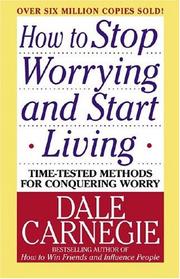
How to Stop Worrying and Start Living
Carnegie offers day-tight routines for worry built from interviews and worker stories.
2,505-word summary · 11 min read
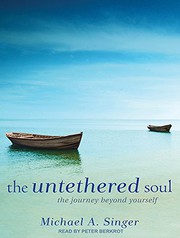
The Untethered Soul
Singer names the noisy inner voice and shows how watching thoughts, loosening old hurt, and keeping the heart open through surrender can ease daily suffering…
2,752-word summary · 12 min read
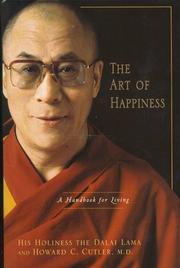
The Art of Happiness
The Dalai Lama and psychiatrist Howard Cutler link lasting happiness to training the mind, human warmth, compassion, and basic spiritual values for daily life.
3,394-word summary · 15 min read
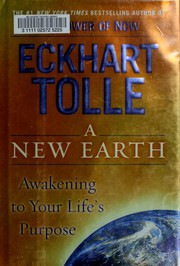
A New Earth
Tolle maps ego pain and shows how presence can loosen roles, thoughts, and suffering.
1,909-word summary · 8 min read
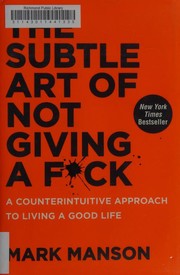
The Subtle Art of Not Giving a F*ck
Blogger Mark Manson argues for fewer cares held better, through suffering, values, failure and saying no, with raw stories.
2,020-word summary · 9 min read
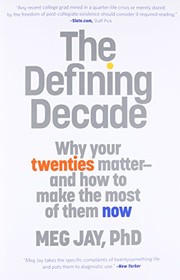
The Defining Decade: Why Your Twenties Matter - and How to Make the Most of Them Now
A clinical psychologist argues that the twenties are not a holding pattern and urges readers to build skills, ties, and commitment now.
2,443-word summary · 11 min read
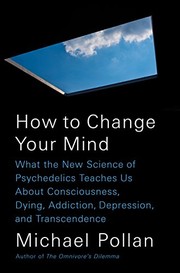
How to Change Your Mind
Pollan blends the history of psychedelic research, his own guided trips, and current neuroscience to ask what these drugs reveal about consciousness.
2,466-word summary · 11 min read
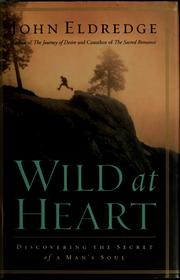
Wild at Heart: Discovering the Secret of a Man's Soul
Why do men feel bored and tame? John Eldredge argues a man's heart is wild by design, and that recovering it means facing the wound and the question of whether…
2,289-word summary · 10 min read
The Art of Loving
Fromm argues that love is an art requiring care, responsibility, respect and knowledge, not a feeling we simply fall into. A short, stern classic of 1950s…
3,175-word summary · 14 min read
Rising Strong: The Reckoning. The Rumble. The Revolution.
Brené Brown's 2015 book asks what happens after we fall, and argues that examining the stories we invent about failure and heartbreak is the path to getting…
2,271-word summary · 10 min read
Getting to Yes: Negotiating Agreement Without Giving In
Fisher and Ury propose negotiating on interests rather than positions, using fair standards and a clear alternative if no deal is reached.
2,231-word summary · 10 min read
Boundaries: When to Say Yes, How to Say No to Take Control of Your Life
A Christian self-help book that treats a boundary as a personal property line and applies the idea to family, friendship, marriage, work and the self.
2,047-word summary · 9 min read

Atlas of the Heart: Mapping Meaningful Connection and the Language of Human Experience
Brené Brown maps 87 emotions and experiences into thirteen 'places we go,' arguing that precise language changes what we can ask for and how we connect.
2,491-word summary · 11 min read
Extreme Ownership: How U.S. Navy SEALs Lead and Win
Two retired Navy SEALs turn their Ramadi combat experience into a blunt leadership creed: the leader owns everything, and the team follows when the why is…
2,368-word summary · 11 min read
As a Man Thinketh: A book that will help you to help yourself
In seven short chapters, James Allen argues that character and circumstance grow from thought, and that changing how you think is the practical route to…
2,673-word summary · 12 min read
What Happened to You?
Oprah Winfrey and psychiatrist Bruce Perry explain how early experience shapes the brain, and why asking what happened to someone works better than asking what…
2,238-word summary · 10 min read
Moonwalking with Einstein: The Art and Science of Remembering Everything
A journalist spends a year training for the U.S. Memory Championship and discovers that extraordinary memory is mostly technique, attention, and a lot of…
2,027-word summary · 9 min read
The Total Money Makeover: A Proven Plan for Financial Fitness
Dave Ramsey lays out seven Baby Steps, from a $1,000 starter fund to a paid-off house, with the debt snowball at the center.
2,663-word summary · 12 min read