
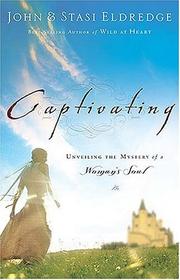
Captivating: Unveiling the Mystery of a Woman's Soul
2,722-word summary 12 min read 243 pages in the book
- First published
- 2005
- Publisher
- Thomas Nelson
- Pages
- 243
- ISBN
- 9780785264699
Reading options
What's inside (9 sections)
- The three longings and the woman who feels "too much"
- Eve, the word for helper, and the Fall
- Wounds, and the question of whether she is wanted
- A claim that femininity is under attack
- Healing, and God as the lover the heart wants
- Beauty, men, mothers and friends
- The irreplaceable role, and where the book loses me
- Key takeaways
- FAQ
I picked this up with some suspicion. I had read Wild at Heart years before, and I remembered how confidently it sorted men into a pattern of battle, adventure and rescue. When I heard that John Eldredge had written a companion about women, with his wife Stasi as co-author, I expected a book that would flatten half the people I know into a template. Part of me was right to be wary. What I did not expect was how tender the book often is, or how much of it is Stasi speaking from a life she describes in painful detail. Captivating came out in 2005 from Thomas Nelson, and the hardcover runs to 243 pages. It reads less like a manual than like a long conversation about why so many women feel they have misplaced something they were born with.
The premise is stated early and stated bluntly. Every woman, the Eldredges say, carries three desires: to be romanced, to play an irreplaceable role in a great adventure, and to unveil beauty. Those three longings are the spine of the book. Everything after the opening chapter is an attempt to explain how those desires get buried under wounds and pressure, and how a woman might dig them back up. This is a work of Christian teaching, heavy on Scripture and on the authors' own counseling and life experience, and it will make most sense to a reader who shares that framework. I want to describe what the authors actually argue before I get to the places where I think the argument strains, because the strain is easier to see once the shape of the thing is clear.
The three longings and the woman who feels "too much"
Stasi opens by separating this book from the guides she was tired of seeing handed to Christian women. She rejects the approach that says do these ten things and you will be a godly woman, because she believes it leaves women measuring themselves against a standard they cannot reach and quietly concluding they have failed. She singles out the Proverbs 31 woman, the biblical picture of domestic perfection, as an image the church has used to make ordinary women feel inadequate. Her alternative is to start with the heart and its desires rather than with a list of duties.
The condition she names will be familiar to a lot of readers. A woman feels unseen, unsought and uncertain. She senses herself as at once "not enough" and "too much," never quite the person the people around her want her to be. The Eldredges treat that feeling not as a personal failing but as a clue. If little girls dream of being swept into a romance, of having a part that only they can play, of being the beauty of the story, then the longings must point to something real. They read those dreams as evidence of design rather than escapism.
Each desire gets a chapter of its own early on. To be romanced means to be wanted and pursued, to be someone's priority, and the authors insist they are not saying a woman's worth depends on whether a man is romancing her. To play an irreplaceable role means to be needed in a story that matters, not merely useful, and they use the image of a woman as a warrior in a specifically feminine way. To unveil beauty means something deeper than looking attractive: it is a quality of heart and presence offered freely rather than a surface to be admired. The book keeps returning to these three, sometimes more often than I wanted, but the repetition is part of its method.
Eve, the word for helper, and the Fall
Having named the desires, the authors go back to Genesis to argue that women were made with them on purpose. John describes creation as an ascending work of art, with Eve as its culminating act rather than an afterthought. They lean hard on the Hebrew phrase used for Eve in Genesis 2, usually translated as "helper." The word is ezer kenegdo, and the Eldredges point out that ezer appears elsewhere in the Old Testament almost entirely to describe God himself in situations of life and death. Their claim is that the usual translation shrinks what the text says about woman's dignity and about God's own relational nature.
The Fall then explains how the design got distorted. In their telling, Eve is persuaded that God is holding something good back from her and takes matters into her own hands while Adam stands passively beside her. The consequences that follow in Genesis 3 become, for the authors, a description of the two ways women relate to the world ever since. They call it Fallen Eve. One pattern is the dominating woman who refuses vulnerability and tries to control everything around her. The other is the desolate woman, hollowed out by emptiness, who either hides from everyone or reaches desperately for love. Under both patterns sits the same unasked question: am I wanted? The authors argue that fear of abandonment drives the behavior, whether it appears as hardness or as neediness.
I found this section intellectually lively even where I disagreed with it. The reading of ezer is a real argument, grounded in how a word is used elsewhere in Scripture, and it gave me something to chew on. At the same time, the move from a contested translation to sweeping claims about every woman's inner life happens quickly. The book generally treats its observations about women as universal, and that habit is both its confidence and its weakness.
Wounds, and the question of whether she is wanted
The next stretch of the book turns from ancient text to biography. The Eldredges argue that childhood wounds teach girls false verdicts about themselves, and that the vows children make in response grow into the strategies adults use to protect themselves. A girl who learns she is unwanted, unsafe or unworthy does not simply feel bad. She builds a life around not being seen, and then wonders why the life feels small.
Stasi tells her own story here, and it is the most disarming material in the book. Her father struggled with alcoholism and bipolar disorder, was often absent and emotionally unavailable, and her mother was overwhelmed. Stasi describes attempting to take her own life at age ten and making a vow to be invisible, both literally and in the sense of withdrawing from everyone. She writes about hiding as a way of surviving. She also writes about the long shadow that kind of childhood casts, including a lifelong struggle with depression that she says required care for body, soul and spirit: medication for inherited chemical imbalances, counseling for the soul, and prayer and spiritual authority for the spirit.
The authors widen this into a pattern they see in many women's lives. Women whose fathers abused, neglected or rejected them carry the message into adulthood. Self-protection becomes a way of life. The book lists the messages and the strategies with a counselor's fluency, and I could feel the accumulated weight of case after case. What held it together for me was Stasi's willingness to put her own history on the page rather than only other people's. When the authors write about hiding or about the fear of being truly known, the voice has been earned.
A claim that femininity is under attack
This is where the book becomes hardest for a skeptical reader, and I want to be fair about why. The Eldredges argue that there is a sustained spiritual assault on women, and they assemble evidence from across history and cultures: foot-binding, female genital mutilation, sex trafficking, and mass rape used as a weapon of war. They read these not as separate human crimes but as expressions of a single hatred, which they trace to Satan. Drawing on Ezekiel 28, they describe Lucifer as celebrated for his beauty before his fall, and they argue that his revenge is to attack beauty wherever it appears, especially in women, who in their view embody God's beauty and give life in a kingdom of death. The message a wounded woman has received, they say, is wrong. These things did not happen because something is wrong with her. They happened because she is glorious and dangerous to the forces arrayed against her.
That argument gave me pause. There is no question that violence against women is real and vast, and the authors are right to refuse to trivialize it. But moving from that fact to a claim about a personal spiritual vendetta requires a leap of faith, and the book takes it without much hesitation. Readers who do not share the authors' cosmology will feel the ground give way here. Even a sympathetic reader might notice that the more lurid examples are doing emotional work that the argument itself cannot do. I also felt that Stasi's own history was being folded into a grand explanation a little too neatly, as if the pain of one life could be accounted for by a cosmic theory of beauty under siege.
The criticism of the book from both inside and outside Christian circles often lands here. Some readers object that the authors' personal experience is doing too much work for claims about all women. Others dispute the scriptural readings. Publishers Weekly, reviewing the hardcover, called the three-part scheme familiar to fans of Wild at Heart and judged the themes recycled, while noting that the book was likely to sell heavily to the women who had bought Wild at Heart for the men in their lives. That is a fair observation about the market as well as the message.
Healing, and God as the lover the heart wants
The practical center of the book is a chapter on healing, and it rests on the idea that Christ came to mend broken hearts, not only to forgive sins. The authors cite Isaiah 61 and lay out a sequence. A woman surrenders the strategies she has used to protect herself. She invites Jesus into the wounded places. She renounces the agreements she made with the lies those wounds delivered. She lets herself grieve. She forgives the people who harmed her. She asks Jesus to heal and to break what the authors call spiritual strongholds, the entrenched footholds of shame, fear and self-doubt that form around old wounds. She lets God be the father she did not have. Finally, she takes the core question, the one about being wanted, straight to God.
Stasi describes what this looked like in her own life. She writes about God bringing back forgotten memories of her parents' love and taking the sting out of the painful ones, so that her history was rewritten without being denied. That passage is the book at its most hopeful, because it stays close to a person rather than to a system.
From there the authors argue that God wants an intimate, even romantic, relationship with each woman. They trace the metaphors Scripture uses for the divine and human relationship, moving from potter and clay toward Bridegroom and bride, and they claim God has been wooing every woman since childhood through whatever stirred her heart. The practical counsel is to make space for worship and journaling and to stay openhearted in seasons when God feels distant. They challenge the church's habit of treating busyness as spirituality and propose instead that the deep spiritual life is a romance with God. I found this section moving and also a little too neat. Every ache gets redirected toward God, which gives the book its comfort and also limits what it can say about ordinary human love.
Beauty, men, mothers and friends
The chapters on beauty broaden the word beyond appearance. The authors argue that beauty is the essence of femininity, a soulful quality flowing from a heart at rest in God's love, and that unveiling it means offering presence and vulnerability rather than mere usefulness. They revisit the instruction in 1 Peter about a gentle and quiet spirit, insisting it asks for a heart quieted by God rather than for silence. Beauty, they say, deepens with age instead of fading, which is a welcome corrective to the culture they are pushing against.
When they turn to relationships between men and women, the complementarian framework becomes explicit. Femininity, they write, calls forth masculinity, and a woman's beauty and strength can draw men toward courage while men's strength helps women flourish. The same chapter warns women not to ask men for the validation only God can supply. They point to bold biblical women such as Ruth, Rahab and Esther as examples of courage and vulnerability at work. This is the part of the book that will divide readers most sharply. Readers who embrace an egalitarian reading of these texts will not find the authors' perspective convincing, and the gendered model they build can feel like a set of roles assigned in advance rather than discovered in a life.
The book is better when it stays with relationships rather than roles. A chapter on mothers, daughters and sisters argues that women are called to nurture life in others whether or not they have children of their own. Stasi recounts her difficult relationship with her own mother, their reconciliation shortly before her mother was diagnosed with terminal cancer, and the four months of restored love that followed. That story is specific and honest and does more for the book's case than any number of general claims. The Eldredges also urge women to pursue friendships actively while acknowledging that only Jesus can fully satisfy the longing for connection. Later, framing women as spiritual warriors, they ground the idea in Ephesians 6 and describe a spirit of accusation that they say afflicted their own marriage for ten years. The warfare language will not work for every reader, but here it stays attached to a real marriage and a real struggle.
The irreplaceable role, and where the book loses me
The final chapter asks women to take up the role the authors believe God designed for them. They survey women's contributions across biblical history and then in contemporary life, and they name three spheres in which that role plays out: personal relationships, the community of believers, and the wider world. Near the end they offer a declaration of identity, that every woman is made in God's image, chosen before time, wholly loved and needed. The closing invitation is to keep going through prayer, small groups and retreats, with the claim that God's kingdom will not advance as intended unless men and women both take their parts. A postscript added years later uses the woman with the bleeding disorder from Mark 5 as a picture of desperate faith met with restoring power.
I closed the book wanting to recommend it to some people and not to others. For a woman inside the evangelical world who feels worn down by the demand to be a cheerful, efficient servant, the book's insistence that her heart matters could genuinely be freeing. Stasi's personal chapters are brave, and the healing sequence gives a reader concrete things to think about and pray through. For a reader outside that world, or for one who bristles at universal claims about femininity, much of the framework will feel imposed. The Eldredges draw heavily on films and romance fiction to make their case, and those references date the book in places. The three desires are a tidy scheme, and the authors sometimes make the evidence fit the scheme rather than letting the evidence complicate it.
That is the honest balance. This is a book with a generous heart and a controlling thesis. It comforts by telling women their longings are holy, then narrows what those longings can mean. I found myself most persuaded in the passages where Stasi simply tells what happened to her and least persuaded where the authors explain what it all must mean for every woman everywhere. If you can take the teaching as a witness to one life and a tradition rather than as a description of all women, there is real warmth here. If you cannot, the book's confidence will grate long before you reach the last page.
FAQ
Is Captivating written by John Eldredge alone?
No. It is co-written by John and Stasi Eldredge, and much of the personal testimony is told in Stasi's voice, even though listings often name John only. The book is a companion to his earlier Wild at Heart.
What are the three core desires the book describes?
The authors say every woman longs to be romanced, to play an irreplaceable role in a great adventure, and to unveil beauty. They use those three desires to organize the whole book.
Who is Captivating most likely to appeal to?
It will resonate most with readers inside evangelical Christianity who want a spiritual account of women's identity and healing. Readers wary of gender roles or broad claims about women may find its framework restrictive.
Similar books
My Utmost for His Highest
A posthumous collection of 366 daily devotional readings assembled from Oswald Chambers's sermons, built around surrender, discipleship and the gap between…
2,015-word summary · 9 min read
The Prayer of Jabez: Breaking Through to the Blessed Life
A tiny 2000 devotional built on two verses in Chronicles became a publishing phenomenon and a lightning rod for criticism.
2,296-word summary · 10 min read
Wild at Heart: Discovering the Secret of a Man's Soul
Why do men feel bored and tame? John Eldredge argues a man's heart is wild by design, and that recovering it means facing the wound and the question of whether…
2,289-word summary · 10 min read
The Pursuit of God: The Human Thirst for the Divine
Ten short chapters on wanting God rather than merely knowing about him, from a pastor who wrote the book in a single night on a train.
2,014-word summary · 9 min read
Have a Little Faith: a True Story
Asked to deliver his childhood rabbi's eulogy, Albom interviews the man and a Detroit pastor serving the homeless, and finds two very different models of faith.
2,339-word summary · 10 min read
Blue Like Jazz
Donald Miller leaves youth group faith in Texas for Portland and Reed College, where a confession booth and shared house life reshape his view of Christian…
2,366-word summary · 11 min read
The Power of Positive Thinking
Peale's 1952 guide to faith, affirmations, picturing success, prayer, and worry control, retold chapter by chapter with stories, limits, and small daily habits…
2,742-word summary · 12 min read
The Case for Christ
An atheist journalist cross-examines scholars on the Gospels, the tomb, and the resurrection to test the evidence for Jesus.
2,882-word summary · 13 min read
The Purpose Driven Life
Rick Warren's 40-day guide to Christian purpose, from worship and fellowship to growth, service and mission.
2,846-word summary · 13 min read
You Can Heal Your Life
Louise Hay's 1984 bestseller argues that thoughts and beliefs shape the body, pairing a mirror-and-affirmation workbook with an A to Z list of ailments and…
3,672-word summary · 16 min read
Women Who Run with the Wolves
A Jungian analyst reads fairy tales as maps to a woman's instinctual self, from La Loba to Bluebeard and Vasalisa.
2,331-word summary · 10 min read
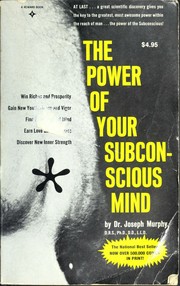
The Power of Your Subconscious Mind
Joseph Murphy argues that the subconscious accepts whatever the conscious mind repeats, so worry and confidence quietly grow into very different lives.
2,259-word summary · 10 min read
The Book of Mormon: Another Testament of Jesus Christ
A religious scripture first published in 1830, presented as a record of ancient peoples in the Americas and a second witness to Jesus Christ in the Latter Day…
2,390-word summary · 11 min read
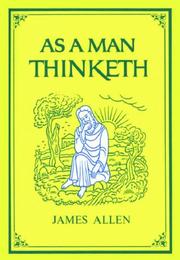
As a Man Thinketh: A book that will help you to help yourself
In seven short chapters, James Allen argues that character and circumstance grow from thought, and that changing how you think is the practical route to…
2,673-word summary · 12 min read
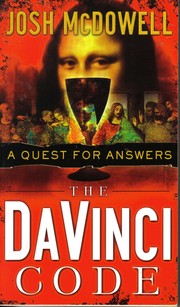
The DaVinci Code: A Quest for Answers
A short 2006 dialogue in which three friends test Dan Brown's claims about Jesus, Mary Magdalene, Nicaea, and the canon.
2,088-word summary · 9 min read
Year of Yes: How to Dance It Out, Stand in the Sun and Be Your Own Person
Shonda Rhimes takes her sister’s accusation seriously and spends a year saying yes to the things that frighten her, from live television to her own reflection.
2,585-word summary · 11 min read
Love Does
A lawyer and activist tells stories of saying yes, showing up, and loving people through ordinary, often ridiculous actions.
2,411-word summary · 11 min read
The Road Less Traveled: A New Psychology of Love, Traditional Values and Spiritual Growth
M. Scott Peck argues that maturity begins with accepting difficulty, then builds discipline, love, and spiritual growth through honest, often painful work.
2,200-word summary · 10 min read
90 Minutes in Heaven: A True Story of Death and Life
A pastor declared dead at a 1989 crash scene describes ninety minutes he says he spent in Heaven, then thirteen months of surgeries, depression, and recovery.
2,246-word summary · 10 min read
The Artist's Way: A Spiritual Path to Higher Creativity
A twelve week course with morning pages and artist dates to recover creativity.
2,345-word summary · 10 min read
God Is Not Great
Hitchens argues religion poisons life across history and texts.
2,545-word summary · 11 min read
10% Happier
An ABC newsman panics on air, then finds meditation without losing his edge.
2,590-word summary · 12 min read
The Untethered Soul
Singer names the noisy inner voice and shows how watching thoughts, loosening old hurt, and keeping the heart open through surrender can ease daily suffering…
2,752-word summary · 12 min read
The Art of Happiness
The Dalai Lama and psychiatrist Howard Cutler link lasting happiness to training the mind, human warmth, compassion, and basic spiritual values for daily life.
3,394-word summary · 15 min read
A New Earth
Tolle maps ego pain and shows how presence can loosen roles, thoughts, and suffering.
1,909-word summary · 8 min read

Girl, Wash Your Face
Twenty lies, twenty stories, twenty small habits on body, approval, motherhood, faith, and work.
1,995-word summary · 9 min read
The Power of Now
Tolle argues pain comes from mind chatter and peace from full attention to now.
2,354-word summary · 10 min read
Eat, Pray, Love
Eat, Pray, Love retold: divorce, Italy for pleasure, India for practice, Bali for balance.
1,962-word summary · 9 min read
The Defining Decade: Why Your Twenties Matter - and How to Make the Most of Them Now
A clinical psychologist argues that the twenties are not a holding pattern and urges readers to build skills, ties, and commitment now.
2,443-word summary · 11 min read
Motherland: A Feminist History of Modern Russia, from Revolution to Autocracy
A feminist history of modern Russia told through women's lives, from the revolutionaries of 1917 to Pussy Riot and the politics of today.
2,191-word summary · 10 min read