
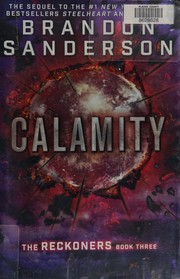
Calamity
2,774-word summary 12 min read 432 pages in the book
- First published
- 2016
- Publisher
- Delacorte Press
- Pages
- 432
- ISBN
- 9780385743600
- Series
- The Reckoners (#3)
Reading options
What's inside (8 sections)
I came to this book as the last stop of a trilogy I had already spent two books careening through, and I expected a straightforward siege. Instead I got a finale that keeps widening its scope until the fight is no longer about one city or one villain but about what power does to the person holding it. Calamity was published on 16 February 2016 by Delacorte Press, the third volume of The Reckoners, and it runs 432 pages in the American hardcover. It picks up in the wreckage left by Firefight and refuses to treat that wreckage as a pause. Characters are missing, alliances have curdled, and the red star that started everything is about to stop being a mystery.
A world that never stopped breaking
The premise is worth restating because the book assumes you know it cold. Twelve years before David Charleston's story began, something people called Calamity appeared near Earth and burst across the sky, and a handful of ordinary people woke up with impossible abilities. They became the Epics. Most of them did not use their gifts to help anyone. They robbed, ruled, and enslaved, and governments folded because nothing ordinary could stand against a person who could turn a city block into steel or hide the sun. The Fractured States, the old America, comes apart into fiefdoms run by the strongest Epics.
David is the boy who was eight when Steelheart killed his father in a bank in Chicago, and who grew up studying Epics the way other people study insects. By the end of Firefight he had killed Steelheart, watched his own teammate Regalia try to burn Babylon Restored, and seen his mentor and leader, Jonathan Phaedrus, the man everyone calls Prof, slide into the darkness that seems to take every Epic who uses enough power. Prof is not a background problem here. He is the villain David has to chase, a man who once taught the Reckoners how to kill Epics and now commands them as Limelight.
The team David has left is small and tired. There is Megan Tarash, his girlfriend, who can step into other dimensions and pull things out of them, including a flame-wrapped figure called Firefight. There is Abraham Desjardins, a former Canadian special forces soldier who has come a long way from the man who once resented taking orders from a teenager. There is Cody, a lanky Southerner with a gift for machines, and Mizzy, an engineer whose power lets her stick to walls. Their strategist, Tia, vanished after the fighting in Babilar, and her absence hangs over every decision. The book opens with these survivors sitting in a tree stand outside the Knighthawk Foundry in West Virginia, broke and hunted, needing equipment badly enough to try one more desperate raid.
What I liked immediately is that Sanderson drops us straight into competence. These people know what they are doing. They argue, they cover one another, they make plans that go wrong in specific ways. The finding of a body, the wrong door, the cleaning bot that hears too much, the freezer room guarded by drones, all of it moves with the clean logic of a heist. It is a good way back into a world this dense, and it gives the team something to do before the book asks the bigger questions.
What the Foundry was really making
The raid is where the story changes gear. The Knighthawk Foundry is the main source of the technology the Reckoners rely on, the devices called motivators that channel Epic powers into tools and weapons. David gets inside and finds jars and tubs of body parts, then freezers full of glass vials. The answer to what those vials contain is the first real revelation of the book, and it is a grim one. Motivators are made from living Epic cells kept in incubators. The weapons the resistance has been using are grown from the people they fight.
Dean Knighthawk, the paralyzed owner who runs the place through armed robots, catches David and assumes Prof has sent a thief. Firefight melts through a wall, Megan pulls her creation back before the corruption can take her, and David gets shot in the leg and dragged out by his friends. The escape is messy, and the mess is the point. When David brings what he has learned to Knighthawk and offers the secret of the Epics in exchange for help, the deal gets made because of something he has seen Megan do. She used her fire selflessly, to save him, and did not slide into darkness. That is the clue the whole book turns on.
An Epic's weakness is tied to a fear. Not a random vulnerability, not a piece of trivia to be collected, but something the person is frightened of at the deepest level. Face the fear and the darkness recedes. Megan resists the pull by grabbing a flame from David's lighter and staring down her terror of fire. It is a small scene in a book full of huge ones, and it is the clearest statement of the theme Sanderson is building toward. Courage here is not a mood. It is a specific act done while terrified.
David trades that discovery for equipment and for one more piece of information. Prof has gone to Ildithia, the city that used to be Atlanta. David also says something that sounds like madness at the time: Calamity is not a star. It is a person, and he intends to kill it. I remember sitting with that line for a page or two, because the whole series had been built on the idea of a cosmic event, and here was the narrator announcing that the event had a face. It reframes everything the Reckoners have been doing without explaining it yet, which is a patient choice on Sanderson's part. The explanation is the reward for finishing.
Ildithia, the city that would not stay put
Ildithia is one of the stranger settings I have found in this kind of book. It is made of salt, and it moves. The city creeps across the landscape on a seven-day cycle, which means that any map of it is out of date almost immediately. Prof has settled there under the name Limelight and is pulling power toward himself. The city's previous ruler, Larcener, can permanently steal another Epic's abilities, and he is not going quietly.
On the way there the team finds Kansas City gone. Obliteration, an Epic who quotes scripture and destroys cities as a religious mission, has wiped it out with a device rather than showing up in person. This is one of those moments where the book's scale jumps again. Whole cities are being erased while David is still trying to work out how to talk to his old friend. The mismatch is deliberate and it made me feel the same helplessness the characters must feel.
They infiltrate Ildithia by posing as workers and set up a hidden base. David sees Prof act with a cruelty that is new and ugly, and then, in a moment that matters more than it looks, he sees Prof turn away when a baby cries. The old man is still in there, struggling, and David will not give up on him. Larcener, terrified of Limelight, shows up at their door and asks for shelter, and David takes him in on the condition that he hurts nobody and steals no powers. It is an uneasy arrangement, and Sanderson keeps it uneasy. You are never quite sure which Epic is the greater danger.
Tia is the breakthrough. Using a traceable phone and knowledge of Tia's particular habits, David locates her hiding among a local clan. She is alive, and she knows Prof's weakness. When Prof's forces close in, she gives herself up to protect the people who sheltered her, and as she is taken she presses a data chip into David's hand and whispers the answer: Prof's own powers. When someone uses his gifted abilities against him, his protections fail and his wounds stop healing. It is a clever weakness, because it grows directly out of who Prof is. He fears the responsibility that comes with his power, so he gives pieces of it away, over and over, creating weapons that could one day destroy him. Tia understood that better than anyone.
Sharp Tower and the cost of the answer
The raid on Sharp Tower is where the book stops holding back. David and Megan get into Prof's party under illusory disguises while Abraham and Mizzy climb to reach Tia. The plan comes apart in the way good plans in this series always do, because people are unpredictable and because Tia, once free, refuses to leave the computer. She wants the data on Prof's machine. Prof notices the intrusion, and the rescue becomes a battle.
Megan summons Tavi, a version of Prof's daughter from another dimension who carries his exact abilities. Tavi's attacks confirm what Tia said about the weakness, but confirming it does not save them. Tia is hit by stray gunfire and dies, and Prof, undone by grief, vaporizes the entire tower. The team escapes by the skin of their teeth. I found this stretch genuinely painful, partly because Tia had been absent for so much of the story and then, once found, was gone within a chapter. Sanderson does not give her a speech to close things out. She dies doing the work she was best at, and the people left behind have to keep going.
The data Tia died for reveals Prof's plan. He intends to make a motivator from Larcener's power-stealing ability, teleport to Calamity, and absorb all of its powers. David sends a tissue sample from Prof to Knighthawk and gets back motivators that copy Prof's three gifts: forcefields, tensor disintegration that dissolves matter, and healing. The team drills in underground caverns, planning to lure Prof by setting off the motivators, which cause him pain.
Prof does not take the bait on their terms. He sends an ultimatum, demanding Larcener in two days or he will destroy Newcago, and then attacks before the deadline. The fight underground is the biggest set piece in the book. Abraham wields a device that forms shields from liquid mercury. Cody works a tensor suit that shatters Prof's forcefields. Both are badly hurt. David takes the suit himself and, with Megan beside him, drives Prof back. In the middle of it he understands the deeper layer of the weakness. It is not only fear of the powers. It is fear of committing everything and still failing. Prof gave his abilities away because that way he could always tell himself he had not used all of what he had. There was always an excuse.
David and Megan beat him until he collapses in tears, and still he does not turn from the darkness. David cannot bring himself to execute the man who raised him, so he walks away. He notices that the ground around him has turned to dark steel, and realizes some emerging power has been shielding him all along, even from the gunfire that killed Tia. Then Larcener drains every one of Prof's abilities and leaves him catatonic. The man who trained the Reckoners is alive and hollowed out, and the team did not save him in the way David had hoped.
What Calamity turned out to be
This is where the book stops being a superhero story and becomes something stranger. Obliteration teleports David and a bomb to a glass space station in orbit, and there David finally meets Calamity. It is not a star. It is a being from another world, one that found Earth's sensory surroundings so agonizing that its distress spread outward and infected every Epic with the darkness that made them cruel and acquisitive. The Larcener who had been living among the Reckoners turns out to have been a decoy, a projection behind which Calamity hid in plain sight. The effect is to make the whole series about something other than the pictures it put on the box. The monsters were not only the people with powers. They were the result of a visitor who could not bear the place it had landed in.
David sets off the bomb and Calamity absorbs the blast without effort. The thing that cannot be beaten by force has to be answered another way. Megan arrives by forcing an alternate version of Obliteration to teleport her, and Prof arrives too, using a teleportation device assembled from Obliteration's own powers. That return was part of a plan originally devised by Regalia, the Epic who ruled Babilar and engineered Prof's fall, and it works because Prof finally puts on the motivator vest and genuinely faces his fear of using his full strength. He breaks free of the darkness at last. It is a far better ending for him than the fight in the caverns managed, and it cost a lot of pages to get there.
Calamity destroys the teleportation device, trapping them all on the station. David asks Megan to send him and Calamity into the alternate dimension, the one place where the corruption never took hold. There, the figure wearing the costume of Steelheart is not Steelheart at all but David's father, Blain Charleston, who in that reality received the powers instead of dying in the bank all those years ago. Father and son embrace and forgive each other for things neither of them chose. Calamity watches an Epic use enormous power to protect someone rather than rule over them, and it whispers that it understands.
Back on the station, Calamity fades away, and its hold on the Epics of Earth lifts with it. David finds that he now carries Steelheart's abilities himself: energy blasts, invulnerability, flight, and the power to turn matter into steel. He turns the falling station into steel and crash-lands in Australia. Prof survives, shaken and free of the corruption but left to live with what he did. Obliteration says he will keep destroying cities, because he had already overcome Calamity's influence years before and his violence is his own choice. That last point is the one I keep returning to. Removing the thing that warped everyone does not make everyone good. It only gives them back the ability to decide. In the final scene Megan sends David back to the other dimension for a longer visit with his father, who offers to teach him to fly just as he once taught David to ride a bicycle.
Where the finale strains
I want to be fair about what does not work. This is a book that keeps revealing one more layer right up to the last chapter, and the pace of those reveals can feel like a trick. Just when a twist seems to settle the story, another one arrives to reopen it, and the Larcener business in particular asks the reader to accept a great deal in a short span. Tia's death lands hard, but the speed of the surrounding plot leaves little room to sit with it before the next crisis begins.
The ending is also more of an argument than a battle. Calamity is not defeated by a punch or a bomb but by being shown an example, and David wins the last confrontation through a realization about fear and choice. That fits the theme the trilogy has been building, and for me it was the right answer. I can see why a reader who came for the sharp tactical fights of the earlier books might feel shortchanged, as though the emotional payoff were being reasoned into place rather than earned in action. The book also leans on you having read Steelheart and Firefight closely. It is not a place to start, and it does not pretend to be.
For all of that, I finished it glad I had stayed with the trilogy. The best parts are the quiet ones: Megan holding a flame from a lighter and refusing to be afraid of it, David sitting with a baby and seeing that Prof is still in there, a father in another world offering to teach his son to fly. Sanderson gives his hero an ending that is about forgiveness rather than vengeance, which is a long way from the eight-year-old boy who first watched his father die in a bank. The corruption lifts, the cities are still ruined, and people still have to choose what to build next. That is a messier and more honest place to land than a clean victory would have been.
FAQ
Is Calamity the last book in The Reckoners?
Yes. It is the third novel, following Steelheart and Firefight, and it resolves the fate of David, Prof, and the red star. Sanderson later wrote a standalone companion called Lux set in the same world, but Calamity ends the original trilogy.
Do I need to read Steelheart and Firefight before this one?
Yes. Calamity opens just after the fighting in Babilar, with Prof already turned and Tia missing. Much of the emotional weight depends on knowing those earlier books, so it does not work as a starting point.
What is Calamity actually?
It is not a star but a being from another world whose misery in Earth's surroundings spread the corruption that warped the Epics. The resolution asks David to show it that power does not have to lead to cruelty, and its influence lifts from the Epics once it fades.
Similar books
More from The Reckoners first, then related titles.

Steelheart
In steel-covered Newcago, David Charleston joins the Reckoners to kill the invincible Epic Steelheart, the tyrant who murdered his father.
2,190-word summary · 10 min read
Firefight
David hunts Firefight in flooded Babylon Restored while Prof slips.
2,462-word summary · 11 min read

Iron Widow
Wu Zetian enlists to avenge her sister, kills her pilot, and becomes an Iron Widow in a mecha Huaxia where the machines are built to kill women.
2,444-word summary · 11 min read

Archenemies
Nova steals for the Anarchists while Adrian hides his Sentinel identity, and a serum that erases prodigy powers puts them both at risk.
2,485-word summary · 11 min read
World After
Penryn wakes from near-death to find her altered sister Paige hunted as a monster, and follows her into the angels' scorpion factory and Uriel's coup.
2,213-word summary · 10 min read
Shadow Me
Kenji Kishimoto narrates for the first time as he joins Nazeera on a quiet mission after Restore Me, carrying painful secrets into Defy Me.
2,512-word summary · 11 min read

The Young Elites
Adelina survives fever and execution to join a secret group of gifted malfettos plotting against the queen of Kenettra.
3,310-word summary · 15 min read
Angelfall
After angels destroy the world, Penryn trades help with a wingless angel to rescue her sister from their stronghold.
2,420-word summary · 11 min read
King's Cage
Chained by Maven with Silent Stone, Mare endures while Cal and the Guard gamble on rescue and alliance.
2,001-word summary · 9 min read
Powerless
Ordinary Paedyn hides in Ilya, saves Kai, and enters the Purging Trials while pretending an ability.
3,079-word summary · 14 min read
Unravel Me
Juliette trains at Omega Point while Warner hunts her and Adam's touch starts to hurt them both.
2,262-word summary · 10 min read
Red Queen
In a world split by red and silver blood, a Red girl with impossible powers is forced into palace lies, a royal engagement, and a rebellion she cannot trust.
2,522-word summary · 11 min read

The Hunger Games
Suzanne Collins's The Hunger Games explained: the reaping, Rue, the tracker jackers, the nightlock berry standoff, and what the arena is really for.
2,295-word summary · 10 min read
Mockingjay
Suzanne Collins's Mockingjay explained: Katniss as the symbol, District 13, Coin and Snow, and the speech that ruins victory for her.
2,474-word summary · 11 min read
Divergent
Veronica Roth's Divergent explained: the five factions, Tris's choice of Dauntless, the aptitude test, and where the trilogy's premise starts to crack under…
2,494-word summary · 11 min read
Catching Fire
Suzanne Collins's Catching Fire explained: the Quarter Quell, the arena's secret, Finnick and Johanna, and the moment the Games turn into a rescue.
2,459-word summary · 11 min read
Starsight
Spensa Nightshade goes undercover aboard the Superiority space station Starsight to steal a hyperdrive, and finds a frightened bureaucracy where she expected…
2,568-word summary · 11 min read
Edgedancer
Hungry street thief Lift and her vine-like friend Wyndle cross the Herald Nale in Tashikk when a child emperor shows Radiant signs and she refuses to step…
2,328-word summary · 10 min read

The Sorcerer in the North
A young Ranger posted to a quiet fief goes undercover as a jongleur to investigate a supposed sorcerer haunting a wood and a poisoned castle.
2,246-word summary · 10 min read
The Demon King
A thief steals an amulet once owned by a legendary sorcerer, while a princess flees a forced marriage in the first volume of Cinda Williams Chima's high…
2,371-word summary · 11 min read

The 100
Three centuries after a nuclear war, a hundred teenage prisoners are sent from a failing space colony to test whether Earth is livable again.
2,152-word summary · 10 min read

Revelations
Schuyler is pulled into the Force household as Silver Bloods rise, and a Conclave gathering in Rio ends in bloodshed.
2,166-word summary · 10 min read
Wings
A homeschooled fifteen-year-old grows a blue flower from her back and learns she is a faerie sent to guard a hidden gate. Pike's debut makes plant lore feel…
2,506-word summary · 11 min read
Wild Magic
A thirteen-year-old orphan in the kingdom of Tortall learns to live with the gift of speaking to animals, and discovers that the creatures she loves are not…
2,056-word summary · 9 min read

White Hot Kiss
Layla is half Warden, half demon, and one kiss from her steals a soul. A demon prince warns that Hell is hunting her, and she must choose between the clan that…
2,299-word summary · 10 min read
The Woman Who Rides Like a Man
Newly knighted, Alanna heads south into Tortall's desert, where a broken sword and a dead shaman leave her responsible for a rebel tribe and three Gifted…
2,894-word summary · 13 min read
The Tyrant's Tomb
Apollo, still trapped in a mortal teenager's body, carries Jason Grace's coffin to Camp Jupiter and must learn what a hero is before the emperors destroy it.
2,292-word summary · 10 min read
The Sorceress
Flamel takes the twins to London to find Gilgamesh, while Perenelle fights for her life on Alcatraz and an older threat wakes.
2,684-word summary · 12 min read

The Prince
Kiera Cass's 2013 novella replays the opening of The Selection from Prince Maxon's side, from his nerves before the lottery to his sharp first meeting with…
2,651-word summary · 12 min read

The Iron Knight
Winter prince Ash journeys to the End of the World to earn a soul and a mortal body so he can stand beside Meghan, the Iron Queen.
2,564-word summary · 11 min read