
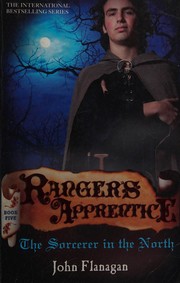
The Sorcerer in the North
2,246-word summary 10 min read 329 pages in the book
- First published
- 2006
- Publisher
- Random House Australia
- Pages
- 329
- ISBN
- 9781741661286
- Series
- Ranger's Apprentice (#5)
Reading options
What's inside (9 sections)
I came to the fifth Ranger's Apprentice book expecting another war story and got something quieter and stranger. The first four books had been about a small boy learning a hidden trade while a kingdom geared up for a fight. This one gives Will a fief, a dog, and a problem that no arrow can solve. It was first published in Australia in 2006 by Random House, and American readers know the very same book under the title The Sorcerer of the North. That split title tells you something about the story itself. It travels well, but it shifts a little depending on where you meet it.
A fief, a baron, and a dog on the road
Will is no longer an apprentice. He has his own patch of ground, the fief of Seacliff, and the awkward dignity of a Ranger who is still young enough to be mistaken for a errand boy. The book opens with him doing something small and decent: he finds a dog at the side of the road with a spear wound in it, lifts it onto his horse Tug, and takes it home to nurse. He calls the dog Shadow. That opening is easy to skim past, and then it quietly becomes the hinge of the whole plot, because the dog's owner comes looking for him.
Before that, Will reports to the baron at Castle Seacliff and gets a lesson in how little a Rangers' fief actually contains. A band of Skandians shows up and starts helping themselves to what the place has. Will is outnumbered, so he makes a deal. He gives them food and drink, and they agree to leave without burning anything. It is an ingenious little piece of thinking on his feet, and it also sets him up badly. When the man who owns the wounded dog arrives and traces it to Will, the Skandians take him as a slave before they sail off. The author does not dwell on this. He just moves Will from one kind of trouble to another, which is very much the rhythm of these books.
The slave episode is short, but it does real work. Will has spent four books being the smallest person in the room, and Flanagan keeps him in that position even after promoting him. He is a Ranger now on paper. In practice he is still the boy who has to talk his way out of a fix.
The jongleur of Macindaw
The mission that follows sounds like a ghost story. Word has reached the king that a sorcerer is haunting Grimsdell Wood and terrifying the people of Castle Macindaw. Will is sent to find out who it is and stop it. His chosen approach is not to march in with a badge. He disguises himself as a jongleur, a travelling entertainer who performs for coins, because people will talk freely to a man with a lute and a jest, while they clam up the moment a Ranger starts asking questions. I liked this idea more than I expected to. It plays to Will's real skills, which are patience and observation, and it lets the book turn a serious investigation into a series of awkward dinner performances.
At Macindaw the situation is worse than the rumour. Lord Syron has been poisoned and lies ill in the keep. His son Orman has stepped into his place, and Orman's cousin Keren is circling the castle with ambitions of his own. Will does not know any of this yet. He only knows that the hall is tense and that a man who claims to be lord is not the man everyone expects to be lord.
Will performs for Orman after dinner and gets a stinging review. Orman says he is a poor jongleur because he cannot play classical music. The scene is funny on the surface, but it plants a doubt that matters later, since Orman's obsession with proper form and proper music is a small sign of a mind that cares more about appearances than truth. Keren arrives late to the same meal and seems pleasant, almost easygoing. That first impression is one of the book's better pieces of misdirection, because almost everything decent in this castle turns out to be a surface.
The Night Warrior in Grimsdell Wood
Alyss arrives next, disguised as a noblewoman and travelling under her own cover story. She is a Courier in the Diplomatic Service and one of Will's closest friends from the earlier books, and her presence changes the pace of the novel. Where Will is cautious and physical, Alyss is quick and verbal. She notices what people say and what they leave out.
Will takes her to Grimsdell Wood in daylight, and that is where the supposed magic starts to come apart. He has already seen the Night Warrior, one of the ghosts the locals fear, and fled from it on Tug. In daylight with Alyss, the place looks less like a haunted wood and more like a workshop. She works out how the magician produced the apparition, which means the terror in Macindaw has been manufactured by somebody with an eye for theatre. The book never turns this into a long explanation. It lets the reader assemble the trick alongside Alyss, which is far more satisfying than a lecture would have been.
Alyss sends a report to Halt and Crowley by pigeon. Halt, the stern mentor who raised Will, reads it and does something I found genuinely warm: he sends Horace. Horace is a knight of the king's guard, a friend of both Will and Alyss, and the boy who used to be bullied at Battleschool. Bringing him in ties the new mission back to the old books without leaning on nostalgia. He is not there to rescue Will. He is there because Will asked for help and Halt decided the request was worth honouring.
The poison plot tightens while this is happening. Orman is poisoned too and is dying, and the only person anyone can think of who might help is the sorcerer in the wood, who is rumoured to have been a healer once. Will runs for Grimsdell, leaving Alyss behind in the castle. It is a mistake he pays for, and the book is honest about it.
Malcolm's house and the giant
Shadow, the dog from the first page, picks up a trail and leads Will to a house in the trees. This is where Malcolm lives, the man the countryside calls a sorcerer. The reveal is deliberately staged. Will and his companions first see a giant moving around the place and several deformed people who turn out to be Malcolm's helpers and patients, people he took in when nobody else would. The scene is strange on purpose, and it is also the book's clearest piece of decency. Malcolm's great crime appears to be that he tried to heal people and liked company that respectable folk found disturbing.
Malcolm is not the villain. He is the person who can treat the poison, and his knowledge of it is exactly what made the rumours start. The real hand behind the sickness is Keren, the affable cousin from the dinner hall, who has been using fear of the Night Warrior to clear a path to lordship. He has poisoned his own father and his own cousin, and he has let the countryside blame a healer for both. Will goes back for Alyss, finds she has been taken by Keren, and barely escapes with his life. That failure is important. For most of this book Will is one step behind, and the people who save the day are the ones who paid attention.
Alyss being taken hostage raises the stakes in a way the earlier books did not need. Will's feelings for her have been hinted at across the series, and here they are put under pressure without the story stopping for a long romantic detour. The relationship works because it is expressed in action. He goes back for her. She, in turn, has already done the clever work that identified the trick. Neither of them is decoration.
How the knot comes undone
The last movement of the book pulls the threads together at Macindaw, and it does so with a tidy satisfaction. Everything that looked like magic turns out to have a person behind it. Alyss's report explains the trick, Horace provides the muscle and the steady nerve, Malcolm knows what the poison is and how to treat it, and Shadow's nose supplies the path between the wood and the castle. None of these pieces is new at the moment of the reveal. They have been placed in front of the reader all along, which makes the ending feel earned rather than sprung on us at the last page.
Keren's scheme depends on people being too frightened to check anything. Once Will and Malcolm can name the poison and account for the Night Warrior, that fear drains away, and Keren is left with nothing but his own ambition. I found this a satisfying villain's end because it fits the book's idea of power. He never had any of his own. He borrowed it from a story the countryside was willing to believe, and the story collapses as soon as someone asks a plain question. The fighting that follows is brief. The author understands that the real contest here was over what people thought was true.
What happens afterward is gentle by the standards of this series. Will gets his friend back and returns to the fief he was given at the start, a little less certain of himself and a little more willing to ask for help. Malcolm stays in his wood with his patients and his odd household, which the book treats as a victory of a quiet kind. There is no parade, no promotion, no grand reward for anyone. That restraint is the reason this book stands apart from the ones around it. It is a fantasy adventure that ends by restoring a healer's good name, and it trusts the reader to find that exciting enough.
What works and what drags
The strongest thing here is the change of setting. Castles and battlefields were the backdrop of the first four books. A poisoned household, a wood full of rumour, and a healer's odd household give Flanagan a smaller canvas, and he fills it with people who have motives you can follow. Keren's greed is plain from early on, yet the book still manages to make his reveal land, because the clue is in how smoothly he lies rather than in a hidden identity.
The jongleur disguise is the best idea in the book. It lets Will use soft skills instead of a bow, and it gives the author permission to write scenes of social awkwardness that the series had not attempted before. I also like that the dog is not a mascot. Shadow finds a trail at the moment it matters, and then the story moves on.
The drag comes in the middle, where the same facts about poison and succession get restated a few times to keep the reader oriented. Some of Will's internal fretting repeats too. He is a capable Ranger who keeps reminding himself that he is a beginner, and after a while the joke stops being fresh. The Skandian opening, meanwhile, feels like a chapter written for another book. It sets up the slave episode and then vanishes, and I finished that part wishing the author had either given it more weight or cut it.
There is also a limit to how far the disguise plot can stretch. Once you know the Night Warrior is a trick, the mystery loses its bite, and the last stretch is more about who is holding whom hostage than about uncovering anything. That is fine for a children's adventure, but it does make the title feel a little oversold. There is one sorcerer in this book, and he is a healer with bad neighbours.
Where this book sits in the series
This is book five of Ranger's Apprentice, and it reads as a pause between large campaigns. Will has a fief, Horace has a commission, and Alyss has a job that takes her into danger. Halt remains the fixed point, the man whose judgement everyone trusts. The earlier books built a world of border raids and wars. This one asks what a Ranger does when the threat is a rumour and a poisoned cup, and the answer is that he listens, watches, and asks a friend to come along.
That answer is why I would hand this to a reader who liked the earlier books but wanted a change of pace. It is still a fantasy adventure with a medieval feel, still full of horses, castles, and dry jokes, and still very much about a boy who wins by paying attention. The difference is that the enemy here is a man you could meet at dinner, smiling as he pours the wine.
For anyone coming fresh, I would start with The Ruins of Gorlan and read in order. The bond between Will, Alyss, and Horace has been built over four previous books, and this story assumes you know why those names matter. Read alone, it is a decent puzzle. Read in sequence, it feels like the series learning it can be quiet and still keep you turning pages.
FAQ
Is this the same book as The Sorcerer of the North?
Yes. Random House published it in Australia in 2006 as The Sorcerer in the North, while the American edition from Philomel is titled The Sorcerer of the North.
Do I need to read the earlier Ranger's Apprentice books first?
Yes. Will, Alyss, Horace and Halt arrive with relationships built over the first four books, and this story assumes you already know them.
Is the sorcerer a genuinely magical villain?
No. The feared sorcerer is Malcolm, a healer who took in deformed patients, and the Night Warrior is a manufactured trick used by Keren to frighten Macindaw.
Similar books
More from Ranger's Apprentice first, then related titles.
The Ruins of Gorlan
Small orphan Will becomes Ranger Halt's apprentice and helps hunt the Kalkara at Gorlan.
2,109-word summary · 9 min read
The Burning Bridge
Will and Horace burn Morgarath's secret bridge, meet Evanlyn, and face capture and a duel that decides a war.
2,412-word summary · 11 min read
The Icebound Land
Captured and enslaved in Skandia, Will fights a drug that erases him while Halt and Horace cut a bloody road through Gallica to bring him home.
2,088-word summary · 9 min read
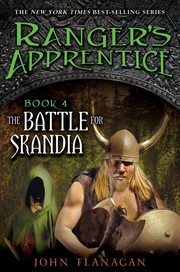
The Battle for Skandia
Will and Evanlyn are still hiding in the Skandian mountains when Halt and Horace arrive with word of a Temujai invasion that could roll on to Araluen next.
2,248-word summary · 10 min read

The Blood of Olympus
Seven demigods stop Gaia waking while Reyna brings Athena statue.
2,196-word summary · 10 min read
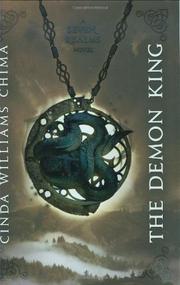
The Demon King
A thief steals an amulet once owned by a legendary sorcerer, while a princess flees a forced marriage in the first volume of Cinda Williams Chima's high…
2,371-word summary · 11 min read
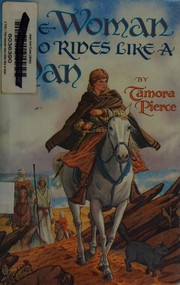
The Woman Who Rides Like a Man
Newly knighted, Alanna heads south into Tortall's desert, where a broken sword and a dead shaman leave her responsible for a rebel tribe and three Gifted…
2,894-word summary · 13 min read
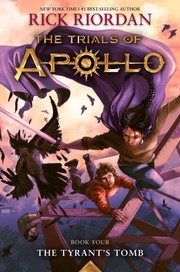
The Tyrant's Tomb
Apollo, still trapped in a mortal teenager's body, carries Jason Grace's coffin to Camp Jupiter and must learn what a hero is before the emperors destroy it.
2,292-word summary · 10 min read
The Sorceress
Flamel takes the twins to London to find Gilgamesh, while Perenelle fights for her life on Alcatraz and an older threat wakes.
2,684-word summary · 12 min read

The Iron Knight
Winter prince Ash journeys to the End of the World to earn a soul and a mortal body so he can stand beside Meghan, the Iron Queen.
2,564-word summary · 11 min read
The Heart of Betrayal
Held captive in Venda, Lia must survive the Komizar's scrutiny while Rafe hides his identity and Kaden, the assassin who spared her, risks everything to keep…
2,702-word summary · 12 min read
The Girl of Fire and Thorns
Rae Carson's debut follows Elisa, an insecure princess born with a godstone in her navel, who is married to a foreign king and must grow into the leader a…
2,331-word summary · 10 min read
The Book of Three
A restless assistant pig-keeper in mythical Wales chases his escaped oracle pig and finds himself beside Prince Gwydion in a war against the Lord of Annuvin.
2,019-word summary · 9 min read
Oathbound
Bree Matthews has exiled herself from the Legendborn Order to protect the people she loves, but an unbreakable bargain with a shapeshifting demon has bound her…
2,751-word summary · 12 min read

Magic Study
Sentenced to die in Ixia, Yelena returns to the land she was stolen from to learn the magic that made her an outlaw.
2,542-word summary · 11 min read
Keys to the Demon Prison
The fifth and final Fablehaven book sends Kendra and Seth Sorenson across secret preserves to keep the last keys to the demon prison out of rival hands.
2,251-word summary · 10 min read
Dragon Rider
A silver dragon, a sharp-tongued brownie and a lonely orphan boy cross deserts and seas to find the dragons' lost homeland, pursued by a golden killer made by…
3,188-word summary · 14 min read

13 Little Blue Envelopes
A seventeen-year-old follows thirteen letters from her dead aunt across Europe, with no phone, no journal and no spare cash, and learns who she is on her own.
2,515-word summary · 11 min read
Ptolemy's Gate
Nathaniel and a weakened Bartimaeus face a possession plot in Stroud's dark final Bartimaeus novel.
2,328-word summary · 10 min read
Keeper of the Lost Cities
A twelve-year-old telepath leaves her human family for a hidden world of elves, where her powers and manufactured origins make her the target of a dangerous…
2,443-word summary · 11 min read
The Thief
A boastful young thief is pulled from a prison to steal a legendary stone for the king's magus, and the story he tells about himself is not the whole story.
2,514-word summary · 11 min read

Inkdeath
The final Inkworld novel sends Mo into the land of the dead, leaves Meggie choosing between two boys, and ends the Adderhead's immortality with three written…
2,062-word summary · 9 min read

Vow of Thieves
Kazi and Jase return to Tor's Watch to find it occupied, and their marriage is tested by captivity, betrayal, and a war for the town of Hell's Mouth.
2,059-word summary · 9 min read

Lioness Rampant
Alanna searches for the Dominion Jewel with the Shang Dragon, then returns to Tortall to face Duke Roger at Jonathan's coronation.
2,478-word summary · 11 min read

Archenemies
Nova steals for the Anarchists while Adrian hides his Sentinel identity, and a serum that erases prodigy powers puts them both at risk.
2,485-word summary · 11 min read
Dealing with Dragons
A princess who hates embroidery runs away to become the cook and librarian for a dragon, then has to outthink wizards, knights, and a plot against the dragon…
2,563-word summary · 11 min read
The Golem's Eye
Two years after The Amulet of Samarkand, Nathaniel is a rising bureaucrat, Bartimaeus is his unwilling servant again, and something made of clay is tearing…
2,299-word summary · 10 min read

Heist Society
A teenage art thief gets expelled from boarding school, then has two weeks to steal five paintings back from a London museum and clear her father.
2,781-word summary · 12 min read
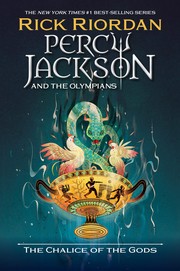
The Chalice of the Gods
Percy needs three recommendation letters from three gods to apply to college, so his first quest is recovering a stolen chalice from the god of old age.
2,106-word summary · 9 min read
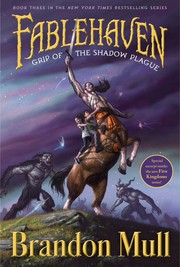
Grip of the Shadow Plague
A plague turns Fablehaven's creatures of light into shadows while Kendra hunts an artifact in Arizona and Seth races to find the cause.
2,131-word summary · 9 min read