
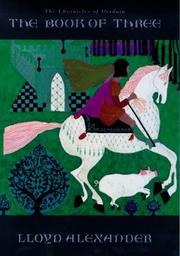
The Book of Three
2,019-word summary 9 min read 217 pages in the book
- First published
- 1964
- Publisher
- Holt, Rinehart and Winston
- Pages
- 217
- ISBN
- 9780805008746
- Series
- The Chronicles of Prydain (#1)
Reading options
What's inside (8 sections)
The assistant pig-keeper
The book opens with Taran wanting a sword. He is a restless youth raised at Caer Dallben by the ancient enchanter Dallben and the farmer and retired soldier Coll. His title is Assistant Pig-Keeper, and his charge is Hen Wen, Prydain's only oracular white pig. He longs to be a great hero like High Prince Gwydion, and the opening argument, in which Coll insists on horseshoes while Taran wants to make a blade, tells you exactly where he is. He is a boy with a grand idea of his own future and no experience of what it costs.
Lloyd Alexander published this in 1964, the first of five volumes in The Chronicles of Prydain. The series drew on the Mabinogion and on the castles, scenery and language of Wales, which Alexander encountered during army intelligence training in the Second World War. He originally planned to call the book The Battle of the Trees. The change of title is telling. The war and the trees are still there, but the book that resulted is about a young man learning what it means to be useful.
The stakes are real from the start. The warlord Horned King serves Arawn Death-Lord of Annuvin, and Hen Wen's prophecies matter because they might reveal how to defeat him. Taran is forbidden to leave the farm. He has never had to obey a rule that mattered, and when Hen Wen panics and escapes into the Forbidden Forest, he goes after her without telling anyone.
That act of disobedience is the novel's engine. Taran strays farther from home than he has ever been, and the consequences arrive quickly. He loses the pig, is attacked by horsemen led by the Horned King himself, escapes and collapses wounded. He is found by Gwydion, crown prince of the ruling House of Don, who is travelling to Caer Dallben to consult Hen Wen. Gwydion treats the wound and takes Taran along on the search. The boy has got exactly what he wanted, which is a place beside a hero, and he discovers that it is nothing like the stories.
I want to say a word about Hen Wen. An oracular white pig is a very strange device, and Alexander never treats it as a joke. The pig's prophecies are the reason the war wants her, and the reason Taran has been raised as a keeper rather than a fighter. The pig is the center of his ordinary life, and his failure to guard her is what sends him into the world. That is a clever inversion of the usual hero's journey. Taran does not leave home because he is called. He leaves because he was not equal to the responsibility he already had.
Dallben and Coll are given very little space, and what little there is matters. Dallben is ancient and distant, and the work of the farm goes on around his authority. Coll is practical and kind, the man who keeps insisting on horseshoes while the boy dreams of swords. Their argument in the first scene is the whole book in miniature, and Alexander never has to point at it.
Gurgi and the road
The companions gather. Gurgi is a hairy, rhyming forest-dweller obsessed with "munchings and crunchings," and his speech is one of the book's most distinctive inventions. He leads Gwydion and Taran to the Horned King's camp, where they learn that the real target is Caer Dathyl, the home castle of the House of Don. Gwydion resolves to warn the court.
Before he can, Arawn's undead Cauldron-Born soldiers attack and capture both Gwydion and Taran. They are taken to Queen Achren at Spiral Castle. Achren is a sorceress who was once Gwydion's teacher and consort, and whom Arawn overthrew to claim the Iron Crown of Annuvin. She offers Gwydion a bargain: help her depose Arawn and rule Prydain together. He refuses, and they are imprisoned separately.
Princess Eilonwy visits Taran's cell. She had been sent as a girl to learn enchantment from Achren, and she agrees to free Gwydion first and Taran second. The escape through the tunnels toward Gwydion's horse Melyngar is one of the best sequences in the book. Taran and Eilonwy steal weapons from a tomb, including the legendary sword Dyrnwyn, and Spiral Castle collapses behind them.
Then comes one of the book's best jokes. Eilonwy has misunderstood which companion Taran meant. The person waiting outside is not Gwydion but Fflewddur Fflam, a king by birth and a wandering bard by choice whose harp strings snap whenever he exaggerates. The three search the ruins, mourn Gwydion as dead and resolve to take up his mission to warn Caer Dathyl. Gurgi rejoins them, and Cauldron-Born pursuit drives them east.
Eilonwy deserves more than she is sometimes given. She arrives in the story as a prisoner of Achren and leaves as the person who can get everyone out of a locked tower. Her misunderstanding about which companion Taran wants to free is funny, but it also shows that she has been taking care of herself for a long time in a place where nobody was taking care of her. She is clever, impatient and unimpressed by Taran's seriousness. The relationship between them is one of the book's quiet pleasures, because it is based on argument rather than admiration.
That sequence does a great deal of character work without commentary. Taran keeps meeting people who do not fit the roles he expected: the ugly princess who is braver than he is, the bard who is more than a fool, the strange creature who talks in rhyme. His education is a series of revisions to his own imagination.
The Fair Folk
The companions end up in the underground kingdom of the Fair Folk, who have rescued Hen Wen. King Eiddileg grudgingly agrees to return the pig, re-equip the party and lend them a dwarf guide named Doli. Against the advice of Fflewddur and Doli, Taran rescues an injured fledgling gwythaint, one of Arawn's enslaved great birds of prey. It recovers and escapes, and Hen Wen flees just before the Horned King's army spots them.
Fflewddur, Doli and Gurgi stay to fight while Taran and Eilonwy race ahead on Melyngar with the Horned King in pursuit. On a hilltop the Horned King shatters Taran's sword with one blow. Taran seizes Dyrnwyn, but he lacks the noble birth to draw it, and white flame burns his arm and throws him down. As he loses consciousness, he glimpses a man in the trees and hears an unintelligible word. The Horned King's mask melts and he bursts into flame.
That is the book's most memorable image, and Alexander gives it very little explanation. Taran wakes in Caer Dathyl and learns the man was Gwydion, who survived Achren's torture and gained the ability to understand the hearts of all creatures. That gift was enough to speak to the gwythaint and then to Hen Wen, who revealed the Horned King's secret name. The name destroyed him. It is a very fairy-tale solution, and what makes it satisfying is that it comes from relationship rather than force. Gwydion wins because he can listen.
Recognizing Gwydion's nobility, Eilonwy gives him Dyrnwyn. The companions receive treasures from the House of Don: a ring for Eilonwy, a never-empty wallet of food for Gurgi, an unbreakable golden harp string for Fflewddur and the power of invisibility for Doli. These gifts are the book at its most traditional, and they work because the characters have earned them by becoming themselves.
Going home
Taran asks only to return to Caer Dallben. He has realized that the place he wanted to escape is where he truly wants to be. Gwydion accompanies him back with Eilonwy, Hen Wen and Gurgi, who settle there too, and Dallben says Eilonwy may stay. It is a gentle ending for a book with a war in it. The children's novel does not end with Taran made a knight. It ends with him choosing home.
That choice is the point of the book, and it is easy to miss if you are looking for the sword. Taran begins by wanting the symbols of adulthood. He ends by understanding the value of the place he already had. Alexander is too good a writer to make this a moralizing lesson. Taran does not stop wanting adventure. He simply recognizes where he belongs.
The Series of Prydain grew darker and more complex in later volumes, and this first book is the lightest of them. That is not a criticism. It is an introduction written for readers who will grow up alongside Taran. The danger is real, but the book believes in a world where a pig's prophecy and a bard's harp can matter as much as an army.
The title itself is one of the book's quiet jokes. Taran keeps meeting people who complete a set he did not know he was assembling, and the book never explains which three the title refers to. It might be the companions, the treasures or something only Dallben understands. That refusal to explain is characteristic. Alexander trusts the reader to notice that the world is larger than Taran's account of it, which is the same thing the boy has to learn.
The book has stayed in print through Dell, Yearling and Square Fish editions, which is why its page count and cover art vary so much between copies. Evaline Ness drew the first edition, and her designs helped establish the look of Prydain for a generation of readers.
The book's afterlife
In a 2012 survey by School Library Journal, The Book of Three was ranked eighteenth among all-time best children's novels. It and The Black Cauldron were loosely adapted into Disney's 1985 animated film The Black Cauldron, which Alexander said bore no resemblance to the books. Anyone who knows both versions will understand why. The film takes the names and the broad outlines but loses the texture of a world built from Welsh myth and a boy's own uncertainty.
I should say something about the audiobook and edition history for cataloguing purposes. The first American edition came from Holt, Rinehart and Winston in March 1964 with cover art by Evaline Ness, and it ran to 217 pages. Later paperbacks from Dell, Yearling and Square Fish kept the story in print. Some catalog records give 1969 as the first publication date, but 1964 is the correct year.
The Welsh material is worth a paragraph, because it explains the book's texture. Alexander encountered Wales while doing army intelligence work during the war, and he drew on the Mabinogion for the names, the creatures and the sense that the old stories are still alive beneath the surface of the world. Caer Dallben and Spiral Castle are not generic fantasy locations. They feel like places that have been standing for a long time, which is why Taran's restlessness is so touching. He wants to make a name for himself in a landscape that already has more names than he can count.
What I finished with
The thing I remember most is Gurgi. A creature defined by a rhyme about food could have been merely cute, and in weaker hands he would have been. Alexander gives him real courage and a real place in the group. He stays behind to fight so that Taran and Eilonwy can escape, and he ends up with a wallet that will never be empty, which is the perfect reward for a character whose whole world is made of hunger.
I also finished with a renewed respect for the book's structure. It looks like a simple quest, and it is, but the quest keeps revising what it is for. First Taran is looking for a pig. Then he is trying to warn a castle. Then he is rescuing a friend. By the end he is escorting a collection of new companions home. The heroism is not in the fighting. It is in the way he keeps revising his idea of what matters.
FAQ
Do I need to have read the other Prydain books?
No. This is the first of five volumes and introduces Taran, Gwydion, Eilonwy and the world of Prydain from scratch. It was published in 1964.
Where did Lloyd Alexander get the world of Prydain?
He drew on the Mabinogion and on the castles, landscape and language of Wales, which he encountered during army intelligence training in the Second World War.
Is the book the same as Disney's The Black Cauldron?
No. The 1985 film loosely adapted this book and its sequel, and Alexander said it bore no resemblance to his stories.
Similar books
More from The Chronicles of Prydain first, then related titles.
The Silver Chair
Eustace and Jill retold: four signs, a lost prince, Puddleglum the Marsh-wiggle, giants at Harfang, and the Lady below.
2,940-word summary · 13 min read
The Witches
A boy and his grandmother face the Grand High Witch's plan to turn England's children into mice.
2,738-word summary · 12 min read
The Wonderful Wizard of Oz
Dorothy is carried to Oz by a cyclone and walks the yellow brick road with Scarecrow, Tin Woodman, and Lion.
3,297-word summary · 15 min read
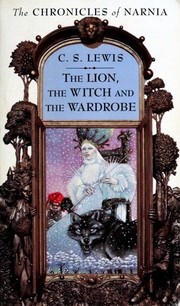
The Lion, the Witch and the Wardrobe
C. S. Lewis's Narnia opener retold: four Pevensies, the White Witch's winter, Aslan's sacrifice, and the crowning at Cair Paravel.
2,502-word summary · 11 min read
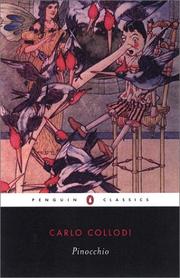
Pinocchio
A wooden puppet with a talent for trouble gets chance after chance to become a real boy. Collodi's 1883 original is stranger, darker and funnier than the…
2,600-word summary · 12 min read
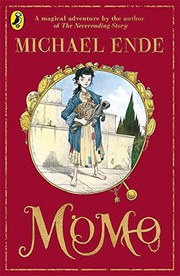
Momo
A girl with a gift for listening takes on grey-clad thieves who persuade a city to save its time, in Michael Ende's 1973 fable about efficiency and attention.
2,275-word summary · 10 min read
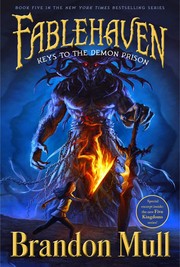
Keys to the Demon Prison
The fifth and final Fablehaven book sends Kendra and Seth Sorenson across secret preserves to keep the last keys to the demon prison out of rival hands.
2,251-word summary · 10 min read
Dragon Rider
A silver dragon, a sharp-tongued brownie and a lonely orphan boy cross deserts and seas to find the dragons' lost homeland, pursued by a golden killer made by…
3,188-word summary · 14 min read
The Mouse and the Motorcycle
A bored mouse named Ralph finds a boy's toy motorcycle in a hotel room and starts a secret life of night rides, mishaps, and unlikely friendship.
2,254-word summary · 10 min read
The Field Guide
Three siblings move into a creepy Maine estate, anger a brownie, and find a forbidden guide to the fairy world in the first Spiderwick book.
2,033-word summary · 9 min read
Grip of the Shadow Plague
A plague turns Fablehaven's creatures of light into shadows while Kendra hunts an artifact in Arizona and Seth races to find the cause.
2,131-word summary · 9 min read
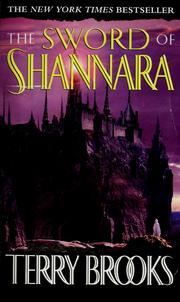
The Sword of Shannara
A young half-Elf and a company of companions set out to recover a magic sword before the Warlock Lord destroys the Four Lands.
2,474-word summary · 11 min read
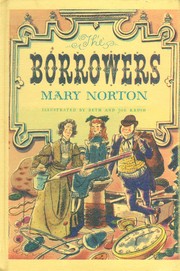
The Borrowers
A family of tiny people live under the floorboards of an English house, borrowing what they need until a lonely boy and a suspicious housekeeper change…
2,164-word summary · 10 min read
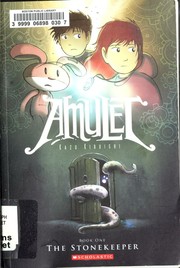
The Stonekeeper
After their father's death, Emily and Navin chase a monster into a hidden world to save their mother, and Emily's great-grandfather's amulet offers power at a…
2,753-word summary · 12 min read
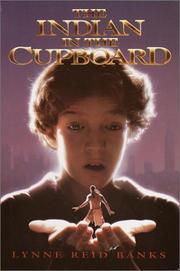
The Indian in the Cupboard
Omri learns a key turns plastic Little Bear into a live Iroquois man.
2,228-word summary · 10 min read
The Last Unicorn
A unicorn learns she may be the last of her kind and sets out to find the others, with a failed magician and a tired woman at her side.
2,245-word summary · 10 min read
Charlie and the Great Glass Elevator
Charlie and Wonka overshoot Earth in the glass elevator, meet alien Knids, then risk age pills and Minusland.
2,514-word summary · 11 min read
Redwall
A novice mouse hunts for Martin the Warrior's lost sword while Cluny the Scourge besieges Redwall Abbey.
2,727-word summary · 12 min read
Magyk
A baby found in snow, a lost seventh son, and a run for the Marram Marshes as Marcia Overstrand shields two children from DomDaniel.
2,604-word summary · 12 min read
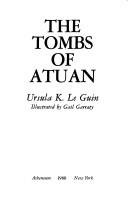
The Tombs of Atuan
Priestess Arha guards dark Tombs until wizard Ged comes to steal back ring.
2,043-word summary · 9 min read
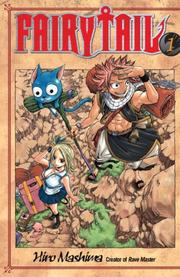
Fairy Tail, Vol. 1
Lucy joins rowdy Fairy Tail guild with fire boy Natsu and cat Happy.
2,049-word summary · 9 min read
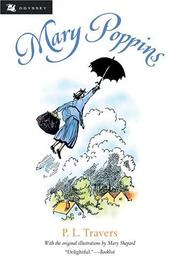
Mary Poppins
A stern, vain nanny blows in on the East Wind to 17 Cherry Tree Lane and leads Jane and Michael through a year of small, strange magic.
2,729-word summary · 12 min read
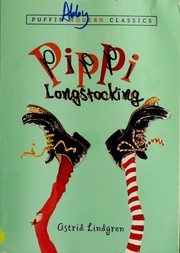
Pippi Longstocking
A super-strong nine-year-old lives alone in Villa Villekulla, upending school, circus and town rules with neighbors Tommy and Annika.
3,115-word summary · 14 min read
The Neverending Story
Bastian steals a book about Fantastica dying and learns he must name and wish to save it.
1,941-word summary · 9 min read
The Phantom Tollbooth
A bored boy drives a toy car through a magic tollbooth into the Kingdom of Wisdom and learns to care about words, numbers and time.
2,765-word summary · 12 min read
The Last Battle
Lewis ends Narnia: Shift ape false Aslan, King Tirian last stand, Jill and Eustace at Stable Hill, and a morning beyond the world.
3,037-word summary · 13 min read
The Horse and His Boy
Shasta and Bree flee Calormen to Narnia with Aravis and Hwin.
2,594-word summary · 12 min read
Peter Pan
Wendy, John and Michael fly to Neverland with Peter, face Hook, and learn what growing up costs.
2,502-word summary · 11 min read
Howl's Moving Castle
Cursed old by the Witch of the Waste, hatmaker Sophie Hatter talks her way into wizard Howl's moving castle and bargains with fire demon Calcifer to break the…
2,363-word summary · 11 min read
The Voyage of the Dawn Treader
Lewis sends Lucy, Edmund and Eustace aboard Caspian's Dawn Treader to find seven lost lords, past dragon gold, dark dreams and the world's edge.
2,330-word summary · 10 min read