
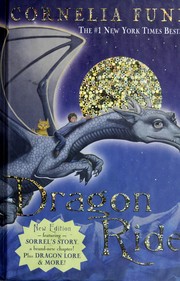
Reading options
What's inside (9 sections)
I came to this book through the Inkworld novels, which I loved, and I expected something of the same shape: a large fantasy with a child at the middle of it and a dangerous adult world pressing in from all sides. What I found was simpler in outline but every bit as absorbing in its particulars. Dragon Rider first appeared in Germany in 1997 under its original title, Drachenreiter, and the English version, translated by Anthea Bell, was published in 2004 by The Chicken House in Britain and by Scholastic in the United States. It is a children's book, aimed at readers around eight and older, but the machinery under the story is solid enough that an adult can enjoy watching it turn. By the end I had grown fond of a silver dragon, a bad tempered brownie, and a homunculus who starts as a spy and ends as someone you would trust with your bag.
A valley under threat, and a quest nobody remembers the way to
The story opens in a hidden valley in the Scottish Highlands, where the last silver dragons have lived in secret for about a hundred and fifty years. They are not grand, threatening creatures here. They are a dwindling family hiding from something, and they have grown small and wary in the hiding. A rat named Rosa comes with news that humans are pushing a road toward the valley, which means the dragons' refuge will not last. The eldest dragon, Slatebeard, says it is time to go back to the Rim of Heaven, the ancestral home somewhere in the world's highest mountains. The trouble is that no living dragon remembers how to get there. The knowledge has been lost along with their confidence.
This is where Firedrake comes in. He is young, still hopeful, and willing to go looking. His friend Sorrel, a spotted forest brownie with a sharp tongue and a practical streak, agrees to go with him. Brownies in this book are small household creatures with a talent for mischief and a substance in their spit that does surprising things later on. Sorrel is suspicious of almost everything, especially humans, which makes her slow to trust Ben when they meet him. Rosa tells the pair that her cousin Gilbert lives in a human city and may be able to help with a map. Before they set off there is a quiet piece of world building that matters a great deal later: silver dragons draw their strength from moonlight, and without it they cannot fly. Everything that follows is shaped by that one rule.
I liked this opening a lot. Funke does not spend pages explaining the dragons' history. She gives you a valley, a road, an old dragon who has forgotten the way home, and a young one who decides to find it. The stakes are clear without being shouted. There is also something touching about the idea of a creature that has forgotten its own homeland. The quest is not about glory. It is about a family that has been afraid for so long that it has forgotten where it came from.
Ben, Sorrel, and a rat named Gilbert
In the city, Firedrake and Sorrel find Gilbert, a rat who knows the ways of human places. He gives them a map that points toward the Himalayas and warns them that strange ravens have been asking about the Rim of Heaven for years. Ravens turn out to be important, and the warning is the first sign that someone else is hunting for the dragons' refuge. Gilbert is one of those small characters who does exactly what a good guide should do: he hands over the useful thing, says the worrying thing, and then gets out of the way.
It is in this city that they meet Ben, an orphan boy who has been living on his own and who is lonely enough that a dragon landing nearby feels like an invitation rather than a fright. Firedrake invites him along, and Ben joins the quest. I want to be careful here, because the book gives him very little in the way of a grand introduction. He is simply a boy who is good at paying attention and better than he knows at being kind. That kindness is what wins over the creature who travels with him next, and it is also what makes the legend at the centre of the story land without feeling forced.
Ben's place in the group grows slowly. At first he is the human who needs explaining to, the one who cannot fly and has to be carried. Sorrel watches him closely and does not warm to him quickly. But he listens, and he asks questions on behalf of other people rather than himself, and over the course of the book that habit keeps being rewarded. Funke is interested in a particular kind of courage, the kind that belongs to someone who has no power of his own and keeps stepping forward anyway. Ben is not fearless. He is just unwilling to leave anyone behind, which turns out to matter more than being brave in the usual way.
A tiny spy in Ben's bag
After leaving the city, the group stops to rest in the mountains and meets a band of dwarves. One of them, Gravelbeard, slips away and tells a golden dragon that he has seen a silver one. That report sets the main threat in motion, because the golden dragon has been looking for the silver dragons for a very long time. He sends two watchers after them: a raven and a small homunculus named Twigleg, a servant who looks like a tiny red haired human and who is sent to report everything he learns.
A storm forces Firedrake down in Egypt, near an archaeological camp, and this is where the story takes its most unexpected turn. The people at the camp catch Sorrel and put her in a cage, with one of the men insisting she must be some kind of mutant monkey. Professor Greenbloom, a scholar of unusual creatures, knows better and identifies her as a Spotted Forest Brownie. In the same camp Ben finds a second cage holding a thin, red haired homunculus, which Greenbloom describes as an artificial being made by an alchemist rather than born naturally. Ben frees the little creature, who calls himself Twigleg and claims to have escaped a cruel master. Twigleg helps unlock Sorrel's cage, and then rides along on top of Ben's head.
I enjoyed this section because it is funny and uneasy at the same time. The humans at the camp are not villains, exactly. They are scientists who have caught something strange and are trying to name it, and their certainty about what they have found is gently mocked. Greenbloom is different from the others. He is genuinely curious and genuinely careful, and his invitation to the group later comes from a real wish to help rather than from a wish to own a specimen.
Twigleg is the best thing in the book, and his arc is the one I remember most clearly. He is sent to spy. He sends word back to his master at every chance. But Ben keeps treating him decently, and slowly the little homunculus finds that he does not want to be the creature who betrays his friends. The change is not sudden and it is not clean. He lies, then lies again, then does something brave while still being afraid. That messiness is what makes him work. A spy who simply switches sides in one scene would have been much less interesting.
The Golden One and an alchemist's mistake
The enemy here is called Nettlebrand, and his backstory is stranger than anything else in the novel. He was made by an alchemist who wanted dragon horns for his experiments, specifically for the business of trying to make gold. To get them, the alchemist built a dragon killer, a golden creature with scales that almost nothing could damage, and set it hunting the silver dragons. Nettlebrand did the job too well. He killed the alchemist who made him, ate the eleven other homunculi who were built to care for him, and carried on hunting on his own. He can move through water, which is why wells and rivers and the sea never keep him from going where he wants, and he commands ravens, which is why those birds keep turning up. His golden scales are the clue that runs through the whole chase, because the professor has one in his bag and does not fully understand what it is.
Nettlebrand tries to get that scale back by rising through a well in the professor's lodgings. The attempt fails, and Greenbloom hurries after the group to warn them. This is a good example of how the book handles its villain. He is never far away, and he is rarely seen clearly. He arrives through water, through a raven, through a servant who smiles too much. The fear comes from not quite knowing where he will surface next, and the water detail gives the chase a physical logic that a lot of fantasy chases lack.
Greenbloom tells the others about a djinn who can answer any question, and about his colleague Zubeida Ghalib, who studies dragon lore in Pakistan. He sends them on with supplies and with one of the golden scales, keeping the other for himself. I should mention a small weakness here. Some of the coincidences in this stretch are convenient. The professor just happens to be at the camp, just happens to have the right scale, and just happens to know the right people. A less patient reader may find the gears a little visible. For me it was a fair trade, because each piece gets used later rather than being left as decoration.
The djinn's riddle and a long way east
The group finds the djinn at the bottom of a ravine, in an abandoned car. When Ben honks the horn as he has been told, blue smoke pours out and the creature appears, its body covered in eyes that each show a different scene. Ben asks where the Rim of Heaven lies. The djinn asks whether he wants the answer for himself or for his friends, and when Ben says it is for Firedrake, the creature is pleased. Many people have come asking for that location out of greed, he says, and this is the first time someone has asked for another creature's sake. He sends Ben looking into the eyes and tells him to follow the Indus River, with a riddle about a palace on a mountainside, moonlight broken on a stone dragon's head, twenty fingers pointing the way, and silver becoming worth more than gold.
This scene is a hinge in the book. Up to now the quest has been a matter of following a map and asking directions. After the djinn, it becomes a matter of reading signs, and Ben grows into the role of the person who can read them. I also like that the djinn notices Ben's motive. The story keeps returning to the idea that what you want for other people says something about who you are, and it trusts a child reader to understand that without a lecture.
Twigleg slips away to report, but he has grown attached to Ben and does not want his master to eat the boy. He searches the map for a stretch of desert and tells Nettlebrand the group is there, knowing the golden dragon cannot travel through dry land. It is a clever bit of thinking from a small creature who has spent his life being frightened, and it buys them time. Crossing the Arabian Sea, they run into a lunar eclipse. Firedrake's strength drains away with the moon, and they come down hard, only to be met by a sea serpent who has not seen a dragon in a century and a half. She carries them across and tells them what she saw long ago: a great golden dragon attacking silver dragons in the sea. The group recognises the creature from the raven warnings and from the scale in their bag.
A raven tracks them from the sky, and Sorrel brings it down with a stone and a gob of her spit, which has the odd property of sticking to things and weighting them. It is a small, satisfying moment, and it shows how Funke pays off details planted much earlier. Nothing in this book is purely decorative. The brownie spit mattered in the camp, and it matters here, and it will matter again at the end.
Moon-dew, a monastery, and the last dragon
At the mouth of the Indus the group finds the village where Zubeida Ghalib lives. The Greenblooms, including his wife Vita and daughter Guinevere, have arrived ahead of them to deliver the warning about Nettlebrand. Zubeida tells Ben the legend of the original Dragon Rider, a human who once befriended the silver dragons, and she shows him the rider's tomb. The prophecy says that the rider will return to help the dragons defeat the Golden One, and Zubeida believes Ben is that person. This is the sort of chosen child plot that can feel thin, but here it is softened by everything that has come before. Ben has spent the whole book choosing to help, so the legend reads as a recognition of his habits rather than a random honour.
Zubeida also shows Firedrake a flower that gathers moonlight in its dew, and gives him a bottle of it so he can fly when the moon is hidden. That gift quietly undoes the rule that has governed every flight in the story, and it arrives just in time for the final stretch. Twigleg confesses that he was the spy and swears he is done with Nettlebrand. To prove it, he tries to contact his master and learns that the golden dragon is alive, has escaped the desert trap, and is waiting near the village. Gravelbeard, the dwarf who betrayed them early on, tells the others that Nettlebrand died in the desert, which is a lie, and for a while it works.
The party travels up the Indus, with the Greenblooms following in a boat and Nettlebrand somewhere in the water below them. Along the way they meet Lola Graytail, a rat who flies an airplane and happens to be Gilbert's niece. She guides them to a monastery, where the monks treat Firedrake as a sign of good fortune. The lama teaches Ben how to summon a brownie called Burr-Burr-Chan, who once lived at the Rim of Heaven and agrees to lead them there. He warns them that the dragons they are going to find are not what they expect. Generations of hiding have turned Firedrake's kin into earthbound creatures who are afraid of their own shadows. That warning is one of the saddest notes in the book, and it made the ending land harder for me.
Polish, spit, and dragon fire
The Rim of Heaven turns out to be a great valley ringed by mountains, with a lake at its centre. Twigleg can sense that Nettlebrand is hidden in the water. While he and Lola keep the golden dragon occupied, the others slip into the cave where the silver dragons have been waiting. They find twenty two of them turned to stone through long deprivation of moonlight. Only one dragon is still living, a female named Maia, and she agrees to help fight. It is a bleak picture, and Funke does not hurry to brighten it. These are not noble guardians waiting for a hero. They are frightened animals who have paid a terrible price for staying hidden.
Twigleg and Lola manage to catch Gravelbeard as he tries to spy again, which means the traitor is finally in their hands. The group works out the one thing that can hurt Nettlebrand, using the golden scale the professor gave them: brownie spit mixed with dragon fire will melt his golden armour. The plan that follows is wonderfully small and practical. Twigleg swaps the bottle of polish that Gravelbeard uses with a bottle of brownie spit, then lets the dwarf go. Gravelbeard, eager to save his own skin, polishes Nettlebrand's scales as he is told and leads him straight to the dragons' cave. Firedrake and Maia corner him and breathe fire over the treated scales, and the armour melts away. What is left of the great dragon killer is the toad that the alchemist originally used to make him. Gravelbeard then offers to help bring the petrified dragons back in exchange for his safety, which is a bargainer's ending rather than a heroic one, and I found it believable.
Afterwards the group returns to the monastery. Firedrake, Sorrel, Maia, and Burr-Burr-Chan fly back to the Scottish Highlands to gather the others and bring them home to the Rim of Heaven. Ben goes to live with the Greenblooms, and Twigleg goes with him. Two months later, word reaches them of a flock of giant birds seen over the Highlands. Ben and Guinevere know it is their friends, and they settle into the ordinary business of waiting for the school holidays so they can go and meet them. It is a gentle close, more interested in showing two children with somewhere to belong than in delivering a grand last statement.
I do not think this is a flawless book. The middle section is episodic, and there are long stretches where the group simply travels to the next encounter. The villains are drawn in broad strokes, and Nettlebrand never becomes much more than a force that rises out of water. Some of the helpers appear exactly when the plot needs them. If you want a fantasy with intricate politics or a slow build of dread, this is not it, and readers who bounced off Funke's longer Inkworld books for their length will find some of the same habits here in a smaller package.
But what stayed with me was not the quest itself. It was the friendship between Ben and Twigleg, a boy with no home and a creature made to be a servant who learns, awkwardly and late, that he can choose who he is loyal to. There is a kindness in this book that never turns into sweetness. The dragons are scared, the brownie complains, the dwarf looks after himself, and Ben keeps choosing to be useful anyway. The English edition runs to more than five hundred pages in hardcover, and it is longer than it needs to be in places, yet I never regretted the time. It is a story about a home that has been lost and found again, told with enough warmth that even the grumpy characters feel like company. I would hand it to a young reader without hesitation, and I would happily read it again with an adult who enjoys seeing an old fashioned quest built carefully, one small act of trust at a time.
FAQ
Is Dragon Rider part of a series?
It is a standalone story with a complete ending. Funke did write a follow-up, Dragon Rider: The Griffin's Feather, but you do not need it to enjoy this book.
What year was Dragon Rider first published, and who translated it?
The German original, Drachenreiter, appeared in 1997. The English translation by Anthea Bell was published in 2004 by The Chicken House in Britain and Scholastic in the United States.
Is Dragon Rider suitable for young readers?
It is a children's book aimed at readers around eight and older, though the long journey and the threat from Nettlebrand may test the youngest readers. Adults can enjoy it too.
Similar books
Grip of the Shadow Plague
A plague turns Fablehaven's creatures of light into shadows while Kendra hunts an artifact in Arizona and Seth races to find the cause.
2,131-word summary · 9 min read
Keys to the Demon Prison
The fifth and final Fablehaven book sends Kendra and Seth Sorenson across secret preserves to keep the last keys to the demon prison out of rival hands.
2,251-word summary · 10 min read
Secrets of the Dragon Sanctuary
Kendra is replaced by a plant copy and held by the Society, while Seth steals a unicorn horn so the family can enter a dragon sanctuary.
2,590-word summary · 12 min read
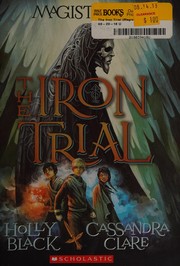
The Iron Trial
Call Hunt tries to fail the entrance tests for the Magisterium, only to be chosen and drawn into a secret about the war that killed his mother.
2,248-word summary · 10 min read
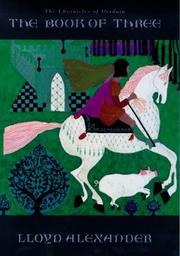
The Book of Three
A restless assistant pig-keeper in mythical Wales chases his escaped oracle pig and finds himself beside Prince Gwydion in a war against the Lord of Annuvin.
2,019-word summary · 9 min read
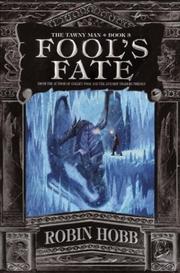
Fool's Fate
Prince Dutiful must kill a dragon to secure his betrothal, and FitzChivalry Farseer is caught between the Fool and Chade over Icefyre's fate.
2,247-word summary · 10 min read
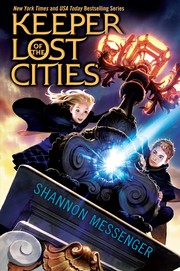
Keeper of the Lost Cities
A twelve-year-old telepath leaves her human family for a hidden world of elves, where her powers and manufactured origins make her the target of a dangerous…
2,443-word summary · 11 min read

The Field Guide
Three siblings move into a creepy Maine estate, anger a brownie, and find a forbidden guide to the fairy world in the first Spiderwick book.
2,033-word summary · 9 min read
The Time Paradox
When his mother falls ill with a fairy disease, Artemis Fowl travels back in time to find the extinct lemur that can cure her and confronts his younger self.
2,601-word summary · 12 min read
The Stonekeeper
After their father's death, Emily and Navin chase a monster into a hidden world to save their mother, and Emily's great-grandfather's amulet offers power at a…
2,753-word summary · 12 min read
His Majesty's Dragon
When Captain Will Laurence's crew captures a French frigate carrying a dragon egg, the hatchling chooses him, and he trades the Navy for Britain's Aerial Corps.
2,405-word summary · 11 min read
When the Moon Hatched
An assassin who hears air takes a job that throws her to dragons and a hunter.
2,083-word summary · 9 min read
The Indian in the Cupboard
Omri learns a key turns plastic Little Bear into a live Iroquois man.
2,228-word summary · 10 min read
The Farthest Shore
Archmage Ged and Prince Arren sail to the far west to stop Cob, whose bid for endless life drains magic across Earthsea in Le Guin's sad 1972 third volume.
2,800-word summary · 12 min read
Magyk
A baby found in snow, a lost seventh son, and a run for the Marram Marshes as Marcia Overstrand shields two children from DomDaniel.
2,604-word summary · 12 min read
Dragons of Autumn Twilight
Old friends reunite at the Inn of the Last Home, guard a glowing Blue Crystal Staff, face black dragon Khisanth, and free slaves at Pax Tharkas in this 1984…
2,803-word summary · 12 min read
The School for Good and Evil
Best friends Sophie and Agatha are taken to fairy tale school and sorted to wrong sides.
2,042-word summary · 9 min read
The Eyes of the Dragon
In the kingdom of Delain, a jailed prince and his younger brother face a magician whose long plot for the throne turns on a napkin clue.
2,018-word summary · 9 min read
Rise of the Evening Star
Kendra and Seth return to Fablehaven as the Society of the Evening Star closes in, with a traitor inside the house and a demon prison key at stake.
2,874-word summary · 13 min read
Fairy Tail, Vol. 1
Lucy joins rowdy Fairy Tail guild with fire boy Natsu and cat Happy.
2,049-word summary · 9 min read
Fablehaven
Kendra and Seth spend the summer with their grandfather and learn his woods hide Fablehaven, a preserve for fairies, satyrs and darker things.
2,949-word summary · 13 min read
A Wizard of Earthsea
A proud goatherd becomes the wizard Ged, looses a shadow at Roke, and must hunt it across Earthsea to name it. Le Guin's lean 1968 series opener.
2,972-word summary · 13 min read
Eldest
Eragon trains with Oromis in Ellesmera while Roran defends Carvahall and Nasuada leads the Varden toward war.
2,652-word summary · 12 min read
The Mark of Athena
Seven demigods sail for Rome where Annabeth must follow the Mark to the Athena Parthenos alone.
2,031-word summary · 9 min read
Eragon
Paolini's Eragon retold: a farm boy, a blue stone, Saphira the dragon, and the road to the Varden.
1,996-word summary · 9 min read

Inkdeath
The final Inkworld novel sends Mo into the land of the dead, leaves Meggie choosing between two boys, and ends the Adderhead's immortality with three written…
2,062-word summary · 9 min read
Inkspell
Meggie and Farid read themselves into the Inkworld, where Mo is wanted as the Bluejay and words can wound.
2,406-word summary · 11 min read
Inkheart
Bookbinder Mo reads characters alive and daughter Meggie is pulled into Capricorn's hunt for Inkheart.
2,910-word summary · 13 min read
The Sorcerer in the North
A young Ranger posted to a quiet fief goes undercover as a jongleur to investigate a supposed sorcerer haunting a wood and a poisoned castle.
2,246-word summary · 10 min read
The Magician's Land
Exiled from Fillory, Quentin takes a teaching job at Brakebills, joins a crew of magical thieves, and must help rebuild a dying world to finish the trilogy.
2,204-word summary · 10 min read