
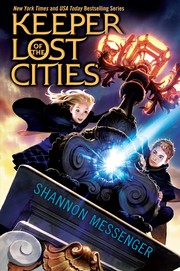
Keeper of the Lost Cities
2,443-word summary 11 min read 496 pages in the book
- First published
- 2012
- Publisher
- Simon & Schuster
- Pages
- 496
- ISBN
- 9781442445932
- Series
- Keeper of the Lost Cities (#1)
Reading options
What's inside (9 sections)
I picked this up with a suspicion I would put it down halfway. The chosen-child fantasy was already a factory by 2012, and a twelve-year-old heroine with a secret identity and a hidden world sounded like a checklist assembled from better books. What Shannon Messenger published on 2 October 2012, the first volume of a series that would grow to nine novels and two novellas, turned out to be less cynical than that. The cover art is by Jason Chan, and the hardcover from Simon & Schuster's Aladdin imprint runs just under five hundred pages. That is a lot of room for a first book, and Messenger uses most of it. The result is not a masterpiece of the form, but it has one idea handled so well that the rest can be forgiven a great deal.
A girl in a noisy room
The opening takes place at the Natural History Museum in Balboa Park, San Diego. Sophie Foster is twelve years old and a senior in high school, having skipped enough grades that she is shorter than nearly everyone in her class and has no idea how to talk to them. Her teacher, Mr. Sweeney, pulls the earbuds out of her ears in front of everyone and asks her to explain how a Lambeosaurus differs from the other dinosaurs on display. She answers, because her photographic memory recorded the placard the moment they walked in. The class resents her for it. A boy named Garwin Chang, still sour that Yale offered her a scholarship he wanted, calls her Curvebuster and reads aloud the newspaper headline about her choosing San Diego City College instead.
The newspaper story is a small masterpiece of parental dread. Sophie's parents have built half their household rules around keeping her out of the public eye, and a reporter has just put her face on the front page under a headline about the Ivy League school she turned down. They call the paper to complain. The editor, it turns out, is annoyed too, because the piece ran in the slot meant for a story about the arsonist who has been setting strange fires around the city. That aside is doing quiet work. Long before anyone says the word elf, the book has established that something unnatural is burning in San Diego, and that the adults in Sophie's life are more afraid of attention than of the danger.
None of that is the real problem. Sophie wears the earbuds because the museum is unbearably loud in a way nobody else can hear. Tourists and kindergartners fill her head with other people's thoughts, scattered and sharp, like a room full of televisions tuned to different stations. The noise began when she was five and hit her head, and she has spent seven years hiding it, dressing in dull colours and standing at the back of every group. Messenger writes the physical side of this better than anything else in the book: the pressed temples, the headaches, the careful architecture of a day built around staying invisible. Before the elves arrive, this is a story about a child managing a condition no one believes in, and it is the most honest section here.
Then Fitz appears. He is a tall, dark-haired boy with teal eyes and an accent she cannot place, something close to British and crisper. He asks whether the picture in yesterday's newspaper is her. When two classes of kindergartners flood the fossil hall and the mental noise spikes, he clutches his forehead too, and Sophie realizes with a jolt that his mind is completely silent to her unless he is speaking. He can shield. His name is Fitz, he says, and her flinch gives her away before she can lie. "I'm one too," he tells her, and then: "We've been looking for you for twelve years." Sophie runs out of the museum, crosses a street without checking, and is nearly hit by a car. It is an excellent first meeting. Messenger lets Fitz be useful and strange before she lets him be handsome, and the romance that follows grows out of that.
The world she was moved into
Fitz does not explain everything at once, which is the correct instinct. Sophie is an elf. Her life in San Diego was a placement arranged by other people, not a family she belonged to by blood. The human parents who raised her are not her parents in the way she thought, and the discovery is not a happy one. Messenger resists the temptation to make Sophie thrilled about the upgrade. She is twelve, she has just been told that her whole life was a decision made by strangers, and she is angry and scared in equal measure. The people she has to leave are the only people she has, and the fact that they were assigned to her does not make the leaving hurt less.
She is brought to the Lost Cities, a hidden place where elves live alongside trolls, ogres, goblins, gnomes and dwarves. She is placed with Grady and Edaline Ruewen, an elvin couple who take her in and eventually adopt her. Their estate, Havenfield, is less a fancy house than a menagerie, full of animals they look after, and it gives Sophie somewhere to use the odd abilities that keep surfacing without anyone watching. Grady and Edaline are warm in a way that aches, because Sophie has no memory of the people who made her and no way to know whether that warmth was part of somebody's design. Her gratitude and her suspicion sit side by side, and the book is at its best when it refuses to tidy them up.
Foxfire and the other children
School is where the book settles into a rhythm. Sophie enrolls at Foxfire, the academy of the noble families, and for the first time she is in classes with children her own age instead of teenagers twice her size. That ought to be a relief. It is not. She is years behind in every subject that matters to elves, and her telepathy is useless on command, which is awkward in a school that teaches telepathy as a discipline. Her mind keeps doing things she cannot control. Objects move when she is frightened. People feel pain when she does not intend them to. Her classmates, many of them born into names that open doors, treat her arrival as an intrusion.
The friends she collects are the reason this series kept going. Fitz Vacker is the golden son of a prominent family, a gifted telepath whose eagerness to help sometimes slips into condescension. Keefe Sencen is the joke teller, an empath who reads emotions through touch and hides behind humour, the son of Gisela, one of the people pulling strings in the shadows. Dex Dizznee is the alchemist and technopath, a boy who can build machinery out of scraps and who is quietly devoted to Sophie. Biana Vacker, Fitz's younger sister, begins as a rival who can turn herself invisible and becomes someone Sophie can trust. Each of them arrives with one clean ability and one private problem, and the dialogue is quick enough that the long stretches of explanation are easier to sit through.
Her abilities keep rearranging the social order. The girl who was a freak in San Diego is now a novelty with powers nobody her age can match, and the nobles who look down on her background still need her help when something breaks. Messenger is good on the small humiliations of being assessed by experts. Sophie is tested, measured and discussed as if she were a promising specimen, and her teachers argue about which of her talents counts as the important one. Telepathy gets the attention, but the inflicting, the languages and the uncanny knack for appearing somewhere else altogether keep turning up at moments when being polite would be safer.
I should be honest about the cost of all this. A great deal of the middle of Keeper is school business: rules about clothes, arguments over seating, who is invited to what, which family name carries which weight. None of it is badly written, and it does build a world, but readers who expect the danger to start on page fifty will spend a hundred pages waiting. The elderly elves who teach at Foxfire often exist to deliver information rather than to be people. I did not mind it. The social detail gives the later scenes somewhere to land. Still, the book could be a hundred pages shorter without losing the story.
The design behind the girl
The part that caught me off guard is that Sophie is not an ordinary elf child who got lost. She was made. The Black Swan, a rebel organization opposed to the Neverseen, created her through a project called Moonlark, editing her genes so she would be unusually powerful. A man named Mr. Forkle, who was her neighbour in the human world, turns out to direct that project. He helped place her with humans and helped bring her back when the moment came. Sophie is a telepath, an inflictor who can cause pain, a polyglot who can speak any language, a teleporter and an enhancer able to magnify the powers of people around her. For a twelve-year-old, that is a startling amount of equipment, and the book seems aware of how absurd it is.
The name Moonlark is doing a lot of quiet work. A lark is a small bird that sings before dawn, and this child was built and planted among humans to be a signal that something new was coming. The book never spells the metaphor out, which is to its credit. What it does spell out, through Forkle's calm explanations, is how little regard the project had for Sophie's own wishes. She was a means to an end, and the people who made her speak about her in the language of experiments and outcomes. Watching her listen to that is the closest the first book comes to real anger.
The search for her origins supplies the mystery. Why was she hidden among humans, and who are her biological parents? The answer the first volume gives is that her parents are deliberately unknown, because discovering their identities could set off catastrophes. It is a real answer and the text commits to it, but it also works as a blank cheque for the sequels. The same is true of the Black Swan. We are told it is the good side, and we learn almost nothing about what it wants beyond keeping Sophie safe and fighting the Neverseen. The moral question at the centre of the book, whether it is right to build a child into a weapon and then raise her in the dark, is raised and then set aside. Messenger returns to it in later books, but the first one is content to ask.
The fires and the people who set them
The Neverseen are introduced through arson. Those strange fires in San Diego, burning white-hot with smoke that smells of burnt sugar, are their work, and the threat follows Sophie into her new life. The group wants what she is or what she knows, and the last stretch of the novel stops treating it as a story told over dinner. Sophie's abilities are pushed past the point she understands, and the girl who could not keep her thoughts quiet in a museum has to act decisively when it counts. There are faces from the human world and faces from Foxfire caught up in it, and the book does a decent job of making the danger feel close to the people she has grown to love.
Here is where I thought the book was weakest. The climax resolves the immediate threat but leaves the larger argument clearly for another volume, and the ending feels like a pause rather than an arrival. That is a structural choice, not an accident, and the emotional logic still works. Sophie's fury at being manufactured and her fear of the people who manufactured her are the same feelings she carried out of the museum. The outside fight matters because the inside one is already running. But anyone hoping that book one would pay off the questions it raised will be disappointed, and the withheld answers are handled with a confidence that can feel like a tease.
What holds up and what does not
Kirkus called the first novel "wholesome shading to bland, but well-stocked with exotic creatures and locales," and that seems close to fair. The world is crowded in a pleasing way, with trolls, ogres, goblins, gnomes, dwarves, noble houses and a school governed by elaborate rules. The young characters are drawn with more care than the typical portal fantasy affords them, and the friendships are the strongest part of the book. Against that, the prose is functional rather than beautiful, and the emotional register stays narrow. Sophie is special, Sophie is confused, Sophie is angry about being special and confused, and those three notes repeat. The early romance with Fitz is sweet and mostly well handled, though it arrives with the certainty of a machine rather than the messiness of two people choosing each other.
The length works against it too. Almost five hundred pages is a lot for a story that ends by arranging the next several stories. Scenes could be cut, rules could be stated once, and the Neverseen could be given a clearer shape before the book asks us to fear them. None of this ruined the reading for me, because the opening chapter had already won me over. But I would not hand this to someone looking for a self-contained fantasy, and I would warn them that the first book is a down payment.
Who it is for
The middle-grade label is accurate. The concerns belong to a twelve-year-old, the romance stays gentle, and the violence is kept at a distance even when the language of life and death appears. Readers who like long series with a dependable group of friends will find a great deal to enjoy, and the creature-filled world gives the illustrators and the imagination plenty to work with. Adults who want tight plotting or sentences worth rereading should look elsewhere, and mystery readers will be frustrated by how much is held back. If you have ever been the youngest person in a room, or the one who hears too much and smiles anyway, the museum chapters will recognize you long before the elves do.
FAQ
Is Keeper of the Lost Cities the first book in the series?
Yes. It is book one of Shannon Messenger's Keeper of the Lost Cities sequence, published in 2012 and followed by Exile in 2013.
What abilities does Sophie have in Keeper of the Lost Cities?
She is a Telepath who reads minds, but the book also reveals her as an inflictor, polyglot, teleporter and enhancer created through Project Moonlark.
Does Keeper of the Lost Cities work as a standalone novel?
Not really. The immediate danger is addressed, but the mystery of her origins and the Neverseen is left for later books, so it reads as an opening move.
Similar books
More from Keeper of the Lost Cities first, then related titles.
The Iron Trial
Call Hunt tries to fail the entrance tests for the Magisterium, only to be chosen and drawn into a secret about the war that killed his mother.
2,248-word summary · 10 min read
Oathbound
Bree Matthews has exiled herself from the Legendborn Order to protect the people she loves, but an unbreakable bargain with a shapeshifting demon has bound her…
2,751-word summary · 12 min read
Keys to the Demon Prison
The fifth and final Fablehaven book sends Kendra and Seth Sorenson across secret preserves to keep the last keys to the demon prison out of rival hands.
2,251-word summary · 10 min read
Dragon Rider
A silver dragon, a sharp-tongued brownie and a lonely orphan boy cross deserts and seas to find the dragons' lost homeland, pursued by a golden killer made by…
3,188-word summary · 14 min read
Grip of the Shadow Plague
A plague turns Fablehaven's creatures of light into shadows while Kendra hunts an artifact in Arizona and Seth races to find the cause.
2,131-word summary · 9 min read
The School for Good and Evil
Best friends Sophie and Agatha are taken to fairy tale school and sorted to wrong sides.
2,042-word summary · 9 min read
Blue Lily, Lily Blue
Blue searches for her missing mother while the Raven Boys wake a sleeper in the caves who is not the king they sought.
2,983-word summary · 13 min read
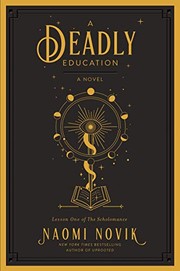
A Deadly Education
El can level mountains with a word, but surviving magic school takes allies, control, and a hard choice about power.
2,959-word summary · 13 min read
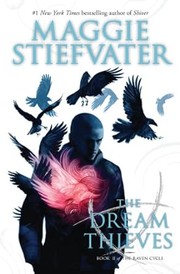
The Dream Thieves
Ronan pulls things from dreams while Gansey hunts a dead king and Blue tries to stay alive by staying apart.
1,922-word summary · 9 min read
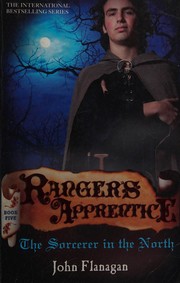
The Sorcerer in the North
A young Ranger posted to a quiet fief goes undercover as a jongleur to investigate a supposed sorcerer haunting a wood and a poisoned castle.
2,246-word summary · 10 min read
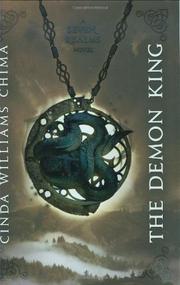
The Demon King
A thief steals an amulet once owned by a legendary sorcerer, while a princess flees a forced marriage in the first volume of Cinda Williams Chima's high…
2,371-word summary · 11 min read
Wings
A homeschooled fifteen-year-old grows a blue flower from her back and learns she is a faerie sent to guard a hidden gate. Pike's debut makes plant lore feel…
2,506-word summary · 11 min read
Wild Magic
A thirteen-year-old orphan in the kingdom of Tortall learns to live with the gift of speaking to animals, and discovers that the creatures she loves are not…
2,056-word summary · 9 min read
The Woman Who Rides Like a Man
Newly knighted, Alanna heads south into Tortall's desert, where a broken sword and a dead shaman leave her responsible for a rebel tribe and three Gifted…
2,894-word summary · 13 min read
The Sorceress
Flamel takes the twins to London to find Gilgamesh, while Perenelle fights for her life on Alcatraz and an older threat wakes.
2,684-word summary · 12 min read
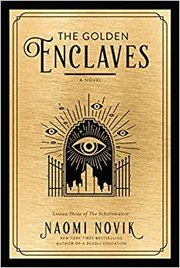
The Golden Enclaves
The Scholomance trilogy closes as El Higgins hunts the monsters beneath every enclave, tries to reach the boy trapped inside one, and learns what her world's…
2,564-word summary · 11 min read
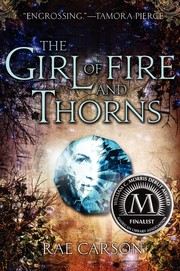
The Girl of Fire and Thorns
Rae Carson's debut follows Elisa, an insecure princess born with a godstone in her navel, who is married to a foreign king and must grow into the leader a…
2,331-word summary · 10 min read
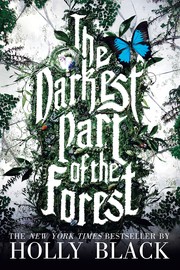
The Darkest Part of the Forest
In a town built around a sleeping horned boy in a glass coffin, a girl discovers she has been spending her nights as a faerie king's knight and remembers none…
2,012-word summary · 9 min read
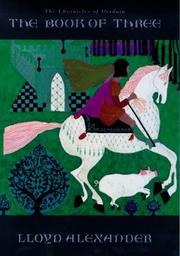
The Book of Three
A restless assistant pig-keeper in mythical Wales chases his escaped oracle pig and finds himself beside Prince Gwydion in a war against the Lord of Annuvin.
2,019-word summary · 9 min read
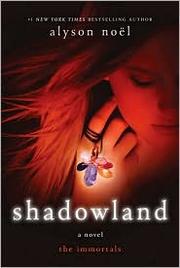
Shadowland
Ever Bloom cannot touch Damen without risking his life. As she hunts for a cure, a mysterious surfer named Jude arrives and her loyalty to Damen is tested.
2,301-word summary · 10 min read

Nightshade
Calla Tor is raised to lead a wolf pack and marry its chosen alpha, until saving a human boy makes her question the Keepers who command her kind.
2,619-word summary · 12 min read
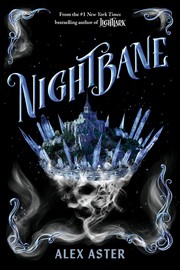
Nightbane
Isla Crown has thirty days to defend Lightlark after Grim threatens to destroy it, while memories of the year she spent with him return.
2,353-word summary · 10 min read

Magic Study
Sentenced to die in Ixia, Yelena returns to the land she was stolen from to learn the magic that made her an outlaw.
2,542-word summary · 11 min read
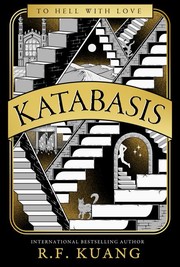
Katabasis
Kuang sends a Cambridge doctoral magician into the underworld to fetch the supervisor she killed, all for a letter of recommendation. Academic satire turns…
2,374-word summary · 11 min read
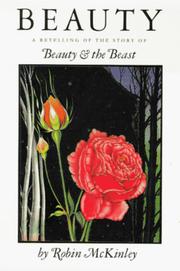
Beauty: A Retelling of the Story of Beauty and the Beast
Robin McKinley's debut retells Beauty and the Beast through a plain, book-loving girl whose nightly refusals of the Beast's proposals slowly become something…
2,100-word summary · 9 min read
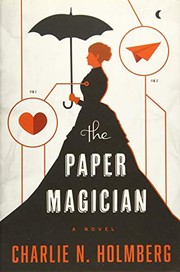
The Paper Magician
A graduate magician is assigned to paper magic instead of metal, then must face a woman who tears out her mentor's heart.
2,454-word summary · 11 min read
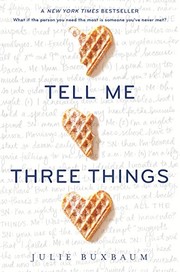
Tell Me Three Things
A grieving Chicago teen lands in her new stepfamily's Los Angeles mansion, then gets anonymous emails promising to guide her through a brutal private school.
2,292-word summary · 10 min read
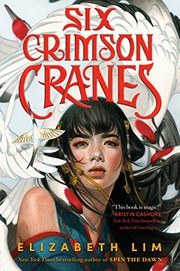
Six Crimson Cranes
A princess who loses her voice when a curse turns her six brothers into cranes must work in secret, trust a dragon, and speak a name she does not know.
2,214-word summary · 10 min read
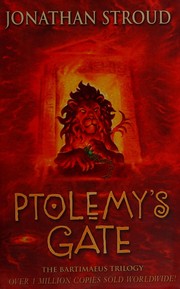
Ptolemy's Gate
Nathaniel and a weakened Bartimaeus face a possession plot in Stroud's dark final Bartimaeus novel.
2,328-word summary · 10 min read

Inkdeath
The final Inkworld novel sends Mo into the land of the dead, leaves Meggie choosing between two boys, and ends the Adderhead's immortality with three written…
2,062-word summary · 9 min read