
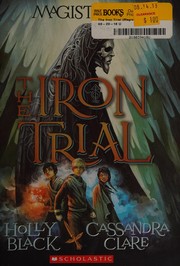
The Iron Trial
2,248-word summary 10 min read 304 pages in the book
- First published
- 2014
- Publisher
- Scholastic Press
- Pages
- 304
- ISBN
- 9780545522250
- Series
- Magisterium (#1)
Reading options
What's inside (9 sections)
I picked this one up for the byline, mostly. Two very different writers sharing a single book felt like a stunt, and I wanted to see whose voice won out. What I got instead was a twelve-year-old who spends the first third of the story trying very hard to be ordinary, and a school that keeps insisting he is anything but. The surprise is how much of the fun comes from Call Hunt fighting the idea that he is special. By the end, that resistance is the whole point.
A boy who wants to fail
Callum Hunt, called Call, is twelve and lives with his father, Alastair, a former mage who has made a point of keeping magic out of their house. Alastair came to hate what magic did to his family. His wife, Sarah, died at the Cold Massacre during the Third Mage War, killed by Constantine Madden, the mage known as the Enemy of Death. Alastair raised Call to expect nothing from the Magisterium, the school where mages train their apprentices, and to treat the whole subject with something close to contempt.
That contempt turns out to have a reason the book does not hand over politely. In the prologue, the dying Enemy of Death pushes his soul into the body of an infant. That infant is Call. Sarah, bleeding out nearby, manages to carve a warning into the ice and to break the bones of her son's leg, a desperate attempt to stop what she believes she has just seen happen. Call grows up with a bad leg and a limp, and with a father who watches him far too closely for a boy who is supposedly ordinary.
The father-son relationship is the quiet engine of the early chapters. Alastair is not a cartoon villain of a parent. He is a grieving man who genuinely believes that magic destroyed his family and that keeping his son away from it is an act of love. He warns Call about the Magisterium in ways that make the place sound like a trap. Call, who has never had much choice about anything, absorbs those warnings and turns them into a goal: do badly enough on the entrance tests that nobody will ever come looking for him.
When the time comes to take the Iron Trial, the series of tests that decides who gets into the Magisterium, Call goes in hoping to flunk. It is one of the cleaner hooks in recent children's fantasy. Every other candidate is trying to show off, to call up a flame or lift a stone. Call is trying to be mediocre, and his father has told him that failing is the whole point. Watching him deliberately underperform is funny for a chapter or two, and it also says something sad about a kid who has learned that the safest thing in the world is to be overlooked.
Naturally, it does not work that way.
Sand, wolves, and a prophecy
The tests are deliberately dull. Call is asked to sort sand by shade and to do other small, repetitive tasks that look like nonsense until you understand what the school is measuring. Master Rufus, one of the teachers, selects Call anyway. He also takes Tamara Rajavi and Aaron Stewart, the two highest ranked students in the year. The three of them are thrown together as apprentices, and the first weeks are awkward, mostly because Call is certain he does not belong and half expects to be sent home at any moment.
At the Magisterium, apprentices learn to work with four elements: fire, air, water, and earth. The school sits underground, and the training is physical and tedious before it is ever glorious. Call keeps waiting for the moment he will be found out as a fraud, all the while discovering that he is rather good at this. He starts to want to stay past his first year, which puts him directly against his father's wishes. The shift happens slowly, through small embarrassments and grudging successes, which is far more convincing than a sudden declaration of destiny.
Three apprentices and a teacher
Master Rufus is the adult who anchors this section. He is patient in a slightly frightening way, and he seems to know more about Call than he is telling. His decision to take a boy who was obviously trying to fail is presented as a quiet kind of confidence, and it gains weight later. Tamara is sharp and impatient with nonsense, the sort of student who has always been the best in the room and does not know what to make of someone who does not want to compete. Aaron is quieter, with a steadiness that the plot will put to work in a surprising way.
The three begin at a frigid distance and become a unit through shared irritation more than shared warmth. They grumble about the exercises, about the food, about the strange rules of the place. I liked that the book lets the friendship form out of ordinary friction. Nobody bonds over a tearful confession in the first week. They bond because they are stuck together and because each of them notices, slowly, that the other two can be trusted.
The book picks up when the three apprentices go into the caverns and meet a Devoured, a creature that tells them their fates: one will die, one will fail, one is already dead. Call blurts this out at dinner, to the irritation of a student named Drew, who calls the whole thing nonsense. Drew slips away that night, leaving a note, and the Masters organize a search. The found-child sequence turns ugly fast. A pack of chaos-ridden wolves attacks the group, and Aaron saves everyone by driving the wolves into the void with chaos magic.
That moment reclassifies everything. Chaos is a fifth element, and only a Makar can wield it. Aaron is one, which makes him both valuable and vulnerable in a place built around the four ordinary elements. The reveal is handled with a shrug from Aaron and a great deal of alarm from everyone else, and that contrast is part of the book's charm. On the walk back, a student named Jasper DeWinter tells the story of Constantine Madden and why he started the Third Mage War, which gives Call a version of his own history before he knows it is his own.
Havoc and the trouble with secrets
Still walking through the snow, Call finds a chaos-ridden wolf pup and decides to keep it. He names the animal Havoc and smuggles it into the Magisterium without telling anyone. It is a warm, impulsive decision, and it is also the kind of choice that gets a person in trouble in a story like this. Call's habit of acting first and explaining later never becomes easier to watch, even when you understand why he does it. The wolf is a small act of defiance and a small act of kindness at the same time, which is exactly the sort of thing this book is good at.
Matters get worse when Aaron is taken while walking Havoc. Call and Tamara decide to rescue him without informing the Masters, partly because Call has been hiding so much already that involving adults feels dangerous. His bad leg, the one Sarah broke when he was an infant, makes him hold back physically at moments when he wants to move, and the book uses that limitation without making it a speeches. Their trail leads to a bowling alley outside the school, where Drew is holding Aaron above a chaos elemental. Drew has thrown in with the Enemy. When the elemental is released, Drew calls it a coward and is killed by it. The scene is sudden and genuinely startling, the point where the book stops feeling like a school story.
Then the Enemy of Death arrives, and the mask comes off.
The bowling-alley reveal
The figure in the bowling alley is Master Joseph, once Constantine Madden's teacher. He explains what Sarah tried to warn her husband about: mortally wounded at the Cold Massacre, Constantine put his soul into a baby, and that baby was Call. The words Sarah carved into the ice were a command to kill the child. Alastair, suspecting the truth, had written to Master Rufus asking that Call's magic be bound, and had sent a wristband that turns out to have belonged to Constantine. The limp, the entrance tests, the father's coldness, all of it points back to one secret that nearly everyone but Call has been carrying.
I will give the book this: it commits to the twist rather than winking at it. Call is not a chosen hero in the usual sense. He is the vessel of the man who started a war, and the people who love him have been quietly preparing to stop him if it comes to that. That knowledge changes the meaning of his father's protections and of Rufus's patience in one stroke. It also makes Call's stubborn decency matter, because the plot is no longer asking whether he is powerful. It is asking what he will do with a power he never asked for.
Tamara and Aaron bring the bowling alley's sign down through the roof, Joseph disappears, and Call wakes in the infirmary with no intention of telling Rufus what he learned. He is allowed to contact his father, and the apprentices pass through the First Gate with the story's largest questions still open. The last pages are deliberately unresolved, which can be frustrating if you came for a complete answer. Given that this is book one of five, the restraint makes sense.
What two names on a cover buy you
The Iron Trial was published on September 9, 2014, by Scholastic Press, and runs 304 pages in the hardcover edition. It is the first book in a five-part series called Magisterium, followed by The Copper Gauntlet in 2015 and then The Bronze Key, The Silver Mask, and The Golden Tower. It was the first collaboration between Holly Black and Cassandra Clare, which is why the byline looks so odd on the cover and why readers turn the first page expecting some blend of their established styles.
The blend that actually arrives is closer to a boarding-school adventure with a sharp, sarcastic narrator. Call's voice carries a great deal of the load, and there is real humor in the way he describes the adults around him and the boring rituals of apprenticeship. Cassandra Clare's taste for large secrets and tangled parentage sits comfortably beside Holly Black's ear for a friend group that bickers and protects itself. The underground school where mages train apprentices gives both writers room to work, and neither author's habits overwhelm the other.
The obvious comparison is to Harry Potter, and critics made it immediately. Kirkus said the similarities can be distracting, while the Daily Telegraph thought the book moved neatly into the space that series left open. I think both reactions are fair. There is a boy with a difficult home life, a school under the ground, a teacher who sees something unusual in him, and a hidden connection to a dark figure from a previous war. The difference is that Call does not want any of it, and the book keeps returning to his resistance even after the plot has swept him along. The American Library Association later named it one of its top ten Quick Picks for Reluctant Young Adult Readers, which tells you something about how approachable the prose is.
Where it drags
The first third, with Call trying to fail the Iron Trial, is funny for a while and then starts to repeat itself. The exercises, the sand sorting, and the muttering about his father all make the same point several times before the story moves on. Some of the rules around chaos and Makars arrive as straight explanation in conversation, and a reader who wants everything dramatized may find those passages heavy.
Booklist's review was mixed for similar reasons, saying the book did not quite measure up to what each author had done separately and that a few opportunities were missed, though the ending offered intriguing twists. I felt some of that. The prophecy is blunt enough that a careful reader may guess where it is going, and the final reveal lands better if you have not already put the pieces together. A few characters, particularly the unpleasant Jasper, are drawn broadly enough that they never become more than a function. The middle stretch between the wolf attack and the bowling alley moves in fits and starts, with several sequences that exist mainly to position people for the reveal.
That said, the ending earns its place. The bowling alley sequence shifts the book's tone in a handful of pages, and the quiet conversation afterward, with Call deciding what not to say, is the strongest thing in the story. For a first volume it does the hard part well: it gives you a complete emotional arc for Call while leaving the larger argument about who he is wide open. Readers who want a tidy standalone should look elsewhere, but anyone willing to keep going has a clear reason to pick up the second book. It is a solid beginning to a long argument about loyalty, fear, and what a child owes to a parent who lied to protect him.
FAQ
Who actually wrote The Iron Trial?
Holly Black and Cassandra Clare co-wrote it as their first collaboration, published by Scholastic Press on September 9, 2014. Holly Black is the name used in the book list, but both authors share the credit.
Is The Iron Trial part of a series?
Yes. It is book one of Magisterium, followed by The Copper Gauntlet in 2015, then The Bronze Key, The Silver Mask, and The Golden Tower.
Will readers who dislike magic-school stories enjoy it?
It follows many magic-school conventions, and Kirkus noted the comparisons to Harry Potter. The difference is that Call does not want to be there, and the darker reveal arrives late in the 304-page book.
Similar books
More from Magisterium first, then related titles.
Keys to the Demon Prison
The fifth and final Fablehaven book sends Kendra and Seth Sorenson across secret preserves to keep the last keys to the demon prison out of rival hands.
2,251-word summary · 10 min read
Dragon Rider
A silver dragon, a sharp-tongued brownie and a lonely orphan boy cross deserts and seas to find the dragons' lost homeland, pursued by a golden killer made by…
3,188-word summary · 14 min read
Keeper of the Lost Cities
A twelve-year-old telepath leaves her human family for a hidden world of elves, where her powers and manufactured origins make her the target of a dangerous…
2,443-word summary · 11 min read
Grip of the Shadow Plague
A plague turns Fablehaven's creatures of light into shadows while Kendra hunts an artifact in Arizona and Seth races to find the cause.
2,131-word summary · 9 min read
The School for Good and Evil
Best friends Sophie and Agatha are taken to fairy tale school and sorted to wrong sides.
2,042-word summary · 9 min read
The Book of Three
A restless assistant pig-keeper in mythical Wales chases his escaped oracle pig and finds himself beside Prince Gwydion in a war against the Lord of Annuvin.
2,019-word summary · 9 min read
Oathbound
Bree Matthews has exiled herself from the Legendborn Order to protect the people she loves, but an unbreakable bargain with a shapeshifting demon has bound her…
2,751-word summary · 12 min read
Katabasis
Kuang sends a Cambridge doctoral magician into the underworld to fetch the supervisor she killed, all for a letter of recommendation. Academic satire turns…
2,374-word summary · 11 min read

The Field Guide
Three siblings move into a creepy Maine estate, anger a brownie, and find a forbidden guide to the fairy world in the first Spiderwick book.
2,033-word summary · 9 min read
Secrets of the Dragon Sanctuary
Kendra is replaced by a plant copy and held by the Society, while Seth steals a unicorn horn so the family can enter a dragon sanctuary.
2,590-word summary · 12 min read
The Time Paradox
When his mother falls ill with a fairy disease, Artemis Fowl travels back in time to find the extinct lemur that can cure her and confronts his younger self.
2,601-word summary · 12 min read
The Stonekeeper
After their father's death, Emily and Navin chase a monster into a hidden world to save their mother, and Emily's great-grandfather's amulet offers power at a…
2,753-word summary · 12 min read
The Girl Who Drank the Moon
A witch who secretly rescues the town's sacrificed babies accidentally enmagicks one with moonlight, and the girl grows up with a power she cannot name.
2,078-word summary · 9 min read
The Last Graduate
El must survive graduation when the school feeds seniors to monsters.
2,232-word summary · 10 min read
The Indian in the Cupboard
Omri learns a key turns plastic Little Bear into a live Iroquois man.
2,228-word summary · 10 min read
Magyk
A baby found in snow, a lost seventh son, and a run for the Marram Marshes as Marcia Overstrand shields two children from DomDaniel.
2,604-word summary · 12 min read
Rise of the Evening Star
Kendra and Seth return to Fablehaven as the Society of the Evening Star closes in, with a traitor inside the house and a demon prison key at stake.
2,874-word summary · 13 min read
Fairy Tail, Vol. 1
Lucy joins rowdy Fairy Tail guild with fire boy Natsu and cat Happy.
2,049-word summary · 9 min read
Fablehaven
Kendra and Seth spend the summer with their grandfather and learn his woods hide Fablehaven, a preserve for fairies, satyrs and darker things.
2,949-word summary · 13 min read

Blue Lily, Lily Blue
Blue searches for her missing mother while the Raven Boys wake a sleeper in the caves who is not the king they sought.
2,983-word summary · 13 min read
A Deadly Education
El can level mountains with a word, but surviving magic school takes allies, control, and a hard choice about power.
2,959-word summary · 13 min read
The Dream Thieves
Ronan pulls things from dreams while Gansey hunts a dead king and Blue tries to stay alive by staying apart.
1,922-word summary · 9 min read
The Mark of Athena
Seven demigods sail for Rome where Annabeth must follow the Mark to the Athena Parthenos alone.
2,031-word summary · 9 min read

The Darkest Part of the Forest
In a town built around a sleeping horned boy in a glass coffin, a girl discovers she has been spending her nights as a faerie king's knight and remembers none…
2,012-word summary · 9 min read
The Sorcerer in the North
A young Ranger posted to a quiet fief goes undercover as a jongleur to investigate a supposed sorcerer haunting a wood and a poisoned castle.
2,246-word summary · 10 min read
The Midnight Train
An eighty-one-year-old bookshop magnate dies and wakes young again aboard a train that carries him back through the moments that mattered most.
2,299-word summary · 10 min read
The Magician's Land
Exiled from Fillory, Quentin takes a teaching job at Brakebills, joins a crew of magical thieves, and must help rebuild a dying world to finish the trilogy.
2,204-word summary · 10 min read
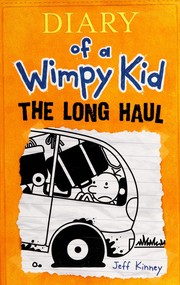
The Long Haul
Greg Heffley's summer road trip goes sideways with a towed boat, a live pig, and a family in a purple van.
2,311-word summary · 10 min read
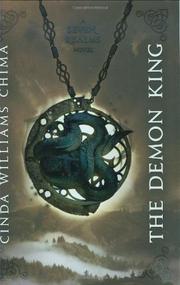
The Demon King
A thief steals an amulet once owned by a legendary sorcerer, while a princess flees a forced marriage in the first volume of Cinda Williams Chima's high…
2,371-word summary · 11 min read

Jade City
On an island where jade grants power, two clans fight over the mineral, the family name, and the right to decide what loyalty costs.
2,403-word summary · 11 min read