
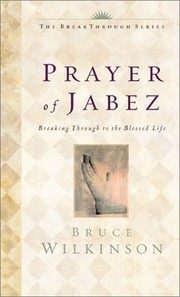
The Prayer of Jabez: Breaking Through to the Blessed Life
2,296-word summary 10 min read 93 pages in the book
- First published
- 2000
- Publisher
- Multnomah Books
- Pages
- 93
- ISBN
- 9781590524831
Reading options
What's inside (8 sections)
I picked this book up expecting something small, and it is. The original edition was a pocket sized hardcover of under a hundred pages. Then I learned the story behind it, and the size stopped making sense. This is the little Christian self help book that sold millions of copies in a single year, topped the New York Times list, got talked about on Capitol Hill, and spawned mugs and keychains and a line of children's editions. It also made a lot of people angry. I wanted to understand both halves of that story, so I read it as an argument rather than as a devotional, and tried to be fair to it.
The facts first. The Prayer of Jabez: Breaking Through to the Blessed Life was written by Bruce H. Wilkinson and published in 2000 by Multnomah Books, the first title in the publisher's BreakThrough series. Wilkinson was an American evangelical pastor who had been preaching on the subject for some time before he asked Multnomah to put out a small book ahead of the National Day of Prayer that year. The whole thing is built on two verses from the First Book of Chronicles, and it asks the reader to turn those verses into a daily habit for thirty days. That is the entire machine. Everything else, including the fortune the book made, grew out of it.
Two verses and a name that means pain
The passage Wilkinson builds on is 1 Chronicles 4:9 and 10. It is short enough to quote in full, and in the New International Version it goes like this:
Jabez was more honorable than his brothers. His mother had named him Jabez, saying: "I gave birth to him in pain." Jabez cried out to the God of Israel, saying: "Oh that You would bless me indeed and enlarge my territory! Let Your hand be with me, and keep me from the evil one." And God granted his request.
That is the raw material. A man whose name means pain, born in circumstances his mother remembered as suffering, is described as more honorable than his brothers. He is not a king or a prophet or a warrior in the big narratives. He is a minor figure in a long genealogy, and the writer of Chronicles stops to say two things about him: he was honorable, and he asked God for something specific, and God said yes.
Wilkinson's reading leans hard on that last part. He treats Jabez as proof that a clear, directed request to God can change a life. The prayer has four movements you can hear in the verse: a request for blessing, a request for enlarged territory, a request for God's hand to be with the speaker, and a request to be kept from evil. Wilkinson reads "territory" broadly, as influence and opportunity rather than literal land, which is what lets a twentieth century reader claim the prayer for a career or a marriage or a bank account. I think that move is the reason the book traveled so far. It takes a line about a nearly forgotten biblical name and makes it sound like a key you can turn yourself.
What Wilkinson actually asks of you
The book does not want you to admire Jabez. It wants you to pray his prayer every day. Wilkinson states the challenge plainly: make the Jabez prayer part of the daily fabric of your life, follow the plan he lays out unwaveringly for thirty days, and by the end you will be noticing significant changes while the prayer becomes a lifelong habit. I have quoted that challenge because it is really the book's whole pitch, and it is worth seeing in his own words rather than in a summary.
The method is repetition with a promised payoff. You say the words, you keep saying them, and you are supposed to watch for openings that were not there before. Wilkinson frames it as a way to leave the past behind and break through to the life you were meant to live, which is the language in the publisher's own description of the book. For a reader in a rut, that is a powerful offer. It asks for very little in the way of effort beyond showing up with the words each day, and it promises that the listening part will take care of itself.
I want to be honest about my reaction here. There is a real comfort in a short, fixed prayer when you are anxious. Repetition can steady a person, and the four petitions cover concerns most people actually have: more good in my life, more room to grow, company along the way, and protection from harm. As a piece of spiritual marketing, it is hard to fault the design. But the design also does something I find troubling, which is that it treats a biblical episode as a template that works on demand. Jabez's story ends with "God granted his request" and no further detail. Wilkinson turns that single line into a promise with a thirty day trial period, and that is a much bigger claim than the verse itself makes.
A pocket sized tour of the seven chapters
The book moves in seven short chapters, and the titles tell you the arc. It opens with "Little prayer, giant prize," which sets the scale: a few words from an obscure man, an enormous result. The next, "So why not ask?", is the sales pitch for prayer as a reasonable thing to do. "Living large for God" develops the idea of enlarged territory, and "The touch of greatness" pushes the notion that closeness to God changes your standing in the world.
Then the book turns inward. "Keeping the legacy safe" deals with holding on to what you have been given, and "Welcome to God's honor roll" leans on the idea that Jabez was counted as honorable. The last chapter, "Making Jabez mine," is where the reader is told to make the prayer a personal possession. I found that structure quite skillful for such a small book. It starts with the prize, spends two chapters making the ask feel safe, then gradually moves the prayer from Jabez's lips to yours. By the final pages the argument has shifted from a story about a man in a genealogy to a habit you are supposed to keep for the rest of your life.
The weakness is the same as the strength. Because the chapters are so short and so aimed at one conclusion, they do not leave much room for the hard questions. What does "enlarge my territory" mean when the territory in question belongs to someone else? What do you say to a person who prays the prayer faithfully for thirty days and sees no change? The book is not built to hold those questions. It is built to carry a reader from curiosity to a daily habit, and it does that job with impressive economy. If you want a slow study of the passage and its place in the genealogy of Judah, this is not where to find it.
How a tiny book became a phenomenon
The numbers are hard to believe until you see them lined up. The book sold around eight million copies in its first year, was the bestselling nonfiction title of 2001, and had passed nine million copies by 2002. It spent ninety four weeks on the New York Times best seller list. It won the Evangelical Christian Publishers Association's Gold Medallion Book of the Year award in 2001. By that point the prayer itself had found its way into committee hearings on Capitol Hill, and Wilkinson was invited to the National Day of Prayer by President George W. Bush.
Multnomah pushed the brand hard. There were versions for preschoolers, for children aged eight to twelve, and for teenagers, along with a journal, a devotional in adult and children's editions, a Bible study, and a version for women written by Wilkinson's wife, Darlene. A music companion called The Prayer of Jabez Music: A Worship Experience came out through ForeFront Records. Then came the objects: keychains, mugs, backpacks, Christmas ornaments, scented candles, mousepads, a framed picture of Jabez, and a line of jewelry introduced in 2002. I found the merchandise almost more revealing than the sales figures. A prayer about a man in pain became a shelf of things you could buy, which is either a sign of how deeply it landed or a sign of how slickly it was sold. Probably both.
Reading about the rollout changed how I read the book itself. The thirty day challenge suddenly looked less like a suggestion and more like a device, something designed to create a repeat customer and a recognizable routine. That may be too cynical. Wilkinson had been preaching the idea long before there was a product line. Still, it is hard to separate the spiritual advice from the machine that carried it once you know the machine existed.
The backlash, and why it stuck
The criticism came from Christian and secular writers at the same time. The most common charge was that the book sounded like the prosperity gospel, the teaching that faith should produce wealth and health. Critics said it suggests God will obey people's wishes if you say the right words. Forbes and The Christian Century both reached for Santa Claus imagery, with one line about the "Santa-fication of God." Newsweek argued that Wilkinson had turned the prayer into a Christian mantra. Berit Kjos objected to the repetition itself, pointing to Jesus' warning about vain repetitions in the Sermon on the Mount.
Other objections were more subtle. The Christian Century called the book's vision markedly individualistic and insulating, meaning it turns faith into a private transaction between one person and God rather than something lived in a community. The New Republic ran a review that called it, in many ways, the ultimate anti self help book, on the grounds that it tells readers to rely entirely on God and denies that there is any inner strength to uncover. That one always amused me, because it means the book got attacked from both directions at once: too much like self help for some, not enough like it for others.
The parodies tell their own story. Douglas M. Jones wrote The Mantra of Jabez, a Christian satire, in 2001. Norm Franz published The Jabez You Never Knew in 2002 to give the account more historical context and to attack what he saw as rote prayer. The musician Derek Webb said his song "Wedding Dress" came after hearing Wilkinson speak about the book, and the band Ceili Rain recorded "Gold God," which compares the God who "expanded my territory" to a credit card. When a book produces that much art in opposition, it has clearly struck a nerve.
I think the critics have a real case, especially on the prosperity question. A verse that ends with "God granted his request" is being asked to carry a guarantee it never states. But I also think some of the fury was aimed at the packaging and the money rather than the prayer. The words themselves are modest and ancient. What Wilkinson did was wrap them in a thirty day program and sell them by the million, and that made people uneasy.
Who it helps and where it thins out
So who is this for? I would hand it to someone who wants a simple daily discipline and finds longer devotional books exhausting. The repetition works, the four petitions give shape to vague longings, and the story of an honorable man with a painful name is genuinely affecting in its few lines. There is nothing harmful about setting aside a moment each morning to ask for blessing and protection. For a reader who has never had a prayer practice at all, a pocket sized book with one clear thing to do might be exactly the right size.
I would be careful with it for anyone who reads it as a contract. If the promise is that thirty days of saying these words will enlarge your territory in a measurable way, then the book is overselling both the verse and the God it describes. It also offers almost nothing about suffering that does not resolve, which sits awkwardly beside a man whose name means pain. Jabez's mother is in the passage for one sentence, and Wilkinson uses her mainly to explain the name. A book built on that verse could have said more about what it means to ask for blessing while pain is still in the room.
What I remember most is not the sales or the merchandise but the quiet shape of the original passage. A man nobody expected anything from, carrying a name his mother gave him in grief, asks for more life and more room, and the writer of Chronicles says only that God granted it. Wilkinson takes that small opening and builds a very large house on it. Whether you find shelter in that house or want to walk out again depends mostly on how you feel about a prayer being turned into a plan. I finished the book still unsure, which is more than I can say for most things this confident.
A last thing about the edition, because the physical object matters here. The original Multnomah hardcover runs ninety three pages and fits in a coat pocket. That smallness is part of how the book worked. People could carry it, hand it to a friend, and finish it in a single sitting, and that is how a few verses from a genealogy ended up on mugs and in headlines.
FAQ
What is the Prayer of Jabez based on?
It is based on 1 Chronicles 4:9 to 10, where a man named Jabez asks God for blessing, enlarged territory, his presence and protection from evil, and God grants the request.
What did Wilkinson ask readers to do?
Wilkinson challenged readers to pray the Jabez prayer daily for thirty days, promising they would notice changes and the prayer would become a lifelong habit.
Why was the book criticized?
Critics said it echoed the prosperity gospel and treated God as a wish granter. Others called it individualistic, while The New Republic oddly called it the ultimate anti self help book.
Similar books
My Utmost for His Highest
A posthumous collection of 366 daily devotional readings assembled from Oswald Chambers's sermons, built around surrender, discipleship and the gap between…
2,015-word summary · 9 min read
Captivating: Unveiling the Mystery of a Woman's Soul
A Christian companion to Wild at Heart in which John and Stasi Eldredge argue that women carry three God-given desires that wounds can bury. Warm, scriptural…
2,722-word summary · 12 min read
Wild at Heart: Discovering the Secret of a Man's Soul
Why do men feel bored and tame? John Eldredge argues a man's heart is wild by design, and that recovering it means facing the wound and the question of whether…
2,289-word summary · 10 min read
The Pursuit of God: The Human Thirst for the Divine
Ten short chapters on wanting God rather than merely knowing about him, from a pastor who wrote the book in a single night on a train.
2,014-word summary · 9 min read
Have a Little Faith: a True Story
Asked to deliver his childhood rabbi's eulogy, Albom interviews the man and a Detroit pastor serving the homeless, and finds two very different models of faith.
2,339-word summary · 10 min read
Blue Like Jazz
Donald Miller leaves youth group faith in Texas for Portland and Reed College, where a confession booth and shared house life reshape his view of Christian…
2,366-word summary · 11 min read
The Power of Positive Thinking
Peale's 1952 guide to faith, affirmations, picturing success, prayer, and worry control, retold chapter by chapter with stories, limits, and small daily habits…
2,742-word summary · 12 min read
The Case for Christ
An atheist journalist cross-examines scholars on the Gospels, the tomb, and the resurrection to test the evidence for Jesus.
2,882-word summary · 13 min read
The Purpose Driven Life
Rick Warren's 40-day guide to Christian purpose, from worship and fellowship to growth, service and mission.
2,846-word summary · 13 min read
You Can Heal Your Life
Louise Hay's 1984 bestseller argues that thoughts and beliefs shape the body, pairing a mirror-and-affirmation workbook with an A to Z list of ailments and…
3,672-word summary · 16 min read
The Power of Your Subconscious Mind
Joseph Murphy argues that the subconscious accepts whatever the conscious mind repeats, so worry and confidence quietly grow into very different lives.
2,259-word summary · 10 min read
The Book of Mormon: Another Testament of Jesus Christ
A religious scripture first published in 1830, presented as a record of ancient peoples in the Americas and a second witness to Jesus Christ in the Latter Day…
2,390-word summary · 11 min read
As a Man Thinketh: A book that will help you to help yourself
In seven short chapters, James Allen argues that character and circumstance grow from thought, and that changing how you think is the practical route to…
2,673-word summary · 12 min read
The DaVinci Code: A Quest for Answers
A short 2006 dialogue in which three friends test Dan Brown's claims about Jesus, Mary Magdalene, Nicaea, and the canon.
2,088-word summary · 9 min read
Love Does
A lawyer and activist tells stories of saying yes, showing up, and loving people through ordinary, often ridiculous actions.
2,411-word summary · 11 min read
The Road Less Traveled: A New Psychology of Love, Traditional Values and Spiritual Growth
M. Scott Peck argues that maturity begins with accepting difficulty, then builds discipline, love, and spiritual growth through honest, often painful work.
2,200-word summary · 10 min read
90 Minutes in Heaven: A True Story of Death and Life
A pastor declared dead at a 1989 crash scene describes ninety minutes he says he spent in Heaven, then thirteen months of surgeries, depression, and recovery.
2,246-word summary · 10 min read
The Artist's Way: A Spiritual Path to Higher Creativity
A twelve week course with morning pages and artist dates to recover creativity.
2,345-word summary · 10 min read
God Is Not Great
Hitchens argues religion poisons life across history and texts.
2,545-word summary · 11 min read
10% Happier
An ABC newsman panics on air, then finds meditation without losing his edge.
2,590-word summary · 12 min read
The Untethered Soul
Singer names the noisy inner voice and shows how watching thoughts, loosening old hurt, and keeping the heart open through surrender can ease daily suffering…
2,752-word summary · 12 min read
The Art of Happiness
The Dalai Lama and psychiatrist Howard Cutler link lasting happiness to training the mind, human warmth, compassion, and basic spiritual values for daily life.
3,394-word summary · 15 min read
A New Earth
Tolle maps ego pain and shows how presence can loosen roles, thoughts, and suffering.
1,909-word summary · 8 min read
The Power of Now
Tolle argues pain comes from mind chatter and peace from full attention to now.
2,354-word summary · 10 min read
Eat, Pray, Love
Eat, Pray, Love retold: divorce, Italy for pleasure, India for practice, Bali for balance.
1,962-word summary · 9 min read
The Defining Decade: Why Your Twenties Matter - and How to Make the Most of Them Now
A clinical psychologist argues that the twenties are not a holding pattern and urges readers to build skills, ties, and commitment now.
2,443-word summary · 11 min read

Women Who Run with the Wolves
A Jungian analyst reads fairy tales as maps to a woman's instinctual self, from La Loba to Bluebeard and Vasalisa.
2,331-word summary · 10 min read
The Witch of Portobello
A journalist collects testimony from those who knew Athena, a woman born in Transylvania who became a dancer and teacher in Portobello. Coelho keeps her fate…
2,499-word summary · 11 min read
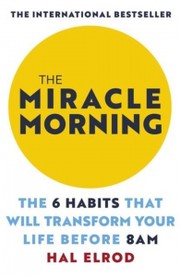
The Miracle Morning
Hal Elrod argues that the first hour of the day sets its tone, and offers six short practices, silence, affirmations, visualization, exercise, reading and…
2,240-word summary · 10 min read
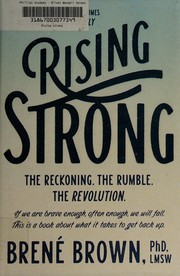
Rising Strong: The Reckoning. The Rumble. The Revolution.
Brené Brown's 2015 book asks what happens after we fall, and argues that examining the stories we invent about failure and heartbreak is the path to getting…
2,271-word summary · 10 min read