
The Autobiography of Benjamin Franklin
2,259-word summary 10 min read 391 pages in the book
- First published
- 1791
- Publisher
- Norton
- Pages
- 391
- ISBN
- 9780393017373
Reading options
What's inside (7 sections)
I picked this up expecting a book of maxims, the kind of thing you skim for lines about early rising and thrift. What I found was stranger and more companionable: a long, chatty letter from an old man to his son, full of printing presses, failed schemes, political grudges, and a man who kept surprisingly careful score of his own faults. It is unfinished. It stops with events from 1758, when Franklin was 52, and he lived to be 84. That silence at the end is part of why the book still gets argued over.
The writing happened in four separate stretches between 1771 and 1790. Franklin never saw it printed as a whole. The first edition was French, issued in 1791 by Buisson in Paris as Mémoires de la vie privée de Benjamin Franklin, and it covered only Part One, based on a transcript made before Franklin revised his manuscript. An English retranslation appeared in London in 1793. The first three parts were finally published together in English in 1818 by Franklin's grandson William Temple Franklin, who also made his own stylistic changes. The complete text, including Part Four, waited until 1868, when John Bigelow bought the original manuscript in France and printed it.
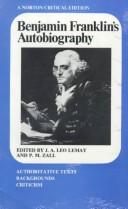
For this summary I used the 1986 Norton Critical Edition edited by J. A. Leo Lemay and P. M. Zall, published by Norton, 391 pages, ISBN 9780393017373. It is built from the holograph manuscript and adds background documents and criticism, so those 391 pages include far more than Franklin's own prose. The year given in the metadata is 1791, the date of that first French publication, not the year of the edition I read.
A boy who wanted books
Part One is addressed to William Franklin, then 41 and serving as Royal Governor of New Jersey. Franklin starts it in 1771 at Twyford, the English estate of the Bishop of St Asaph, and begins, as old men do, with his parents and grandparents. His father Josiah was a tallow chandler and soap maker who had emigrated from England, a man of "strong constitution and robust frame" with a gift for drawing and music. Benjamin was the youngest son, born in Boston in 1706, and he describes being sent to grammar school, then taken out after a year because the family could not afford it.
What matters in these opening pages is the reading. Franklin says he "was generally roguish and facetious," but the thing he remembers most clearly is how books shaped him. He read Bunyan's Pilgrim's Progress, Plutarch's Lives, and an essay collection by Joseph Addison and Richard Steele called The Spectator. He liked the style so much that he tried to copy it. At home he argued with his father about religion, and the arguments, which he calls "disputes," taught him to be careful about asserting opinions. That habit of testing his own positions by arguing them out is one of the book's real engines.
At twelve he was bound as an apprentice to his older brother James, a printer who published the New-England Courant. Benjamin learned the trade, setting type and carrying papers through the streets, and he wanted to write for the paper. James would not have it. So Benjamin wrote anonymous essays in the voice of a fictitious widow named Silence Dogood, slipped them under the printing house door at night, and watched his brother publish them. When he finally admitted who had written them, James was angry. The relationship soured, and after James was jailed and ordered to stop publishing the Courant, Benjamin quit the apprenticeship. He admits, in a small flash of honesty that recurs throughout the book, that leaving was not entirely fair.
Running away and making good
With his brother blocking work in Boston, Franklin slipped onto a ship for New York, though his father and James did not know he had gone. New York did not pan out. He was told to find Andrew Bradford, a printer in Philadelphia, and so he went, arriving as a dirty, hungry teenager with no money and no connections. This is one of the best sequences in the book because Franklin remembers the texture of it: the bread, the streets, the uncertainty about where he would sleep.
He found work with Samuel Keimer, an eccentric printer, and boarded at the house of a Quaker merchant named Thomas Denham. Governor William Keith took notice of the capable young printer and promised to set him up in his own shop, sending him to London with a letter of recommendation that, when Franklin arrived, turned out not to exist. London was a wash; he worked there for a time and returned to Philadelphia as Denham's assistant. When Denham died suddenly, Franklin went back to Keimer, then quit over wages.
The partnership with Hugh Meredith followed, subsidized by Meredith's father, though Franklin did nearly all the work because Meredith drank. Their first plan was a newspaper. Keimer heard of it and rushed out his own paper, the Pennsylvania Gazette, which failed. Franklin bought it from him and made it profitable. An appointment as printer to the Pennsylvania assembly followed. When Meredith's father withdrew his backing and Meredith left for North Carolina, Franklin kept the business in his own name. In 1730 he married Deborah Read, and with the group of tradesmen and merchants he had gathered, the Junto, he pushed for a lending library. The Library Company of Philadelphia grew out of that proposal.
The point Franklin keeps making is not that he was brilliant, though he plainly was. It is that he was useful and persistent, and that he watched how things worked. He notes, almost in passing, that the Saturday Evening Post would later trace its lineage to his Gazette. He also notes, less modestly, how often he was trusted with public business.
The project of arriving at moral perfection
Part Two was written in 1784 at Passy, outside Paris, after two friends had read Part One and urged him to continue. Franklin opens it with the story of the public library, then turns to what he calls his "bold and arduous Project of arriving at moral Perfection." He drew up a list of thirteen virtues, each with a short rule: Temperance, Silence, Order, Resolution, Frugality, Industry, Sincerity, Justice, Moderation, Cleanliness, Tranquillity, Chastity, and Humility.
He made a little book with a column for each day of the week and a mark for every time he broke a rule. The idea was to focus on one virtue at a time, then move to the next, until the whole set became habit. What makes this section worth reading is not the scheme itself, which is rather rigid, but Franklin's report of how it went. He found Order nearly impossible to keep. He confesses that he was "a great lover of order" in theory and a hopeless case in practice, bothered by disorder the way a neat person is, yet unable to hold the discipline. He admits that he fell short again and again, and that he never reached perfection. He also says the attempt made him a happier man, and that he was willing to be rid of the pride that came with succeeding.
Franklin is careful to say the book was a failure in its own terms. He kept the notebook for years and kept finding new faults in it. The "Errata" metaphor he used earlier for his life applies here too. He is constantly editing himself.
Printing, electricity, and public business
Part Three, written in Philadelphia in 1788 and 1789, is the longest stretch and the one with the most public events. Franklin says many of his papers were lost during the Revolution, so he works from what survived. He quotes an early "Substance of an intended Creed," a list of what he took to be the essentials of all religions, which he never turned into a sect. He started Poor Richard's Almanack in 1732, and its success made him famous well beyond Philadelphia. He supported the preacher Samuel Hemphill, wrote pamphlets for him, and then shrugged when Hemphill was caught borrowing sermons, saying he would rather hear a good stolen sermon than a bad original one.
The 1730s and 1740s fill the page with names. George Whitefield, the great itinerant preacher, stayed in Franklin's house, and Franklin printed his sermons and journals despite their religious differences. The Junto grew and spun off smaller clubs. Franklin became clerk of the General Assembly in 1736, then deputy postmaster general, which made it easier to get reports and subscriptions for his paper. He proposed reforms to the city watch and to fire prevention. He invented the Franklin stove in 1740 and refused to patent it, saying it was made for the good of the people. He raised money by subscription for an academy that grew into the University of Pennsylvania. He served on the city council, became an alderman and a justice of the peace, negotiated with Native leaders, helped Thomas Bond establish a hospital, and pushed for paved streets.
Then comes the part about "the Rise and Progress of my Philosophical Reputation." Franklin describes his experiments with electricity, the letters he sent to England that were published as a book, and the French translation that angered the Abbé Nollet, whose own theory the experiments undercut. Franklin refused to answer Nollet, arguing that anyone could repeat the experiments and check them for himself. Another French writer answered on his behalf, the views gradually won out, and Franklin was elected a fellow of the Royal Society.
The military interlude is less flattering. As war with France approached, Franklin drew up a plan for colonial union that was not adopted. General Edward Braddock arrived with two regiments, and Franklin helped him find wagons and horses. Franklin warned him about the danger of ambush on the march to Frontenac. Braddock ignored the warning, was mortally wounded, and his army fled. Franklin later raised a militia and built forts in the northwest, was made colonel of a regiment, and was offended when the proprietor Thomas Penn complained about the honor his officers showed him. These episodes show the public man as a browser of factions, quietly keeping score of slights.
Part Three ends with Franklin sailing for England in 1757 with his son, after an unsuccessful attempt to be repaid for militia expenses. He arrives in London on July 27, 1757.
The short last part and the long argument
Part Four is only a few pages, written in 1789 and the early months of 1790 while Franklin was ill. It covers the London years in brief. He takes advice from John Fothergill about how to argue the colonies' case, visits Lord Grenville, and meets the proprietaries. Little is settled. The proprietaries ask for a written summary of colonial complaints, then delay their reply for more than a year, and when it comes they call it a "flimsy Justification." Meanwhile the assembly gets a taxation act passed and Franklin defends it in court so it can receive royal assent. The final sentence notes that the governor "despis'd the Threats, and they were never put in Execution." Then the book stops.
The style is part of the experience. Franklin writes in a plain, sociable prose, full of digressions and dry asides, that is easy to read aloud. He is excellent at the small scene: the boy sneaking essays under a door, the young printer arriving in a strange city, the argument with a strong-willed brother. He is also excellent at explaining how he made something work, whether it is a subscription library or a correspondence about electricity.
He is much less appealing when he talks about himself. The book returns again and again to the esteem he claims to enjoy in every place and among every sort of person. He counts his money with unusual care and tells readers exactly how much he earned and how he invested it. Mark Twain, who thought Franklin had "brought affliction to millions of boys" by writing a biography their fathers made them read, was responding to this side of the book. D. H. Lawrence was blunter in 1923, attacking what he called the "snuff-coloured Doctor Franklin" and his whole project of manufacturing virtue. There is something to both complaints. The Franklins who read this as a manual for getting ahead were not misreading it.
Still, the vanity is entangled with the honesty. The same man who tells you how much he made also tells you how often he failed, how he broke his own rules, and how he treated his brother unfairly. He presents the moral perfection scheme as a comedy of small failures. That combination of self-satisfaction and self-correction is the real subject. You finish the book wary of the man and glad you met him.
The Norton edition makes the arguments easy to follow because it prints the reactions alongside the text, including Twain's and Lawrence's, and it restores the wording of the manuscript rather than the smoothed over versions that circulated for a century. If you want Franklin's own voice rather than the legend built around him, this is the place to find it. The last pages leave you wanting the missing decades, and there is no one to write them. That is the honest ending of a book that is, above all, an account of a life being inspected while it was still being lived.
FAQ
When was The Autobiography of Benjamin Franklin first published?
It first appeared in 1791 in French, published by Buisson in Paris as Mémoires de la vie privée de Benjamin Franklin. An English version followed in 1793, and the complete text including Part Four was not printed in English until 1868.
Which edition is cited on this page?
The facts here come from the 1986 Norton Critical Edition edited by J. A. Leo Lemay and P. M. Zall, which runs 391 pages and is based on the original manuscript. The year field keeps 1791, the date of the first publication, rather than the edition year.
Did Franklin finish the autobiography?
No. He wrote four parts but stopped with events from 1758, when he was 52. He lived until 1790, so the last three decades of his public life, including the Revolution and the Constitutional Convention, are not covered.
Similar books
Walden
Thoreau builds a cabin at Walden Pond and spends two years testing what a person really needs to live well.
2,986-word summary · 13 min read
How to Change Your Mind
Pollan blends the history of psychedelic research, his own guided trips, and current neuroscience to ask what these drugs reveal about consciousness.
2,466-word summary · 11 min read
Mark Twain
Ron Chernow's 1,200-page biography follows Samuel Clemens from the Mississippi River to worldwide fame, weighing a literary genius against a lifetime of…
2,501-word summary · 11 min read
As a Man Thinketh: A book that will help you to help yourself
In seven short chapters, James Allen argues that character and circumstance grow from thought, and that changing how you think is the practical route to…
2,673-word summary · 12 min read
Too Much and Never Enough: How My Family Created the World's Most Dangerous Man
Mary L. Trump's 2020 memoir traces how a cold, zero-sum Queens household shaped her uncle, and uses family tax documents to challenge his self-made story.
2,059-word summary · 9 min read

Beyond Good and Evil: Prelude to a Philosophy of the Future
A guide to Friedrich Nietzsche's Beyond Good and Evil: its attack on moral prejudice, the will to power, master and slave morality, and the philosopher of the…
2,597-word summary · 12 min read
Twelve Years a Slave
Free violinist Solomon Northup tells how Brown and Hamilton lured him south into twelve years of Louisiana bondage until Bass letters brought rescue in January…
2,931-word summary · 13 min read
Narrative of the Life of Frederick Douglass
Douglass names names from Maryland slavery to his 1838 escape, showing how literacy, wages, and faith were policed, then answers with defiance.
2,630-word summary · 12 min read
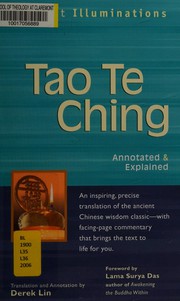
Tao Te Ching: Annotated & Explained
Eighty one brief verses on the Way and effortless action, with Lin's translation and facing notes.
2,140-word summary · 10 min read
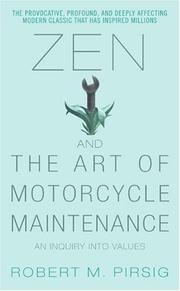
Zen and the Art of Motorcycle Maintenance
Father and son ride west while lectures on Quality and past madness intrude.
2,180-word summary · 10 min read
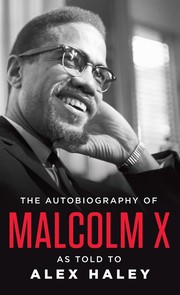
The Autobiography of Malcolm X
Malcolm X traces his life from Michigan childhood through Harlem, prison, and the Nation of Islam to Mecca in this 1965 memoir told to Alex Haley.
2,816-word summary · 13 min read
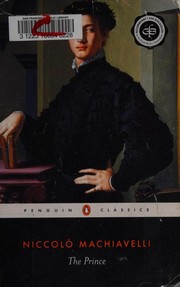
The Prince
Machiavelli advises Lorenzo on rule through fear and love, fortune, cruelty and mercy.
2,204-word summary · 10 min read
Greenlights
McConaughey shares outlaw stories and greenlight catching from Texas to Hollywood.
2,577-word summary · 11 min read
The Art of War
Sun Tzu's thirteen chapters on winning without fighting: laying plans, knowing ground, using spies, and why the best victory costs least, in the classic Giles…
2,029-word summary · 9 min read
Becoming
Michelle Obama traces her path from South Side Chicago through Princeton, Harvard law and the White House years in this warm, candid memoir of family, work and…
2,143-word summary · 10 min read
Zeitoun
A Syrian-American contractor rides out Hurricane Katrina by canoe, rescuing neighbors and stray dogs, until a routine arrest turns into twenty-three days…
2,097-word summary · 9 min read
The Symposium
At a banquet in Athens, seven men compete to praise Eros, ending with Socrates' account of Diotima and a drunken interruption by Alcibiades.
2,147-word summary · 10 min read
Survival in Auschwitz
A chemist deported from Turin records ten months in Auschwitz with a restraint that makes the horror impossible to look away from.
2,177-word summary · 10 min read
Motherland: A Feminist History of Modern Russia, from Revolution to Autocracy
A feminist history of modern Russia told through women's lives, from the revolutionaries of 1917 to Pussy Riot and the politics of today.
2,191-word summary · 10 min read

I Feel Bad About My Neck: and Other Thoughts on Being a Woman
In short, funny essays written just after her sixty-fifth birthday, Nora Ephron takes on aging, vanity, a White House summer, and the daily upkeep of looking…
2,099-word summary · 9 min read
Eating Animals
A new father's question about what to feed his son becomes a wide-ranging investigation of factory farming, food labels, and the stories we tell about meat.
2,100-word summary · 9 min read
Brief Answers to the Big Questions
A short posthumous collection in which Hawking answers ten big questions about God, the universe, time, and humanity's future.
2,464-word summary · 11 min read
The Pursuit of God: The Human Thirst for the Divine
Ten short chapters on wanting God rather than merely knowing about him, from a pastor who wrote the book in a single night on a train.
2,014-word summary · 9 min read
The Princess Diarist
Built from diaries Fisher kept at nineteen while filming the first Star Wars movie, this 2016 memoir revisits her affair with Harrison Ford and the strange…
2,360-word summary · 10 min read
The Power of Your Subconscious Mind
Joseph Murphy argues that the subconscious accepts whatever the conscious mind repeats, so worry and confidence quietly grow into very different lives.
2,259-word summary · 10 min read
The Elements of Style
William Strunk Jr.'s tiny 1918 classroom primer, revised and expanded by E. B. White in 1959, became the handbook generations of writers turn to for clearer,…
2,501-word summary · 11 min read
Taste: My Life Through Food
Stanley Tucci's memoir traces his life through food, from a Calabrian family kitchen in Katonah to film sets, marriage and a cancer fight that cost him his…
2,503-word summary · 11 min read
Source Code
Bill Gates's first memoir retells his Seattle childhood, from a grandmother's Ritz crackers to nights sneaking out to code. It stops just before the MS-DOS…
2,473-word summary · 11 min read
Mother Mary Comes to Me
Arundhati Roy's memoir circles her mother, Mary Roy, a formidable Kerala school founder whose love and cruelty made her the writer she became and then resented…
2,413-word summary · 11 min read
Momo
A girl with a gift for listening takes on grey-clad thieves who persuade a city to save its time, in Michael Ende's 1973 fable about efficiency and attention.
2,275-word summary · 10 min read