
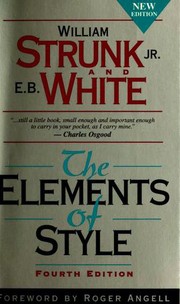
The Elements of Style
2,501-word summary 11 min read 105 pages in the book
- First published
- 1959
- Publisher
- Macmillan
- Pages
- 105
- ISBN
- 9780205309023
Reading options
What's inside (8 sections)
I had a battered paperback of this book on my desk for years before I ever read it straight through. Like a lot of people, I used it as something to consult in a panic: a comma question at midnight, a doubt about whether a sentence was allowed to end that way. Reading it cover to cover turned out to be a different experience. It is a tiny book with a long and unlikely life, and most of what makes it interesting is not the rules themselves but the chain of accidents that kept those rules in print for a century.
The book began as a classroom handout. William Strunk Jr. taught English at Cornell University for nearly four decades, from 1899 to 1937, and in 1918 he composed a short guide for his own students, privately printing it in 1919 and releasing a 52-page commercial edition through Harcourt, Brace and Howe in 1920. Strunk died in 1946. By the 1950s the little book was nearly forgotten, surviving in a handful of library copies. Its rescue came from one of Strunk's former students, E. B. White, who had sat in his class in 1919 and would go on to write for The New Yorker. What White did next is the reason the book you can buy today carries both names on the cover.
A former student brings the book back
In 1957 an editor at the Cornell Alumni News named H. A. Stevenson went looking for a copy of Strunk's primer. According to an account written by Jonathan Rick, Stevenson borrowed one of the two copies the campus library still held and mailed it to White, a longtime friend. Seeing the book again prompted White to write a warm piece about his old professor for The New Yorker, a column titled "Letter from the East." In it he described the guide as an attempt to cut the vast tangle of English rhetoric down to size and write its rules and principles on the head of a pin. He called the original a forty-three-page summation of the case for cleanliness, accuracy, and brevity in the use of English.
That column did something Strunk's own students never could. An editor at Macmillan, J. G. Case, read it and asked White whether he would revive the book. The plan started modestly, with White contributing an introduction, then grew into a full revision. White worked from the 1935 edition that Strunk had produced with a fellow Cornell instructor, Edward A. Tenney, under the title The Elements and Practice of Composition, which had added student exercises. He widened the text considerably. The result, published by Macmillan on 16 April 1959, was the book known ever since as Strunk and White. White wrote the introduction, revised the rules, and added a closing chapter of his own.
It is worth pausing on how improbable all of this is. A professor's private notes, out of print and nearly lost, are brought back by a former student who had largely forgotten them, and the revival becomes one of the bestselling reference books in American publishing. Within months of the 1959 release the book was on The New York Times bestseller list, where it sat alongside another Cornell professor's novel, Vladimir Nabokov's Lolita, and climbed as high as number three. Cornell's own account puts lifetime sales above ten million copies. None of that was built into the slim pamphlet Strunk handed to his students.
The rules, and the one everybody remembers
The book is arranged in a few short sections. There is an opening set of rules for usage, covering matters such as forming the possessive singular of nouns by adding an apostrophe and s, using a comma after each term in a series, enclosing parenthetic expressions between commas, and not joining independent clauses with a comma. Then comes a section on composition, with rules about choosing a suitable design and holding to it, making the paragraph the unit of composition, using the active voice, putting statements in positive form, using definite and specific and concrete language, keeping related words together, and placing the emphatic words of a sentence at the end. After that come a few matters of form, a list of words and expressions commonly misused, and a list of words often misspelled.
Most readers remember exactly one rule from all of this: Omit needless words. It is the book's signature, and with good reason. Strunk's explanation is worth quoting in full, because it shows the whole method in a few lines:
Vigorous writing is concise. A sentence should contain no unnecessary words, a paragraph no unnecessary sentences, for the same reason that a drawing should have no unnecessary lines and a machine no unnecessary parts. This requires not that the writer make all his sentences short, or that he avoid all detail and treat his subjects only in outline, but that he make every word tell.
Notice the care in that last sentence. Strunk is not asking for short sentences for their own sake. He is asking for sentences in which each word earns its place. That is a much harder standard, and a much more useful one. A writer can obey it while writing long, elaborately qualified sentences, provided every qualification does real work. Most of us fail not because our sentences are too long but because they are padded with phrases that could be deleted without anyone noticing.
The practical test is simple enough. Take a sentence and cross out any word whose removal would not change the meaning. A phrase like "in order to" almost always becomes "to." Words like "very" and "really" usually collapse under the same treatment. Strunk's point is not that such words are forbidden. It is that they should be there because you chose them, not because they were left in by accident. Once you start hunting for them, you find them everywhere, including in your own drafts.
The other rules have the same blunt usefulness. Use the active voice because it tells the reader who did what. Put statements in positive form because a stack of negatives is hard to picture. Use concrete language because a reader can see a specific noun but cannot see an abstraction. These are not deep ideas, and that is their strength. They are checks you can run on a paragraph in thirty seconds, and they catch a surprising amount of slack writing.
White adds a chapter about style
If the book stopped with Strunk's rules, it would be a serviceable grammar pamphlet and probably would not have lasted. What made it a companion for writers is the chapter White added, called "An Approach to Style." Where Strunk's rules are short and imperative, White's chapter is a series of reminders about the habits and outlook of a writer. It is the part that readers argue about most, and the part that has aged in the strangest ways.
White opens by telling the writer to place himself in the background. The idea is that writing should show its subject rather than its author, and that a reader should not be aware of a performance. He urges writers to write in a way that comes naturally, to work from a suitable design, and to write with nouns and verbs rather than leaning on adjectives and adverbs. There is a great deal of practical advice here, and some of it is as sharp as anything in Strunk's rules. Revise and rewrite. Do not overwrite. Do not overstate. Avoid the use of qualifiers. Be clear. Make sure the reader knows who is speaking. Use figures of speech sparingly.
The chapter also has a softer side. White borrows a phrase from Robert Louis Stevenson and tells writers to aim for "one moment of felicity," a small moment where the writing simply lands. That is a strange thing to find in a handbook of rules, and it is the best argument for White's authorship. Strunk wanted clean prose. White wanted clean prose that could also give a reader a little pleasure. He advises writers to write to please themselves, which is a long way from the classroom atmosphere of the original.
Not every reminder has held up. White tells writers to use orthodox spelling, to avoid dialect unless their ear is good, and to avoid foreign languages. The final reminder in the chapter, and the final point of the book, is "Prefer the standard to the offbeat." Read charitably, this is advice about clarity, a warning against novelty for its own sake. Read less charitably, it sounds like a preference for the familiar that can flatten a distinctive voice. Both readings seem available to me, and I suspect White would have accepted the charge with a shrug. He was a working editor at The New Yorker, and he knew how much bad writing tries to pass itself off as original.
How the little book kept changing
The 1959 edition was only the beginning. White produced a second edition in 1972 with help from Eleanor Gould Packard, and a third in 1979, by which point the book had grown to about 85 pages. The third edition gained an index prepared by a naval officer, Lieutenant Colonel Laurence W. Mazzeno of the United States Naval Academy. A fourth edition appeared in 1999, after White's death, published by Allyn and Bacon and carrying an ISBN of 9780205309023. This is the edition most readers meet today, a 105-page paperback with a foreword by Roger Angell, White's stepson and a writer and editor at The New Yorker. It added a glossary and an index, and it made some telling changes to the text.
One change concerns pronouns. Strunk's original advice told writers to use the generic he unless the antecedent was or must be feminine. The fourth edition replaced that with a plain statement that many writers find the generic he or his limiting or offensive, and retitled the entry "They. He or She," advising writers to avoid an unintentional emphasis on the masculine. Another change is almost comically small. In 1979 and later editions, the comma was dropped from "Strunk, Jr." because the book's own advice about punctuating such names caught up with its author's name. A style guide quietly amended its author's byline. I find that detail more charming than the book probably intended.
Other editions piled up. An illustrated version appeared in 2005 with pictures by Maira Kalman. A fiftieth anniversary edition followed in 2009, published by Pearson Education, with a new foreword by the broadcaster Charles Osgood. Because Strunk's original text is in the public domain, publishers can and do reprint it, which is why you will find many cheap copies of the 1918 text alongside the Strunk and White versions. If you pick up a copy without looking, you may not be holding the book you think you are. Check the title page and the author line before you buy.
The criticism, and where it lands
This book has plenty of critics, and some of them are linguists. Geoffrey K. Pullum, a prominent grammarian, published a paper in 2010 called "The land of the free and The Elements of Style," and he is not alone in thinking that the book's authority exceeds its accuracy. The complaint is not that clarity is a bad goal. It is that a short list of prescriptive rules, written for a particular time and place, gets treated as the final word on how English works. Rules about comma placement, about not joining clauses, about the proper case of pronouns, are tidier than the language they describe. Real usage is messier, and a rule that is easy to remember is not always a rule that is true.
There is also a problem of scale. The book is tiny, and its advice is necessarily selective. It is not a grammar, and it does not pretend to be one, but readers have often treated it as if it were. If you want to understand why a sentence is grammatical or how English punctuation actually behaves, you need a different book. What Strunk and White offer is a set of habits and a way of looking at a draft, not a full account of the language. Presenting it as the last word on English would do it no favors.
The book can also feel dated in tone. Its confidence is bracing the first time through, but a steady diet of imperatives eventually grates. Not every writer needs to be told to avoid fancy words or to place himself in the background. A novelist, a poet, or anyone writing for pleasure may find the advice narrow, tuned as it is to a certain kind of clear expository prose. I would not hand this to someone looking for permission to experiment. It is a book about removing obstacles between a writer and a reader, and that is a real purpose, but it is not the only purpose writing serves.
Finally, there is a small irony in the book's own history. A guide that says omit needless words is itself about a hundred pages long once you include the apparatus, and later editions added forewords, a glossary, and an index. None of this is a contradiction exactly. A rule can be simple and still need explanation. But it is fair to notice that the little book grew plumper with every anniversary, even as it kept telling writers to cut.
What to take from it
I still think the book is worth reading, though not in the way I once used it. As a reference to dip into, it is handy and mostly sound. As a cover-to-cover read, it is a strange little document of American literary culture: a professor's classroom notes, a magazine editor's rescue mission, and a set of rules that somehow became common sense for generations of students.
The part I would keep is the habit behind "omit needless words." Read a paragraph of your own writing and ask which words could go without loss. Do the same with a rule you have always followed, and ask whether it still has a reason. That habit of checking, more than any specific instruction about commas or active verbs, is what the book actually teaches. Strunk and White disagreed about plenty, but both believed that writing could be examined and improved rather than merely admired or given up on.
If you want a book that will tell you exactly what is correct in every situation, this one will disappoint you. If you want a short, opinionated companion that will make you look harder at your own sentences, it is hard to beat. Read the 1999 edition if you want the familiar version, or find a copy of the 1918 original if you are curious about the seed. Either way, pay attention to the story of how it survived. The rules are the excuse; the rescue is the real story.
FAQ
Is The Elements of Style a grammar reference?
No. It is a short guide to usage and composition, not a complete grammar, and readers who want to understand how English punctuation really works need a different book.
Who wrote The Elements of Style, Strunk or White?
William Strunk Jr. wrote the original 1918 classroom guide. E. B. White, his former student, revised and expanded it for the 1959 Macmillan edition and added the closing chapter on style.
Which edition should I buy?
The 1999 fourth edition, ISBN 9780205309023, is the familiar Strunk and White version with a foreword by Roger Angell. The original 1918 Strunk text is in the public domain and is also widely reprinted.
Similar books
Eats, Shoots & Leaves
Truss defends commas with jokes about pandas and posters.
2,423-word summary · 11 min read
Understanding Comics
McCloud explains comics in comics form, from icons to closure between panels.
2,091-word summary · 9 min read
The Lord of the Rings: Weapons and Warfare
An illustrated 2003 companion that breaks down the weapons, armies and battles of Middle-earth using film production art, maps and commissioned battle plans.
2,297-word summary · 10 min read
Mark Twain
Ron Chernow's 1,200-page biography follows Samuel Clemens from the Mississippi River to worldwide fame, weighing a literary genius against a lifetime of…
2,501-word summary · 11 min read
Hiroshima
In 1946 John Hersey followed six ordinary people through the atomic bombing of Hiroshima and its aftermath, using a plain style that made the reporting feel…
2,991-word summary · 13 min read
The Autobiography of Benjamin Franklin
Franklin writes his own life in four parts, from a Boston boyhood and a runaway apprenticeship to printing, science, and public service, while keeping careful…
2,259-word summary · 10 min read
As a Man Thinketh: A book that will help you to help yourself
In seven short chapters, James Allen argues that character and circumstance grow from thought, and that changing how you think is the practical route to…
2,673-word summary · 12 min read

Moonwalking with Einstein: The Art and Science of Remembering Everything
A journalist spends a year training for the U.S. Memory Championship and discovers that extraordinary memory is mostly technique, attention, and a lot of…
2,027-word summary · 9 min read
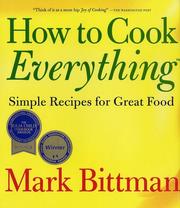
How to Cook Everything: Simple Recipes for Great Food
Bittman's 1998 doorstop taught a generation that dinner is a technique, not a recipe, with master recipes and variations instead of rigid instructions.
2,027-word summary · 9 min read
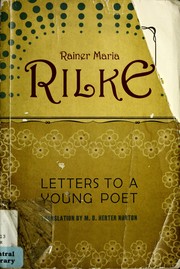
Letters to a Young Poet
Rilke's ten letters to a young officer cadet refuse easy criticism and ask whether he must write, offering patience and solitude as a way of life.
2,530-word summary · 11 min read
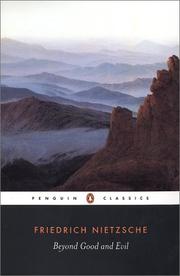
Beyond Good and Evil: Prelude to a Philosophy of the Future
A guide to Friedrich Nietzsche's Beyond Good and Evil: its attack on moral prejudice, the will to power, master and slave morality, and the philosopher of the…
2,597-word summary · 12 min read
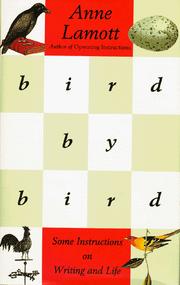
Bird by Bird
Anne Lamott's 1994 book on writing and life: shitty first drafts, the one-inch picture frame, and quieting the inner critic so you can take it bird by bird.
2,592-word summary · 12 min read
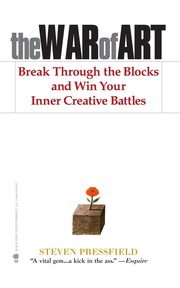
The War of Art
Pressfield names Resistance and urges daily professional work.
2,565-word summary · 11 min read
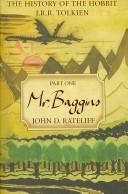
The History of the Hobbit, Part One: Mr. Baggins
Rateliff traces every draft of Bilbo from 1930 notes to print.
2,410-word summary · 11 min read
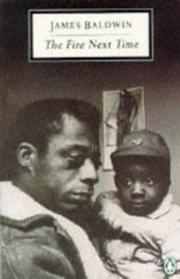
The Fire Next Time
Baldwin writes his nephew and faith on race in America.
2,463-word summary · 11 min read
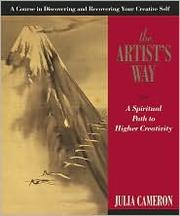
The Artist's Way: A Spiritual Path to Higher Creativity
A twelve week course with morning pages and artist dates to recover creativity.
2,345-word summary · 10 min read
Twelve Years a Slave
Free violinist Solomon Northup tells how Brown and Hamilton lured him south into twelve years of Louisiana bondage until Bass letters brought rescue in January…
2,931-word summary · 13 min read
The Surgeon of Crowthorne
James Murray built the Oxford dictionary with Broadmoor inmate William Minor, whose thousands of slips shaped this 1998 HarperCollins story of murder, madness…
2,775-word summary · 12 min read
Grit
A psychologist argues sustained passion plus perseverance beats raw talent, and shows how grit can be grown.
2,432-word summary · 11 min read
The Story of My Life
Deafblind Keller learns water at pump through Sullivan finger spelling.
2,149-word summary · 10 min read
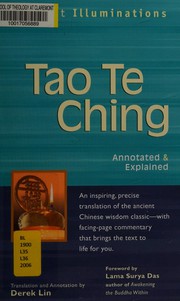
Tao Te Ching: Annotated & Explained
Eighty one brief verses on the Way and effortless action, with Lin's translation and facing notes.
2,140-word summary · 10 min read
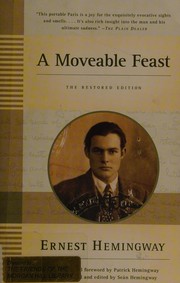
A Moveable Feast: The Restored Edition
Young Hemingway writes hungry in Paris cafes among Stein, Pound and Fitzgerald.
2,116-word summary · 9 min read
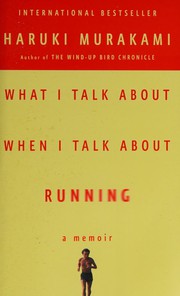
What I Talk About When I Talk About Running
Murakami connects daily running to writing novels, from his jazz club years to marathons and a 62-mile ultramarathon, with frank notes on aging. A quiet memoir…
3,100-word summary · 14 min read
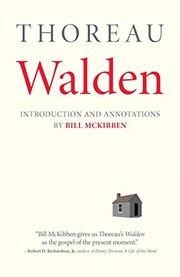
Walden
Thoreau builds a cabin at Walden Pond and spends two years testing what a person really needs to live well.
2,986-word summary · 13 min read
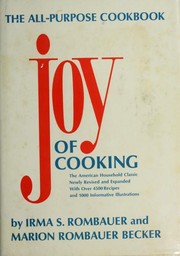
The Joy of Cooking
First self-published in 1931, this one-volume kitchen teacher shows how to learn skills, follow its action format, and pick an edition.
2,591-word summary · 12 min read
A Room of One's Own
Woolf argues a woman needs money and a locked room to write, touring history for lost sisters.
2,001-word summary · 9 min read
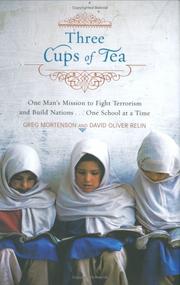
Three Cups of Tea: One Man's Mission to Promote Peace ... One School at a Time
Mortenson fails K2 builds schools in Pakistan after Korphe kindness.
2,554-word summary · 11 min read
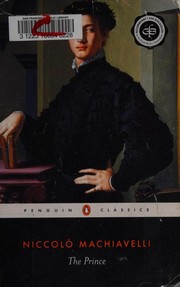
The Prince
Machiavelli advises Lorenzo on rule through fear and love, fortune, cruelty and mercy.
2,204-word summary · 10 min read
The Last Lecture
Dying professor Pausch lectures really achieving childhood dreams.
2,579-word summary · 11 min read
Fear and Loathing in Las Vegas
Raoul Duke and Gonzo binge Vegas covering Mint 400 and drug conference.
2,443-word summary · 11 min read