
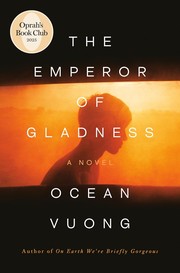
The Emperor of Gladness
2,693-word summary 12 min read 416 pages in the book
- First published
- 2025
- Publisher
- Penguin Press
- Pages
- 416
- ISBN
- 9780593831878
Reading options
What's inside (10 sections)
I picked this up expecting the music. Ocean Vuong came to novels from poetry, and his first one, On Earth We're Briefly Gorgeous, read like a letter written in a language still being learned, full of light and broken grammar and ache. The Emperor of Gladness is a rougher ride. It is set in a decaying Connecticut mill town called East Gladness, and it opens with a nineteen-year-old named Hai standing on a graffitied bridge over the river, working up the nerve to jump. I did not expect to laugh as much as I did, and I did not expect the laughter to curdle so quickly. By the last page I had been moved, annoyed, and then moved again, sometimes inside the same paragraph.
The woman on the riverbank
Hai is Vietnamese by birth, a college dropout, and dependent on painkillers. He has told his mother that he is studying medicine at a university in Boston. He is not. He is standing on that bridge in the rain, thin and cold, and the novel does not soften the moment. He has reached the point where falling looks like rest.
What stops him is not a vision or a voice from above. It is Grazina, an eighty-two-year-old Lithuanian immigrant who lives nearby and spots him from the riverbank. She calls up to him. She does not know his name. She simply talks to him until he comes down, the way a person might speak to a stray animal that has wandered onto a ledge. The scene is strange and funny and very calm, and it sets the terms of the whole book. Two lonely people, neither of them well, find a use for each other before they know what they are doing.
Grazina has dementia. She is lucid enough to notice a boy on a bridge and steady enough to keep him there with plain talk, but her mind slides out of the present without warning. Hai ends up moving into her house as her live-in caretaker. He keeps up the lie to his mother, who believes he is in Boston becoming a doctor. The arrangement is practical on both sides. He needs a place to be, and she needs someone to cook, to keep her from wandering, to sit with her when the past comes back. Neither of them says any of this aloud. It is simply what happens after the bridge.
I want to say something about the town, because East Gladness is close to being a character here. The mills are gone. What is left is a river, a bridge covered in graffiti, houses divided and subdivided, and a restaurant called HomeMarket that feeds people who once held better jobs. The decay is never delivered as a lecture. It is in the walk Hai takes, the clothes people wear, the fact that a grown man can butcher pigs behind a restaurant for extra cash and think nothing of it. The town's decline is the water these people swim in, and Vuong trusts us to notice it without pointing.
Living with Grazina
Much of the novel takes place inside Grazina's house, and the rhythm of that life is the book's quiet achievement. Hai learns her routines. He learns which questions calm her and which ones send her somewhere else. There are days when she knows exactly who he is and days when she looks at him as though he is a stranger who has come to take her things.
The dementia returns her again and again to the Second World War and to Stalin's purges. These are not decorative memories. They arrive whole, with the fear still attached, and Hai has to meet her where she is. His solution is odd and tender. He role-plays an American sergeant named Pepper, a big-hearted soldier with a drawl, and the two of them stage mock gunfights around the house. He becomes the good man who has come to protect her. She becomes, for a little while, someone safe.
I found this device touching, and I also found it a little too neat. Vuong keeps the Pepper scenes short, which helps, but the idea of a young Vietnamese man performing a white American savior for an elderly Lithuanian woman is loaded with more history than the pages can comfortably hold. The book seems aware of that. It lets the irony sit there without explaining it. Whether that counts as confidence or evasion depends on your tolerance for the author's silence.
What is not silent is the affection. Hai's care for Grazina is the best thing in him, and the novel keeps returning to it when other parts of his life come apart. He is not a saint about it. He lies to his mother, he drifts, he is still taking pills, and he is clearly using Grazina as much as she is using him. The honesty of that arrangement is what made me believe it. Care here is not a virtue on display. It is two damaged people making a go of a day.
The crew at HomeMarket
Hai takes a job at HomeMarket, the restaurant where his cousin Sony already works. The manager is BJ, a man who guards a secret corn-bread recipe as if it were a state secret and dreams of becoming a professional wrestler. The cashier is Maureen. Together they form the closest thing the novel has to a family away from family, a group of people who spend their shifts talking about food, money, and the small humiliations of service work.
BJ is one of the figures I kept thinking about after I closed the book. His corn bread is the one thing in the restaurant that is entirely his, and he will not tell anyone what is in it. The recipe is a tiny act of ownership in a life that offers very little of it. His wrestling ambition is funnier and sadder. He talks about it the way people talk about a comeback that will never come, with a lot of detail about moves and entrances and very little about the actual risk of stepping into a ring.
Sony is Hai's cousin and something more complicated than a sidekick. He is autistic, and he is obsessed with the Civil War. He knows battles and dates and generals the way other people know the news. The restaurant crew tolerates him, and Hai clearly loves him, but the world outside that crew is less patient. Vuong writes their conversations with a lightness that made me want to spend more time in that kitchen, and the book's best stretches are the ones where nothing much happens and people simply talk while working.
Maureen gets less room than I wanted. She is present, she is sharp, and she belongs to this place, but she mostly serves as a witness to the men around her. That is a small frustration in a novel that otherwise notices who gets pushed to the edges of a room.
What Hai carried with him
The book keeps interrupting the present with Hai's past, and the interruptions are where his character fills in. The most important of these concerns his friend Noah. Noah is dead, and his death is what pushed Hai into pills and then into rehab. Vuong does not give us a clean account of that loss. It comes in pieces, in the way a person remembers someone he cannot stop thinking about, and the gaps are part of the point. What is clear is that Hai came out of that period altered, and that the bridge he stands on in the first chapter is the far end of a long road beginning with Noah.
The other memory that keeps surfacing involves Sony. When they were younger, Sony was bullied, and Hai failed to defend him. He watched instead. That failure sits in Hai the way a bad tooth sits in a mouth, and it helps explain why he is so careful with Grazina and so determined, later, to do something for Sony. The novel links these two acts of care, the one he manages and the one he botched, without announcing the link. I noticed it about halfway through and found that it changed how I read the caretaking. Hai is not simply kind to Grazina. He is trying again.
These flashbacks also give the painkiller addiction its shape. Hai is not written as a cautionary figure. Pills are what he reaches for when the present becomes unmanageable, and rehab is a place he has already been, not a dramatic new chapter. The book is matter-of-fact about recovery in a way I found refreshing. It refuses to offer a single turning point where he chooses a better life. He is still choosing, badly and repeatedly, and the novel stays with him in the middle of it.
Pigs, a firing, and a wrestling debut
The novel gathers speed as the year turns. The workers at HomeMarket butcher pigs for extra cash, a job that is bloody and practical and described with a bluntness that suits the season. This is the book at its most physical. People handle bodies, animal and otherwise, and the work goes on because the money is needed. Vuong does not dress it up.
Sony's story takes a hard turn. He is diagnosed, and then he is fired under corporate pressure. The diagnosis is less important than what follows, which is the way a workplace decides that a person who has been useful is now a problem. Sony does not argue. He runs off toward Vermont, convinced that a diamond is hidden in the hand of his dead father. It is a strange, sad errand, and it is exactly the kind of detail that makes this novel feel unmoored in the best and worst ways. I could not tell whether Vuong was asking me to take the diamond literally. The book never says. Sony needs a reason to keep moving, so he has one.
BJ's amateur wrestling debut goes badly. After all the talk in the kitchen, the actual event is a letdown, and Vuong lets it be a letdown. There is no triumph waiting around the corner. That refusal to pay off the dream is one of the braver choices here, because the easier novel would have given BJ his moment and asked us to cheer. This book cares more about the shape of the wanting than the winning.
By this stretch I was convinced that the messiness people complained about is partly the design. The plot does not build toward a single crisis. It accumulates, the way a hard year accumulates, until the characters are simply living inside what has happened to them.
Christmas Eve at Grazina's
Grazina's son Lucas arrives for Christmas Eve with his family, and the visit is brutal in a very ordinary way. He and his relatives are condescending. They press the case for assisted living. They talk about Grazina as though she is no longer quite present, in front of her, and they treat Hai as a convenient arrangement rather than a person who has been sleeping in the next room for months.
This is the section that made me angriest, which I take as a sign that it works. Lucas is not a villain. He is a tired son who has been managing a difficult situation from a distance and has run out of patience. That is more uncomfortable than if he were cruel. Vuong gives him reasonable words and lets us hear what is buried under them, which is a wish for the problem to be handled by someone else. The family's comfort with that wish is the real subject of the scene.
Hai has no standing to fight them. He is the caretaker who lied to his own mother, the dropout, the addict. The book knows this, and it denies him the speech he might have made. He sits with it. Grazina sits with it. The visitors leave, and the two of them are alone again in a house that has just been judged.
The scooter and the dumpster
The ending comes in small, physical movements. Hai takes Grazina out for a final ride on her scooter. It is the closest thing the novel offers to a goodbye, and it is wordless in the way that matters. Afterward he takes the money she has left and gives it to Sony, so that Sony can bail out his aunt. Then Hai climbs into a dumpster, and his mother calls as he does.
I read those last pages twice. The dumpster is not a metaphor the book explains, and that is part of why it lands. Hai has spent the novel moving between places he does not quite belong to: a bridge, a borrowed bedroom, a restaurant, a stranger's kitchen. Ending him in a container meant for discard is harsh, and it is also consistent. His mother's call arriving at that moment is a final twist of the knife, a reminder of the life he has been describing to her from a distance. The novel stops there. It does not tell us what he decides next, and it does not offer the consolation of a clean exit.
Some readers will find that ending cruel or evasive. I found it honest, but I understand the other reaction. Vuong has spent four hundred pages refusing easy resolutions, so a tidy last page would have felt like a betrayal of the book's own terms. The lack of closure is not an accident. It is where the whole approach leads.
What grates, and what stays
I should be straight about the parts that did not work for me. The lyricism that Vuong brings from his poetry can be heavy-handed here. There are sentences that reach so hard for beauty that they call attention to themselves, and the book sometimes seems more in love with its own images than with the people in them. I found myself skipping back over a few passages to work out what had actually happened, because the language had blurred the scene.
The story is also messy, and not always in a way that serves it. Maureen is underserved. Sony's diamond plot never resolves, which may be the point, but it leaves a loose thread flapping. The Pepper scenes, which I loved, flirt with a cleverness that the novel does not fully earn. Critics were split along these lines. Some called the lyricism overdone and the narrative shapeless, while others pointed to the portrait of postindustrial poverty as the book's real strength, the thing it sees more clearly than most novels of its kind. I lean toward the second group, with reservations.
What stays with me is East Gladness itself, and the people who keep getting up in it. Vuong is writing about a place that has been left behind by the economy that made it, and he is writing about people who have been left behind by other people. The novel's great subject is what one person owes another when neither of them has much to give. Hai cannot save Grazina from her dementia. He cannot save Sony from the world that keeps discarding him. He cannot save himself from the bridge he stood on. What he can do, on a good day, is show up, make the corn bread, hold the scooter steady, and stay a little longer than anyone expected him to.
That is a modest thing to end on, and the book never pretends otherwise. I would hand this to a reader who likes a novel with music in it and does not mind being left unsettled. I would be careful with a reader who wants a tidy plot or a life changed for good by the final chapter. The Emperor of Gladness offers neither. What it offers is a long, uneven, often beautiful account of a few months in a hard town, told by someone who clearly cares about the people in it and is willing to let them remain unfinished.
FAQ
Who are the two people at the center of The Emperor of Gladness?
Hai, a nineteen-year-old Vietnamese-born college dropout and painkiller addict, and Grazina, an eighty-two-year-old Lithuanian immigrant with dementia. Grazina talks Hai down from a bridge, and he becomes her live-in caretaker.
Where does Hai work in the novel?
He takes a job at HomeMarket, a restaurant in East Gladness where his cousin Sony is also employed. The manager BJ guards a secret corn-bread recipe and dreams of becoming a professional wrestler.
Is The Emperor of Gladness a cheerful book?
No. It is a bleak novel about grief, addiction, dementia and poverty in a decaying mill town, though it contains moments of humor and warmth, especially in the mock gunfights Hai stages with Grazina.
Similar books
Dream Count
Four women narrate the 2020 lockdown in their own voices: a travel writer, a friend in early labor, a banker cousin and a housekeeper assaulted in a hotel room.
2,286-word summary · 10 min read
A Guardian and a Thief
Over one week in near-future Kolkata, a mother's flight plan and a homeless young man's hunger collide over a set of stolen travel documents.
2,306-word summary · 10 min read

We Are Okay
Marin fled San Francisco after her grandfather vanished and stopped answering anyone. When Mabel visits her college dorm, she has to say what happened.
2,253-word summary · 10 min read
On Earth We're Briefly Gorgeous
A son writes to the mother who cannot read him: war, migration, first love, and loss in one Vietnamese American family in Hartford.
3,113-word summary · 14 min read

The Wilderness
Four Black women move through twenty years of friendship in Angela Flournoy's discontinuous, widely praised second novel.
2,141-word summary · 10 min read
The Loneliness of Sonia and Sunny
Two Indian families, a failed arranged match, and years between Allahabad and New York shape a slow, sprawling romance.
2,092-word summary · 9 min read
Palaver
A mother shows up uninvited at her estranged son's Tokyo apartment, and the two spend the weeks before Christmas talking their way toward something like…
2,465-word summary · 11 min read

Only Son
A brief, funny, melancholy debut about a boy whose father dies in 1982 Florida, and the man he becomes, still trying to read the mystery of that loss.
2,170-word summary · 10 min read

Love Forms
A Trinidadian mother sent away at sixteen returns to the loss of her daughter forty years later, in Claire Adam's quiet, longlisted novel.
2,153-word summary · 10 min read

Whistler
Ann Patchett's eleventh novel follows a New York teacher who reconnects with a former stepfather at the Met and hears the strange story of a chestnut mare.
2,697-word summary · 12 min read

The Vacationers
A New York family's two-week stay in Mallorca turns into a comedy of exposed secrets when a magazine editor's affair and a son's debts come to light.
2,324-word summary · 10 min read
The Correspondent
A retired lawyer in Annapolis writes letters across a decade to family, literary heroes, and one recipient she never mails. Evans's debut turns correspondence…
2,296-word summary · 10 min read
The Collected Regrets of Clover
A death doula who writes down the last words of strangers keeps her own heart locked away, until a new neighbor, a dying photojournalist and a road trip to…
3,055-word summary · 14 min read

Tara Road
After her husband admits to an affair, a Dublin woman swaps houses for the summer with a grieving American, and each begins to heal inside the other's life.
2,020-word summary · 9 min read
Saving CeeCee Honeycutt
A twelve-year-old girl loses her mother and is packed off to Savannah, where a great-aunt, a housekeeper and a street of eccentric women teach her how to…
2,627-word summary · 12 min read
My Friends
A dying artist sends an eighteen-year-old stranger a painting, pulling her into the story of four teenagers and one summer on an abandoned pier.
2,219-word summary · 10 min read
King of Ashes
A Virginia crematorium, a debt owed to the Black Baron Boys and a family secret pull Roman Carruthers back into a war where everything burns.
2,229-word summary · 10 min read

Hollow Bones
On 11 September 2001, two-month-old Molly Fitzgerald loses her mother at the World Trade Center. She grows up planning for disasters, until a crisis in her new…
2,703-word summary · 12 min read

Heart the Lover
Lily King's seventh novel revisits a 1980s college love triangle thirty years on, as a woman who once gave up a baby decides what to tell the lover who never…
2,441-word summary · 11 min read

Good Girl
A nineteen-year-old artist in Berlin, grieving her mother, falls into an unequal romance with an American author who offers escape from the ideal of the good…
2,579-word summary · 11 min read

Good Dirt
A stoneware jar made by an enslaved potter links a prominent Black New England family across a hundred and fifty years of prosperity, grief and buried history.
2,069-word summary · 9 min read
Counting by 7s
A gifted twelve-year-old who counts by sevens loses her parents in a car crash and gradually builds a new family with help from a counselor, a taxi driver, and…
2,306-word summary · 10 min read
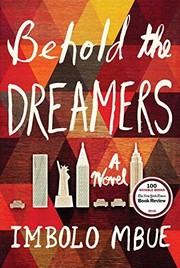
Behold the Dreamers
A Cameroonian chauffeur and his wife chase the American dream while driving a Lehman Brothers executive through the 2008 crash in Mbue's debut novel.
2,578-word summary · 11 min read
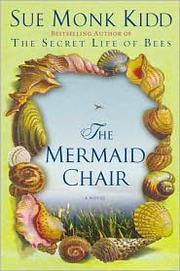
The Mermaid Chair
Jessie Sullivan returns to her childhood home on Egret Island to care for her agoraphobic mother, then finds her marriage, her faith, and a monk's vow thrown…
2,237-word summary · 10 min read
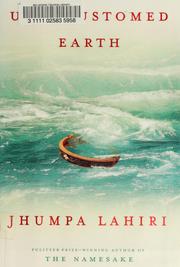
Unaccustomed Earth
Lahiri’s second story collection follows Bengali families in America and abroad, tracing the quiet distances between parents and children, spouses, and the…
2,333-word summary · 10 min read

A Spool of Blue Thread
Four generations of the Whitshank family in Baltimore, and the silences, resentments and quiet love they hand down without ever saying so.
2,408-word summary · 11 min read
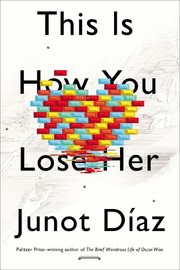
This Is How You Lose Her
Yunior cycles through love affairs and betrayals in nine linked stories, tracing the damage he does and the family history behind it.
2,195-word summary · 10 min read
And Every Morning the Way Home Gets Longer and Longer
An elderly grandfather, his son, and his grandson share memories and fears as the old man's mind begins to fade, in a short novel about grief and love.
2,078-word summary · 9 min read

The Tiger's Wife
A young doctor in a war-scarred Balkan country chases the stories her grandfather left behind, including a deathless man and a deaf girl who loved an escaped…
2,232-word summary · 10 min read

Someone Like You
Halley and her best friend Scarlett face a summer of grief, a surprise pregnancy, and Halley's dangerous first romance in Sarah Dessen's 1998 young adult novel.
2,218-word summary · 10 min read