
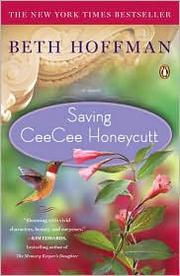
Saving CeeCee Honeycutt
2,627-word summary 12 min read 336 pages in the book
- First published
- 2010
- Publisher
- Penguin Books
- Pages
- 336
- ISBN
- 9780143118572
Reading options
What's inside (9 sections)
- A house in Willoughby where the child is the adult
- The great-aunt who arrives in a convertible
- The women of Gaston Street
- A summer of secrets, and a beach that changes things
- The peach farm and the memory she had buried
- A family assembled from women, and what the ending leaves open
- What works, and what I would have changed
- Key takeaways
- FAQ
I picked this up because of a line on the back: "Steel Magnolias meets The Help." That comparison got my attention, and it also made me wary. Books that sell themselves by referencing two better known books usually have a trick or two up their sleeve. What I found was a gentler, stranger book than that pitch promises, a first novel from 2010 about a twelve-year-old girl who has spent most of her childhood parenting a mother who cannot parent her. It is funny far more often than I expected, and it is also sad in a way the jacket copy does not prepare you for. Beth Hoffman wrote it after leaving a career in interior design in Cincinnati, and her eye for old houses and gardens shows up on nearly every page.
The book was published in January 2010 by Pamela Dorman Books at Viking, then came out in paperback that October through Penguin. The edition I read is the 336-page Penguin paperback, ISBN 9780143118572. It became a New York Times bestseller and it is still mostly read as a comfort novel, which is fair, though I think that label hides how odd some of it is.
A house in Willoughby where the child is the adult
The story opens in Willoughby, Ohio, in the 1960s, with Cecelia Rose Honeycutt, called CeeCee, living in a house that has stopped functioning as a home. Her mother, Camille, is fixed in the role she played years earlier as the 1951 Vidalia Onion Queen of Georgia. She wears tiaras and old pageant dresses around town, smears her lipstick, and behaves as though a parade might come down the street at any moment. The neighbors laugh at her. CeeCee is embarrassed by her and furious on her behalf at the same time, which is the emotional knot the whole book keeps returning to.
Camille's illness is not a passing phase. There are depressions and erratic episodes, and her husband Carl, a traveling hardware salesman, is away so much that the actual work of keeping the household running falls to a twelve-year-old. Carl is not abusive in a cartoonish way. He is simply checked out, and Hoffman is interested in what a child does when the adult in charge has quietly handed her the keys. CeeCee's answer is to read. Books are her escape, and she escapes into them with a hunger that makes sense given what is waiting in the rest of the house.
The one steady adult presence is Mrs. Odell, an elderly neighbor who sees CeeCee on Sundays and offers the small, reliable kindness the girl gets nowhere else. Mrs. Odell is important because she is the person CeeCee does not tell. She knows something is wrong next door but never learns the full extent of it, and the book's own discussion questions ask whether she could have done more if she had been told. I thought that was an honest question rather than a rhetorical one. Shame keeps CeeCee's mouth shut. She has learned that telling the truth about your own home means exposing yourself to pity, and she would rather be invisible.
Then Camille is struck and killed by an ice cream truck. The scene is brief and almost absurd in its suddenness, and that is the point. A life that has been lopsided for years ends in a moment of traffic. Carl does not know what to do with his daughter, and for a stretch CeeCee is simply unclaimed.
The great-aunt who arrives in a convertible
Help comes from someone CeeCee has never heard of. Tallulah Caldwell, known as Tootie, is a great-aunt from Savannah, and she shows up in a vintage automobile, a convertible big enough to make an entrance. She takes one look around the house, understands that something is badly wrong, and offers to take CeeCee back to Georgia with her. Carl agrees with a relief that borders on eagerness. He hands over his daughter with a short note and CeeCee leaves with a couple of boxes of belongings.
This is the moment when the book changes color. The drive south happens at night, and CeeCee later describes flying through the dark in a fancy car with a woman who appeared out of nowhere and offered to take her, messed-up life and all, to a place called Savannah. She does not know where they are, and she suspects Tootie does not either. That uncertainty is charming in the retelling, but underneath it is a frightened child who has lost her mother and been handed to a stranger. Hoffman lets both feelings sit in the same paragraph.
Tootie's world in Savannah is a revelation to CeeCee. The house on Gaston Street is full of color, old books, gardens, and objects that are used rather than protected. Tootie is in her mid-sixties, lively and funny, and deeply involved in historic preservation. She works to save old houses from demolition, and when the Pemberton house is threatened, she drops everything to help. This is not decoration in the novel. It gives CeeCee a picture of an adult who cares about something beyond herself, and it gives Hoffman a way to write about Savannah's architecture and gardens through a character who loves them. Hoffman herself came to fiction from interior design, and her great-aunt Mildred, whose Kentucky house she visited as a girl, was the seed for Tootie.
The women of Gaston Street
The house is run by Oletta Jones, Tootie's housekeeper and cook, a large, stern-looking Black woman with a heart that the book is determined to show you. Oletta makes cinnamon rolls that the reader is told about so often they become a kind of household weather. She also gives the best advice in the book, usually while feeding someone. Oletta becomes the stable mother CeeCee never had, and CeeCee, in turn, fills a space in Oletta's life left by the early death of her own daughter. That exchange is the quiet engine of the book, and it is the relationship I believed most.
The neighbors are a catalogue of types, drawn broadly on purpose. Miz Thelma Rae Goodpepper lives next door, bathes in a backyard tub, and keeps garden slugs as secret weapons against people who cross her. She wears finger cymbals and dresses in colors that have not agreed to match, and she is as duplicitous as she is striking, kind to your face and busy behind your back. Violene Hobbs is a gossip and a racist who entertains a local police officer in a canary-yellow peignoir and has a habit of losing her brassiere in ways everyone notices. On CeeCee's first visit, Violene asks an insensitive question about how Camille died and says something pointed about CeeCee's hair. The local busybody with the missing brassiere becomes a running joke, and Hoffman clearly enjoys writing these women being outrageous.
I enjoyed them too, with a reservation. The eccentricity is so thick that some of the characters never quite become people. Thelma Rae in particular reads as a collection of props rather than a person with a private life, and Violene's racism functions mostly as a flaw the plot can point at rather than something examined. The book is set in the late 1960s, and Hoffman wanted a world where a Northern girl could connect deeply with an African American housekeeper, so the racial material is deliberate. It is also, at times, handled at a distance, with slavery and segregation and the KKK appearing as lessons and close calls rather than as forces that touch the central characters in complicated ways.
A summer of secrets, and a beach that changes things
The summer unfolds as a series of lessons. Tootie takes CeeCee to see historic homes and brings her into the garden club. CeeCee begins to understand that Savannah's beauty is something people actively maintain, and she starts to picture herself as part of the city rather than a visitor. Mrs. Odell remains a thread back to Ohio, and Tootie arranges for them to see each other. When Carl passes through on his way to Chattanooga and stops to visit, CeeCee is cold and furious, and the women around her make room for the encounter without asking her to pretend the past is settled. He probably wants something from her, and the house protects her from it.
Oletta takes CeeCee with her to Tybee Island to visit her aunt Sapphire, and on that trip CeeCee learns more about Oletta's family and about the history of Black people who were allowed on the island only as workers. She also learns about Lucas Slade, a troubled young man whose family is investigated by detectives, and she keeps information to herself because she is afraid of what will happen if she speaks. That secret weighs on her and complicates the trust she is building with Oletta and Tootie.
Then there is the beach, and the attack. After it happens, Oletta tells CeeCee that she has to reclaim her power in order to get past her fear. The phrase is the kind of thing a wise fictional housekeeper says, and in a less careful book it would land as a slogan. Here it works because CeeCee has spent the entire novel being powerless in the face of other people's choices. Her mother's illness, her father's absence, the accident, the move, even the secrets she keeps: all of it has happened to her. Being told that she has a role in her own recovery is new. The beach episode also connects to Lucas Slade's trial, in which a Black man is accused of taking a white woman's belongings, and Oletta worries that a prejudiced legal system will do him harm. This is the book at its most serious, and it is a long way from the cinnamon rolls.
Through all of this, CeeCee keeps a private record she calls her Life Book. At several moments she realizes the book is being revised, that a memory she thought was fixed can change when new information arrives. It is a neat device for a novel about a child rewriting her own story, and it gives the publisher's discussion questions a useful hook. I liked it more in theory than in practice, since the book sometimes tells you that a page has turned rather than showing you what changed.
The peach farm and the memory she had buried
The turn comes on a trip to buy peaches. Tootie drives and the conversation moves to CeeCee's anger at Carl, his infidelity, and the years when Camille's sickness shaped the house. Tootie does not tell her to let it go. She lets CeeCee say what she actually feels, which is the first time an adult in the book has done that. At the farm, a detail in the present unlocks a memory CeeCee has pushed down: she was there when her mother was hit by the ice cream truck, and she saw it happen.
She wakes the next day terrified that she is becoming like Camille. That fear has been in the background from the start, never fully stated, and Hoffman finally lets it out. Tootie tells her that her mother's illness is not something she should assume she has inherited. Oletta helps her talk through the memory. And CeeCee cries for the first time, properly, for the mother she lost. It is the emotional center of the book, and it arrives late enough to feel earned.
Shortly after, Carl sends CeeCee her mother's pearls with a brief note. The pearls come with a story Camille told her, about how nature makes imperfect things, pearls included, and how Camille never saw her daughter as anything less than perfect. It is the best gift the father gives her, and it is telling that it is an object and a memory rather than a conversation. CeeCee slowly finds good memories of Camille hiding in the wreckage of the bad ones. She does not get a clean mother back. She gets a complicated one, which is more than the earlier chapters allowed.
A family assembled from women, and what the ending leaves open
As summer ends and school approaches, the household grows. Mrs. Odell learns that the cousin she meant to stay with has died, and she has nowhere she wants to go. Tootie invites her to live in the Savannah house, which brings CeeCee's oldest neighbor into the same home as the women who have cared for her through the summer. CeeCee is enrolled at Rosewood School for Girls and makes a friend named Dixie Lee. The novel closes with a celebration at the end of summer, CeeCee surrounded by Tootie, Oletta, Mrs. Odell, and the rest of the circle. She has lost one mother and gained a house full of them.
What the ending does not do is tidy everything up. Camille is still dead. Carl is still distant, and the relationship with him is not repaired by a box of pearls. CeeCee has learned to grieve out loud and has found people who will hold her while she does it, which is a real outcome even if it is not a triumph. The line about surviving hurts and gaining strength and beauty from them is the note Hoffman wants you to leave on. I am a little wary of that kind of summing up, but the book has done enough work by then that it does not feel cheap.
What works, and what I would have changed
The best thing here is Camille. Hoffman said she wanted to write her with respect, as a woman with a wounded soul and threads of a likable personality still showing through, and she managed it. It would have been easy to make Camille a joke, and instead she is funny and sad at once, which is the hardest combination to hold. Oletta is the other success. She is wise without being a saint, and her history with her own daughter gives her care for CeeCee a cost that the book does not ignore.
The weaknesses are the ones you can guess from the pitch. Publishers Weekly called it a by-the-numbers Southern charmer and complained that any hint of trouble gets smoothed away before it can create tension, that madness and neglect and snobbery sit in the background while the book stays locked on the promise of a new day. I think that is a little harsh, but not wrong. The structure is episodic, a summer of incidents stacked one after another, and the bad things are often contained within a page or two. The men are mostly layabouts, crooks, and emotional black holes, which is a choice that flattens them. And the book toys with the idea that CeeCee might inherit her mother's illness without developing it, which feels like a thread left hanging.
None of that ruined it for me. This is a book that knows what it is: a story about a girl who needed a home and found an unlikely one, told by someone who clearly loves old houses, good bread, and women who look after other women's children. It is at its best when it stops trying to be charming and simply lets CeeCee sit with what happened to her. I would hand it to a reader who wants warmth and does not mind a heavy hand with the sentiment. I would be careful with a reader who wants tension or a sharp edge. There is comfort here in generous amounts, and a real story underneath it about how a child begins again when the adults around her finally act like adults.
FAQ
Is Saving CeeCee Honeycutt based on a true story?
No. Hoffman drew Aunt Tootie partly from her own great-aunt Mildred and from visits to the South, but the characters and plot are fictional.
What is the Life Book that CeeCee keeps talking about?
It is CeeCee's private record of the events and memories that make up her life. At several points she realizes the book is being revised as new truths change what she remembers.
Is this a sad book or a funny one?
It is both. The humor comes from the eccentric women of Gaston Street, while the sadness sits with Camille's illness and the death CeeCee witnessed. Hoffman said she wanted the light and the dark to balance each other.
Similar books
Counting by 7s
A gifted twelve-year-old who counts by sevens loses her parents in a car crash and gradually builds a new family with help from a counselor, a taxi driver, and…
2,306-word summary · 10 min read

Someone Like You
Halley and her best friend Scarlett face a summer of grief, a surprise pregnancy, and Halley's dangerous first romance in Sarah Dessen's 1998 young adult novel.
2,218-word summary · 10 min read
Only Son
A brief, funny, melancholy debut about a boy whose father dies in 1982 Florida, and the man he becomes, still trying to read the mystery of that loss.
2,170-word summary · 10 min read

The Emperor of Gladness
Ocean Vuong's second novel follows a young addict pulled back from a bridge in a dying Connecticut mill town and into the home of an elderly immigrant woman…
2,693-word summary · 12 min read
The Bookstore Sisters
A short, warm story about a woman who returns to her family's failing Maine bookstore and the sister she has spent years avoiding. Books, baking and old…
2,335-word summary · 10 min read

Good Girl
A nineteen-year-old artist in Berlin, grieving her mother, falls into an unequal romance with an American author who offers escape from the ideal of the good…
2,579-word summary · 11 min read

Girls in Pants: The Third Summer of the Sisterhood
The four friends face their last summer before college, with art school, an old flame, a guilty conscience and a new baby in the balance.
2,382-word summary · 11 min read

This One Summer
Mariko Tamaki and Jillian Tamaki's graphic novel about two friends at a lake town, where a mother's grief and a pregnant teenager reshape one summer.
2,324-word summary · 10 min read

The Boston Girl
Eighty-five-year-old Addie Baum tells her granddaughter how she grew up in Boston's North End, chased education and love, and became the woman she is.
2,439-word summary · 11 min read
Tell Me Three Things
A grieving Chicago teen lands in her new stepfamily's Los Angeles mansion, then gets anonymous emails promising to guide her through a brutal private school.
2,292-word summary · 10 min read

We Are Okay
Marin fled San Francisco after her grandfather vanished and stopped answering anyone. When Mabel visits her college dorm, she has to say what happened.
2,253-word summary · 10 min read

At First Sight
Jeremy and Lexie are married and expecting a baby when anonymous emails tell him the child may not be his.
2,317-word summary · 10 min read

The Second Summer of the Sisterhood
Four friends share the traveling pants through a summer of grandmothers, first loves, and mothers who are learning to let go.
2,209-word summary · 10 min read

Delilah Green Doesn't Care
Delilah returns to Bright Falls to photograph her stepsister's wedding and falls for Claire, a bookstore owner and single mother, while a cruel bet threatens…
2,315-word summary · 10 min read

Aristotle and Dante Dive into the Waters of the World
Ari and Dante return for senior year in El Paso, navigating first love, AIDS, family grief, and the cost of being openly gay in 1987 Texas.
2,188-word summary · 10 min read
Maame
Maddie Wright, 25, has spent years as the responsible one in her Ghanaian British family, and the year she finally tries to live for herself is the year…
2,108-word summary · 9 min read
Cold Sassy Tree
In 1906 Georgia, fourteen-year-old Will Tweedy watches his widowed grandfather marry a much younger woman three weeks after his grandmother's funeral.
2,154-word summary · 10 min read

Clap When You Land
Two half sisters, one in Sosúa and one in Queens, discover each other after their father dies in a plane crash, in Elizabeth Acevedo's novel in verse.
2,890-word summary · 13 min read
Summer Sisters
Vix and Caitlin share Martha's Vineyard summers from age twelve into adulthood, through first love, grief, marriage, and a disappearance that still haunts Vix.
3,633-word summary · 16 min read
The Winners
Two years on, Beartown opens a new rink, welcomes Maya and Benji home, and faces money fights and a gun at the ice.
2,366-word summary · 11 min read

Almond
Yunjae, born with alexithymia, navigates grief and friendship with troubled Gon after losing mother and grandmother.
2,088-word summary · 9 min read
The Switch
A burned-out consultant and her 79-year-old grandmother swap London and Yorkshire homes for two months, facing grief, dating apps, and village politics.
2,782-word summary · 12 min read
The Shipping News
At thirty-six, failed newsman Quoyle loses his cruel wife and flees to ancestral Newfoundland with his daughters, where a small-paper job slowly rebuilds him.
2,833-word summary · 13 min read

The Great Believers
Yale builds a Chicago art collection as AIDS takes his friends, and Fiona searches Paris for her daughter thirty years later.
2,742-word summary · 12 min read
Tell the Wolves I'm Home
A grieving fourteen year old secretly befriends her late uncle's boyfriend in 1980s New York, testing family loyalty and love.
3,014-word summary · 13 min read

Me and Earl and the Dying Girl
A self-protective Pittsburgh senior is pushed to befriend a classmate with leukemia, and a clumsy film with Earl changes all three.
2,773-word summary · 12 min read

Fly Away
After Kate's death, Tully, Marah, and Dorothy face grief and addiction while trying to rebuild their lives.
2,940-word summary · 13 min read
Evvie Drake Starts Over
A widow hiding a painful secret rents her back apartment to a pitcher who lost his throw, and they slowly learn to start again.
2,584-word summary · 11 min read
Walk Two Moons
Sal rides west with her grandparents telling Phoebe's story while facing her own mother's absence in Idaho.
2,554-word summary · 11 min read
Ordinary Grace
In 1961 Minnesota, thirteen-year-old Frank Drum faces a summer of deaths that tests his minister family and forces him to weigh truth, guilt, and mercy.
2,948-word summary · 13 min read