

Reading options
What's inside (8 sections)
Why the same day, over and over
I have a weakness for books that keep returning to one date. There is something about the repetition that lets a writer measure damage: you see the same street, the same people, and you notice who is missing and who has changed. Alex Finlay's 2026 standalone, published by Minotaur Books, is built on that idea. It revisits May 1 in the small town of Monarch, Nebraska, once a year for ten years. The May Day Killer strikes on that date, and the book keeps coming back to it the way a person returns to a scab, half wanting it to have healed and half afraid to look.
The structure also withholds in a deliberate way. Because we only get May 1, the book skips over the ordinary days in between, and that absence becomes its own kind of tension. What happened to Jules in December? What did Quinn do with a whole year of detention? Finlay lets those gaps sit empty, and the reader fills them with dread. It is a clever trick, and it keeps the pace brisk even when the story is standing still.
The device does more than give the chapters a pleasing shape. It lets Finlay show two young people growing up wrong. Jules Delaney and Quinn Riley share eleventh-grade study hall in 1992. Jules is the popular senior, the one other people orbit. Quinn is quiet and bookish, a boy who reads while the room moves around him. They are not close in the way best friends are close, but study hall throws them together, and the years that follow bind them in ways neither chooses. Their ordinary teenage lives come first. Jules is dating Brad, and her friend Miranda is cheating with Brad behind her back. It is a small, mean betrayal, the kind that feels enormous when you are seventeen. For a while it is the worst thing in the book.
There is a warmth to these early chapters that I did not expect. Finlay writes study hall and the Omaha concert with a casual, knowing touch, and you can feel why Jules is the one everyone likes. That warmth makes what comes next harder, because the book has convinced you that this is a world worth caring about.
Then May 1 arrives, and the story stops being about who is sleeping with whom.
The night Jules did not report
The first May Day attack lands on Jules. After learning about Brad and Miranda at a concert in Omaha, she goes out to her car and finds a man hiding in the back seat. What follows is a savage attack that she survives and never tells anyone about. That silence is the hinge of the whole novel. Finlay does not need to shout about it. He simply has Jules carry it, year after year, while the town and the case move on around her.
The attack itself is described without embellishment, which is the right choice. Finlay understands that the details of such a night belong to the person who lived through it, and that Jules's refusal to speak is a form of control she can still exercise. She tells no one not because she does not remember, but because saying it aloud would make it real in a way she is not ready for. That is my reading of it, and the book gives enough space for it to hold.
That same night, Quinn is arrested for a fight in which he nearly kills someone, and he goes to juvenile detention. The two threads start together and then pull apart. It is one of the more effective choices in the book, because the reader spends years waiting for them to touch again.
A year later Quinn is at the funeral of his mother, Nadine, who has been beaten to death with a hammer. Jules, now in an alcohol program, drives him home and asks what Brad told him about that night. The question is casual on its surface but loaded underneath, and it is the first time anyone tries to join the private attack on Jules to the public violence in Monarch.
There are crumbs. A witness saw a man in a suit near the murder. Nadine's co-worker says she was about to report something at the potato chip factory, and that she kept evidence in a green folder. Quinn later finds that green folder at his brother George's group home, along with a bloody hammer. The folder and the hammer are the kind of concrete objects Finlay uses well. They sit in a room waiting to be understood, and the reader grasps their weight before the characters do.
Nadine's death also deepens the portrait of Quinn. He is not the harmless bookish boy from study hall anymore. Grief and suspicion turn him into someone who can be alone with a bloody hammer and keep looking at it. Finlay never quite says that the boy was broken by that year, but the grown man he becomes is clearly built out of it.
Italy, the letter, and the FBI
Finlay then jumps to 1994, with both characters in Italy for reasons that have nothing to do with each other. Jules is modeling. Quinn is delivering a letter for a fellow soldier killed in Somalia. It is a strange pairing of errands, and that strangeness is the point: the two are still circling the same wound without ever quite meeting it.
In Italy Jules mails an anonymous account of her attack to the police, and the FBI recruits her. This is the moment her silence breaks, and it changes the book's machinery. She is no longer just a victim sitting in a small town. She is working with Agent Jack Smith, and in 1995 Smith warns Jules and two other survivors, Carrie and Lucy, that the killer has shifted his behavior. He is now hunting the victims he once spared. That shift raises the stakes in a way that feels earned, because the date has been ticking along in the background the whole time.
The Italy chapters also give Jules a skill set. Modeling teaches her how to be seen without being known, which is a useful preparation for the role she will play with the FBI later. She is learning to perform a version of herself, and the attack she reports anonymously is another kind of performance: a truth told under cover.
Quinn's thread runs in the opposite direction. He watches Nadine's boyfriend, Randy Calhoon, convicted of her murder, while suspecting the whole case is a frame. The suspicion gives Quinn something to do with the rest of his life, and it quietly sets up the book's central argument about how easy it is to put the wrong person in prison when everyone involved wants the case closed.
I found the Italy stretch odd and compelling in equal measure. It is the least Nebraska part of a Nebraska book, and yet it moves the investigation forward more than some of the chapters set at home do. Finlay seems to understand that a thriller can afford one strange detour if the detour pays.
The long middle years
The subsequent May Days widen the cast considerably, and this is where the book asks for patience. Quinn becomes a private investigator. He chases names: Megan Tucker, Kenny Pearl, the disappearance of a girl named Minnie Agbayani. These are not tidy clues. They are half-glimpsed connections, and Finlay seems interested in the grind of looking rather than the thrill of finding.
Jules, meanwhile, confronts her former counselor, Mr. Vanderman, at Carrie's father's megachurch, and keeps searching for her missing sister, Clare. The megachurch scene is one of the book's sharper ideas. It puts a predatory figure in a place of moral authority, and the collision is uncomfortable in the right way. Clare's absence, running quietly alongside the other missing girls, gives Jules a private reason to keep digging long after the official case would have gone cold.
By this point the two leads have become the people who do not let go. That is their bond, more than any romance. They are the ones who keep the file open when everyone else has filed it away.
I kept thinking about the title here. The anniversary is not a celebration in this book. It is the day the town checks to see whether the wound has reopened, the day the survivors measure how much of their lives have been spent waiting for the next call. Finlay keeps the word quiet, but the idea sits under every chapter.
I will be honest about the pace here. The sprawling cast and the slow build, which some readers called a drag, did test me. There are a lot of names to hold, and a lot of years in which the killer seems to hover just out of reach. Finlay is patient in a way that not every thriller reader will reward. But the patience buys something: by the time the answer arrives, it feels like it has been paid for rather than sprung.
The bunker and the name behind the killer
In year eight the abductor reappears, Jules is taken to an old bunker, and Quinn arrives as the truth finally breaks. The bunker itself is a good piece of setting. It is old, sealed away, and clearly has been used before, which raises the question of how many other people were brought there. Finlay does not answer every question the bunker raises, and that restraint works in its favor. The place feels like a physical piece of the killer's history rather than a stage built for one scene.
The reveal is that the May Day Killer is Quinn's Uncle Pat, a man who once killed alongside Quinn's father. That family connection is the book's deepest seam, and running it through Quinn makes the personal and the procedural snap together.
The rest of the truth arrives in pieces. Nadine was murdered because she recognized a victim's earring. Jack, the FBI agent who recruited Jules, is Pat's partner, the man who liked to watch. That last detail recolors every scene Jack has in the book, and it is the kind of turn that makes you want to flip back through earlier chapters to see what was sitting in plain sight. Jules strangles Pat with a cord and sets him on fire, and Quinn locks him in a cell. It is a brutal, operatic ending to a decade of restraint, and it arrives with a physical clarity that the quieter chapters have been earning.
Later chapters reveal that Pat also killed Megan, closing one of the names Quinn had been chasing for years. A 2011 epilogue shows Quinn and Jules married with two children, George Guiseppe and Clare. Naming the children after the people they lost is a soft gesture after all the violence, and it lands because Finlay has kept those names alive for so long.
Whether that ending feels earned depends on how much you buy the years of therapy and recovery the book skips over. Finlay gives us the before and the after and very little of the middle, which is a risk. For me the epilogue works as an emotional closing rather than a realistic one, and I am willing to grant a thriller that much.
What stays with me, and what does not
The propulsive structure drew starred reviews from Library Journal and Booklist, and I can see why. The date device gives the book a heartbeat. Each May 1 arrives like a small deadline, and the years give the characters room to change in ways a single-season thriller would not allow. Publishers Weekly called it an "intriguing if predictable" standalone, and that feels fair to me. The solution is less surprising than the journey, but the journey is solid.
The book's greatest strength may be the way it treats memory. Jules's attack is something she carries privately for years, and the investigation is partly an argument about which stories get believed. Brad's affair, Nadine's murder, Randy Calhoon's conviction, and the names Quinn chases all depend on who is willing to listen. Finlay keeps returning to the gap between what happened and what can be proven.
For all its strengths, the book is not without friction. The middle years can feel like a catalog of leads, and several of the smaller characters never quite step out of their functions. The villain's identity, once revealed, explains a great deal but does not entirely excuse how long the plot took to get there. I also think the book sometimes confuses more names with more depth.
Still, I closed it thinking about Jules and Quinn more than about the killer. Finlay has written a book about what happens when two people survive the same night and respond by refusing, for ten years, to let it go. That is a sturdier engine than any twist. The May Day date gives it shape, but the stubbornness of these two gives it feeling. I would hand this to a reader who likes character-driven suspense and can tolerate a slow middle. I would be careful about recommending it to someone who wants a tight, fast puzzle, because the book keeps choosing the long view. That is both its virtue and the reason it may frustrate.
FAQ
Why does The Anniversary keep returning to May 1?
May 1 is the date the May Day Killer strikes each year. Finlay uses it once per year for ten years so the reader can watch the same characters age and the case change around them.
Is this a standalone or part of a series?
It is a standalone thriller published by Minotaur Books in 2026. There is no series attached to it, and the story reaches a full resolution.
Does the book have a satisfying ending?
The identity of the killer is revealed and the threat ends, with an epilogue set in 2011 showing Quinn and Jules married with two children. Some reviewers found the answer predictable even if the route there was absorbing.
Similar books
Not Quite Dead Yet
A drifting twenty-seven-year-old is told she will die within a week and decides to solve her own attempted murder instead of taking surgery with a ten percent…
2,010-word summary · 9 min read

The Witness
A Chicago murder witnessed at sixteen sends a woman into hiding in the Arkansas Ozarks, where a police chief starts asking questions about her past.
2,217-word summary · 10 min read

Rules of Prey
Minneapolis detective Lucas Davenport hunts a killer who leaves a new rule at every scene and treats murder as a game of wits.
1,914-word summary · 9 min read

3rd Degree
The third Women's Murder Club novel follows a San Francisco terror cell and a three-day killing schedule, and it costs the club a member.
2,685-word summary · 12 min read

Worth Dying For
Reacher stops for one night in rural Nebraska and finds a family that runs the county, a missing girl and a shipment worth killing for.
2,021-word summary · 9 min read

Say You're Sorry
A widowed prosecutor defends the teenager accused of killing her babysitter, uncovering a small town's secrets and a killer hiding in plain sight.
2,116-word summary · 9 min read

The Woods
Twenty years after two teenagers were murdered and two vanished at summer camp, prosecutor Paul Copeland identifies a fresh corpse as one of the missing.
2,490-word summary · 11 min read

The Heiress
A missing heiress returns to claim a mansion full of letters and lies.
2,362-word summary · 10 min read
Blindsighted
Sara and Jeffrey hunt a killer staging women in small-town Georgia.
2,400-word summary · 11 min read
The Other Mrs.
A Chicago family inherits a house on a Maine island, then a neighbor is found murdered. Kubica's 2020 thriller builds to a final reframe.
2,267-word summary · 10 min read
Fool Me Once
Widowed Maya sees murdered husband on nanny cam and digs into family lies.
2,104-word summary · 9 min read

You Shouldn't Have Come Here
Grace books a remote Wyoming ranch Airbnb to reset, but her attentive host Calvin blurs hospitality, attraction, and threat until twists reframe it.
2,515-word summary · 11 min read
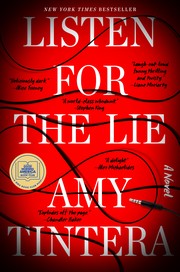
Listen for the Lie
Lucy Chase cannot remember the night her best friend Savvy died in Plumpton, Texas, until a true crime podcast pulls her back.
2,160-word summary · 10 min read
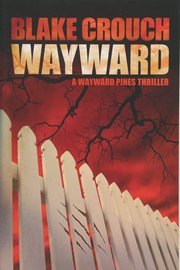
Wayward
With Ethan Burke now sheriff, Wayward Pines runs on cameras, fear and a founder's private plan, until a murder forces him to choose between order and the truth.
2,252-word summary · 10 min read
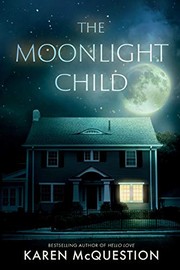
The Moonlight Child
On a cold January night, Sharon Lemke sees a child washing dishes in a neighbour's kitchen and decides she cannot ignore it.
2,169-word summary · 10 min read
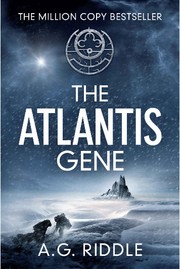
The Atlantis Gene
A geneticist and an intelligence operative chase two kidnapped boys through a global conspiracy about human evolution and a weapon built to cull humanity.
2,369-word summary · 11 min read

The 5th Horseman
Two linked cases pull Lindsay Boxer and the Women's Murder Club into a hospital full of strange deaths and a luxury-car murder spree.
2,609-word summary · 12 min read
Th1rt3en
A former con artist turned defense lawyer takes a celebrity murder trial while a serial killer sits on the jury, steering the verdict.
2,254-word summary · 10 min read

State of Terror
A new secretary of state and her team unpick a web of attacks across Pakistan, Afghanistan, and Iran in this 2021 political thriller.
2,307-word summary · 10 min read
Make Me
Reacher drifts into a quiet Midwestern town and finds a missing investigator, a trail of killers, and a deep web secret.
2,352-word summary · 10 min read

Forever Odd
Six months after Stormy's death, Odd Thomas tracks a kidnapped friend to a decaying hotel and faces a cultist who wants his gift.
2,308-word summary · 10 min read
Zero Day
Army investigator John Puller is sent alone to a West Virginia coal town to solve a colonel's murder, and finds a much larger secret buried nearby.
3,434-word summary · 15 min read

You Are Not Alone
A lonely New Yorker witnesses a subway suicide and falls in with the dead woman's friends, where a makeover and a framed murder hide a hidden mastermind.
2,588-word summary · 12 min read
The Running Grave
In the seventh Cormoran Strike novel, Robin goes undercover inside a Norfolk cult while Strike digs into a child's death from decades earlier.
2,615-word summary · 12 min read
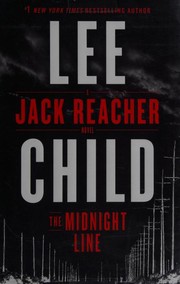
The Midnight Line
A West Point class ring in a Wisconsin pawnshop sends Jack Reacher across the Midwest, from a biker's lie to a wounded veteran hiding from the opioid trade.
2,590-word summary · 12 min read
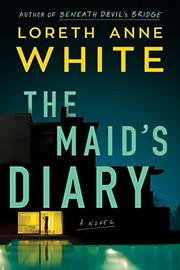
The Maid's Diary
A cleaner who snoops through her wealthy clients' lives finds a secret that could destroy them, while a detective investigates a bloody waterfront house with…
3,459-word summary · 15 min read

The Lies I Tell
A con artist returns to Los Angeles to ruin the man who took her family's home, while a journalist who has hunted her for ten years closes in.
2,201-word summary · 10 min read
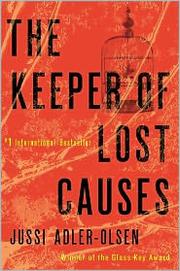
The Keeper of Lost Causes
Jussi Adler-Olsen introduces Carl Mørck and Department Q, a Copenhagen cold-case unit in a basement, and a missing politician whose file refuses to stay closed.
2,759-word summary · 12 min read
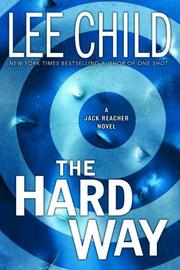
The Hard Way
A man Reacher sees drive a ransom-laden Mercedes pulls him into a retired colonel's hunt for his missing wife and stepdaughter.
2,637-word summary · 12 min read

The Girl in the Ice
A young socialite is found frozen beneath the ice in a south London park, and DCI Erika Foster returns to work to lead the case. Grief, privilege and three…
2,492-word summary · 11 min read