
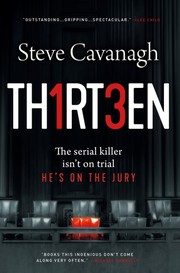
Th1rt3en
2,254-word summary 10 min read 323 pages in the book
- First published
- 2018
- Publisher
- Flatiron Books
- Pages
- 323
- ISBN
- 9781250297600
- Series
- Eddie Flynn (#4)
Reading options
What's inside (7 sections)
I picked this one up because a friend described it in a single sentence and then refused to say anything more. The sentence was that the serial killer isn't on trial, he's on the jury. That same line is printed across the cover, so the secrecy was a little silly, but it worked on me anyway. I spent the first stretch of the book trying to work out how a murderer could get himself sworn in as a juror in a high profile case, and the rest of it trying to work out what he hoped to gain once he was sitting there.
Steve Cavanagh's hook is the kind that sounds too good to be true, and in lesser hands it would be. What makes it hold is that the book is just as interested in the trial itself as in the man lurking inside the jury box. The courtroom scenes have a rhythm to them, a mix of procedure and con artistry that feels fresh even when the events stretch belief. I finished it in two sittings and then went back to the opening chapter, which reads differently once you know who is narrating it.
A defense lawyer with a criminal past
Eddie Flynn is a former con artist who now works as a criminal defense attorney in New York. That background is the whole engine of the character. He knows how a lie is built, how a room is read, and how to make a person want to believe something that is not true. Cavanagh, who practiced civil law before writing full time, clearly enjoys the overlap between the two trades. Flynn treats cross examination as a performance with a mark, and the book keeps finding new ways for him to run that con in front of a judge.
He is not presented as a hero in a neat sense. His marriage to Christine is strained, his daughter Amy has been pulled into danger by his work before, and he keeps promising that the next case will be the last one that puts his family at risk. The promise is familiar to anyone who has read the earlier books, and the novels get some comic mileage out of how little anyone believes it. Here he has taken a position with Rudy Carp's firm and been placed on the defense team for a celebrity murder trial, which is exactly the sort of quiet, safe legal work he claimed he wanted.
The personal strain matters because it gives the stakes a second layer. Losing this case would damage his career and his fragile home life at the same time. Winning it might still cost him both, given how he goes about things. Flynn is charming and impulsive, and he has a habit of acting first and telling his own team about it later. Some readers will find that exhausting after a while. I found it part of the appeal, though the book does ask you to accept that he is considerably cleverer than everyone around him.
Harper, an investigator with an FBI background, works alongside him and supplies the more grounded perspective. Where Flynn improvises, Harper checks records and follows leads. Their exchanges keep several scenes from floating off into pure cleverness, and Harper is the one who takes seriously the idea that the evidence in this case might have been planted by someone with a much longer history.
The murder trial of the century
The defendant is Robert Solomon, a movie star often called Bobby, who is charged with killing his wife, Ariella Bloom, and a member of his security detail. The couple had been one of Hollywood's most photographed pairs, and the case draws the full circus of cameras and commentary. The evidence against Solomon looks overwhelming. There is physical material at the scene, a weapon that ties to him, and witnesses who place him where he need not have been. A conviction seems close to certain.
The prosecutor, Art Pryor, is a flamboyant figure who has never lost a case and who treats the trial as a showcase. He is Southern, media savvy, and entirely comfortable with the idea that a famous man can be brought down in public. Against him, Flynn looks like an outsider brought in to soften the defense team's image, or perhaps to take the blame if things go badly. That suspicion turns out to matter more than it first appears.
One of the more interesting turns involves the judge. When the original judge has health problems, Judge Harry Ford, an old friend of Flynn's, takes over the proceedings. That development is convenient on its face, but Cavanagh uses it to put pressure on the friendship. Flynn needs room to maneuver and Ford needs to preserve the appearance of a fair trial. Their conversations carry a warmth that the rest of the courtroom does not have, and they also carry the quiet threat that the judge may have to rein in his friend from the bench.
What the prosecution cannot see is that the case against Solomon may have been arranged rather than discovered. Flynn senses this before he can prove it. The doubt starts with small inconsistencies and grows into a suspicion that someone has spent a great deal of effort guiding the investigation toward a guilty man. That is where the killer's wider pattern comes into view.
Solomon himself is a thinner figure than the case around him, and that is one of the book's weaker choices. He is defined by his fame, his dead wife, and the evidence stacked against him rather than by anything he says or does on the stand. The media circus makes sense as atmosphere, since a star's murder trial would draw exactly that kind of noise, but it also keeps the defendant at arm's length. I never felt I knew the man Flynn was fighting for, only the role he played in someone else's plan. Cavanagh gives far more attention to the people working the case than to the person at the center of it.
The man in the jury box
Joshua Kane is introduced early, and the book never pretends he is a mystery. He is a serial killer who kills for his own reasons and then arranges for someone else to be convicted of the crime. His signature involves marked dollar bills, and the investigation turns up a trail of older cases in which the wrong person went to prison. Several of those cases came from different states, which makes them easy to overlook as a single pattern. The number in the title is tied to that history, and the book is careful to let the reader piece the connection together gradually.
Kane is unnerving because he is ordinary looking and entirely without pity. Cavanagh writes his chapters in a flat, observing voice. He watches people the way a shopper compares prices, noting who is easy to read and who might cause trouble. He has a physical resilience that edges close to something superhuman, and he can adopt another person's manner well enough to slip through a room unnoticed. That is the machinery behind the book's famous premise. He does not sneak into the courthouse with a weapon. He simply becomes a man who was always meant to be there.
The way he obtains his seat is brutal, and it is also the part that asks the most of a reader. For the plan to work, a real juror has to disappear, and nobody around the courthouse can notice the substitution for the length of a lengthy trial. Cavanagh works hard to make the mechanics plausible, down to the small details of paperwork and routine. I was willing to go along with it, but I can see why some readers stop there. A killer this gifted at vanishing into other lives makes the people whose job is to notice such things look remarkably slow.
Once he is inside, Kane's route to influence is simple. A single juror cannot force a verdict, but he can argue, hold out, and quietly steer the conversations that happen when the jury is alone. He also has reason to want this particular defendant convicted, and that private motive is what keeps him close to the case instead of drifting away. Flynn, meanwhile, is trying to build a defense against a prosecutor who wants a headline and a system that already has its man.
Building a defense out of doubt
The middle of the book is largely a contest of tactics. Flynn chips away at the evidence, calls attention to the police work, and keeps looking for the older pattern that Harper has uncovered. Each small success makes the prosecution more anxious and Kane more careful. There is a strong sequence in which the defense starts to suspect that the physical evidence against Solomon was handled by people with their own reasons to want a conviction. That is the thread that connects the celebrity murder to the earlier crimes, and it gives the trial an argument beyond Solomon's innocence.
Cavanagh is good at the mechanics of a courtroom without drowning the reader in them. Objections, witness preparation, and the politics of a judge's ruling all move the story rather than stall it. Flynn's con man instincts make the legal maneuvering lively, because he is always thinking about what the other side wants to hear. The book's best scenes are the ones where he says something that sounds like a mistake and turns out to be an invitation for a witness to overreach.
The parallel narrative keeps the tension up. While Flynn works in the courtroom, Kane follows the case from the jury room and from the street, and the two men keep arriving at the same facts from opposite directions. They are mirrored figures, both skilled at reading strangers and both willing to bend the rules. The difference is that one of them is working inside a system with rules and the other is using the system as cover. That contrast gives the novel its shape and keeps even the quieter chapters moving.
It is also where the book starts to strain. Kane's abilities keep growing as the plot requires, and Flynn's escapes keep arriving at the last possible moment. There is a stretch late in the novel where the improbable starts to feel like a habit rather than a surprise. A few reviewers have made the same complaint, and it is fair. The craft is real, but the story occasionally leans on the idea that its hero and his opponent are both too clever for the ordinary world around them.
What the ending asks of you
The final movement pulls the threads together. The older crimes, the marked bills, and the planted evidence all point toward a single explanation, and Flynn has to get that explanation in front of a jury that includes the one person who cannot allow it to be heard. The confrontation is tense and violent, and Cavanagh does not shy away from letting innocent people get hurt along the way. The serial killer's private reason for wanting Solomon convicted is resolved, though the resolution depends on a revelation about who has been helping him.
That last reveal is clever and also a little slippery. It explains a great deal about how Kane operated, and it recolors a few earlier scenes in a way that rewards a second read. It also asks the reader to accept a coincidence that the book has not fully earned. I enjoyed it in the moment and felt the seams afterward. A reviewer I trust described the same reaction, which made me feel less alone in it.
The closing chapters also do something the book has been hinting at all along. They show how much of a trial depends on the stories people tell about the evidence, rather than the evidence itself. Once a plausible account is in place, the attorneys, the jury, and the spectators all begin sorting every new fact to fit it. Flynn's skill is in offering a competing story that is just plausible enough to make the jury hesitate. That is a satisfying idea for a legal thriller, and it lands better than some of the physical action that surrounds it.
What stays with me is not the twist but the question underneath it. The book is worried about how easily a legal process can be steered when everyone assumes the people in the room are who they say they are. It treats the jury system as something fragile that depends on ordinary trust, and it is far more interested in that fragility than in delivering a clean moral lesson. The title's stylized digits feel appropriate for a story about identity that can be rearranged.
Th1rt3en was first published in the United Kingdom in 2018 and reached the United States in 2019, where Flatiron Books published it. The edition cited here is the 2019 hardcover, which runs 323 pages. It works well as a standalone even though it sits fourth in the Eddie Flynn series, since the book supplies enough of Flynn's history to follow him without the earlier novels. If you like courtroom fights and are willing to accept a premise that lives a little beyond the possible, this is an entertaining, tightly wound thriller. If you need your crime fiction to stay inside the bounds of what could actually happen, the jury box idea will likely test your patience long before the verdict arrives.
FAQ
Is Th1rt3en part of a series?
Yes. It is the fourth Eddie Flynn novel, first published in 2018 in the United Kingdom. The story supplies enough background that it can be read on its own.
Why is the title spelled with numbers?
The cover styles the word as TH1RT3EN, replacing the i with a 1 and the e with a 3. The United States edition from Flatiron Books uses the same stylized title.
Does the book reveal the killer early?
Yes. The cover line and the opening chapters make clear that Joshua Kane is the killer and that he is on the jury. The suspense comes from watching Flynn prove it.
Similar books
More from Eddie Flynn first, then related titles.

4th of July
Lindsay Boxer shoots two armed teenagers in self-defense, faces a wrongful-death trial, and spends her leave chasing a string of throat-slashing murders in…
2,192-word summary · 10 min read

The Rainmaker
Broke rookie Rudy Baylor sues an insurer over a denied transplant and faces Leo Drummond at trial.
3,040-word summary · 14 min read
Rogue Lawyer
A street lawyer with a bulletproof van and a gun takes on clients no one else will defend, from a wrongly accused teenager to a mobster on death row.
2,353-word summary · 10 min read

The Beach House
A young valet is beaten to death at a Hamptons party, and his law-student brother spends a year building a case against the family that covered it up.
2,049-word summary · 9 min read

Rules of Prey
Minneapolis detective Lucas Davenport hunts a killer who leaves a new rule at every scene and treats murder as a game of wits.
1,914-word summary · 9 min read

3rd Degree
The third Women's Murder Club novel follows a San Francisco terror cell and a three-day killing schedule, and it costs the club a member.
2,685-word summary · 12 min read
Gray Mountain
A Manhattan associate furloughed after the financial crash takes a year of unpaid legal aid work in Appalachian coal country, and finds the case of her life…
2,026-word summary · 9 min read
The Racketeer
A jailed lawyer trades a judge murder secret for freedom and revenge.
2,434-word summary · 11 min read
The Judge's List
Lacy Stoltz hunts a sitting judge who murders off his list.
2,513-word summary · 11 min read

The Partner
A Biloxi lawyer fakes his death, steals $90 million, and hides in Brazil until hired muscle drags him home to trial.
2,221-word summary · 10 min read
Defending Jacob
A Newton prosecutor defends his fourteen year old son after a classmate is stabbed in the park.
2,994-word summary · 13 min read
The Pelican Brief
Law student Darby Shaw writes a brief on murdered justices and becomes a target, fleeing with a reporter.
2,994-word summary · 13 min read

The 5th Horseman
Two linked cases pull Lindsay Boxer and the Women's Murder Club into a hospital full of strange deaths and a luxury-car murder spree.
2,609-word summary · 12 min read
Make Me
Reacher drifts into a quiet Midwestern town and finds a missing investigator, a trail of killers, and a deep web secret.
2,352-word summary · 10 min read
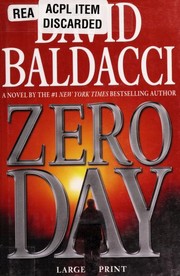
Zero Day
Army investigator John Puller is sent alone to a West Virginia coal town to solve a colonel's murder, and finds a much larger secret buried nearby.
3,434-word summary · 15 min read
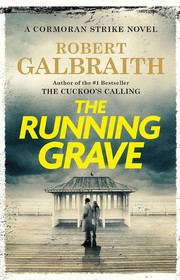
The Running Grave
In the seventh Cormoran Strike novel, Robin goes undercover inside a Norfolk cult while Strike digs into a child's death from decades earlier.
2,615-word summary · 12 min read
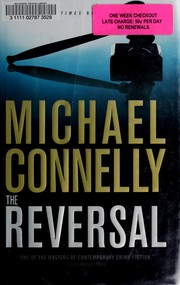
The Reversal
Mickey Haller prosecutes a child killer's retrial with ex-wife Maggie and half-brother Harry Bosch on his team.
2,056-word summary · 9 min read
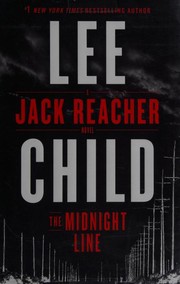
The Midnight Line
A West Point class ring in a Wisconsin pawnshop sends Jack Reacher across the Midwest, from a biker's lie to a wounded veteran hiding from the opioid trade.
2,590-word summary · 12 min read
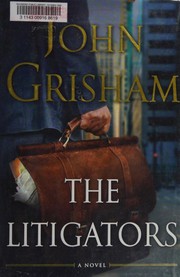
The Litigators
Two Chicago ambulance chasers and a burned-out Harvard Law graduate take on a drug giant, only to find the case sliding toward disaster.
2,244-word summary · 10 min read
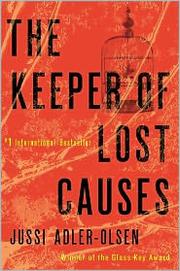
The Keeper of Lost Causes
Jussi Adler-Olsen introduces Carl Mørck and Department Q, a Copenhagen cold-case unit in a basement, and a missing politician whose file refuses to stay closed.
2,759-word summary · 12 min read
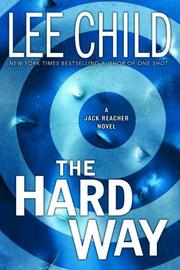
The Hard Way
A man Reacher sees drive a ransom-laden Mercedes pulls him into a retired colonel's hunt for his missing wife and stepdaughter.
2,637-word summary · 12 min read
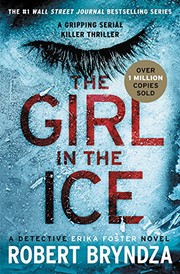
The Girl in the Ice
A young socialite is found frozen beneath the ice in a south London park, and DCI Erika Foster returns to work to lead the case. Grief, privilege and three…
2,492-word summary · 11 min read
The Fifth Witness
A foreclosure case turns into a murder trial when a client's banker turns up dead, and a slick Los Angeles lawyer wins a case he wishes he had lost.
2,154-word summary · 10 min read
The Brass Verdict
Mickey Haller takes over a murdered lawyer's caseload and a Hollywood double-murder trial, with Harry Bosch circling the edges.
2,672-word summary · 12 min read

Salem Falls
A former teacher wrongly convicted takes a job washing dishes in a small New Hampshire town, where a new accusation stirs a modern-day witch hunt.
2,415-word summary · 11 min read
Never Go Back
Reacher returns to his old military unit to find Major Susan Turner jailed and two invented cases hiding an opium smuggling ring.
2,245-word summary · 10 min read
Jack & Jill
A senator is killed with a nursery-rhyme calling card as a child is murdered near Alex Cross's home. The third Alex Cross novel pulls him toward two cases, one…
2,646-word summary · 12 min read
Hidden Bodies
Joe Goldberg flees to Los Angeles chasing the woman who robbed him, falls for a wealthy grocery heir, and finds the bodies he buried in New York resurfacing in…
2,247-word summary · 10 min read
Fractured
In Karin Slaughter's second Will Trent novel, a mother kills the wrong man in an Atlanta mansion, and a GBI agent with a hidden reading difficulty finds a…
2,219-word summary · 10 min read
A Wanted Man
Hitchhiking home to Virginia, Jack Reacher accepts a ride from three strangers and finds himself inside a murder case that someone has decided to erase.
2,788-word summary · 12 min read