
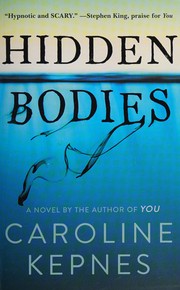
Hidden Bodies
2,247-word summary 10 min read 448 pages in the book
- First published
- 2016
- Publisher
- Atria/Emily Bestler Books
- Pages
- 448
- ISBN
- 9781476785639
- Series
- You (#2)
Reading options
What's inside (9 sections)
I read the first You and went straight into this one, mostly because I wanted to know what a serial killer does for an encore. Hidden Bodies came out in 2016, published by Atria/Emily Bestler Books, and this edition runs 448 pages in the trade paperback. It is book two of The You Series, and it finds Joe Goldberg alive, free, and running Mooney Rare and Used in New York, doing his best to look like a man who has turned a corner. He has not turned a corner. He has learned to be more careful with the evidence.
The book opens on a May morning with Joe buying violets for his girlfriend on East Seventh Street. Not roses, he explains, because roses are what you buy when you have done something wrong. He has done everything right this time, or so he tells you, and the word "you" is the whole trick: Joe speaks straight at the reader the way he spoke to Guinevere Beck in the first book, so you are stuck in the position of the person he is trying to impress. In that same opening walk he admits he once left a urine-soaked ceramic mug on the floor of a closet in the Salinger house, a loose end from the murder that closed You. He thinks about that mug a dozen times a day. It is not idle worrying. The mug comes back.
Amy and the books she takes
Amy Adam walks into Mooney Rare and Used carrying a spiral notebook, a jar of superfruits, and a story about wanting a job. Joe notices her latex gloves, her blond hair, her blue contact lenses, and the fact that she tells the truth when she could just as easily lie. She wants the two of them to go hunting at estate sales, and she mentions copies of Alice in Wonderland worth over a million dollars. Joe keeps the valuable books in a cage in the basement, and he pictures locking the two of them inside it together. He hires her instead, which is his version of restraint.
They bond over Philip Roth. Amy loves Portnoy's Complaint, marks her favorite passages with a Sharpie, and wants to own every yellow dust jacket ever printed. Joe overstocks the title so the two of them can be near it. There is a signed copy of The Easter Parade she begs him to buy, there is a Starbucks bathroom, and for a while Joe believes he has found somebody who matches him. Then Amy gets into the basement, takes the rare books, and disappears west. She was never the reader she pretended to be. Joe takes this less like a breakup than like a personal betrayal, quits his job, and follows her to Los Angeles with the intention of killing her.
That is the engine of the first stretch of the novel. Kepnes sets up a fresh start and then shows you the same machinery running underneath it, only with better lighting. Joe is careful about details now. He remembers the mug, he remembers where the books were kept, and he is still the man who narrates his own actions as though a sympathetic listener might agree with him.
Los Angeles, Delilah, and a comedian's joke
Joe lands in a city he promptly decides is shallow and famous mostly for wanting to be famous, and he says so at length. He joins Facebook and Twitter to hunt Amy, takes a job in another bookstore, and rents a place where his neighbor is a woman named Delilah Alves, a former journalist with ambitions and a sharp eye. Joe sleeps with Delilah and uses her to make contacts, telling himself that this time he is being honest about what he wants. Delilah introduces him to Henderson, a wealthy comedian with a popular web show called F@ck Narcissism and a mansion in the Hollywood Hills where he throws parties for the entertainment industry.
At one of those parties Henderson performs a bit about a girlfriend named Amy who mocked a man's sexual performance. Joe recognizes the story, decides Henderson must be dating the woman who robbed him, and spirals into a rage. Henderson admits he only tried to date Amy and got rejected, but Joe has already built the case in his head. He kills Henderson at the mansion and makes the death look like a suicide. The murder is dressed up as a response to a crude joke, and underneath it sits the older truth that Joe cannot bear to be laughed at.
He does find Amy eventually, when she tries to sell a copy of Portnoy's Complaint at the store where he now works. She recognizes him and vanishes before he can grab her. Later, on a beach, he has the chance to kill her and decides she is not worth the trouble. That choice is the closest the book comes to growth, and it is hard to read as mercy. Amy simply stops mattering once Joe has somebody else to want.
Love Quinn and the darkened room at Soho House
The person who replaces her is Love Quinn, whom Joe meets in a darkened room at Soho House. She is beautiful, intense, and comes from a family with real money: her parents, Lottie and Ray Quinn, built the Pantry grocery chain. She works at an upscale store, and Joe reads her emotional availability as destiny. The second-person voice works hard in these chapters, because Joe keeps telling you that this relationship will prove he can love normally, and the person being told gets no vote.
Love's twin brother Forty comes with the package. Forty is an aspiring screenwriter, erratic and dependent on drugs, and Joe finds him exhausting. He puts up with him to stay close to Love. There is also Milo, a man from Love's past who sells a script that casts himself and Love as the romantic leads, then writes enough kissing scenes to make Joe furious. Joe goes with them to Palm Springs to be near the shoot, seethes through the production, and watches Love choose him over an explicitly sexual scene in the movie. For a few chapters the new life feels within reach, but it is being built on a script Joe is not in.
The bodies that come back
The title is not decoration. Delilah starts asking about Henderson's disappearance and about Joe's past, and Joe kills her in the bathtub, stabbing her and then carrying on as though nothing has changed. He has spent hundreds of pages telling himself he is a man who remembers his mistakes, and the killing shows what that memory is for. It helps him cover his tracks.
Officer Robin Fincher had pulled Joe over for jaywalking earlier in the book and takes an interest in him afterward. Joe lures Fincher to Mexico, where the Quinns are holding a party to celebrate the end of filming, and traps him in a glass-walled panic room inside a house under construction that belongs to Axl Rose. Joe accuses him of stalking celebrities, and Fincher throws himself against the glass hard enough to kill himself. Joe buries the body under a cactus. The scene is absurd and ugly at the same time, and it shows how thin his justifications have become. By this point he is not protecting love. He is protecting the story he has written about himself.
Kepnes is writing a satire of Hollywood in these chapters too, and the two modes do not always sit comfortably together. The web show, the parties, the screenplay, and the panic room in a star's unfinished house give Joe plenty of targets, and the novel is sharp when it notices how easily vanity and cruelty share a room. At other times the jokes about Los Angeles feel like material Joe might have written himself, which may be the intention but gets wearing. The middle section runs long, and the flood of party names and industry chatter can blur from one chapter into the next. Stephen King called the voice hypnotic and scary, and Entertainment Weekly said Kepnes "hits the mark, cuts deep, and twists the knife." Both descriptions fit. Booklist went further and called Joe "the love child of Holden Caulfield and Patrick Bateman," which gets the joke and the danger in one line.
Forty, the mug, and what Love knows
Joe takes Forty into the desert, drugs him with LSD, and holds him underwater at a spring, convinced he has drowned him. He has not. Forty survives, works out what happened, and blackmails Joe into writing scripts for him. Joe does the work and gets no credit, which is a small and almost domestic version of the containment he prefers. Forty sells two of the scripts and keeps the money. Joe's rage stays buried because Love is watching.
Then there is the mug. Joe travels back to Little Compton to retrieve the ceramic cup he left in that closet at the Salinger house, the last piece of physical evidence tying him to Beck's death. Love surprises him at a hotel while he is trying to work out how to get inside the house. He tells her the truth about himself. She locks him in the bathroom, and he assumes she is calling the police, but she goes and gets the mug instead. Then she forgives him, because she does not believe hating anybody is ever justified. She tells him about the puppy Forty killed as a child because the dog loved her more than him, and about how she has spent her life blaming people for not loving her brother enough. She also tells him she is pregnant. For a few pages Joe believes he has been understood, which is the one thing he has wanted more than sex or money.
Forty turns up alive and the blackmail drags on for a while, and then a tourist's car hits him while he is jaywalking and he dies. Joe writes the eulogy and delivers it at the funeral, and celebrities including Reese Witherspoon and Susan Sarandon approve of it. On a beach he sees Amy again and lets her go. The story is moving toward what Joe thinks of as retirement.
A proposal in a Taco Bell
Joe proposes to Love inside a Taco Bell, and the police arrest him there for the murder from the previous novel. He is not especially worried. He and Love have kept their stories straight, and he assumes the evidence is gone. That confidence is the book's last joke on the reader, because the novel ends with Joe in prison, still narrating from his cell, certain that Love will come back and that the child she is carrying will restore the life he believes he was building. He has been caught, he has lost his freedom, and he has learned nothing about why any of this went wrong.
I kept waiting, even at the end, for the flicker of doubt that never comes. Joe has an answer ready for every horrible thing he does, and Kepnes sustains that voice for four hundred pages without letting it crack. It is impressive and a little exhausting. A reader who wants a killer to face a moral reckoning will not find one. A reader who wants to spend time inside a brilliant, warped mind that can explain away a bathtub and a glass panic room will find plenty to admire.
What the sequel gets right and wrong
The strongest part of Hidden Bodies is the way it refuses to let Joe's fresh start succeed without showing you the old pattern underneath it. He buys violets instead of roses, he memorizes the details, he talks about being a changed man, and he still kills anybody who threatens the story he is telling. The mug, the basement cage at Mooney's, and the yellow wall of Roth paperbacks are concrete details that make him feel like a person rather than a type. The Hollywood satire gives the book a wider target than the first novel had.
The weak part is the pacing. Once Joe reaches Los Angeles, the plot starts stacking coincidences and celebrity cameos, and the body count rises faster than the insight. Forty is meant to be a comic nuisance and a genuine threat, but he wears out his welcome well before the car hits him. The book also asks you to accept that Love's forgiveness follows from a story about a puppy, which is a thin foundation for the turn the plot needs. Joe's second-person complaints about the city can read like a privileged man's review of a restaurant he has decided to hate.
One useful thing to know if you have seen the Netflix show: the novel goes its own way. The Amy plot belongs to the book, while the series gives that role to Candace. Henderson and his web show exist in the novel, and in this version Joe kills Delilah in the bathtub rather than leaving her to Love in a cage. The show moves the story toward the Quinn family secrets that the later books develop, so the two versions track each other only loosely. Hidden Bodies stands on its own as a further study of Joe's obsessions, and it works best if you finish You first, because so much of the mug, the basement cage, and Joe's guilt depends on what happened to Beck.
FAQ
Do I need to read You before Hidden Bodies?
Yes. This novel begins after Joe has killed Guinevere Beck, and it keeps returning to evidence from that crime, especially a ceramic mug he left behind in a closet.
Is Amy Adam the same character as Candace from the Netflix show?
No. Amy is the novel's book-loving thief who steals rare editions and runs to Los Angeles, while the television adaptation gives that role to a different character, Candace.
How does Hidden Bodies end?
Joe proposes to Love in a Taco Bell and is arrested for the earlier murder. The book closes with him in prison, still convinced that Love is pregnant and will come back for him.
Similar books
More from You first, then related titles.
The Obsession
After a childhood in the shadow of her serial killer father, photographer Naomi Carson puts down roots in a coastal town, only to face a copycat killer…
2,230-word summary · 10 min read
Intensity
A college student survives a brutal home invasion, then follows a killer's motor home in a bid to save the teenage girl he holds captive.
2,290-word summary · 10 min read
The Ex
Cassie thinks her new boyfriend's ex is the woman harassing her, but Freida McFadden's thriller keeps rearranging who the ex actually is.
2,103-word summary · 9 min read
Th1rt3en
A former con artist turned defense lawyer takes a celebrity murder trial while a serial killer sits on the jury, steering the verdict.
2,254-word summary · 10 min read
You Are Not Alone
A lonely New Yorker witnesses a subway suicide and falls in with the dead woman's friends, where a makeover and a framed murder hide a hidden mastermind.
2,588-word summary · 12 min read
The Maid's Diary
A cleaner who snoops through her wealthy clients' lives finds a secret that could destroy them, while a detective investigates a bloody waterfront house with…
3,459-word summary · 15 min read
The Lies I Tell
A con artist returns to Los Angeles to ruin the man who took her family's home, while a journalist who has hunted her for ten years closes in.
2,201-word summary · 10 min read
The Cellar
Abducted in her small English town, sixteen-year-old Summer is locked in a cellar with three other girls. Their captor calls himself Clover and wants a perfect…
2,551-word summary · 11 min read
Pretty Things
A grifter and an heiress collide at a decaying Lake Tahoe mansion in Janelle Brown's sharp novel about social media, deception and the stories people tell to…
2,725-word summary · 12 min read
When She Returned
Eleven years after vanishing from a California parking lot, Kate Bennett reappears in Montana with an infant, and her family learns that coming home may not…
2,338-word summary · 10 min read
The Flight Attendant
A flight attendant wakes in a Dubai hotel beside a dead man she may have killed, and spends the rest of the novel lying to everyone who could help her.
2,496-word summary · 11 min read
The Anniversary
Alex Finlay's standalone revisits May 1 in a Nebraska town for ten years as two former classmates close in on the May Day Killer.
2,237-word summary · 10 min read

What She Knew
Rachel lets her eight-year-old son run ahead in a Bristol park, and the nine-day search turns her into a suspect in the public eye.
2,952-word summary · 13 min read

Rules of Prey
Minneapolis detective Lucas Davenport hunts a killer who leaves a new rule at every scene and treats murder as a game of wits.
1,914-word summary · 9 min read

Still Missing
A realtor is abducted at a Vancouver Island open house and held for more than a year. Told through therapy sessions, the novel follows her escape and the hunt…
2,466-word summary · 11 min read
Saving Noah
A seventeen-year-old swimmer confesses to molesting two girls he coached, and his mother must decide what unconditional love is worth.
2,976-word summary · 13 min read

3rd Degree
The third Women's Murder Club novel follows a San Francisco terror cell and a three-day killing schedule, and it costs the club a member.
2,685-word summary · 12 min read
The End of Her
A sleep-deprived mother of twins faces a stranger's accusation that her husband murdered his first wife in Shari Lapena's domestic suspense novel.
2,383-word summary · 11 min read
The Drowning Woman
Living in her car in Seattle, Lee saves a wealthy stranger from drowning. The friendship that follows draws her into abuse, murder, and a plan to disappear.
2,578-word summary · 11 min read
The Widow
A widow of a suspected criminal faces reporters and police while hiding what her marriage really cost.
2,599-word summary · 12 min read
The Therapist
A couple moves to a gated street where the previous therapist was murdered in their house.
2,437-word summary · 11 min read
The Night Swim
A true crime podcaster covers a rape trial while probing an old drowning in a small town.
2,260-word summary · 10 min read
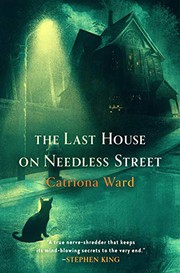
The Last House on Needless Street
A lonely man, a cat and a mysterious neighbor pull you into a house full of buried trauma.
2,627-word summary · 12 min read
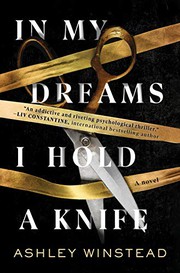
In My Dreams I Hold a Knife
College friends reunite ten years after a murder with a trap set.
2,252-word summary · 10 min read
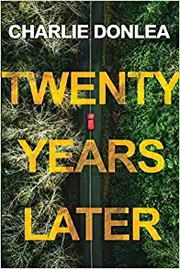
Twenty Years Later
A TV host reinvestigates a 20-year-old murder after a 9/11 victim ID names the accused, and the case pulls her own hidden past into view.
2,726-word summary · 12 min read
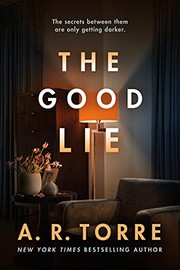
The Good Lie
A psychiatrist and a grieving lawyer reopen a closed serial killer case in California and find the profile points somewhere painful.
2,964-word summary · 13 min read
The Breakdown
After driving past a stranded driver who is found dead, teacher Cass forgets pills and codes while silent calls mount.
2,424-word summary · 11 min read
The Wives
A woman who sees her husband only on Thursdays tracks down his other wives and learns her marriage is not what she believed.
2,454-word summary · 11 min read
The Turn of the Key
A nanny writes from prison about a smart Highland house, four girls, and the night one child died.
3,207-word summary · 14 min read