
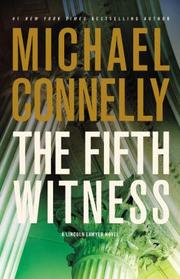
The Fifth Witness
2,154-word summary 10 min read 421 pages in the book
- First published
- 2011
- Publisher
- Little, Brown and Company
- Pages
- 421
- ISBN
- 9780316069359
- Series
- Lincoln Lawyer (#4)
Reading options
What's inside (9 sections)
I came to this book having already spent time with Mickey Haller in The Lincoln Lawyer and The Brass Verdict, and I more or less knew what to expect: smooth courtroom work and a client whose innocence was never quite certain. Connelly gave me that, but he opened the story somewhere I did not anticipate. Before there is a murder to solve, there is a lawyer who cannot find anyone willing to pay him. The Fifth Witness was published on 5 April 2011 by Little, Brown and Company, in the thick of the foreclosure crisis, and Connelly built the entire plot out of an ordinary, unglamorous fact. When money is tight, even people facing criminal charges cut back, and a defense practice can quietly starve. It is the fourth Lincoln Lawyer novel and the twenty third of Connelly's books, and it pushes Mickey into a kind of case he has never handled before.
The book later won the 2012 Harper Lee Prize for Legal Fiction, which makes sense once you see how much of it happens inside a courtroom. But the part I remember most is the opening mood, that sense of a man who built a career on being busy suddenly checking his calendar and finding it empty.
A practice that has gone quiet
Mickey Haller works out of the back of a Lincoln Town Car, which is how he earned the nickname the Lincoln Lawyer. In the earlier books that car was a symbol of hustle, a mobile office for a man chasing volume cases and fees. Here it feels more like a refuge. Criminal defense work has dried up in the recession. Crime itself has not slowed down in Los Angeles, as Mickey is careful to point out, but paying customers have become rare. People who need a lawyer to keep them out of jail are finding ways to cut back, and Mickey has had to look elsewhere for income.
That elsewhere is foreclosure defense. Banks are seizing thousands of homes from people who were sold mortgages they could never afford, and a new trade has opened up for lawyers willing to help homeowners stay put. Mickey takes on these cases, and his very first client in that line of work is Lisa Trammel. She has been with him for eight months by the time the book begins. Mickey has managed, so far, to keep the bank from taking her house, but the fight has worn her down and made her angry. She has become a public opponent of the bank's practices, organizing protests and drawing press attention to the fight. The bank has obtained a restraining order to stop her demonstrations.
Then a senior bank executive named Mitchell Bondurant is found dead in the bank's parking garage. He has been struck on the crown of the head with a hammer while standing upright, a detail that matters a great deal later. Lisa, who had public reasons to resent Bondurant and the institution he worked for, is about to be indicted for his murder. She asks Mickey to defend her. Just like that, he is back in the criminal courts, on the biggest stage he knows, and the client he has been trying to help through a civil fight is now accused of killing a man.
The team around the Lincoln
Mickey does not take this case on alone. He has a temporary office now and a young associate fresh out of law school, a sign that he is trying to steady a practice that has always run on instinct and phone calls. His investigator is Dennis Wojciechowski, known to everyone as Cisco, a real presence in Connelly's Haller books who does the legwork that Mickey is too busy or too vain to do himself. Cisco is married to Lorna Taylor, Mickey's former wife, who also works with the team. That arrangement could be a soap opera, and Connelly surely knows it, but he treats it as ordinary working chemistry rather than a source of cheap drama.
The prosecutor handling the case is Andrea Freeman, and Mickey has never beaten her. That fact hangs over the trial like a bet he did not choose to make. He knows Freeman is careful and unflappable, and he knows that a single mistake in front of her will be punished. The foreclosure angle also shadows jury selection. Prospective jurors are asked whether they or anyone in their family has ever owned a foreclosed property, a question that quietly tells you whose side the courtroom instinctively leans toward. In a city full of people who have lost homes, Mickey's client is already walking uphill.
I liked this part of the book more than I expected to. Connelly is good at the small mechanics of a defense team at work, the arguments about what can be used and what cannot, the division of labor between the lawyer who speaks and the investigator who listens. It feels lived in. At the same time, I noticed the middle stretch repeats itself a little. Characters revisit the same evidence and the same doubts in slightly different rooms, and a few conversations seem to exist mainly to restate what the reader already knows.
What the banker was hiding
The heart of the defense is a simple physical problem. Bondurant was six feet two inches tall, and the blow that killed him came from above while he was standing. Lisa is a much smaller woman. That mismatch gives Mickey something concrete to argue: the prosecution's account may not fit the body. Connelly lets the forensic argument carry real weight, because it is the kind of detail a jury can picture without being an expert.
The investigation then widens. As Cisco and Lorna dig into Bondurant's affairs, they turn up signs that the dead man had dealings well outside ordinary banking. There are whispers of black market connections and ties to organized crime, the sort of contacts that give a defense lawyer room to argue that someone other than Lisa had a reason to want Bondurant gone. Soon after these leads surface, Mickey is attacked. The message is not subtle. He takes the assault as proof that he has got close to something the powerful people around Bondurant would rather keep buried, and from that point on the case carries a physical risk along with the legal one.
This is where the book's title starts to earn its keep. The deeper Mickey goes, the more the trial becomes a contest between two stories: a bank and an angry homeowner, or a dead man with dangerous friends and a convenient suspect. Connelly never lets the second story fully take over, which is part of the tension. The evidence that could help Lisa is also the evidence that puts Mickey in danger.
The witness who takes the Fifth
The defense strategy comes down to one witness. Mickey calls Louis Opparizio, a figure with organized crime associations that could point toward an alternative killer, and he does so as the fifth witness of the trial. The plan is to question Opparizio about his connection to Bondurant and then press him on those associations, betting that the witness will invoke his right against self incrimination in front of the jury. If that happens, the jury may be left wondering what Opparizio is hiding, and the name of a plausible alternative suspect will have been planted without Mickey having to prove a thing.
It is a classic courtroom gambit, and Connelly stages it with the patience of someone who knows exactly when a jury leans forward. Opparizio invokes the Fifth Amendment before Mickey can draw out the full extent of his criminal ties. The judge stops the line of questioning and tells the jury to disregard the testimony, which is the legal equivalent of asking people to forget something they have just heard. The instruction is careful and correct, and it does not work. By the time the jury files out, the possibility of another killer is in the room. They return a verdict of not guilty.
The double meaning of the title lands here, and it is neat enough to enjoy. Opparizio is the fifth witness Mickey calls, and he is also the witness who takes the Fifth. That is a small piece of wordplay, but Connelly has earned it by making the moment matter to the case rather than to a puzzle.
A win that leaves a bad taste
In most legal thrillers the acquittal is the payoff. Connelly uses it as the setup for the real ending. Once the trial is over and Lisa is free, Mickey becomes convinced that she did kill Bondurant. When he confronts her, what unsettles him is not anger or denial but a kind of calm. She does not seem troubled by what he thinks he has worked out. The victory he spent the book building turns out to have freed a woman he believes is guilty, and the courtroom result he wanted gives him no satisfaction at all.
Then there is the matter of Lisa's husband. He was said to have run out on her years ago, but Mickey learns that she murdered him and buried the body in her garden. An anonymous tip sends the police to dig under the property, and they find the remains. This is the last surprise Connelly has been holding back, and it arrives after the verdict rather than during the trial, which is exactly where it hurts most. Because Lisa has been acquitted of Bondurant's murder, she cannot be tried for it again. The new discovery opens a different door.
About three weeks later, with his practice suddenly prospering from the trial's publicity, Mickey gets a call from Lisa. She accuses him of tipping off the police about the garden, and she asks him to defend her in the case concerning her husband's death. He refuses. He also tells her that he has filed to run for Los Angeles County District Attorney, a decision that grows directly out of this case. He is tired of building a practice around clients whose conduct he can no longer accept, and he wants to stand on the other side of the courtroom for a change. It is an abrupt turn for a character defined by defense work, but Connelly plants the dissatisfaction early enough that it does not feel cheap.
What the book is really about
Connelly has said that he looked for a story reflecting what was happening in society, and that he partly fell into the foreclosure material after a lawyer he researches with moved into that field. It shows. The bank in this book is not a cartoon villain, and the people losing their homes are not saints. What interests Connelly is the way a financial disaster turns into a criminal case, and how hard it becomes to separate a just outcome from a legal one. The question the book keeps asking is whether winning a case and believing your client are the same thing, and by the end the answer is clearly no.
That theme is why the Harper Lee Prize sits well on it. This is a legal novel that cares about the machinery of the law and about what the machinery fails to see. It also helps that Connelly can write a courtroom scene so that you can hear the room breathe, and that he gives Mickey a moral blind spot that the plot then refuses to let him ignore.
For all that, it is not a book I would hand to everyone. If you want pure procedure with every objection explained, Connelly sometimes skims. If you dislike a hero who is a little too pleased with his own cleverness, Mickey will grate. And the ending asks you to accept a large professional change in a few pages, which I found brisk rather than fully earned. I also thought the recurring doubts about Lisa's guilt were stated once too often before the reveal, taking a little of the edge off the final turn.
Who I would pass it to
I would give this to someone who already likes the Lincoln Lawyer books and wants to see Mickey out of his depth in a case that has almost nothing to do with his usual clients. I would give it just as readily to a reader who has never met him, because the book gives enough of his world early on to stand on its own. Connelly later saw the story adapted as the second season of the Netflix series The Lincoln Lawyer, and it is easy to see why this case, with its single striking courtroom trick and its sour aftertaste, appealed to a television audience. What stays with me is not the twist itself but Mickey sitting with the knowledge that he did his job perfectly and still got the answer wrong.
FAQ
Is The Fifth Witness part of a series?
Yes. It is the fourth Lincoln Lawyer novel featuring Mickey Haller, and it also sits in the wider Harry Bosch universe. It reads fine on its own.
What does the title refer to?
Louis Opparizio is the fifth witness Mickey calls at trial, and he also invokes his Fifth Amendment right against self incrimination, giving the title a double meaning.
Did The Fifth Witness win any awards?
It won the 2012 Harper Lee Prize for Legal Fiction, and it later became the basis for the second season of the Netflix series The Lincoln Lawyer.
Similar books
More from Lincoln Lawyer first, then related titles.
The Lincoln Lawyer
Mickey Haller defends a rich assault suspect from his Lincoln while doubting his innocence.
2,317-word summary · 10 min read
The Brass Verdict
Mickey Haller takes over a murdered lawyer's caseload and a Hollywood double-murder trial, with Harry Bosch circling the edges.
2,672-word summary · 12 min read
The Reversal
Mickey Haller prosecutes a child killer's retrial with ex-wife Maggie and half-brother Harry Bosch on his team.
2,056-word summary · 9 min read
Rogue Lawyer
A street lawyer with a bulletproof van and a gun takes on clients no one else will defend, from a wrongly accused teenager to a mobster on death row.
2,353-word summary · 10 min read

4th of July
Lindsay Boxer shoots two armed teenagers in self-defense, faces a wrongful-death trial, and spends her leave chasing a string of throat-slashing murders in…
2,192-word summary · 10 min read
The Guardians
A innocence lawyer reopens a prison murder where the wrong man waits on death row.
2,564-word summary · 11 min read
Defending Jacob
A Newton prosecutor defends his fourteen year old son after a classmate is stabbed in the park.
2,994-word summary · 13 min read
The Last Coyote
On stress leave, Harry Bosch reopens the unsolved murder of his mother, a prostitute strangled when he was twelve, and finds corruption reaching the DA's…
2,069-word summary · 9 min read
The Black Ice
Harry Bosch works a Christmas-night death the Robbery-Homicide Division does not want him near, and the trail runs from a dead cop to a drug operation across…
2,399-word summary · 11 min read
The Black Echo
Harry Bosch links a fellow veteran's death to a tunnel bank robbery and a dangerous FBI investigation in Los Angeles.
2,133-word summary · 9 min read
Th1rt3en
A former con artist turned defense lawyer takes a celebrity murder trial while a serial killer sits on the jury, steering the verdict.
2,254-word summary · 10 min read

The Beach House
A young valet is beaten to death at a Hamptons party, and his law-student brother spends a year building a case against the family that covered it up.
2,049-word summary · 9 min read
The Black Dahlia
James Ellroy builds a fiction around the real Black Dahlia murder, following two Los Angeles cops whose partnership and obsessions destroy them.
2,533-word summary · 11 min read
The Last Juror
A young editor buys a dying Mississippi paper and covers the murder trial that defines his town for a decade. Grisham's small-town novel about race, juries,…
2,528-word summary · 11 min read
The Racketeer
A jailed lawyer trades a judge murder secret for freedom and revenge.
2,434-word summary · 11 min read
The Judge's List
Lacy Stoltz hunts a sitting judge who murders off his list.
2,513-word summary · 11 min read
The Street Lawyer
Michael Brock survives a hostage morning at his rich D.C. firm, then quits for a street clinic after learning a buried eviction file cost a mother and kids…
2,745-word summary · 12 min read
Presumed Innocent
Rusty Sabich must solve coworker Carolyn Polhemus's murder while hiding his affair with her, then stands accused himself in Turow's 1987 Kindle County debut.
2,726-word summary · 12 min read
The Chamber
Young Chicago lawyer Adam Hall defends his grandfather Sam Cayhall on Mississippi death row as a gas chamber date nears.
2,828-word summary · 13 min read
The Big Sleep
Marlowe takes a blackmail job for the Sternwoods and finds murder and daughters money cannot save.
2,243-word summary · 10 min read
The Rainmaker
Broke rookie Rudy Baylor sues an insurer over a denied transplant and faces Leo Drummond at trial.
3,040-word summary · 14 min read
Nightshade
Connelly launches Detective Stilwell on Catalina Island, where a beheaded buffalo and a Jane Doe in the harbor pull a quiet sheriff's post into violence and…
2,272-word summary · 10 min read

The Late Show
Exiled to the LAPD night shift after accusing her supervisor, Renée Ballard keeps two cases that were meant to be handed off at dawn: a brutal assault and a…
2,563-word summary · 11 min read
The Poet
A crime reporter investigates his twin brother's apparent suicide and uncovers a killer who leaves Edgar Allan Poe quotes behind, in the novel that took…
2,020-word summary · 9 min read

There Will Be Bodies
Digging out a villa buried by Vesuvius, Flavia Albia finds chained corpses and a death someone tried to hide for ten years.
2,152-word summary · 10 min read
The Innocent Man: Murder and Injustice in a Small Town
Grisham's first nonfiction book tells how Ron Williamson lost eleven years on death row for a murder he did not commit in Ada, Oklahoma.
2,245-word summary · 10 min read
The Hangman's Daughter
In 1659 Bavaria, a hangman ordered to torture an innocent midwife instead investigates the deaths of children marked with a strange tattoo.
2,523-word summary · 11 min read
The 5th Horseman
Two linked cases pull Lindsay Boxer and the Women's Murder Club into a hospital full of strange deaths and a luxury-car murder spree.
2,609-word summary · 12 min read
Make Me
Reacher drifts into a quiet Midwestern town and finds a missing investigator, a trail of killers, and a deep web secret.
2,352-word summary · 10 min read
Evil Under the Sun
Poirot's Devon holiday turns deadly when a flirtatious actress is strangled at a secluded seaside hotel in this 1941 puzzle.
2,380-word summary · 11 min read