
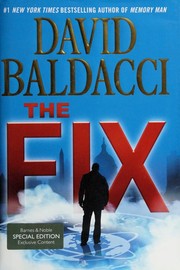
The Fix
2,315-word summary 10 min read 432 pages in the book
- First published
- 2017
- Publisher
- Grand Central Publishing
- Pages
- 432
- ISBN
- 9781455586561
- Series
- Amos Decker (#3)
Reading options
What's inside (9 sections)
I started The Fix the way I started the two before it, with the assumption that I knew what I was getting. Amos Decker had already carried me through a family murder and a death row case, and I expected another clean machine of a thriller with the same engine under the hood. What I found instead was a book that opens with a killing in full daylight and then spends four hundred pages on a question that ought to have been simple. Why would a respectable man shoot a stranger and then turn the gun on himself? The question is strong enough to forgive a fair amount. The answer is where the book started to lose me.
I should say what I brought to it. In Memory Man, Decker was a former professional football player whose career ended with one bad hit that left him able to remember every day of his life. His wife Cassie and his daughter Molly were murdered, and he spent a stretch living in a Residence Inn and working private cases before the FBI pulled him back in. The Last Mile put him on a cold case unit and gave him a team that included Bogart, Jamison, the psychologist Lisa Davenport and Todd Milligan. I liked that book more than some people did, mostly because its conspiracy had a moral shape. Knowing all of that going in made The Fix feel less like a standalone and more like a continuation of an argument about what Decker is for.
Grand Central Publishing released The Fix on 18 April 2017. The hardcover runs 432 pages and carries ISBN 9781455586561. It is the third Amos Decker novel, after Memory Man and The Last Mile, and it reads as the moment the series stops pretending to be a regional mystery and starts behaving like a national security thriller. The publisher's own description says as much, putting a possible attack on the United States at the center of the case. Associated Press called it a compelling puzzler. Plenty of reviewers were cooler than that, and after finishing it I understand both reactions.
A killing in plain sight
The book opens with Walter Dabney walking toward the J. Edgar Hoover Building in Washington. He is sixty one, a successful government contractor with years of sensitive work behind him and a high security clearance, a husband and the father of four grown daughters. Nobody who knew him would have called him a violent man. Amos Decker is walking to work at the same hour. He watches Dabney pull a Beretta and shoot Anne Berkshire, a schoolteacher, in the back of the head. Dabney then puts the barrel under his own chin and fires. Decker has his weapon out before the second shot, and he cannot stop either one.
That is the hook, and it works because Decker is the only witness who can replay it frame by frame. The head injury that ended his football career left him with hyperthymesia, which means he forgets nothing, and with a form of synesthesia that shows dying people to him as a pale blue. The blue has been part of the series from the beginning. Here it appears early and then mostly goes quiet, which feels like a waste of a strange and useful detail. The perfect memory never goes quiet. Decker walks through the sidewalk scene again and again, checking what he saw against what people tell him, and the gaps between those two things are the real engine of the book.
What struck me on a second look was how little the book needs the crowd. A busy sidewalk outside federal headquarters is a place full of cameras and commuters, yet the case turns on one man's recollection of a few seconds. That is a large claim for any narrator to make, and Baldacci leans on it without apology. Decker can recall the angle of the shot and the look on Dabney's face, but he cannot recall a motive, because a motive is not something you see. The distinction is neat, and it is the reason the opening works as well as it does. The mystery lives in the space between what happened and why.
Dabney's other life
The killer gets almost as much attention as the victim, and that is the right choice. Walter Dabney ran a government contracting business, had worked with the National Security Agency and held clearances that opened doors most people never see. He was involved in sensitive projects. He was also a man with gambling debts and an inoperable brain tumor, details the team uncovers as the investigation widens. Those two facts do not excuse anything, and the book is careful not to treat them as a defence. They do explain how a life that looked orderly from the outside could have been quietly coming apart for years.
The four daughters matter here. Each one remembers a father who was gentle and dependable, and none of them saw the man on the sidewalk. Baldacci uses their confusion to keep the reader in the same position, which is uncomfortable in a good way. A reviewer at the time called the motive a shocking revelation of an act by a loving husband and father who was thoroughly honourable, and that is close to how it lands. The novel is interested in the moment a decent person decides that the only clean way out is to become the problem himself. It is a sadder idea than the thriller usually allows, and for a while it lifts the book above its machinery.
The woman who was nobody
Anne Berkshire should have been the easy part of the case. She was a substitute teacher at a Catholic school and a volunteer at a hospice, and the first solid clue is a stamp on the back of her hand from Dominion Hospice. On paper her life looks thin. Then the team finds the condo, expensive enough that a teacher's salary cannot possibly explain it, and a car to match. Her records stop roughly ten years back. Before that, nothing at all.
This is the best stretch of the novel. Baldacci lets the investigation breathe. Decker and the others pull at small threads, and each one leads somewhere unexpected without feeling like a trapdoor. Berkshire owned a run down farmhouse with the utilities cut off, and inside it Decker finds a USB stick that seems to hold the story of her earlier life. On his way out his tyres are shot out, he is knocked unconscious, and the stick is gone. Somebody has been watching the place, and from that moment the case stops being a puzzle about a dead woman and becomes a problem about who is willing to kill to keep her past buried.
Harper Brown and the wall
Harper Brown arrives from the Defense Intelligence Agency and tells everyone to step away. She is not rude for the sake of it. She has a job, and that job rests on the fact that Dabney worked with classified material and that information he could reach may already have passed to a hostile government, or worse, to a terrorist group. The FBI team is not cleared for what she knows. That is a legitimate obstacle, and it gives the novel its actual subject, which is the friction between a detective who wants every fact and an agency that needs certain facts to stay closed.
Decker does not step away. He is not written as a rebel so much as a man with a particular skill and no patience for a rule that stops him using it. Brown and he circle each other for a while, trading half truths, and then settle into an uneasy alliance. I liked that the book refuses to make her a villain. She is right about the danger and wrong about the method, and that tension carries the middle of the story better than the chases do. Agents Ross Bogart, Alex Jamison and Todd Milligan stay on the team, and their different habits give Decker something to push against. Jamison in particular keeps reading the people around them while Decker keeps reading the rooms.
A building, a tenant and a great deal of food
There is a domestic subplot I did not expect to enjoy as much as I did. Decker and Jamison have ended up as roommates in a building bought by Melvin Mars, the death row football player whose case Decker cracked in The Last Mile. Mars is around less than I wanted, but his part in Decker's life now feels earned rather than decorative. A tenant named Tomas Amaya brings gang trouble into the building, and for a while the book has two speeds, a quiet domestic one and a frantic intelligence one. The contrast works. It also makes the danger sharper when it finally reaches home.
A lot of the investigation happens over meals. Crime Fiction Lover complained that the characters spend their time rehashing the same questions and consuming a great many calories while they do it, and the charge is fair. Are Dabney and Berkshire connected, who is Berkshire really, how did she pay for the condo, why did a man with four daughters and no enemies do this in the street? Those questions get turned over more times than they need to be. Some sentences clunk, and a few exchanges land with a thud. The chapter rhythm becomes predictable too, a burst of action followed by a long reflective passage over food. I kept reading, though, because the questions themselves were good ones.
What the title is doing
The word in the title works in more than one way. A fix is a repair, and the DIA wants this one handled quickly and quietly. A fix is also a direction in a fight, and someone in this story has fixed the outcome for other people. That second sense is the one I kept hearing in the pages where agents discuss what can be revealed and what has to stay sealed. I am wary of reading too much into a title, but the double meaning here feels deliberate rather than clever for its own sake. The book keeps asking whether a result is worth the arrangement that produced it, and the answer it gives is uneasy.
The reviews I saw before reading were all over the place, and the book itself explains why. Associated Press called it a compelling puzzler, Connecticut News praised the setup and the plotting, and BookReporter promised a thrill ride. Crime Fiction Lover gave it three stars and complained about clunky sentences, repetition and dialogue that occasionally sounds like nothing a person would say. Both descriptions are accurate. There are stretches where the prose is flat and the characters keep shooting looks at each other, and there are stretches where the machinery turns so smoothly that I forgot to be annoyed. The unevenness is part of the experience.
The memory gimmick functions more like a signature than a method. Decker can call up a face or a phrase from any point in his life, which is useful when a witness lies about what happened on a sidewalk, but it does not tell him why anyone lied. He still has to do the ordinary work of checking records, finding the farmhouse, and persuading Brown to share what she knows. That balance is healthier here than it was in The Last Mile, where the memory sometimes felt like a trick the plot used to skip the hard parts. The blue tinge around dying people is the more interesting idea and the one the book mostly abandons.
The ending, and what it costs
Spoilers from here. The trail of Berkshire's money and Dabney's clearances leads into an espionage operation with information moving toward people who would use it for an attack. The FBI and the DIA end up working the same case whether they want to or not, with Brown and Decker forced to trust each other at the exact moment trust is least comfortable. There is another murder late in the book, which raises the temperature and makes the deadline real. The confrontation that follows is tense while it lasts, but it ends quickly, and the solution depends on one team member happening to have a skill perfectly suited to the final problem. That convenience is the biggest weakness in the book. Hundreds of pages of careful pressure are released in a few brisk scenes.
I finished that section wanting one more chapter of the slower book, the one about a man who cannot understand his own good life, rather than the one about agents and deadlines. The last hundred pages move fast, which is what readers of this series expect, but the speed makes the seams show. A late arrival with exactly the right background to unlock the final problem felt less like luck on the page and more like the author reaching for a tool. I still turned the pages. I just did not believe them the way I believed the farmhouse scene.
What I took away was not the conspiracy. It was Decker's private arithmetic. He has lost a wife and a daughter, and he carries those losses into every room without making a speech about them. Berkshire's double life matters to him partly because she managed to hide a whole self from the people who loved her, and he understands more about that than he would like to. The last stretch gives him no real peace. He gets a result, which is different. When I closed the book I kept thinking about the pale blue he sees around the dying, and how the novel never quite decided whether that was a clue or just a piece of weather inside his head. It could have been both.
FAQ
Is The Fix part of a series?
Yes. It is the third Amos Decker novel, after Memory Man and The Last Mile, published by Grand Central Publishing in 2017.
Who are Walter Dabney and Anne Berkshire?
Dabney is a sixty one year old government contractor with four daughters who shoots Berkshire, a substitute teacher and hospice volunteer, outside FBI headquarters before killing himself.
Does Decker solve the case alone?
No. He works with Bogart, Jamison and Milligan, and is forced into an uneasy alliance with DIA agent Harper Brown, whose classified investigation overlaps his own.
Similar books
More from Amos Decker first, then related titles.
Memory Man
Amos Decker, a detective who cannot forget, hunts the link between his family murder and a school shooting.
2,931-word summary · 13 min read
The Last Mile
Melvin Mars is hours from execution for his parents' murder when another man confesses, and FBI cold case detective Amos Decker goes looking for the trap.
2,746-word summary · 12 min read

The Keeper of Lost Causes
Jussi Adler-Olsen introduces Carl Mørck and Department Q, a Copenhagen cold-case unit in a basement, and a missing politician whose file refuses to stay closed.
2,759-word summary · 12 min read

The Girl in the Ice
A young socialite is found frozen beneath the ice in a south London park, and DCI Erika Foster returns to work to lead the case. Grief, privilege and three…
2,492-word summary · 11 min read

The Secret Place
Two Dublin detectives revisit a murder on the grounds of a girls' boarding school, where a bulletin board note and rival cliques hide the truth.
2,271-word summary · 10 min read
Nightshade
Connelly launches Detective Stilwell on Catalina Island, where a beheaded buffalo and a Jane Doe in the harbor pull a quiet sheriff's post into violence and…
2,272-word summary · 10 min read

All In
Cassie Hobbes and the Naturals chase a Las Vegas killer whose victims share wrist tattoos, while a break in her mother's case pulls her away.
2,484-word summary · 11 min read

The Trespasser
A Dublin Murder Squad detective investigates a staged dinner-party killing and finds a cover-up that reaches into her own department.
2,051-word summary · 9 min read

Rules of Prey
Minneapolis detective Lucas Davenport hunts a killer who leaves a new rule at every scene and treats murder as a game of wits.
1,914-word summary · 9 min read
The Late Show
Exiled to the LAPD night shift after accusing her supervisor, Renée Ballard keeps two cases that were meant to be handed off at dawn: a brutal assault and a…
2,563-word summary · 11 min read
Triptych
A GBI agent with dyslexia hunts a rapist while two Atlanta cops hide pasts.
2,576-word summary · 11 min read

The Bat
Oslo detective Harry Hole aids Sydney police after a young Norwegian woman is murdered and finds a wider pattern. Grief, drink, and a lost partner shape the…
2,766-word summary · 12 min read

The Naturals
Teen profiler Cassie Hobbes joins an FBI program for gifted teens and hunts a killer tied to her past.
2,401-word summary · 11 min read
Zero Day
Army investigator John Puller is sent alone to a West Virginia coal town to solve a colonel's murder, and finds a much larger secret buried nearby.
3,434-word summary · 15 min read

The Camel Club
Four Washington misfits witness a murder on Roosevelt Island and stumble into a conspiracy that reaches the Oval Office, with a hostage president and a nuclear…
2,354-word summary · 10 min read
The Innocent
A government hitman refuses one kill and must protect a teenage girl at the center of a cover-up.
2,403-word summary · 11 min read
The Last Coyote
On stress leave, Harry Bosch reopens the unsolved murder of his mother, a prostitute strangled when he was twelve, and finds corruption reaching the DA's…
2,069-word summary · 9 min read

The 5th Horseman
Two linked cases pull Lindsay Boxer and the Women's Murder Club into a hospital full of strange deaths and a luxury-car murder spree.
2,609-word summary · 12 min read
Make Me
Reacher drifts into a quiet Midwestern town and finds a missing investigator, a trail of killers, and a deep web secret.
2,352-word summary · 10 min read
The Word Is Murder
A fictionalised Anthony Horowitz is talked into chronicling a prickly ex-detective's case: a woman murdered hours after planning her own funeral. A clever…
2,296-word summary · 10 min read
The Unquiet Grave
In Dervla McTiernan's fourth Cormac Reilly novel, a body found in a Galway bog turns out to be a missing school principal, and the case opens into something…
2,253-word summary · 10 min read
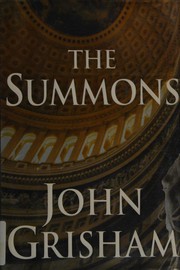
The Summons
A law professor is summoned home to find his judge father dead and more than three million dollars hidden in the house.
2,265-word summary · 10 min read
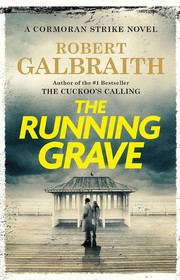
The Running Grave
In the seventh Cormoran Strike novel, Robin goes undercover inside a Norfolk cult while Strike digs into a child's death from decades earlier.
2,615-word summary · 12 min read
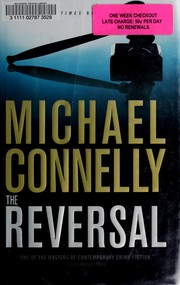
The Reversal
Mickey Haller prosecutes a child killer's retrial with ex-wife Maggie and half-brother Harry Bosch on his team.
2,056-word summary · 9 min read
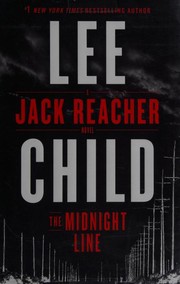
The Midnight Line
A West Point class ring in a Wisconsin pawnshop sends Jack Reacher across the Midwest, from a biker's lie to a wounded veteran hiding from the opioid trade.
2,590-word summary · 12 min read
The Hard Way
A man Reacher sees drive a ransom-laden Mercedes pulls him into a retired colonel's hunt for his missing wife and stepdaughter.
2,637-word summary · 12 min read

The Girl Who Takes an Eye for an Eye
Lisbeth Salander investigates a secret childhood experiment from prison while Mikael Blomkvist uncovers a twin conspiracy behind a wealthy businessman.
2,059-word summary · 9 min read
The Brass Verdict
Mickey Haller takes over a murdered lawyer's caseload and a Hollywood double-murder trial, with Harry Bosch circling the edges.
2,672-word summary · 12 min read
Never Go Back
Reacher returns to his old military unit to find Major Susan Turner jailed and two invented cases hiding an opium smuggling ring.
2,245-word summary · 10 min read
Jack & Jill
A senator is killed with a nursery-rhyme calling card as a child is murdered near Alex Cross's home. The third Alex Cross novel pulls him toward two cases, one…
2,646-word summary · 12 min read