

Forever Odd
2,308-word summary 10 min read 352 pages in the book
- First published
- 2005
- Publisher
- Bantam Books
- Pages
- 352
- ISBN
- 9780553804164
- Series
- Odd Thomas (#2)
Reading options
What's inside (11 sections)
I read Odd Thomas on a recommendation and finished it annoyed that I had to wait for the sequel. Forever Odd is that sequel, published by Bantam Books in 2005, and it picks up roughly six months after the shootout that ended the first book. Odd Thomas is still working the night shift, still seeing the dead, and still grieving the woman he loved. I expected a faster book this time around. What I got is stranger and sadder, with a detective story in the foreground and a meditation on death running underneath it.
Picking up where Pico Mundo left off
Odd is a young man with an unusual gift. He sees the lingering dead, the people who have not yet moved on, and he can sometimes sense where violence is about to happen. In the first book he used that gift to stop a mass shooting at the mall in his small desert town of Pico Mundo, and it cost him everything. Stormy Llewellyn, the woman he planned to marry, died in the confrontation. Odd has never recovered.
Koontz opens this book with Odd still in Pico Mundo, still taking calls at the Blue Moon Café, and still talking to Stormy in the way he talks to the other dead. She is present but distant. He wants to be with her, and the book makes clear that he thinks about death less as a fear than as a door he would like to open. That framing colors everything that follows. A lesser thriller would treat the gift as a clever device for solving a mystery. Here it is also a source of loneliness.
The supporting cast from the first book drifts in and out. Chief Porter, Odd's friend on the police force, shows up when the body count rises. Little Ozzie and the others get their moments. Koontz knows these people well by now, and the dialogue has an ease that the first book had to earn.
A town under a storm
One thing I had forgotten from the first book is how much weather matters in these novels. Pico Mundo sits in the desert, and much of Forever Odd unfolds during a heavy storm. Koontz keeps returning to the weather outside the windows. He uses it the way a stage manager uses lighting. It makes the hotel feel farther away than it is, and it gives the scenes in town a closed in quality, as though the whole place is waiting for something.
I mention this because the storm is doing real work. When Odd follows Danny's trail out of town, the storm cuts him off from the people who would normally help him. Chief Porter cannot simply drive out to the hotel. The usual rules do not apply, and Odd is left with his own judgment and the strange pull of his gift. It is a simple device, but it is effective, and it explains why a young man with a phone and a police friend ends up alone in a flooded tunnel.
The dead are also more present in this book than I remembered. Odd sees them everywhere, standing in doorways and on street corners, and he has learned to live with the noise. He talks to Stormy as if she is sitting beside him, which she is, in a sense. That ordinary quality is what makes the gift believable. For Odd, seeing the dead is not a supernatural event. It is a Tuesday.
The missing friend
The plot starts with two pieces of bad news. Odd learns that his childhood friend Danny Jessup has been kidnapped, and that Danny's stepfather has been murdered. Danny has a bone disease, osteogenesis imperfecta, which leaves him fragile and dependent, and he has always been the person Odd would protect without thinking. Odd assumes the culprit is Danny's birth father, a man recently released from prison, and sets out on that assumption.
Koontz is good at the way a wrong guess can still lead to the truth. Odd's belief about the father sends him moving through the town and then out of it, and the trail ends at a water tunnel that leads into an abandoned hotel. The hotel is one of the book's best settings. It is a place that has been left to rot, with a casino floor and rooms that hold old violence, and Odd feels the dead there before he understands why.
When he finds Danny, the friend is tied up and strapped to a bomb. That scene has the frantic energy Koontz does well, with Odd working against a clock while trying to keep a frightened man calm. Danny is alive, and he has a story that sends the book in another direction. His father did not take him.
Datura
Danny's account is the hinge of the novel. Lonely because of his illness and isolated from people his own age, he called a phone sex line and talked to a woman who called herself Datura. He told her about Odd. He told her about the gift. That was enough to make him valuable to her. Datura is an occultist with a taste for control, and she wants Odd in her hands so she can use what he sees.
This is where the book asks the reader to accept a leap. Datura's interest in the dead is vague, and her power over her two servants is explained late and lightly. Koontz seems more interested in her as an atmosphere than as a person with a plan. She is creepy in the room, and less convincing when the plot asks her to explain herself. I noticed the same problem in the first book with its villains, and it is still here.
Datura has two servants, Cheval Robert and Cheval Andre. They do not speak. They watch, they obey, and they are described in terms that make them seem more like machines or corpses than men. Koontz hints that they have been animated by something Datura took from another person, and that they hunger for flesh. Whether they are zombies is left mostly unsuggested rather than stated, which is the right choice. A clear answer would have made them less unsettling.
A room full of ghosts
Datura orders Odd to show her ghosts. He takes her into the casino in the hotel, a room where he has seen many of the lingering dead and one poltergeist. What follows is one of the more vivid sequences in the book. Datura insults one of the ghosts, and the poltergeist answers by flinging objects at them. Odd uses the confusion to get away.
That scene is pure Koontz, and I mean it as a compliment. He sets a room, fills it with a rule that cannot be argued with, and then lets a person break the rule and pay for it. The dead here are not decorative. They have tempers and habits, and the place they occupy feels inhabited. It is the strongest part of the novel, and it made me wish the book spent more time in that hotel and less time explaining Datura.
The second book in the series
It helps to know where this book sits. Koontz published Odd Thomas in 2003, and Forever Odd followed in 2005 as the second of seven novels, with Brother Odd coming next in 2006. Reading the two back to back is a different experience from reading this one alone. The first book had the clean shape of a single case: a stranger arrives in town, Odd sees the danger, and the mall shooting is stopped. This book has to deal with the cost of that victory, and it is less tidy because grief is less tidy than a case.
That is also the source of its uneven pace. Koontz is writing a sequel that has to do two jobs at once. Danny's kidnapping needs a beginning, a middle, and an end, and Odd's inner life needs room to breathe. Some chapters serve one job and some serve the other, and the handoffs are not always smooth. A reader who wants only the case will find the quiet passages slow. A reader who wants only Odd's grief will find the fight scenes loud.
I fell somewhere in the middle. The best chapters are the ones where the two jobs overlap, such as the casino scene, where the mystery and the supernatural and Odd's loneliness all occupy the same room.
Odd gets back to Danny and disarms the bomb, which is a relief, but the rescue is only the first half of what he has to do. He still has to deal with the people who put the bomb there.
The Chevals and the mountain lion
Odd goes after Datura and finds a shotgun in her room. He kills Cheval Robert with it, and Robert falls from a balcony, his body disappearing in a way that confirms he was never quite ordinary. Datura tracks Odd through what the book calls reverse psychic magnetism, and the two of them face each other while a mountain lion comes up behind her. The animal kills Datura. It is an abrupt end for a villain who had a whole chapter of menace behind her, but it fits the book's habit of letting violence arrive from somewhere nobody planned.
Cheval Andre is the one left. He chases Odd into the flood control system, a dark maze of water and gates, and the pursuit ends in a sewer. Odd slashes Andre with a fishing knife, Andre tears open Odd's chest with the same blade, and Andre dies with his clothing caught in the floodgate. Odd dies too.
I want to be honest about how this landed for me. The sequence is well staged, and the sewer is a good piece of gloom, but the killings come quickly and the prose gets breathless. Koontz writes fight scenes with short sentences, which works for a few paragraphs and then starts to feel like a trick. The mountain lion in particular arrives as a convenient answer to a problem the plot had created for itself.
Death and what comes after
The strangest section of the book comes after Odd dies. His spirit visits three of his friends. These are quiet scenes, and they are the reason I would recommend the novel to someone who liked the first book for its tone rather than its body count. Odd gets to see people from a distance, to notice things he never noticed while alive, and to say things he could not say. The writing slows down here in a way that feels earned.
The three visits are deliberately modest. Koontz does not send Odd on a grand tour of the afterlife. He puts him in front of three friends, at moments when they cannot see him, and lets the reader watch him take them in. These are quiet scenes, and they ask the reader to slow down with him. After the noise of the hotel, that change of speed is a relief. The book spends more time on Odd's reaction to being unseen than on any revelation about what waits beyond death.
Stormy is the absence that hangs over all of it. Odd's wish to join her is treated as a real wish, not as a metaphor. He is young, he has lost the person he loved, and the fact that he can see dead people makes the idea of following her feel almost practical. When he wakes up in his body, the disappointment is physical. I have not read many thrillers that treat resurrection as bad news, and that choice is what gives the ending its sting.
Then he wakes up in front of the Blue Moon Café with no memory of how he got there. He is alive again, and he is furious about it. His dearest hope had been to be reunited with Stormy, and being pulled back into his body feels like a loss. That is a striking choice for a thriller. Most books would treat a return from death as a victory. Koontz treats it as a disappointment the hero has to work through.
Chief Porter arrives, and Odd goes back to the hotel with him to retrieve Danny. The rescue closes the mystery. Two months later Odd is making plans to work in a monastery high in the mountains, looking for a kind of peace he has not found in Pico Mundo. The ending leaves the door open for the next book, but it also reads as a genuine attempt to give Odd a place to stand after everything he has been through.
What works and what drags
The best thing in Forever Odd is Odd himself. Koontz gives him a voice that can be funny and grim in the same paragraph, and the grief over Stormy gives the book a weight that the plot alone would not have. The hotel and the casino are memorable settings. The scenes with the dead are better than the scenes with the living villains.
The middle does drag. There is a good deal of walking through tunnels and waiting in rooms, and Datura's plan never becomes more interesting than the fact that she has one. Readers who want a tightly plotted mystery may find the last act thin. Readers who came for Odd's company will likely forgive it, because the book keeps finding ways to put him in front of questions he cannot answer.
I finished it more attached to Odd than when I started, and more curious about where Koontz would take him. The monastery plan at the end suggests a change of direction, and the next book does move him out of Pico Mundo. That sense of a character being pulled somewhere new is what carried me through the slower chapters.
FAQ
Where does Forever Odd fit in the Odd Thomas series?
It is the second novel, published by Bantam Books in 2005 after Odd Thomas and before Brother Odd. The series runs to seven novels in total.
Does Odd die in Forever Odd?
He dies during a sewer fight but returns to life in front of the Blue Moon Café. His spirit visits three friends first, and he is unhappy to be back because he wanted to join Stormy.
Who is Datura?
Datura is a phone sex operator and occultist who kidnaps Danny Jessup to lure Odd. She wants to control his ability to see the lingering dead.
Similar books
More from Odd Thomas first, then related titles.
Odd Thomas
A twenty year old fry cook who sees the dead tries to stop a mass shooting in his desert town.
3,797-word summary · 17 min read
Later
Boy Jamie Conklin sees dead people who must answer truthfully, pulling him into NYPD cases and a drug crew's greed.
2,009-word summary · 9 min read
We Live Here Now
After a near-fatal fall, a woman moves with her husband to a remote Dartmoor house where strange events happen only when she is alone, and a raven watches from…
2,016-word summary · 9 min read
Not Quite Dead Yet
A drifting twenty-seven-year-old is told she will die within a week and decides to solve her own attempted murder instead of taking surgery with a ten percent…
2,010-word summary · 9 min read
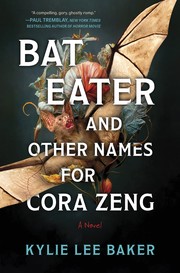
Bat Eater and Other Names for Cora Zeng
A Chinese American crime scene cleaner in pandemic-era New York is haunted by her sister's racist killing and a string of deaths among East Asian women.
2,014-word summary · 9 min read

The Witness
A Chicago murder witnessed at sixteen sends a woman into hiding in the Arkansas Ozarks, where a police chief starts asking questions about her past.
2,217-word summary · 10 min read
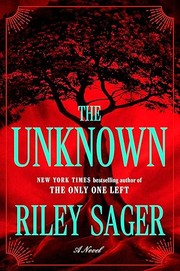
The Unknown
A struggling actress joins an isolated film shoot about five women who vanished on a Vermont island in 1926, and the staged haunting turns deeply personal.
2,424-word summary · 11 min read

The Anniversary
Alex Finlay's standalone revisits May 1 in a Nebraska town for ten years as two former classmates close in on the May Day Killer.
2,237-word summary · 10 min read

Worth Dying For
Reacher stops for one night in rural Nebraska and finds a family that runs the county, a missing girl and a shipment worth killing for.
2,021-word summary · 9 min read

Say You're Sorry
A widowed prosecutor defends the teenager accused of killing her babysitter, uncovering a small town's secrets and a killer hiding in plain sight.
2,116-word summary · 9 min read

The Survivors
Kieran Elliott returns to Evelyn Bay twelve years after a storm killed his brother, and a young woman's murder forces the town to face what it has concealed.
2,571-word summary · 11 min read
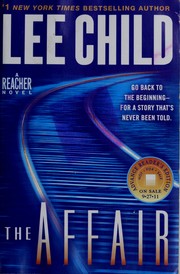
The Affair
In 1997, Reacher goes undercover in a Mississippi town where a murder near an army base collides with a senator's power. The case that ends his military career.
2,039-word summary · 9 min read
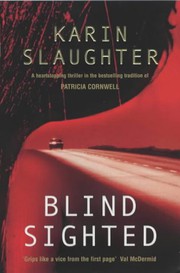
Blindsighted
Sara and Jeffrey hunt a killer staging women in small-town Georgia.
2,400-word summary · 11 min read

The Broken Girls
A journalist revisits her sister's murder while a restored boarding school gives up a girl missing since 1950.
2,579-word summary · 11 min read

The Awakening
Chloe Saunders flees Lyle House with Derek, Simon and friends while her necromancy wakes fully and the Edison Group hunts them.
2,428-word summary · 11 min read

The Book of Cold Cases
A true crime blogger interviews Beth Greer, acquitted in the 1977 Claire Lake murders, as fresh violence and ghost sightings pull the old cold case into the…
2,631-word summary · 12 min read

The Other Mrs.
A Chicago family inherits a house on a Maine island, then a neighbor is found murdered. Kubica's 2020 thriller builds to a final reframe.
2,267-word summary · 10 min read

Ask for Andrea
Three murdered women haunt their killer online dater to stop him from striking again.
2,118-word summary · 9 min read

What Lies in the Woods
Naomi returns after Olivia vanishes to face what happened in the woods at eleven.
2,213-word summary · 10 min read

The Last House Guest
A year after her best friend dies in Littleport, Maine, a local woman finds a hidden phone that reopens the case.
2,596-word summary · 12 min read
The Dark Half
A Maine novelist buries his violent pen name George Stark, then faces murders that carry his own fingerprints.
2,956-word summary · 13 min read

Such a Clever Girl
Fifteen years after the Tanners vanished, Aubrey returns at 30 as a new disappearance forces three women to face old secrets.
2,203-word summary · 10 min read
A Box Full of Darkness
After 18 years away, Violet, Vail and Dodie return to Fell when missing brother Ben calls them home to face Sister and old ghosts.
2,138-word summary · 10 min read

Two Can Keep a Secret
Twins new to Echo Ridge dig into aunt's murder as homecoming threats return.
2,078-word summary · 9 min read
The Sun Down Motel
In 1982 Viv vanishes from a Fell motel desk; in 2017 niece Carly takes the same shift to find her.
2,150-word summary · 10 min read

The Summoning
Chloe Saunders sees ghosts and lands in Lyle House, a group home for troubled teens with hidden powers and a secret tied to the Edison Group.
2,579-word summary · 11 min read
The Truth About the Harry Quebert Affair
A blocked writer tries to clear his mentor Harry Quebert after a girl missing since 1975 is found buried with his famous manuscript.
2,192-word summary · 10 min read

Listen for the Lie
Lucy Chase cannot remember the night her best friend Savvy died in Plumpton, Texas, until a true crime podcast pulls her back.
2,160-word summary · 10 min read

All the Missing Girls
Told backwards over fifteen days, a woman probes two disappearances ten years apart in her hometown.
2,064-word summary · 9 min read

All Good People Here
A journalist returns home to care for her uncle and reopens a 20 year old child murder tied to a new abduction.
2,006-word summary · 9 min read