
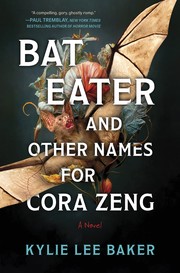
Bat Eater and Other Names for Cora Zeng
2,014-word summary 9 min read 304 pages in the book
- First published
- 2025
- Publisher
- Mira Books
- Pages
- 304
- ISBN
- 9780778368458
Reading options
What's inside (7 sections)
What happened on the subway
The novel opens in New York City in April 2020. Cora Zeng is twenty-four and Chinese American. She watches a white man shout "bat eater" at her older half-sister Delilah and then push her in front of a subway train. There is no ambiguity about what happens and no investigation that could make it meaningful. Delilah is dead, and the word that killed her is a slur that turns a person into an animal.
The moment is described without the usual machinery of a thriller. There is no slow build, no ominous music, no argument beforehand. A man says a word and commits a murder, and the word is the thing that makes the murder possible. Baker understands that a slur is not merely an insult. It is a story about what a person is, and once a crowd accepts the story, the violence becomes a form of enforcement. Delilah is killed because the man has decided what she is, and the book never lets that decision be separated from the act.
Cora's response is watched rather than explained. She is there. She cannot stop it. In the months that follow, that helplessness becomes the shape of her life. She does not report a feeling or make a speech. She takes a job cleaning up after other people's deaths, which is a way of being near the thing that happened to her sister without naming it.
Kylie Lee Baker published this as her adult horror debut in 2025, and the inspiration is explicit. It grew from the rise in anti-Asian racism at the start of the COVID-19 pandemic and from the image of a Chinese needle-neck ghost. The book is a horror novel, but it begins from a real form of hatred, and it never lets the supernatural completely take over the harm that people do to each other.
I picked it up because the premise is so specific. A crime scene cleaner who is also a grieving sister, working in Chinatown during a pandemic, surrounded by the language of disease and blame. That is a rich setup for horror, and Baker uses all of it.
The cleaning
Months after Delilah's death, Cora works as a crime scene cleaner. She scrubs up the aftermath of violent deaths alongside coworkers Harvey and Yifei. The book is very good on this work. Cora finds the blood less troubling than the germs, which tells you something about the order of her fears. She has learned to be careful about what gets on her, and the carefulness is a way of not thinking about what happened to her sister.
Baker writes the cleaning scenes with an almost documentary attention to procedure. There are fluids that have to be removed before they set, materials that have to be disposed of in a particular order, smells that stay in the clothing. Cora's expertise is practical and specific. The work has a rhythm, and the rhythm is a kind of protection. If she keeps her hands busy, she does not have to think about whose hands made the mess.
The other cleaners are essential to that protection. Yifei and Harvey know the work as well as she does, and they have their own reasons for being there. They talk while they clean, and their conversations are funny in the way people's conversations often are in terrible jobs. The humor is not there to lighten the book. It is there to show how people survive. A person who can make a joke while scraping a floor has found a way to keep going.
Then the bite marks start appearing on her coffee table. Food vanishes from her fridge. Shapes move in the dark. East Asian women begin turning up dead with bat carcasses near their bodies. The pattern is both a police case and a supernatural warning, and Cora is caught between the two kinds of explanation.
The Chinese needle-neck ghost that inspired the book is a figure with a body that cannot take nourishment because the neck is too thin. It is an image of hunger that can never be satisfied, and Baker uses it to think about grief. Cora wants something from the dead that the dead cannot give her, and the ghost wants something from her that she cannot provide. The hunger runs in both directions.
Her aunt tells her that a hungry ghost is following her ahead of the Hungry Ghost Festival, when the gates of hell open. Harvey suggests a jiangshi, the hopping vampire of Chinese folklore. The ghost of Delilah appears, and Cora cannot tell what is real. That uncertainty is the book's strongest device. Grief makes a person desperate for the dead to return, and terror makes them wish the dead would stay away. Cora experiences both at once.
The buddy-comedy element comes from Harvey and Yifei. They are funny, profane and competent, and the scenes in which the three of them work together have a warmth that the horror sections do not. The New York Times called the book an ingenious mash-up of folklore horror, buddy comedy and social commentary, which is a fair description. Baker is willing to let the cleaners be the heart of the book while a ghost story and a murder investigation happen around them.
The two explanations
The Hungry Ghost Festival matters to the book's structure because it gives the haunting a deadline. The gates of hell open, and the spirits come through. Cora has been living with the sense that something is following her, and the festival turns that sense into an event with a date. That is a smart piece of horror construction. A haunting without a deadline can go on indefinitely, and a reader can stop being afraid. A haunting with a date keeps the pressure on.
The police investigation is being dragged out to protect a political campaign. That fact is revealed gradually and with a great deal of frustration, because Cora keeps offering information that nobody will act on. The institutional response to the deaths is shaped by the same contempt that killed Delilah. The victims are women the city would rather not count.
The climax reveals that there is no single killer. There is a movement of copycats inspired by online forums. That resolution is the book's most pointed idea. The deaths are not the work of one monster. They are the result of a story people tell about each other, circulating online and turning into action. The "bat eater" slur is the original virus, and the copycats are what happens when a culture decides that some lives are expendable.
I found the folklore material more satisfying than the mystery. The hungry ghost and the jiangshi are not treated as decorations. They come out of the beliefs of the people in the book, and the rules of those beliefs matter to what happens. The ghost logic is also where the book's emotional truth lives. A hungry ghost is a person who died with a desire so strong it will not let them rest, and Delilah's death is the kind of thing that would leave a desire like that.
The book's title is also a recognition of how the killers understand themselves. The online forums give them a language in which each murder is a response to something, a message, a correction. Cora's work is to look at the physical remains of what that language produces. The contrast between a forum post and a crime scene is the book's central image. One is clean and abstract and full of conviction. The other is messy and specific and impossible to argue with.
That is why the cleaning scenes belong in a horror novel about racism. They insist on the material fact of a death. A body on a floor does not care about the story someone told about it. It is simply there, and someone has to clean it up. Cora is the person who does that work, which makes her the book's most useful witness.
What reviewers said
The reception was largely excellent. Library Journal called it frightening to the bone. Booklist gave it a starred review for its treatment of grief and Sinophobia. The New York Times named it a notable book. Those responses make sense. The book is genuinely scary in places, especially when the domestic space turns hostile, and it is clear about the racism that started the story.
The mixed reviews identified real problems. Some readers found the serial-killer plot rushed, and others found the rules of the ghosts inconsistent. FanFiAddict called the book messy. There are slow stretches in the middle where Cora's investigation circles the same information, and the ending does not offer a clear account of justice. The copycat reveal is thematically strong but narratively abrupt. After hundreds of pages of looking for a killer, the reader gets an explanation rather than a confrontation.
That may be deliberate. The book's argument is that there is no single person to catch, because the violence is cultural. A conventional ending with one villain in handcuffs would have contradicted that argument. I understand the choice, even if the execution feels compressed.
What stayed with me
The title is a list of names, and it is about naming. "Bat eater" is what the man calls Delilah. It is also what the killers in the online forums call their victims. The book's full title insists on Cora Zeng's name, the one the story is told under, against all the names that other people use to make her and her sister into something less than human. That is the horror's purpose. The ghost story is a way of asking what a person owes to the dead when the living have decided not to see them.
The crime-scene-cleaning scenes work because they are about attention. Cora looks closely at what other people pay others to clean up. She notices the patterns in the bodies because she is trained to notice details, and she notices the bite marks on her own furniture because they are the one detail that concerns her directly. Her skill is a form of care, and the book treats it as a kind of knowledge.
There is one more thing worth saying about the book's title. "And Other Names for Cora Zeng" is the subtitle, and it is a direct challenge to the opening scene. The man on the subway calls Delilah a name that is not hers. The online forums call the victims names that are not theirs. The book gives Cora back her full name and then uses it as the title, which is a small, firm act of restoration. Horror is often about the return of the repressed. Here it is also about the return of the named.
I finished it wanting more time with Harvey and Yifei and less time with the investigation. That is probably not the response Baker intended, but it is a measure of where the book's world feels most alive. The cleaners have a language, a routine and a way of being together that the plot keeps interrupting. When the book lets them work, it is funny and precise and much stranger than a horror novel about ghosts usually has room to be.
The final unresolved note is worth one more thought. Justice is not delivered. The living go on with their campaign and their forums, and the dead are still dead. For a reader who wants a thriller, that will feel like a failure. For a book about a country that has learned to look away from certain kinds of death, it is the only honest ending available.
The book was published by Mira Books in April 2025 and runs to 304 pages in the hardcover. It is Kylie Lee Baker's first novel for adults, after earlier fantasy writing for younger readers. The New York Times named it a notable book of the year.
FAQ
What inspired Bat Eater and Other Names for Cora Zeng?
Kylie Lee Baker drew on the rise in anti-Asian racism at the start of the COVID-19 pandemic and on the image of the Chinese needle-neck ghost, a spirit whose hunger can never be satisfied.
Is this Kylie Lee Baker's first adult book?
Yes. It is her adult horror debut, published by Mira Books in April 2025. She had previously written fantasy for younger readers.
Is there a single killer in the book?
No. The investigation reveals a movement of copycats inspired by online forums, which the book uses to argue that the violence is cultural rather than the work of one person.
Similar books
The Winter People
A century-old ritual for calling back the dead connects a Vermont farmhouse, a girl who came back from the well and a modern investigation into a…
2,037-word summary · 9 min read
Later
Boy Jamie Conklin sees dead people who must answer truthfully, pulling him into NYPD cases and a drug crew's greed.
2,009-word summary · 9 min read
Forever Odd
Six months after Stormy's death, Odd Thomas tracks a kidnapped friend to a decaying hotel and faces a cultist who wants his gift.
2,308-word summary · 10 min read
We Live Here Now
After a near-fatal fall, a woman moves with her husband to a remote Dartmoor house where strange events happen only when she is alone, and a raven watches from…
2,016-word summary · 9 min read
The Staircase in the Woods
Twenty-five years after a friend vanished at the top of a staircase in the woods, four estranged adults are summoned back to climb another one.
2,023-word summary · 9 min read
The Bewitching
A gothic horror novel that moves between 1908 Mexico and 1998 Massachusetts as an old family curse and a folkloric bewitchment repeat across three timelines.
2,332-word summary · 10 min read
Marina
A fifteen-year-old boarder in 1979 Barcelona follows a singing voice into a ruined mansion and finds a girl, a watch, and a mystery the city has kept buried…
2,352-word summary · 10 min read
Ghost Story
Four elderly friends who trade ghost stories every week find their tales coming true after a fifth member dies in this 1979 horror novel.
2,461-word summary · 11 min read
The Only Good Indians
Four Blackfeet men who killed a pregnant elk are hunted by her spirit a decade later, and the only person who can end the cycle is a teenage girl who was not…
2,010-word summary · 9 min read
Lisey's Story
Two years after her novelist husband dies, Lisey Landon follows a trail of clues into his childhood and the other world that made him a writer.
1,998-word summary · 9 min read
Locke & Key, Vol. 1: Welcome to Lovecraft
After their father is murdered, the Locke children move into a haunted family estate where keys unlock doors to ghosts, other places, and dangerous secrets.
2,019-word summary · 9 min read
Family of Liars
The prequel to We Were Liars: Carrie Sinclair finally tells the story of the summer of 1987, the boy who died on Beechwood Island, and the lie her family built…
2,072-word summary · 9 min read
The Broken Girls
A journalist revisits her sister's murder while a restored boarding school gives up a girl missing since 1950.
2,579-word summary · 11 min read
The Awakening
Chloe Saunders flees Lyle House with Derek, Simon and friends while her necromancy wakes fully and the Edison Group hunts them.
2,428-word summary · 11 min read
The Amityville Horror
The Lutz family flees 112 Ocean Avenue after 28 days of cold spots, voices, and flies, following DeFeo murders.
2,088-word summary · 9 min read
Duma Key
After losing his arm, Edgar Freemantle paints on a Florida island and learns his pictures can open doors for something hungry.
2,530-word summary · 11 min read
The Valley of Vengeful Ghosts
A grieving therapist buys a model home in a rainy valley where the walls leak ghosts.
2,035-word summary · 9 min read
Heart-Shaped Box
A washed-up rock star buys a haunted suit online and must face the vengeful ghost attached to it.
2,980-word summary · 13 min read
The Turn of the Screw
A governess sees Quint and Jessel at Bly, or projects them; James never settles which, and Miles dies.
2,080-word summary · 9 min read
The Sun Down Motel
In 1982 Viv vanishes from a Fell motel desk; in 2017 niece Carly takes the same shift to find her.
2,150-word summary · 10 min read
The Summoning
Chloe Saunders sees ghosts and lands in Lyle House, a group home for troubled teens with hidden powers and a secret tied to the Edison Group.
2,579-word summary · 11 min read

Bag of Bones
A blocked novelist returns to his Maine lake house after his wife dies and faces a custody fight and old ghosts.
2,616-word summary · 12 min read
Odd Thomas
A twenty year old fry cook who sees the dead tries to stop a mass shooting in his desert town.
3,797-word summary · 17 min read
The Outsider
Coach Terry Maitland's DNA and witnesses point to an impossible murder, until Ralph Anderson and Holly Gibney trace it to El Cuco.
2,586-word summary · 11 min read
Hidden Pictures
Nanny Mallory sees Teddy drawings predict a murder in New Jersey.
2,332-word summary · 10 min read
Pet Sematary
Doctor Louis buries Church and then Gage in ground that returns them wrong, learning dead is better.
2,158-word summary · 10 min read
John Dies at the End
Two slacker friends, a drug called soy sauce, and a portal to something that wants every universe.
2,382-word summary · 11 min read
Witchcraft for Wayward Girls
In 1970 Florida, a girl sent to a maternity home for unwed mothers finds a spellbook, and the real horror turns out to be what the adults do to her and her…
2,077-word summary · 9 min read
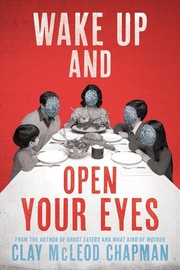
Wake Up and Open Your Eyes
A Brooklyn father drives to Richmond to find his parents lost in a cable news trance, in Chapman's splatterpunk horror about possession spread through…
2,381-word summary · 11 min read
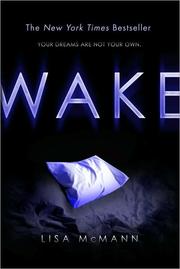
Wake
Seventeen-year-old Janie Hannagan is pulled into other people's dreams whenever they sleep near her. A nursing-home job, a secretive boy and a drug bust give…
2,488-word summary · 11 min read