
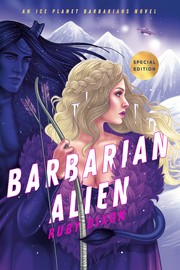
Barbarian Alien
2,778-word summary 12 min read 336 pages in the book
- First published
- 2015
- Publisher
- Berkley
- Pages
- 336
- ISBN
- 9780593546031
- Series
- Ice Planet Barbarians (#2)
Reading options
What's inside (8 sections)
I came to this one with a suspicion. I had read the first Ice Planet Barbarians book and remembered being more amused by the premise than won over by it. Twelve human women, abducted by little green men and dumped on a frozen planet full of blue horned aliens, is the kind of setup that dares you to take it seriously. Barbarian Alien is the second book, first published in 2015, and it is the one where the series starts to feel less like a joke and more like a story with real people in it. The 2022 Berkley paperback I read runs 336 pages and carries a bonus epilogue, and it gave me a heroine I genuinely liked and a hero I wanted to see get his act together.
The book picks up almost exactly where the first one left off, which makes it feel less like a standalone and more like the second half of a very long chapter. That is not a complaint, exactly, but you should know going in that a lot of the opening is recap dressed as fresh scene. Dixon even says in the blurb that you do not have to read book one to follow this one, but that the story will be richer if you do. She is right about the first part and right about the second. I would not start here.
A rescue with a terrible catch
The setup matters because everything that happens later grows out of it. A group of human women were taken from Earth and meant to be sold at an interplanetary trade station. Their captors got greedy, stuffed as many women into the ship as would fit, and then the whole cargo hold got jettisoned when the women rebelled. They crash-landed on a snow-covered world they have started calling Not-Hoth, which is a joke that lands because the alternative is screaming. Two women died in the crash. Liz Cramer lost three toes. The survivors were in nightclothes, in a wrecked, freezing ship, with the air itself slowly poisoning them.
The rescue comes in the form of the sa-khui, a tribe of tall blue-skinned, horned, tailed aliens who have been stranded on the planet for generations. Georgie, the woman who led the escape in the first book, went out in the one warm garment they had and came back with Vektal, the chief. Vektal and his people offer shelter, food, and a catch that is hard to swallow. The atmosphere will kill the humans unless they accept a symbiont the sa-khui call a khui. The women call it a cootie. It is a glowing, worm-like creature that gets slipped into a cut near the collarbone, and once inside it regulates body temperature, speeds healing, and quietly rewrites the host so the planet becomes survivable.
The cootie has another habit, and this is the engine of the whole series. It wants to propagate. When it senses two people who would make a good genetic match, it starts a vibration in the chest called resonance. The feeling is a persistent, insistent hum that pushes the two people together and will not let up until they mate and conceive. The sa-khui tribe has only four women of its own, so the human newcomers are urgently needed as partners. This is where the story's central tension lives: the aliens genuinely need the women to survive, and the women genuinely need the aliens, but the arrangement comes packaged with a mate they did not choose.
Liz, who is twenty-two, from Oklahoma, and used to work as a data entry clerk at a small printing office, is the one who explains all of this to six women just freed from stasis pods. Her father taught her to hunt and shoot a bow, and she meets the crisis with a blunt, gallows humor that reads as brave until you notice how scared she actually is. She tells her audience the truth: the abduction, the deaths, the cold, the gas, and the fact that the men who saved them are "conditionally good." Kira, another survivor with a translator device in her ear, softens the edges for the others. Liz would rather not. It is a strong opening portrait of a woman who uses sarcasm as a weapon and a shield at the same time.
Raahosh decides Liz is his mate
Enter Raahosh. He is a hunter with a broken horn, a face full of scars, and a reputation as the surliest member of the tribe. From the moment the rescue party arrives he has been hovering around Liz, pushing broth and blankets at her and refusing to be discouraged when she tells him to go away. In the book's opening scenes he is a silent, stubborn presence: he will not leave, he will not explain himself, and he will not let her freeze. Liz reads it as harassment and calls him scarier than most things she has met. He hears her, and it cuts, because his own narration reveals that his cootie has already started resonating for her and he has no idea how to handle it.
His point of view is where the book gets unexpectedly tender. Raahosh has spent his life without a mate and without much hope of one. He has watched other hunters pair off and assumes he is too ugly, too damaged, too much. So when his khui begins to hum for the sharp-tongued human, he does not celebrate. He panics a little. His solution, and this is where a lot of readers part ways with the story, is to take matters into his own hands in the most literal sense. While the tribe is busy with the other women and the khui harvest from a giant woolly creature called a sa-kohtsk, he intercepts Liz as she backs away from the implant procedure. She has watched Georgie collapse after receiving her cootie and wants no part of it. Raahosh pins her down and forces the creature into a cut at her collarbone. She tells him she will hate him forever and passes out.
This is the moment the romance rests on, and it is worth being honest about it. Raahosh then carries the unconscious Liz to a secret hunting cave, reasoning that if he hides her until she is pregnant, nobody will be able to separate them. He sets her broken toes, bathes her, dresses her in clothes he has stashed there, and tie her wrists and ankles when she wakes up and starts clawing at her own throat. The caretaking is real. So is the coercion. Dixon asks the reader to hold both at once, and for some people that is a bridge too far. I understand that reaction. I also think the book earns its way past it, because Liz never stops objecting on the grounds that matters most to her: she wants a choice.
A cave, a bow, and a language secret
What follows is a strange, compressed domestic stretch that works better than it has any right to. Liz is trapped in a cave with a man she barely knows, her chest vibrating with a resonance she cannot switch off, and a cootie sealed inside her that makes even a mild closeness feel like a physical demand. She plots. She plans to build a bow and leave. Raahosh feeds her by hand, watches her constantly, and does his best to woo her in the only ways he knows, which mostly involve food, warmth, and a wagon load of unresolved insecurity. The tension is less about whether they will end up together and more about whether Liz will get to say yes to it.
The first real crack comes at a hot spring. Liz sneaks out looking for materials for a bow and is attacked by a huge aquatic creature. Raahosh kills it, and the rush of the fight strips away the pretence. Liz grabs his horns, kisses him, and stops fighting what her body has been telling her all along. Afterward he growls "Mine" in English, and the ground shifts under the whole relationship. He has understood every word she has said since the beginning. He learned human language from a knowledge cache aboard the ship his people crashed generations ago, a translation program inserted into his brain. Liz has been insulting him to his face for days, and he knew. It is funny and mortifying and it also quietly rewrites him from a silent brute into someone who has been listening far more carefully than anyone gave him credit for.
From there the book becomes a hunt story, and this is the part I liked most. Liz discovers Raahosh is a virgin, and when he asks whether her resistance is about his scarred face, she tells him the truth: it was never about how he looks, it was about not being allowed to decide. That distinction is the whole book in miniature. They strike a bargain. She will sleep in his arms if he takes her hunting. They track game together, and it turns out the prickly human and the broody alien are both genuinely good at it. Their banter during these scenes has a looseness the earlier cave chapters lack, and I found myself rooting for them in a way I had not expected to.
Their first hunt together goes badly. A pack of metlaks, savage primate-like creatures, ambushes them on a cliffside. Raahosh tells Liz to run, she refuses and kills two with her bow, and then, outnumbered, he grabs several of the creatures and throws himself off a thirty-foot cliff to pull them away from her. What follows is the emotional centre of the book. Liz scrambles down, finds him broken at the bottom, builds a travois from felled trees and her cloak, and hauls him through the snow for hours. She nurses him for nine days, setting his bones, drying meat, keeping the fire going, and hunting for both of them. When he finally wakes, the physical consummation of their bond feels earned by the work she has done rather than by the parasite that pushed them together.
The metlaks, the family history, and the long walk home
Two hunters eventually find them. Aehako is cheerful and talkative, Haeden is a grim widower, and both have come looking because a hunter who takes a human without permission is a serious problem. On the walk back to the tribal caves, Aehako tells Liz the story of Raahosh's parents, and it reframes everything. His mother, Daya, never loved his father, Vaashan. When she resonated for him a second time and refused to bear another child, Vaashan kidnapped her and their young son and took them into the wilderness. Years later he returned to the tribe alone with a scarred Raahosh, claiming Daya and the baby had been killed by metlaks. The tribe exiled Vaashan, and Raahosh grew up carrying that damage.
Suddenly his desperation makes a kind of terrible sense. He is not just a possessive alien who wants a mate. He is a man who watched his parents' bond curdle into violence and kidnapping, who has no living family, and who is terrified of repeating the pattern. Liz, whose own life has been one long series of other people making decisions for her, recognises a fellow casualty of someone else's choices. Her decision to stand by him lands with more weight because of it. The book is at its best here, in the quiet space between the hunting trip and the trial, where two damaged people work out that they might be able to be a home for each other.
Exile and a speech about choice
Back at the caves, the healer Maylak confirms what Liz already suspects: she is pregnant. Raahosh lights up in a way that makes all the earlier grumpiness look like a defence he can finally put down. Then the other shoe drops. Vektal, the chief, sentences Raahosh to permanent exile for taking Liz without permission and endangering her life. He is dragged away while he and Liz scream each other's names. It is a genuinely painful scene, largely because the chief is not a villain. He is trying to protect a woman who cannot easily protect herself, and the tribe's rules exist for exactly this reason.
Liz responds by becoming a deliberate nuisance. She stirs up the other human women, makes herself as difficult as possible, and lets everyone know that the arrangement is not working. At night she sneaks out to find Raahosh on a distant ridge, gaunt and sleepless, leaving dead animals at the cave mouth so she will not go hungry. The image of him providing for her while being forbidden to be near her is the most romantic thing in the book, and it is not a kiss or a bed scene. Finally she steals Aehako's knife, stages a fake hostage situation, and demands exile for herself, since kidnapping is the crime that carries that sentence. Her speech is the clearest statement of the book's argument. She has never been given a choice in anything, she says, and yet somehow she fell in love with Raahosh anyway. He is her home. After Georgie intervenes privately with Vektal, the chief returns with a revised sentence: Raahosh will be exiled only until the baby is born, spending seven days hunting in the field for every one day at the caves and filling food caches for the tribe. Vektal also declares that any woman who wants to hunt will be treated as a hunter. It is a small legal revolution, and it happens because one pregnant woman refused to sit down and be grateful. The other women equip Liz with new clothes, boots, and supplies, and she and Raahosh leave the caves together. The bonus epilogue and a honeymoon story let them work through his fear that their resonance will curdle the way his parents' did, and she tells him plainly that she loves every part of him. He tells her she has his heart. They walk out into the snow as partners.
The part that rubbed me wrong
I want to be fair about the limits. This is a book about a woman who is forcibly given a parasite, kidnapped, restrained, and slowly talked around to a relationship she initially rejects. The "it is only biology" refrain is meant to be self-deception, and the story knows it, but the darker echoes of the setup do not fully go away. Readers who need consent to be clean and unambiguous from the start will find this one hard going, and I would not hand it to them without a warning. The resonance conceit does a lot of work explaining behaviour that, in a realistic setting, would be alarming. That is the bargain of the subgenre, and it is an honest description of what is on offer.
There is also a repetition problem. Liz's insistence that she deserves a choice is the right and important point, but she makes it so many times, in so many variations, that it starts to feel like a tagline. I caught myself skimming a few of those exchanges. The opening recap from book one is longer than it needs to be, and a reader arriving fresh may feel they are being told a story secondhand for the first fifty pages. The steamy scenes are frequent and the book knows its audience, but the emotional beats are stronger than the physical ones, which is not what I expected from a title with this reputation.
And yet the strengths are real. Liz is funny, stubborn, and competent, and her archery is a plot fact rather than a decoration, since she actually kills things with it. Raahosh's arc from sullen insecurity to someone who can say what he fears is handled with more care than the premise suggests. The hunting partnership gives the romance a foundation in shared skill and mutual respect, so the ending is not simply the parasite winning. The best thing here is the idea that a home is something you can build with someone, even when almost everything about your situation was chosen for you.
I finished it warmer than I expected to be. It is not a book for everyone, and the first hundred pages ask a lot of tolerance from a reader who dislikes coercive romance. For those willing to meet it on its own terms, Barbarian Alien turns a silly premise into a sturdy story about two people who learn to choose each other out loud.
FAQ
Do I need to read Ice Planet Barbarians first?
You can follow the plot without it, since the opening recaps the abduction and the crash, but Dixon notes in the blurb that the story is richer if you read book one first.
Is Barbarian Alien romance or science fiction?
It is both. It is book two of the Ice Planet Barbarians series, originally published in 2015 and reissued in print by Berkley in 2022, and it pairs an ice-planet survival plot with a steamy enemies-to-lovers story.
What exactly is the cootie everyone keeps talking about?
It is a khui, a symbiont implanted near the collarbone that lets humans survive the planet's cold and poisonous air. It also causes resonance, the pull toward a particular mate that drives the plot.
Similar books
More from Ice Planet Barbarians first, then related titles.
Ice Planet Barbarians
Crashed women meet blue hunters on ice and a parasite forces a mating choice.
1,983-word summary · 9 min read
Game On
Tyler Neumann blackmails tattoo artist Stella McCormick into fake dating as a route to his father, and this trilogy closer turns revenge into something harder…
2,395-word summary · 11 min read
Opposition
In the Lux finale, Katy and Daemon face a fractured species, a government that hunts them, and a choice between their love and the future of mankind.
2,513-word summary · 11 min read
My Dark Romeo
A debutante ball kiss traps Dallas Townsend in a marriage to Romeo Costa, a man who wants her as leverage in a war against his father and her fiance.
2,530-word summary · 11 min read
There Are No Saints
Two rival artists circle a struggling San Francisco painter. Cole Blackwell wants her, Alastor Shaw wants her dead. Book one of the Sinners duet.
2,190-word summary · 10 min read
The Predator
Coder Morana Vitalio and mob enforcer Tristan Caine chase stolen software while a case of missing girls from twenty years back catches up with them both.
2,296-word summary · 10 min read
The Casanova
Kate Landon's boss is also the pen pal she falls for online, hiding behind fake names, until family secrets and a trip to Paris get in the way.
2,274-word summary · 10 min read
Below Zero
Stranded at an Arctic station, NASA engineer Hannah is rescued by rival Ian, and a storm forces them to face old grudges and attraction.
2,555-word summary · 11 min read
Stuck with You
Sadie gets stuck in a New York elevator with Erik, the rival she blames for a lost client. A short, spicy STEM novella about rivalry and repair.
3,378-word summary · 15 min read



Reckless
Guarded Winter and charming Theo fake date through wedding season.
2,051-word summary · 9 min read

The Host
Stephenie Meyer imagines Earth settled by Souls, where Wanderer wakes inside Melanie Stryder and hears her voice refuse to fade, sparking a desert flight to…
2,288-word summary · 10 min read
The Dare
A prom queen and the goth outcast she once bullied settle an old score over a beer pong game at a Halloween party.
2,152-word summary · 10 min read
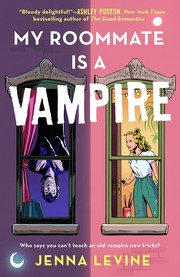
My Roommate Is a Vampire
A struggling artist takes a cheap room in Chicago and discovers her polite, nocturnal roommate is a vampire with a proposition.
2,502-word summary · 11 min read

In Flight
A first class flight attendant loses her composure over a billionaire hotel owner with turquoise eyes, and neither of them is as unbroken as they look.
2,187-word summary · 10 min read
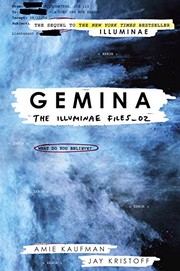
Gemina
A commander's daughter and a crime boss's son team up when BeiTech attacks a remote station, told through chats, reports and redacted files.
2,221-word summary · 10 min read
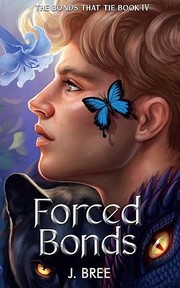
Forced Bonds
The Sanctuary's shield is down and the Resistance is inside. Oli must complete her bond group, including the hostile Nox, before the war costs her everything.
2,316-word summary · 10 min read
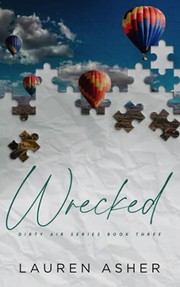
Wrecked
A reckless Formula 1 driver meets the PR specialist hired to shadow him, and both are forced to face the grief they have been outrunning.
2,329-word summary · 10 min read
Wild Eyes
A country-pop star who does not own her own songs flees to a small Canadian mountain town and finds a horse trainer, his two children and a chance to make…
2,018-word summary · 9 min read
Twisted
A dark contemporary reimagining of Aladdin in which a ruthless COO removes his rival, marries the woman he wants and turns their marriage into a struggle for…
2,051-word summary · 9 min read

The Wrong Bride
In Catharina Maura's Windsors opener, model Raven Du Pont takes her absent sister's place at the altar beside billionaire Ares Windsor, the man she has…
2,397-word summary · 11 min read
Spark of the Everflame
A village healer stops taking the powder that keeps her strange powers quiet. After a dying king names her his heir, Diem Bellator faces a choice between a…
2,293-word summary · 10 min read
Second First Impressions
A risk-averse retirement-villa manager and the developer's tattooed son are thrown together at work, where her fear of the outside world meets his relentless…
2,073-word summary · 9 min read
One with You
The final Crossfire novel finds Eva Tramell and Gideon Cross secretly married and fighting to stay that way, as old trauma, a tell-all book, and a dangerous…
2,344-word summary · 10 min read
Off to the Races
A disgraced politician's daughter takes a job training a difficult racehorse at Gold Rush Ranch, where her new boss carries a family scandal of his own.
2,318-word summary · 10 min read
God of Wrath
Rina Kent's God of Wrath pairs a quiet REU student who spies on a rival club with the ruthless leader who catches her. A dark college romance of obsession,…
2,740-word summary · 12 min read
Daggermouth
A trained killer is sent to execute the Executioner, then bound to him in a forced marriage that could ignite a revolution. H. M. Wolfe's dark dystopian…
2,798-word summary · 12 min read
Betting on You
Bailey and Charlie clash on a flight to Omaha over whether guys and girls can be friends. Three years later, a wager at a waterpark changes everything.
2,293-word summary · 10 min read