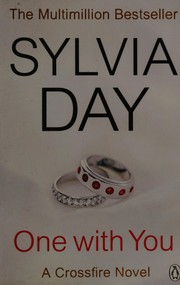
One with You
2,344-word summary 10 min read 473 pages in the book
- First published
- 2016
- Publisher
- St. Martin's Griffin
- Pages
- 473
- ISBN
- 9781250109309
- Series
- Crossfire (#5)
Reading options
What's inside (9 sections)
I picked up the final Crossfire book with that odd mixture of excitement and dread you get when a long saga is about to close. Five books, dozens of hours inside Eva Tramell and Gideon Cross's turbulent marriage, and now the last one, published on 5 April 2016 by St. Martin's Griffin and running to 473 pages in the first American edition. Sylvia Day clearly knew what she was doing by calling it One with You. This is the fifth and final volume of the series, and it arrives with the weight of every promise the earlier books made. I wanted the payoff. I also worried, because a finale has to land, and this one had a lot to settle.
What struck me first was where Day drops us. There is no slow rebuild after the cliffhanger of book four. The story opens on a Manhattan street in the early morning, with Eva stepping out of a corner café onto Broadway and looking at Gideon as if she still cannot quite believe he is hers. The city is loud and moving, horns and air brakes and tires over worn streets, and against that noise Gideon stands utterly still in jeans and a ball cap, a mogul who cannot fade into a crowd even when he tries. In a few pages Day tells us almost everything we need for the book ahead. Eva and Gideon have eloped. They have also just come through a brutal separation, and they are walking toward a therapy appointment with a man named Dr. Lyle Petersen.
A secret marriage and a painful truce
The fight that caused the separation is one that will feel familiar to anyone who has read the earlier books. Gideon hired Eva's boss, Mark Garrity, away from her advertising agency without telling her first. To Gideon this looked like help, pulling his wife toward a job at Cross Industries. To Eva it looked like the same old pattern, a powerful man making a decision about her life behind her back. She drew a line and left, and the gap between them nearly broke them. What brings them back in that opening scene is a breakthrough of a different kind. Gideon has called her in the night to tell her about a violent nightmare, and then to share the memory behind it, a childhood abuse he had kept locked away. Both Eva and Gideon survived sexual abuse as children, and Day never lets us forget that this shared history is the glue and the wound of their marriage at once.
Eva spends much of the early chapters tearing down the walls she has built. She tells her mother, Monica Stanton, about the elopement, and Monica's first panicked question is whether there was a prenuptial agreement. The worry melts when Eva's stepfather, Richard Stanton, reveals that Gideon sent the agreement weeks earlier with terms astonishingly generous to Eva. She calls her father, Victor Reyes, a police officer in California, and the news that she married without telling him leaves both of them in tears. Gideon takes the phone and accepts the blame outright, which is his way of saying he will stand behind what he did. Eva then resigns from Waters Field & Leaman, admitting to herself that clinging to an independent career is straining the marriage more than it protects her. She sends Gideon two dozen white roses signed "Mrs. Cross," and the gesture is her way of choosing the partnership over the performance of independence.
Therapy, a public plan, and a bargain
The weekly sessions with Dr. Petersen give the book its clearest statement of what is wrong with this couple. He names the pattern plainly. Both of them are trying to force change on a timetable, and both are using the other to get there. Gideon tends to disappear inside himself when the pressure rises, a kind of dissociation he cannot always control. Eva tends to blame herself and push her own needs aside, which is a habit rooted in the abuse she suffered from her stepbrother Nathan. When Eva says that her right to make her own choices matters more than almost anything, given what was taken from her, Gideon apologizes for never seeing the connection when he hired Mark. It is one of the few times in the series where he truly hears her, and the apology changes the temperature of the book.
The most striking decision comes from Eva. She proposes that they stop having sex until their public wedding, on the grounds that physical intimacy has become a crutch hiding everything they still cannot say. Gideon resists hard, but he agrees. She picks September 22, his birthday, as the date. I remember thinking, reading this, that Day had found a clever way to make the famous sexual chemistry of the series matter by taking it away. The restraint gives their conversations a charge that a straightforward love scene would not have.
There is also the matter of Corinne Giroux, Gideon's former fiancée, who is preparing a tell-all book. Eva's answer is to stop hiding and release candid photos of the marriage, flooding the market so Corinne's revelations land with a thud. Monica warns her that once you invite the media in, you cannot send them home again. The warning is well placed, because Corinne turns up at Gideon's office with a folder of old photographs, hoping to unsettle him. He tells her calmly that he and Eva are married, and that this is their final goodbye. When Eva arrives and announces she has quit her job, the two meet in the middle of his office, a small piece of staging that Day clearly intends as a picture of compromise.
Weekend family, a puppy, and an old enemy
The couple goes to the Stanton beach house in Westport, Connecticut, and the trip exposes another crack in Gideon. He is undone by being folded into Eva's family. Monica's warm embrace and Richard's hug send him close to panic, because the mothers in his life were never like this. His own mother, Elizabeth Vidal, refused to believe his abuse, and his father died by suicide. When Eva loses patience she tells him that if he did not want in-laws, he should have married an orphan. It is a brutal line, and it works. That night they share a bed despite the danger of his nightmares, a condition his therapist names atypical sexual parasomnia. They bathe and kiss but stop short of sex, and Gideon sleeps through the night without incident for the first time. It is a small, quiet victory, and it lands harder than any grand declaration.
Anne Lucas is the antagonist who keeps the tension humming. She is a psychologist, a former lover of Gideon's, and the wife of a man who once lied about finding signs of abuse on young Gideon in order to protect Hugh, the therapist who harmed him. Anne has been circling Eva's circle, even approaching Cary Taylor, Eva's best friend and roommate, in disguise. Eva ambushes her outside her office and calls her out. Anne sneers that Gideon is a monster, and Eva fires back that she is the beast. The exchange is satisfying in a blunt way, but Anne retaliates by filing false harassment charges, which Gideon's lawyer, Arash Madani, has dismissed.
Two softer threads run through this section. Eva surprises Gideon with a beagle puppy named Lucky as a one-month anniversary present, and the dog turns out to matter more than a pet should, barking and scrambling onto the bed to wake Gideon from a nightmare. In a late-night call, Gideon tells Eva that his stepfather, Chris Vidal, has filed for divorce from Elizabeth, likely because Chris finally learned the truth about Hugh. Meanwhile Arash discovers that Deanna Johnson, a journalist Gideon once slept with, is ghostwriting Corinne's book. Eva suggests hiring Deanna at Cross Industries so that nondisclosure clauses will bind her, a neat piece of quiet scheme that shows Eva growing into the role of partner rather than protected spouse.
The public plan has its own cost. When a viral nightclub photo threatens scandal, Gideon goes on a daytime talk show, reveals the marriage, and proves the photo was digitally altered. Eva watches with her mother, and Monica goes pale and distressed during the interview. The reason is not fully explained yet, but Gideon's driver and bodyguard, Angus McLeod, has uncovered that Monica has been living under a stolen identity for more than twenty-five years. He holds the information back until he understands the whole picture, and that decision to withhold becomes one of the novel's most argued-over choices.
Saying the words at last
The scene where Gideon confronts his mother is the emotional centre of the book. He says the words he has never managed to say to her directly: I was raped. He describes what happened in explicit terms, and he accuses Elizabeth of knowing the truth and choosing to ignore it. She denies everything and walks out. Afterwards he tells Eva that the hope his mother would ever acknowledge the truth is finally dead. It is a devastating moment, and what I appreciated is that Day does not rush to repair it. Gideon then asks Chris to be his best man, because he wants someone who knows everything standing beside him at the altar, with no pretense required. After a lifetime of performance, that is what he wants most.
The dinner, the shot, and the lie
At a black-tie dinner honouring Gideon's philanthropy, the novel turns violent. As they leave, a man named Roland Tyler Hall opens fire. Gideon tackles Eva to the ground, and she loses consciousness under the weight of security personnel piling on top of them. Monica steps into the line of fire and is killed. Gideon cannot bring himself to tell Eva that night. He says the sounds were a car backfiring while he quietly arranges support, and he tells her the truth the next morning. Detectives establish that Hall was obsessed with Gideon and that his psychiatrist was Anne Lucas, working under an alias. Anne had deliberately pushed Hall toward violence, and she is arrested. The reveal ties the villain to the shooting in a way that is tidy, maybe too tidy, and it gives the last act its darker shape.
The truth about Monica, and a beach wedding
At Monica's memorial, the family's head of security, Benjamin Clancy, tells Gideon the full story of Eva's mother. She was born Lauren Kittrie and grew up poor in Texas with a twin sister named Katherine. A man called Jackson Tramell arranged the gang rape of Katherine, leaving her with permanent brain damage. Lauren married Jackson to pay for Katherine's care. When she became pregnant with Eva by Victor, Jackson tried to beat her into miscarrying, and Lauren killed him. The Tramell family covered it up in exchange for her disappearance. She took the identity of Jackson's sister, the real Monica Tramell, and spent decades marrying wealthy men to fund Katherine's ongoing care. Gideon accepts responsibility for Katherine and takes custody of the journals Lauren left for Eva. It is an extraordinary story, and it arrives so late that it feels more like a reveal than a developed thread.
Eva's grief finally breaks through in a dream of her mother. The family gathers at the Outer Banks for Gideon's birthday, where Eva's paternal grandmother offers a handmade wedding dress. On the beach, with their families watching, Gideon places a diamond eternity band on Eva's finger and whispers a single word from their history together. They leave for a month-long honeymoon at a luxury tree house hotel overlooking the Pacific, where Eva reads her mother's journals and makes plans to visit Katherine. In a final dream she speaks with her mother and finds a measure of peace. On a sunset dinner cruise, she and Gideon toast to blue skies, the ghosts of their past beginning to dissolve.
What the finale gets right and what it rushes
I finished the book moved, but not entirely satisfied, and I know from reading other reactions that I am not alone. Reviewers at The Book Pushers and elsewhere pointed to Gideon's regression near the end. For a man who has spent four books learning to share, his choice to lie to Eva about her mother's death overnight, and to hold back the truth about Monica's past until he decides the time is right, feels like a step backward. Eva's grief is glossed over quickly, and her reaction to the lie is softer than the woman we have come to know. Anne's role in the shooting is resolved in a few brisk paragraphs, and Cary's relationship with Trey is left open. Eva's future career is vague, with talk of her working as a partner alongside Gideon but little shown of it. A few reviewers went so far as to say the ending felt like an arc with threads planted for future stories rather than a finished conclusion.
And yet the book works on the level that matters most in this genre. The title is a promise about a marriage, and Day delivers the hard part of that promise. Eva and Gideon stop treating their trauma as a private weapon and start treating it as something they can carry together. The therapy scenes, the beagle Lucky waking Gideon from a nightmare, and the long-delayed confrontation with Elizabeth all say more about healing than the grand gestures do. The beach wedding is earned by the small choices that lead to it, especially Eva's decision to give up sex before the vows and Gideon's decision to tell the truth about his abuse. This is not a flawless finale, and it asks the reader to forgive a lot of rushed plotting. For anyone who stayed with the Crossfire saga this long, though, the chance to see these two people choose each other without the usual wreckage is worth the price of admission.
FAQ
Is One with You the last book in the Crossfire series?
Yes. It is book five of five, published on 5 April 2016 by St. Martin's Griffin in the United States, following Bared to You, Reflected in You, Entwined with You, and Captivated by You.
Why does Gideon go on a daytime talk show in One with You?
A viral nightclub photo threatens scandal, so he goes on air to reveal his marriage to Eva and show that the photograph was digitally altered, part of a plan to blunt Corinne Giroux's tell-all book.
Does One with You give Eva and Gideon a happy ending?
Yes. After Monica's death and a string of confrontations, they exchange vows on a beach during Gideon's birthday gathering and leave for a month-long honeymoon, though reviewers note several plot threads resolve too quickly.
Similar books
More from Crossfire first, then related titles.

Bared to You
Eva starts over in New York and falls for Gideon Cross, whose past mirrors her own trauma.
2,471-word summary · 11 min read
Reflected in You
Eva and Gideon deepen their obsessive love while facing past abuse and public exposure.
2,587-word summary · 11 min read

Entwined with You
Eva and Gideon marry in secret while a Corinne pregnancy claim, police questions, and reporter pressure test their bond in Crossfire book three.
2,971-word summary · 13 min read
Captivated by You
Eva and Gideon hide a secret Caribbean marriage while planning a Monterey wedding as Gideon arrest, press threats, and Corinne strain test them in Crossfire…
3,016-word summary · 13 min read

Twisted Palace
Twisted Palace closes The Royals with Reed accused of murder and a father back from the dead. Ella fights to clear his name while the family finally acts like…
2,303-word summary · 10 min read

Beneath This Man
Ava returns to Jesse after five days apart and finds his drinking, jealousy, and a hidden deception that changes what she can forgive.
2,341-word summary · 10 min read

The Casanova
Kate Landon's boss is also the pen pal she falls for online, hiding behind fake names, until family secrets and a trip to Paris get in the way.
2,274-word summary · 10 min read

Birthday Girl
Homeless Jordan moves in with boyfriend Cole and his father Pike sparking tension.
2,383-word summary · 11 min read

The Dare
A prom queen and the goth outcast she once bullied settle an old score over a beer pong game at a Halloween party.
2,152-word summary · 10 min read

Kiss the Sky
Rose Calloway signs her family up for a reality show to save her fashion line, and her old rival Connor Cobalt keeps pace.
2,178-word summary · 10 min read

In Flight
A first class flight attendant loses her composure over a billionaire hotel owner with turquoise eyes, and neither of them is as unbroken as they look.
2,187-word summary · 10 min read
Ten Tiny Breaths
Four years after a drunk-driving crash took her parents, boyfriend and best friend, Kacey flees to Miami with her sister and falls for a neighbor hiding a…
2,599-word summary · 12 min read

Beautiful Oblivion
Cami tends bar and keeps her long distance boyfriend a secret, until a night at the Red Door puts Trenton Maddox in her way.
2,322-word summary · 10 min read

Rush
Gabe Hamilton has wanted his best friend's sister for years. When Mia signs a contract giving him control of her life, their secret arrangement turns obsessive…
2,591-word summary · 12 min read

Her Soul to Take
A paranormal vlogger in a cult-run town summons a bound demon, and the only way to survive the god beneath the mine is to give him her soul.
2,089-word summary · 9 min read

Lick
Evelyn wakes up married to the lead guitarist of Stage Dive after a Las Vegas birthday she cannot remember, and the annulment gets complicated.
1,989-word summary · 9 min read

Ricochet
Lily Calloway tries to stay celibate for ninety days while Loren is in rehab, leaning on Rose, Connor, and Ryke as therapy forces her to face her childhood.
2,575-word summary · 11 min read

Under Locke
Iris Taylor moves to Austin broke and wary, takes a front-desk job at a tattoo shop, and spends the book learning that Dex Locke’s blunt cruelty and unexpected…
2,591-word summary · 12 min read

Reason to Breathe
Emma Thomas is a star student with a careful, invisible life at home. Evan Mathews notices the cracks, and the novel follows what happens when kindness gets…
2,197-word summary · 10 min read
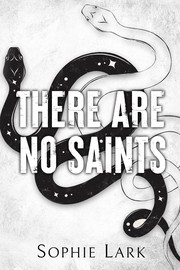
There Are No Saints
Two rival artists circle a struggling San Francisco painter. Cole Blackwell wants her, Alastor Shaw wants her dead. Book one of the Sinners duet.
2,190-word summary · 10 min read

The Predator
Coder Morana Vitalio and mob enforcer Tristan Caine chase stolen software while a case of missing girls from twenty years back catches up with them both.
2,296-word summary · 10 min read
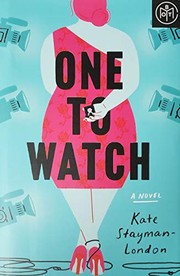
One to Watch
A plus-size fashion blogger takes the lead role on a reality dating show to prove she belongs on television, and finds she might want what the cameras offer.
2,478-word summary · 11 min read
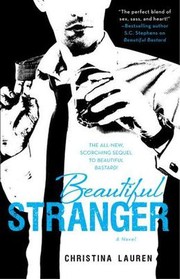
Beautiful Stranger
After a betrayal, Sara Dillon moves to New York and starts a no-strings affair with a British stranger, only to find that control and intimacy are harder to…
2,015-word summary · 9 min read

Rule
A tattoo artist still grieving his twin and the polished girl who has loved him since she was thirteen finally collide one drunken night in Denver.
2,014-word summary · 9 min read
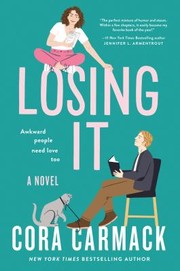
Losing It
Bliss plans a one-night stand, then finds her hookup is her professor.
2,195-word summary · 10 min read

Collided
Sophie bets she can resist playboy Liam, then pit walls fall.
2,219-word summary · 10 min read

Broken Prince
Reed loses Ella and ruins his name while rivals circle him.
2,356-word summary · 10 min read

This Man
Ava O Shea meets Jesse Ward while designing The Manor House, and their obsessive affair tests her work and limits.
2,209-word summary · 10 min read

The Coincidence of Callie & Kayden
Callie saved Kayden in an alley and meets him again in college, where both must face assault and abuse to learn trust.
2,578-word summary · 11 min read