

Rush
2,591-word summary 12 min read 408 pages in the book
- First published
- 2013
- Publisher
- Berkley
- Pages
- 408
- ISBN
- 9780425267042
- Series
- Breathless (#1)
Reading options
What's inside (8 sections)
I picked this one up because it kept turning up in lists of the books that started the billionaire romance wave, and because the premise sounded almost deliberately provoking. A twenty-four-year-old woman signs a contract that hands a much older man control over her life, and the novel asks us to find the romance inside that arrangement. Rush is the first book of the Breathless trilogy, published by Berkley in February 2013, and it has a very clear idea of what it is selling. What surprised me was how straightforwardly it plays the power imbalance as a love story, and how little it seems interested in the awkward questions that setup raises.
A contract in the back of a car
The book opens not with a party but with Mia Crestwell leaving her apartment in the dark, getting into a waiting car with a driver, and heading toward midtown Manhattan with a rumpled contract clutched in her hand. She has read it until she knows it by heart. The terms are plain enough: Gabe Hamilton will control her, possess her, and own her. The driver says nothing. The city slides past the windows. It is a striking way to begin a romance, because the first thing we learn about this relationship is that the woman has memorized the rules before she ever reaches the man.
Mia is twenty-four, the much younger sister of Jace Crestwell. Their parents died years earlier, and Jace raised her, which explains both her habit of drifting and her guilt about it. She finished a degree she is not sure she wants to use, works part-time in a pastry shop, and lives in an apartment Jace pays for, though she has been trying to support herself. Jace wanted her to study business and join the family firm. She wanted something else, or thought she did. Gabe and Ash, Jace's two best friends and business partners, have watched her grow up from a distance. All three men are in their late thirties and run HCM Global Resorts and Hotels, a company that has made them enormously rich. Gabe and Ash were born into money. Jace and Mia were not, and the difference still shows in how she moves through their world.
Gabe, it turns out, has been waiting a long time. He first noticed her when she was sixteen and he was thirty-four, and he told himself she was too young. When she turned twenty he noticed her differently, and he still held back. By twenty-four, the age gap feels smaller to him, and his patience has curdled into something he no longer wants to fight. The novel is candid that this is a fantasy years in the making, and candid too that the person at the center of it is his best friend's baby sister.
The three partners are drawn with a few economical strokes. Gabe is close to his parents, or was until his father shocked everyone by divorcing his mother just after their thirty-ninth anniversary. Ash has spent his life refusing his family and their money, and Jace's summary of them is blunt. He calls them assholes, and Mia has never had reason to disagree. Jace and Ash are the constants in her life, the two people who stayed when her parents died, and Gabe is the one who hovered at the edge of it, sending gifts on holidays and checking that she had what she needed without ever staying for a conversation. That history makes his sudden declaration feel less like a romance than a claim being staked on territory he has been watching for years.
The kiss on the terrace
The story proper begins at the grand opening of HCM's newest hotel, the Bentley, in Union Square. Mia has come to surprise Jace, wearing an off-the-shoulder cocktail dress, heels, and the diamond solitaire necklace and studs Gabe gave her for Christmas a year earlier. He sees her the moment she walks into the ballroom and decides, more or less on the spot, that the waiting is over. Jace and Ash have slipped upstairs with a tall brunette, so the brother who would have objected is nowhere in sight.
The early pages have a fizzy, physical energy. Gabe cuts in on two men who are approaching her, takes her arm, and steers her onto the dance floor. He does not dance, not usually. He tells her Jace would have a heart attack at the dress, she tells him she does not need a second big brother, and he says, quite bluntly, that he has no desire to be her big brother. Then he pulls her out onto the terrace, into the cold and the shadows, and kisses her hard enough that she forgets to be embarrassed. When she asks what happens next, he tells her to come to his office at ten the following morning. He has the doorman call a car and sends her home still wearing the dress he has just spent the evening resenting other men for looking at.
She almost leaves. Two men have already approached her, and she has spent two hours getting ready for a brother who is not there. But Gabe keeps stepping into the space in front of her, first on the dance floor and then outside, and she cannot make herself walk away. She thinks about her embarrassing teenage crush, about how he probably believes she completed her degree by some miracle, and about how much she wants to be seen by him. The dress, the shoes, the diamond he gave her last Christmas: all of it has been aimed at this room, and now he is looking. When he finally says the words, on the terrace with the city lights behind them, she goes still in his arms.
The scene works as a piece of seduction, and Banks writes the physical pull between them with real conviction. It also plants the book's central problem. Gabe gives an order, and the narrative treats Mia's curiosity about it as the whole of her consent. The contract waiting in her bag the next day is less a surprise than a formality.
Life under the contract
When Mia arrives at HCM, Gabe lays out the arrangement. She will sign away control of her life to him for a set period. He will dictate what she wears, where she goes, and who she sees. He will be entitled to her body in ways the contract spells out in uncomfortable detail. There is a clause allowing him to share her with other men. She reads it, thinks about her aimless life, and agrees. They agree as well that Jace and Ash must never find out.
What follows is a strange, almost domestic montage. Gabe makes her his administrative assistant so she is within reach all day. He buys her a new wardrobe, assigns her a car and a driver, and watches her settle into the role he has written for her. He is demanding and exacting, but he is also kind in the small ways that money makes easy, and Mia, who has never had a career she cared about, finds the structure oddly seductive. Banks is good on the way a person with no clear plan can mistake being needed for being loved.
The day-to-day detail is where the book quietly sells its fantasy. Mia's job title gives her a reason to be in his office, and his gifts give her a reason to feel chosen rather than bought. He is never careless with her in public, and the people around them see an assistant and a boss. At home the script changes. He tells her when to dress, when to speak, and what is expected of her, and she learns the rhythm of it. Banks writes these passages without much irony, which is part of the book's appeal for its fans and part of what makes it uneasy reading for anyone else.
The cracks show early. Gabe's ex-wife suggests, almost casually, that he has been in love with Mia for years. The idea enrages him because it threatens the story he tells himself about being in control. He responds not by admitting anything but by deciding to prove it false. Meanwhile, his feelings keep leaking out in small, possessive gestures, and Mia starts to believe the arrangement might be turning into something mutual. The retelling keeps circling the same question: if the feelings are real, why did the control have to come first?
Paris, and the limit of the agreement
The middle of the book takes them to Paris on business, and it is here that the fantasy curdles. Gabe decides to exercise the clause that lets him share Mia with other men. He ties her hands and feet. Three business associates watch. He forces her to perform for him in front of them, and then leaves her restrained while they touch her. The scene is written to shock, and it does. The mood changes when one of the men tries to push further than she will go, slaps her when she refuses, and she screams for Gabe. He throws the men out, apologizes with obvious horror at what he has done, and sees in her blank stare that something has broken.
The return from Paris is handled in a few brisk pages. There are apologies, a long silence, and the slow realization that the terms they wrote down cannot contain what has happened between them. Mia sets the condition in plain language: no one else, ever. Gabe agrees without argument, and the book treats that exchange as the moment the contract becomes a real relationship. It is a tidy resolution to an ugly situation, and it asks a lot of the reader.
This is the most difficult chapter to recommend, and also the one the book most needs. Up until now the contract has been a game played by two people who, whatever the imbalance, at least know each other. In Paris, strangers enter the room and the argument about control turns into something close to an atrocity. The novel's answer is swift. Mia says she can forgive him if he promises there will never be anyone else. He agrees. The relationship resets, and the reader is asked to accept that the slate is clean because she said so. The forgiveness is heartfelt on the page, but it arrives fast enough that the earlier fear gets very little room to breathe.
Back in New York, one of the men from Paris finds Mia on the street. He has photographs. He tells her that unless she delivers information about the bids his competitors are submitting, he will circulate them. She is terrified and ashamed, and after a long internal argument she tells Gabe everything instead of trying to handle it alone. He is moved that she did not betray him, and he takes care of the problem off the page. It is the clearest evidence the book offers that the feeling between them is real, but it also shows how much of this story depends on a powerful man solving problems created by his own choices.
The secret breaks
By the time they agree to tell Jace, the relationship has changed shape. Gabe is no longer performing indifference. Mia has stopped treating the contract as a script she has to follow. They are, in their own awkward way, a couple, and the next step is to bring Jace in. Hours before they plan to do it, Jace and Ash walk into the apartment at the wrong moment. Gabe is spanking Mia with a crop. Jace sees red and starts swinging.
The confrontation is the book at its most melodramatic, and also at its most honest about what the arrangement has cost. Jace has spent his adult life protecting his sister. Finding her in that position, with the man he trusts most, is a betrayal on two fronts. Gabe refuses to explain. He cannot say the words in front of an audience, and instead of stumbling through the truth he does the cruel thing: he tells Mia coldly that it is over, and lets her walk out humiliated. It is a nasty scene, and the book does not soften it. He has spent the whole novel insisting that he is not the sort of man who loses control, and when he is finally forced to account for himself he chooses the exit that preserves his pride.
Mia leaves with nothing to soften the blow. She has no job to go back to that means anything to her, no plan, and a brother who now believes the worst of the man she has been seeing in secret. Gabe spends the next few days trying to reach her and failing. The book lingers over his frustration more than hers, which is a choice that tells you whose story this is. When he finally goes to Jace alone, the confession comes out badly at first, and Jace has every reason to throw him out. It takes repeated, awkward attempts before the brother believes he is hearing the truth.
What he says in that room is simple enough. He is in love with Mia and he wants to marry her. Jace is skeptical, and it takes a while to convince him, but he eventually gives his blessing. The obstacle that mattered most was never the contract. It was the brother, and the book knows it.
The tree at Rockefeller Center
Mia, meanwhile, is furious and finished. Gabe pursues her for days and gets nowhere, so he recruits Jace and Ash to help. They bring her to the Christmas tree at Rockefeller Center, a place loaded with meaning for her from the years when Jace took her there as a girl. In front of a crowd, Gabe proposes. She says yes. The last pages have them talking about going home and starting a family, and the trilogy is off and running.
I finished this book convinced that Banks can write desire well and that she is much less interested in the ethics of what she is describing. The physical scenes have heat and rhythm. The dialogue has a blunt, sometimes funny snap. But the story keeps asking the reader to treat a signed power imbalance as a prelude to love and then to accept that love arrived on schedule as the answer to every problem it created. The ex-wife's warning, the Paris violation, and the blackmail thread all point toward a serious reckoning with control, and each one is folded away quickly so the romance can keep moving. The ending chooses a big public gesture over the harder conversation Mia and Gabe still owe each other.
That matters for who should read it. If you like your romances with bargaining, alpha heroes, and a clear happily ever after, this delivers exactly that, and Banks gets more done in four hundred pages than some writers manage in five hundred. If you need equality established before the first kiss, or if a man sharing his partner with strangers is a hard stop regardless of the apology, this will likely irritate you from the terrace scene onward. Rush is a fast, shameless, well-made example of a particular kind of fantasy. It is just not a book that wants to be argued with, and the argument it quietly invites is the one it never has the nerve to make.
FAQ
When was Rush published and who published it?
Berkley published it on February 5, 2013. The Berkley trade paperback runs 408 pages with ISBN 9780425267042.
Is Rush part of a series?
Yes. It is book one of the Breathless trilogy, followed by Fever and Burn. This site lists the series as Breathless.
Does the book end happily?
Yes. After a painful breakup and a blackmail scare, Gabe proposes at the Rockefeller Center Christmas tree and Mia accepts.
Similar books
More from Breathless first, then related titles.

Beneath This Man
Ava returns to Jesse after five days apart and finds his drinking, jealousy, and a hidden deception that changes what she can forgive.
2,341-word summary · 10 min read

In Flight
A first class flight attendant loses her composure over a billionaire hotel owner with turquoise eyes, and neither of them is as unbroken as they look.
2,187-word summary · 10 min read
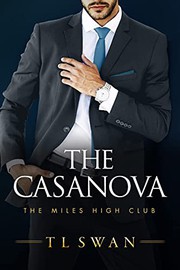
The Casanova
Kate Landon's boss is also the pen pal she falls for online, hiding behind fake names, until family secrets and a trip to Paris get in the way.
2,274-word summary · 10 min read
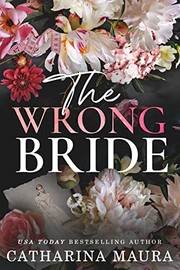
The Wrong Bride
In Catharina Maura's Windsors opener, model Raven Du Pont takes her absent sister's place at the altar beside billionaire Ares Windsor, the man she has…
2,397-word summary · 11 min read
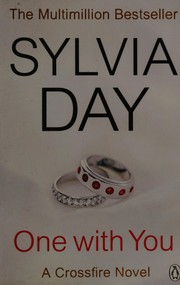
One with You
The final Crossfire novel finds Eva Tramell and Gideon Cross secretly married and fighting to stay that way, as old trauma, a tell-all book, and a dangerous…
2,344-word summary · 10 min read
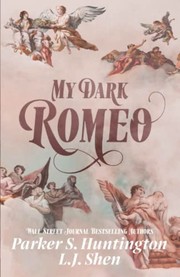
My Dark Romeo
A debutante ball kiss traps Dallas Townsend in a marriage to Romeo Costa, a man who wants her as leverage in a war against his father and her fiance.
2,530-word summary · 11 min read

There Are No Saints
Two rival artists circle a struggling San Francisco painter. Cole Blackwell wants her, Alastor Shaw wants her dead. Book one of the Sinners duet.
2,190-word summary · 10 min read

The Predator
Coder Morana Vitalio and mob enforcer Tristan Caine chase stolen software while a case of missing girls from twenty years back catches up with them both.
2,296-word summary · 10 min read
Beautiful Stranger
After a betrayal, Sara Dillon moves to New York and starts a no-strings affair with a British stranger, only to find that control and intimacy are harder to…
2,015-word summary · 9 min read
The Marriage Bargain
A bookstore owner marries a billionaire friend's brother for a year to save home and company.
2,092-word summary · 9 min read
Love Redesigned
Rival designers Dahlia and Julian restore a Lake Wisteria Victorian while facing grief, family pressure, and old sparks.
2,248-word summary · 10 min read
King of Sloth
Party heir Xavier chases publicist Sloane who refuses to fall in forced job.
2,017-word summary · 9 min read
Praise
A broke young woman takes a secretary job with her ex-boyfriend's father, a club owner twice her age, and tests where approval ends and trust begins.
2,493-word summary · 11 min read
King of Greed
Billionaire Dominic fights to win back Alessandra after work obsession breaks their ten year marriage.
2,548-word summary · 11 min read
A Not So Meet Cute
A broke woman poses as a billionaire's pregnant fiancee and falls for him.
2,888-word summary · 13 min read
Entwined with You
Eva and Gideon marry in secret while a Corinne pregnancy claim, police questions, and reporter pressure test their bond in Crossfire book three.
2,971-word summary · 13 min read
Reflected in You
Eva and Gideon deepen their obsessive love while facing past abuse and public exposure.
2,587-word summary · 11 min read
King of Wrath
Billionaire Dante Russo enters an arranged engagement with Vivian Lau and control slips into feeling.
2,975-word summary · 13 min read

The Dare
A prom queen and the goth outcast she once bullied settle an old score over a beer pong game at a Halloween party.
2,152-word summary · 10 min read
Thank You for Listening
A former child star turned audiobook narrator takes a final romance job to help her grandmother, only to fall for the secretive voice reading opposite her.
2,148-word summary · 10 min read

Kiss the Sky
Rose Calloway signs her family up for a reality show to save her fashion line, and her old rival Connor Cobalt keeps pace.
2,178-word summary · 10 min read

Window Shopping
Two weeks before Christmas, an ex-convict with an eye for design insults a department store window and ends up hired by its cheerfully relentless manager.
2,049-word summary · 9 min read

Wild Eyes
A country-pop star who does not own her own songs flees to a small Canadian mountain town and finds a horse trainer, his two children and a chance to make…
2,018-word summary · 9 min read

Twisted Palace
Twisted Palace closes The Royals with Reed accused of murder and a father back from the dead. Ella fights to clear his name while the family finally acts like…
2,303-word summary · 10 min read
Twisted
A dark contemporary reimagining of Aladdin in which a ruthless COO removes his rival, marries the woman he wants and turns their marriage into a struggle for…
2,051-word summary · 9 min read

The Obsession
After a childhood in the shadow of her serial killer father, photographer Naomi Carson puts down roots in a coastal town, only to face a copycat killer…
2,230-word summary · 10 min read

The Fake Out
A guarded hockey physiotherapist agrees to fake date her team's captain to spite her cheating ex, and finds he has been paying attention to her for years.
2,345-word summary · 10 min read
Ten Tiny Breaths
Four years after a drunk-driving crash took her parents, boyfriend and best friend, Kacey flees to Miami with her sister and falls for a neighbor hiding a…
2,599-word summary · 12 min read

Stolen
A sixteen-year-old is drugged at a Bangkok airport and taken into the Australian Outback by a man who has watched her for years. Lucy Christopher tells it as a…
2,284-word summary · 10 min read
Roomies
A Broadway archivist with a crush on a subway busker marries him to solve his visa problem, and finds the roommates arrangement harder to keep practical than…
2,030-word summary · 9 min read