
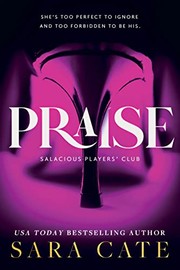
Praise
2,493-word summary 11 min read 336 pages in the book
- First published
- 2022
- Publisher
- Sourcebooks Casablanca
- Pages
- 336
- ISBN
- 9781728282138
- Series
- Salacious Players Club (#1)
Reading options
What's inside (9 sections)
I picked up Praise because it kept showing up in the same breath as every other BookTok romance people told me to read after Colleen Hoover and Ana Huang. The pitch sounded almost like a dare: a twenty-one-year-old woman goes to collect a security deposit from her ex and ends up working for his father, a forty-something club owner with very particular tastes. I expected something thin, a premise held together with heat and not much else. The book surprised me by having an actual story underneath, about attention and self-worth, and by being more interested in its heroine's confidence than in shocking the reader.
The edition most people buy now is the Sourcebooks Casablanca paperback from February 2023, 336 pages, though Sara Cate first self-published the novel in March 2022 through Sara Cate Books LLC before it was picked up. It is the first book in the Salacious Players Club series. Each chapter opens with a numbered rule from the club's world, little lines about begging, shame, and happy endings, which gives the whole thing a playful frame. What follows here is the full arc as I read it, kept to plot and character rather than blow-by-blow detail.
Charlie at the bottom
Charlotte Underwood, called Charlie, is twenty-one and starting over. Her boyfriend Beau has been cheating on her and draining her. She describes him as emotionally neglectful, the kind of guy who made her feel small without ever raising his voice. When the book opens she has moved out of their shared apartment, she is short on money, and she needs her half of the security deposit back. That errand sends her to a big Spanish-style house she does not expect, looking for Beau, and finding someone else entirely.
Charlie's home life fills in fast. Her mother Gwen works long hours as a nurse and loves her daughters without fuss. Her younger sister Sophie is her closest friend and the person she checks in with most honestly. Their father Jimmy is estranged, judgmental, and mostly absent, and his disapproval hangs over Charlie's choices later. Charlie herself is broke, a little lost, working odd hours, and hungry for someone to tell her she is doing something right. That hunger is the engine of the book. She is not naive exactly, but her confidence is shot, and she keeps second-guessing what she wants.
Beau owes her money and keeps dodging her, so Charlie goes to the address he gave her. She assumes it is his place or a friend's. It turns out to be the home office of Emerson Grant, Beau's father, a man she has never met. She walks in expecting an awkward conversation about a deposit. She gets something far stranger.
The wrong meeting with Emerson Grant
Emerson Grant is in his early forties, one of the owners of the Salacious Players Club, a members-only kink club about to open. The prologue, set seven years earlier, shows him with his friends and future business partners, Garrett, Hunter, and Maggie, sketching the idea for an app and then a real club built around consent and no-shame desire. In the present he is wealthy, controlled, divorced from Beau's life for years, and looking for two things: a new submissive partner and, separately, an assistant to help run the club launch.
When Charlie knocks on his office door, Emerson mistakes her for a woman sent over as a submissive candidate. He tells her to wait on her knees. Charlie is confused and embarrassed, but she needs the deposit money badly enough that she does what he says while trying to figure out what is happening. The scene is played for awkwardness as much as tension. Within minutes the misunderstanding collapses. She is Beau's ex-girlfriend. He is Beau's father. Both of them are horrified, for different reasons.
What I liked here is that Cate does not let either of them pretend it meant nothing. Emerson is strict about boundaries once he knows who she is. He apologizes, tries to fix the money problem, and offers Charlie something practical instead: a real job as his secretary and assistant while the club gets ready to open. He is blunt that it would be office work only, nothing personal, partly because he wants a bridge back to his estranged son Beau. Charlie needs the paycheck and, despite herself, she is curious about the world she just glimpsed. She says yes.
The age gap is stated plainly. He is about twice her age. He is her ex-boyfriend's dad. He is also her new boss. The book never hides how messy that is. It just asks what happens if two adults keep choosing it anyway.
A secretary at a kink club
Charlie's new job is ordinary work in an extraordinary setting. She answers emails, manages Emerson's schedule, sits in on planning meetings with Maggie, the calm and private woman who manages the partners and the day-to-day operations, and helps prepare for the club's opening events. Garrett handles clients, Hunter works with the developers on the club's app, Maggie holds everything together. Charlie learns the house rules, the membership tiers, the discretion expected of staff. She is good at the job, organized and quick, and Emerson notices.
The tension builds slowly because Emerson insists on keeping things professional. He has a type of relationship he prefers, built around praise and clear roles, and he tells Charlie he will not pull her into it. He has been burned before, including by a former partner named Monica who now runs her own business and still flirts when she visits. Charlie, meanwhile, is discovering that the club's frankness about desire feels like relief after Beau. Nobody there tells her she is too much or too needy. People say what they want out loud.
Cate spaces their contact through small moments. A late night fixing a schedule. A ride home. Emerson praising her work in a way that lands harder than he intends, because Charlie has been starved of exactly that. He calls her a good girl for a job well done and watches her light up, then pulls back, angry at himself. Charlie starts asking questions about the club, about the rules that open each chapter, about what membership actually involves. Maggie quietly encourages Emerson to stop pretending he feels nothing, which tells the reader where this is heading well before the characters admit it.
I found this middle stretch the strongest part of the book. The club is not just wallpaper. It gives Charlie a contrast to her old life: a workplace where wanting things is normal, where consent is discussed directly, where she is praised for competence first. Her growth at work mirrors what happens later in private.
Terms, lines, and the auction
About a third of the way in, professionalism stops working. Charlie tells Emerson she wants him, plainly, and that she understands what he is into. She has read the rules, talked to people, and thought about it. Emerson resists, cites Beau, the age gap, his role as her boss, and then gives in with conditions. They agree to keep it private, to keep the office work separate, and to be honest about limits. He is careful with checking in. She is careful about saying what she actually likes instead of performing.
From here the plot runs on two tracks. The private track is their relationship deepening. Emerson, who is used to structured arrangements with clear endpoints, starts acting like a boyfriend: remembering details, meeting her mother, showing up when her car breaks down, getting jealous in ways that surprise him. Charlie, who started out desperate for approval, starts asking for more specific things and holding her ground when they disagree. The praise dynamic, which could have stayed one-sided, turns into something mutual. He steadies her. She softens him.
The public track is the club calendar moving toward big events, including a charity auction where members bid for time with a partner. A wealthy member named Ronan Kade bids against Emerson for an hour of Charlie's time, driving the price up and forcing Emerson to put his money where his feelings are. The scene works as plot and as theme at once. Charlie is not being sold; she chose to take part, and the bidding becomes a test of how Emerson values her in front of people. Around the same time, Monica's return stirs Charlie's insecurity that she is replaceable, one in a line of younger women. Emerson handles it badly at first, too used to compartmentalizing, and Charlie calls him on it.
Family pressure builds underneath. Sophie worries about the gossip and about Beau finding out, even while she supports Charlie's right to choose. Gwen senses something has changed in her daughter and waits to be told rather than prying. Beau drifts back into the picture wanting money, attention, and eventually answers, and every conversation with him reminds Charlie why she left. The secrets pile up: the staff knows something is going on, Maggie covers for them, and the longer they hide it the worse the reveal will be.
Beau finds out
The reveal lands the way these reveals always do, at the worst moment and through the wrong person. Beau learns that his ex-girlfriend is seeing his father, and he reacts with fury and hurt that is at least partly real. He had neglected Charlie for months, but betrayal by a parent cuts differently than a breakup. He confronts Emerson about money, about abandonment, about using Charlie to get to him. He confronts Charlie about loyalty and humiliation. Neither conversation goes well.
Cate gives Beau more shading here than I expected. He is selfish and careless, but his anger at Emerson has old roots. Emerson was an absent father who chose work and his own life over showing up, and Beau reads the new relationship as one more proof that his father takes what he wants. Emerson, to his credit, does not hide behind the club's language of honesty when it matters. He admits he failed Beau years ago and that paying Charlie's deposit or offering her a job did not fix it.
Charlie's father Jimmy picks this moment to reappear with judgment, condemning her choices and the club by association. The scene is short but sharp. Jimmy frames his disgust as fatherly concern, and Charlie finally answers him directly instead of shrinking. Gwen backs her up. Sophie stands beside her. It is one of the few scenes where the book's theme is stated out loud: shame is not the same as care, and other people's discomfort does not decide what Charlie is allowed to want.
The fallout splits the couple for a stretch. Emerson pulls away, convinced he has ruined Charlie's family ties and his last chance with his son. Charlie, stung but clearer than she was at the start, refuses to beg him to come back on his terms. She keeps working, keeps her apartment, leans on Sophie and Gwen instead of collapsing. The distance forces Emerson to decide whether Charlie is a phase he should end for everyone's sake or the person he actually wants a life with.
An ending that commits
The last section brings Emerson to Charlie instead of the other way around. He settles things with Beau as much as they can be settled, not with a neat reconciliation but with an honest acknowledgment and space. He stops treating the relationship as a secret arrangement with an expiry date and claims it openly, including in front of club members and friends. Garrett and Hunter, who ribbed him since the prologue, accept Charlie quickly. Maggie, who saw it coming first, gets a quiet moment of vindication.
The club's opening night doubles as their public debut. Charlie attends not as staff and not as a prize but as Emerson's chosen partner, comfortable with what she wants and able to say no to what she does not. The final chapters give the genre's promised happy ending: commitment, talk of a future, a sense that the praise Charlie once chased from everyone now comes mainly from herself, with Emerson as backup rather than source. The last of the chapter rules lands on good girls getting happy endings, which is corny and exactly right for this book.
I should be honest about what did not fully work for me. The prose is repetitive about Charlie's need for approval; the point is made early and then restated in nearly every chapter. Emerson's wealth smooths over problems that money would not fix in real life, from apartments to legal threats to family fallout. Beau's cheating and neglect are useful as a starting gun but he fades into a plot device whenever the romance needs momentum. And readers who do not enjoy age gap or workplace power gaps, even handled with heavy emphasis on consent, will not be won over by how carefully Cate frames them. The care is real but the gap is still the fantasy.
Still, I came away warmer on Praise than I expected. It knows what kind of book it is and executes it with pace and heart. Charlie changes in visible ways: she negotiates, she names what she wants at work and at home, she stops apologizing for taking up room. Emerson changes too, from a man who kept every part of his life in separate boxes to someone willing to be known. The Salacious Players Club setting could have been empty decoration, but here it does thematic work, giving both of them a place where directness is a virtue. As the start of a six-book series that follows Garrett, Hunter, Maggie, and others, it sets the table well. I finished it in two sittings and immediately understood why it launched Cate's career into a higher gear.
What lingers
What stays with me is not any single scene but the book's argument that praise itself can be load-bearing. Charlie does not need a savior. She needs to hear, consistently and specifically, that she is competent and wanted, first at a desk and later everywhere else. Emerson needs someone to praise back, someone who sees past the owner persona to the father who messed up and wants another try. Their deal starts lopsided and ends closer to even, which is more than many books in this lane manage.
If you like contemporary romance with high heat, clear consent talk, and forbidden setups that stay focused on two people, this is an easy recommendation with the usual caveats about the ex's-dad premise and the boss dynamic. If age gaps or kink-centered stories are not your thing, nothing here will convert you. For me, a skeptic going in, it earned its title. Praise is about exactly what it says, and by the end Charlie has learned to give it to herself.
FAQ
When was Praise published?
Sara Cate first self-published it in March 2022 through Sara Cate Books LLC. The widely sold paperback came from Sourcebooks Casablanca in February 2023 with 336 pages and ISBN 9781728282138.
Who are the main characters in Praise?
Charlotte Underwood, called Charlie, and Emerson Grant, owner of the Salacious Players Club. Beau Grant is Charlie's cheating ex and Emerson's estranged son. Sophie, Gwen, Maggie, Garrett, and Hunter round out the cast.
Is Praise a standalone or part of a series?
No, though it helps. Praise is book 1 of the Salacious Players Club series and ends with its own committed happy ending. Later books follow other club owners such as Garrett, Hunter, and Maggie.
Similar books
More from Salacious Players Club first, then related titles.

Heartless
Gruff single dad Cade Eaton hires bubbly Willa Grant as summer nanny in Chestnut Springs, and two months together wear down his walls.
2,967-word summary · 13 min read

Birthday Girl
Homeless Jordan moves in with boyfriend Cole and his father Pike sparking tension.
2,383-word summary · 11 min read

Austenland
A New York graphic designer obsessed with Mr. Darcy inherits a trip to a Jane Austen theme park, where the fantasy of Regency romance collides with the men…
2,030-word summary · 9 min read

Lick
Evelyn wakes up married to the lead guitarist of Stage Dive after a Las Vegas birthday she cannot remember, and the annulment gets complicated.
1,989-word summary · 9 min read

The Bookshop on the Corner
A Birmingham librarian loses her job, buys a van, and moves to the Scottish Highlands to run a mobile bookshop. Warm and bookish, with uneven pacing.
2,557-word summary · 11 min read

Ricochet
Lily Calloway tries to stay celibate for ninety days while Loren is in rehab, leaning on Rose, Connor, and Ryke as therapy forces her to face her childhood.
2,575-word summary · 11 min read

My Dark Romeo
A debutante ball kiss traps Dallas Townsend in a marriage to Romeo Costa, a man who wants her as leverage in a war against his father and her fiance.
2,530-word summary · 11 min read

Under Locke
Iris Taylor moves to Austin broke and wary, takes a front-desk job at a tattoo shop, and spends the book learning that Dex Locke’s blunt cruelty and unexpected…
2,591-word summary · 12 min read

The Ex Talk
Two rival public radio producers pretend to be exes for a dating show, then fall for each other while the lie grows.
2,389-word summary · 11 min read

Bet Me
A sharp actuary agrees to dinner with a charming serial bettor, then spends the next month pretending the wager does not matter.
2,710-word summary · 12 min read

Beneath This Man
Ava returns to Jesse after five days apart and finds his drinking, jealousy, and a hidden deception that changes what she can forgive.
2,341-word summary · 10 min read

Act Your Age, Eve Brown
Eve Brown crashes into a Lake District bed and breakfast, breaks the owner's arm, and talks her way into his kitchen. A grumpy-sunshine romance about work,…
2,474-word summary · 11 min read

Two by Two
Sparks's twentieth novel turns from first love to a marriage breaking up: Russell Green loses his wife and his job, then rebuilds his life around his…
2,192-word summary · 10 min read

There Are No Saints
Two rival artists circle a struggling San Francisco painter. Cole Blackwell wants her, Alastor Shaw wants her dead. Book one of the Sinners duet.
2,190-word summary · 10 min read

The Predator
Coder Morana Vitalio and mob enforcer Tristan Caine chase stolen software while a case of missing girls from twenty years back catches up with them both.
2,296-word summary · 10 min read

The Casanova
Kate Landon's boss is also the pen pal she falls for online, hiding behind fake names, until family secrets and a trip to Paris get in the way.
2,274-word summary · 10 min read

One to Watch
A plus-size fashion blogger takes the lead role on a reality dating show to prove she belongs on television, and finds she might want what the cameras offer.
2,478-word summary · 11 min read

This Time Next Year
Two women give birth minutes apart on New Year's Day 1990, and one takes the other's lucky name. Thirty years on, their children meet again.
2,194-word summary · 10 min read

Indigo Ridge
A new police chief in a Montana town meets the founding family's eldest son in a bar, and one night later a body turns up under their cliff.
2,763-word summary · 12 min read

At First Sight
Jeremy and Lexie are married and expecting a baby when anonymous emails tell him the child may not be his.
2,317-word summary · 10 min read

2 States: The Story of My Marriage
A Punjabi boy from Delhi and a Tamil Brahmin girl from Chennai meet at IIM Ahmedabad, and turn a love marriage into a campaign to convince two families.
2,634-word summary · 12 min read

True Believer
Jeremy Marsh, a science journalist who debunks paranormal claims, comes to a small North Carolina town and falls for a librarian who believes in things he…
2,125-word summary · 9 min read

Marriage for One
Rose marries a cold lawyer to save her coffee shop, then discovers the arrangement was never only business.
2,032-word summary · 9 min read

Juniper Hill
Fleeing New York with her baby, Memphis takes a housekeeping job above Knox Eden's garage, and the grumpy chef becomes the first person she can rely on.
2,021-word summary · 9 min read

Delilah Green Doesn't Care
Delilah returns to Bright Falls to photograph her stepsister's wedding and falls for Claire, a bookstore owner and single mother, while a cruel bet threatens…
2,315-word summary · 10 min read

Beautiful Stranger
After a betrayal, Sara Dillon moves to New York and starts a no-strings affair with a British stranger, only to find that control and intimacy are harder to…
2,015-word summary · 9 min read

Rule
A tattoo artist still grieving his twin and the polished girl who has loved him since she was thirteen finally collide one drunken night in Denver.
2,014-word summary · 9 min read

A Fate Inked in Blood
In Norse-inspired Skaland, a fish gutter hiding a goddess's blood is claimed by a jarl, bound by oath, and guarded by the son she cannot want.
1,971-word summary · 9 min read

Wait for It
A twenty-nine-year-old hairstylist raising her two nephews meets her new neighbor, a former Navy man mid-divorce, in Zapata's slow-burn romance about trust and…
2,154-word summary · 10 min read
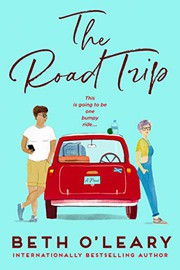
The Road Trip
Two exes squeeze into one small car for the drive to a Scottish wedding, with four years of history and one photograph between them.
2,418-word summary · 11 min read