
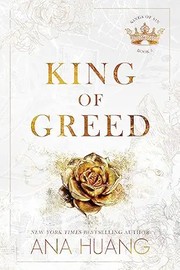
King of Greed
2,548-word summary 11 min read 352 pages in the book
- First published
- 2023
- Publisher
- Bloom Books
- Pages
- 352
- ISBN
- 9781728289748
- Series
- Kings of Sin (#3)
Reading options
What's inside (8 sections)
I picked up King of Greed because I had already spent time with Dante and Vivian and then Kai and Isabella, and I wanted to see what Huang would do with a couple who were already married. Most romance starts with the first kiss. This one starts with a man coming home late to cold takeout. That image sold me. I read it over three nights, slower than the first two books, because the fights felt closer to real life than the gala blackmail plots.
This is the third book in the Kings of Sin series by Ana Huang, published in 2023 by Bloom Books. The paperback cited runs 352 pages with ISBN 9781728289748, as Kings of Sin book 3 after King of Wrath and King of Pride. It follows Dominic Davenport and Alessandra Davenport. He is known around Manhattan as the King of Wall Street. She is his wife of ten years, trying to decide if she still wants the job. It is written for adults, with open door scenes and blunt language about a marriage coming apart. This summary keeps those parts non graphic and stays on the repair work.
Dominic built his firm from nothing. Alessandra stood beside him while he did it. By the time the book opens, he has the house and the accounts and the reputation, and he is losing the only person who thought he was enough before any of it. That is the whole tension. He keeps reaching for more. She keeps waiting to be picked first.
Ten years in and still missing each other
Dominic Davenport did not inherit his seat. He clawed his way from a rough start with no safety net, through scholarships and long nights, into a chair at the top of Davenport Capital. People in his world describe him as brilliant and relentless. He likes numbers because numbers answer. He likes deals because deals close. At home in New York he keeps the same habits. Phone on. Suit pressed. Calendar full. He tells himself the hours are for them, for security, for a future where no one can pull the floor out.
Alessandra feels the cost in small moments. She runs Floria Designs, her own online floral business, and she is good at it. She keeps friendships. She keeps a house that looks perfect in photos and quiet in person. She has spent years as the hostess who smiles while Dominic takes a call under the table. She used to find his focus exciting. Now it reads as absence.
One early scene sets the pattern. She waits up with wine and takeout. He walks in late, loosens his tie, kisses her without really looking, asks if friends were over. He does not ask how her day went. She does not tell him. They have had this exchange in different forms for months. She cries after he goes to shower, not because he shouted, but because he did not notice enough to fight about.
Huang lets Dominic narrate some of this, which helps. He is not cruel in the way Francis Lau was cruel in the first book. He is distracted and convinced that providing counts as staying. He grew up with the sense that money solves fear. If his wife is unhappy, his instinct is to fix the budget or buy the trip, rather than sit down and listen for an hour. That mismatch drives almost every fight.
I believed this setup quickly. It did not need a villain. Two decent people can still starve a marriage if one of them keeps choosing the office.
Thayer tutoring and a young marriage
The past comes back in flashes. Alessandra, then Ferreira, met Dominic at Thayer University. She tutored him. He was proud and broke and funny in a guarded way. She was bright and warm and unimpressed by his bluster. He asked her out with lines that were bad on purpose. She said no, then yes.
Those college scenes matter because they show what work stole. Dominic used to linger after study sessions. He remembered her coffee order. He wore cheap shirts and still carried himself like he would own a room one day. Alessandra loved that version, not because he was polished, but because he paid attention. They married young, before the money, before the staff and the press mentions.
One detail stuck with me. During their first trip to Brazil together, Alessandra gave Dominic a citrus and sandalwood cologne. A decade later he still wears it. She used to find that loyalty romantic. Now it aches, because he kept the scent and lost the habit of noticing her.
Her family background fills in more. Her mother has married more than once. Her brother Marcelo is close to her in the way that brothers can be when parents are scattered. Dominic never had that kind of net. Everything rested on him. When he says he cannot simply step back, he means it as fact, not excuse. If he slips, no rich parents catch him.
The contrast gives the present its sting. They were friends before they were spouses. Tutor and student before CEO and hostess. Remembering that friendship makes the silent dinners harder to read. You keep thinking, these two actually liked each other once.
A missed flight and asking for a divorce
The break comes around their ten year anniversary. They plan a weekend trip. Alessandra packs with the brittle hope people get when they have decided this trip will prove something. Dominic misses the flight because a work emergency blows up. He texts that they can still salvage part of it. She hears what he does not say. Work came first again.
She does not scream. She checks into a hotel and pays cash for the week so he cannot track the card. She turns her phone off, then on, to dozens of missed calls. His voicemails move from annoyed to worried to pleading. She sends her friends a short note that she is safe and will explain later. Then she sits with the quiet and admits she is done living second to his calendar.
When they finally talk, she says she wants a divorce. He hears it as a threat at first. She means it as a boundary. She moves out on her own. She tells him she will use her own money from Floria Designs. She had stashed a small emergency fund when the business started to grow, which turns out to be practical and symbolic. She can leave without asking him to fund the leaving.
Dominic refuses to sign at first. He meets Dante and Kai, his Valhalla circle, and insists he can fix this. They listen more than they lecture. Dante, who learned about control the hard way, tells him in plain terms that buying does not equal changing. Kai watches and says little, which lands harder. Dominic hears support, but he still thinks in terms of strategy. Win her back. Close the gap.
Alessandra holds firm. She tells him that if he loves her, he should let her go rather than trap her in paperwork. It is a painful conversation, held in a plain room without music or speeches. He signs. The divorce is finalized. I found that middle beat brave for this kind of series. Huang lets them actually split, rather than pausing at separation. The rest of the book has to earn a reunion from zero, not from limbo.
A flower shop and learning another way to care
Alessandra puts her energy into a physical store for Floria Designs. Online sales gave her proof she could sell. A shop gives her a place to stand. She rents a narrow space in Manhattan that needs paint and patience. She scrubs floors. She picks tile. She argues with a contractor about light. She plans for a grand opening near the New Year and writes the date on a calendar she actually looks at.
This stretch is my favorite, because it is concrete. We see her choosing stems at the market in the morning. We see her wrapping bouquets for regulars who learn her name. We see her hands sore in a good way. Work here is not a rival to love. It is a source of self respect. She stops introducing herself as Dominic Davenport wife first. She starts saying florist and owner.
Dominic starts showing up differently, and Huang is careful to make it small. He sends flowers, too many at first, until Marcelo tells him to stop flooding her hall. Then he adjusts. He shows up to carry boxes without being asked. He remembers the shop needs better locks and brings someone to fix them. He waits during a delivery delay instead of calling someone to shout. He asks about suppliers and listens to the answer.
Bold care in this book looks like errands, not diamonds. He still has money, and he still slips into grand gestures. Alavish dinner. A car waiting. But Alessandra names what actually helps. Stay for the boring part. Remember what I told you yesterday. Put the phone away when we eat. He practices, fails, practices again.
There is a scene where he sits on a stool in the back room while she conditions roses, and he simply keeps her company. No pitch. No seduction. Just company. She later tells a friend that moment did more than the bouquets stacked in the hall. I believed her. Anyone who has rebuilt something knows the value of someone willing to hold the ladder.
They are physically drawn to each other through all of this, and Huang does not pretend otherwise. They slip into intimacy more than once. Alessandra pulls back after, not because she does not want him, but because she does not want heat to cover cracks. She wants proof that daytime Dominic has changed, not only late night Dominic. That boundary frustrates them both. It also keeps the story honest.
Brazil, a wedding and one date
Alessandra books an open ended trip to Brazil. She wants sun and family and distance from Manhattan opinions. Dominic, with Marcelo help, essentially invites himself along. Marcelo loves his sister and tolerates Dominic in the wary way of a brother who has watched his sister cry. He agrees because Alessandra might need backup, not because he trusts Dominic.
Brazil shifts the air. They eat outside. They walk. Dominic meets relatives who do not care about Wall Street titles. He has to introduce himself as Alessandra husband, or ex husband, and sit with how that sounds in Portuguese and English. He hears stories about Alessandra as a girl that he never knew. He sees her laugh without checking her phone, because no one expects her to perform.
The trip overlaps with her mother fourth wedding in Rio. The event is loud and sentimental. Alessandra wears something bright and tries to enjoy it. Old memories of her own wedding surface during the vows. She remembers being young and sure. Dominic remembers making promises he meant and then buried under earnings calls. They do not fix everything at the reception. They dance once, carefully, like people relearning steps.
After Rio, Alessandra agrees to one date. Dominic takes her to Floripa. He could have made it purely flashy, and parts of it are comfortable in the way money makes things comfortable. What she keeps is not the view, though the view is fine. It is the talk. He tells her what scared him as a boy with no cushion. She tells him what it felt like to slowly turn into a backdrop. They ask follow up questions. They do not check watches.
The trip works because he finally lets her see him unsure. He admits he used work to avoid feeling helpless. She admits she used smiling to avoid asking for more. Neither speech solves ten years. Both speeches make the next choice possible.
They return to New York not back together, but closer to honest. She reopens the shop. He returns to an office that feels less like home than it used to.
Walking away from the deal
The last turn involves money and safety. Dominic has been chasing a buyout tied to DBG, a deal that would cement his standing. Roman, a business contact with ties to a client who opposes the purchase, warns him off. The details are murky on purpose, relayed in parked cars and short calls. The point is clear enough. If Dominic pushes the acquisition through, the people behind Roman will hurt Dominic and the people around him. Roman does not present himself as a killer. He presents himself as a messenger who does not want blood on his hands.
Dominic has wanted this kind of win his whole career. Walking away feels like failure in his old math. He runs the numbers. He calls lawyers. He looks for a clever path that keeps the deal and keeps everyone safe. There is none.
He drops the deal. He puts Alessandra and her family and his own staff ahead of profit and pride. For a man who once missed an anniversary flight for a work emergency, this is the opposite choice. He tells Alessandra plainly what happened, without dressing it as heroics. She sees the cost to him and also sees that he paid it without bargaining for credit.
That choice unlocks the end. Alessandra trusts that his change is not a campaign. He has shown he can leave money on the table when people could get hurt. They reconcile slowly, with talk about schedules and boundaries and counseling style honesty about needs. The final chapters give them a warm close without pretending the past did not happen. Friends orbit back in. The shop opens. There is hope, held carefully.
Now the fair part. I liked the second half more than the first. The early New York chapters repeat a little. Late nights, missed texts, flowers, repeat. I skimmed one flower delivery scene because I got the point. The intimate scenes are frequent and explicit. Some reveal tenderness, especially when Dominic drops his managed rhythm and listens. Others stall the shop and Brazil momentum. Readers who pick Huang for heat will not mind. Readers who came for the business plot may wish one or two of those scenes had been traded for more time with Marcelo or with Alessandra friends, who fade when the couple reconciles.
The predictability question is real too. You will guess that he walks away from the deal. You will guess the shop opening lands near the reunion. The pleasure is not in surprise. It is in watching a proud man do unglamorous repair, box by box, apology by apology. If you want marriage in trouble done with wealth fantasy intact but with actual talk about labor and attention, this entry earns its place as Kings of Sin book 3. If you want quiet realism with no billionaire cushion, the Floripa ease may irritate you.
For me, it landed. I closed it thinking less about Wall Street and more about phones at dinner. Put it away. Stay for the boring part. Remember what she told you yesterday. That is not flashy advice. It is the kind that keeps a shop open and a marriage possible.
FAQ
When was King of Greed published and where does it fit in the series?
Bloom Books published it in 2023. The paperback cited runs 352 pages with ISBN 9781728289748, as Kings of Sin book 3 after King of Wrath and King of Pride.
Is King of Greed an adult romance?
Yes, it is written for adults with open door intimate scenes and strong language around marriage strain. This summary keeps those moments non graphic and focuses on the relationship repair.
Do Dominic and Alessandra stay together?
They met at Thayer University where Alessandra tutored Dominic, married young, drifted apart over ten years as work took over, separated, then slowly rebuilt trust from Brazil to New York.
Similar books
More from Kings of Sin first, then related titles.
King of Wrath
Billionaire Dante Russo enters an arranged engagement with Vivian Lau and control slips into feeling.
2,975-word summary · 13 min read
King of Pride
Stoic heir Kai and wild writer Isabella dare each other into love.
2,148-word summary · 10 min read
King of Sloth
Party heir Xavier chases publicist Sloane who refuses to fall in forced job.
2,017-word summary · 9 min read
The Marriage Bargain
A bookstore owner marries a billionaire friend's brother for a year to save home and company.
2,092-word summary · 9 min read

My Dark Romeo
A debutante ball kiss traps Dallas Townsend in a marriage to Romeo Costa, a man who wants her as leverage in a war against his father and her fiance.
2,530-word summary · 11 min read

Beneath This Man
Ava returns to Jesse after five days apart and finds his drinking, jealousy, and a hidden deception that changes what she can forgive.
2,341-word summary · 10 min read

Two by Two
Sparks's twentieth novel turns from first love to a marriage breaking up: Russell Green loses his wife and his job, then rebuilds his life around his…
2,192-word summary · 10 min read

The Casanova
Kate Landon's boss is also the pen pal she falls for online, hiding behind fake names, until family secrets and a trip to Paris get in the way.
2,274-word summary · 10 min read

At First Sight
Jeremy and Lexie are married and expecting a baby when anonymous emails tell him the child may not be his.
2,317-word summary · 10 min read

2 States: The Story of My Marriage
A Punjabi boy from Delhi and a Tamil Brahmin girl from Chennai meet at IIM Ahmedabad, and turn a love marriage into a campaign to convince two families.
2,634-word summary · 12 min read

True Believer
Jeremy Marsh, a science journalist who debunks paranormal claims, comes to a small North Carolina town and falls for a librarian who believes in things he…
2,125-word summary · 9 min read

Marriage for One
Rose marries a cold lawyer to save her coffee shop, then discovers the arrangement was never only business.
2,032-word summary · 9 min read

Same Time Next Summer
A woman planning a perfect wedding meets her first love back at the beach house.
2,329-word summary · 10 min read

Love Redesigned
Rival designers Dahlia and Julian restore a Lake Wisteria Victorian while facing grief, family pressure, and old sparks.
2,248-word summary · 10 min read

Funny You Should Ask
Chani profiles star Gabe Parker, then ten years later a reunion interview tests memory, work, and timing.
2,603-word summary · 12 min read

Before We Were Strangers
Matt waits fifteen years to ask Grace why she left after one college night that shaped them both.
2,386-word summary · 11 min read

A Not So Meet Cute
A broke woman poses as a billionaire's pregnant fiancee and falls for him.
2,888-word summary · 13 min read

Final Offer
Cal Kane must spend the summer at Lake Wisteria to inherit, but his childhood ex Lana, now a mother, says the house belongs to her family.
2,379-word summary · 11 min read

Terms and Conditions
Declan must marry to inherit, so he offers his assistant a deal with rules.
2,695-word summary · 12 min read

Twisted Lies
Shy influencer Stella Alonso fake dates billionaire Christian Harper to save her career, until a returning stalker forces them into his penthouse.
2,455-word summary · 11 min read

Twisted Love
Sunshine Ava Chen falls for her brother's cold billionaire best friend Alex Volkov as old fires and revenge surface.
2,495-word summary · 11 min read

Austenland
A New York graphic designer obsessed with Mr. Darcy inherits a trip to a Jane Austen theme park, where the fantasy of Regency romance collides with the men…
2,030-word summary · 9 min read

Lick
Evelyn wakes up married to the lead guitarist of Stage Dive after a Las Vegas birthday she cannot remember, and the annulment gets complicated.
1,989-word summary · 9 min read

The Bookshop on the Corner
A Birmingham librarian loses her job, buys a van, and moves to the Scottish Highlands to run a mobile bookshop. Warm and bookish, with uneven pacing.
2,557-word summary · 11 min read

Ricochet
Lily Calloway tries to stay celibate for ninety days while Loren is in rehab, leaning on Rose, Connor, and Ryke as therapy forces her to face her childhood.
2,575-word summary · 11 min read

Devil in Winter
A shy heiress with a stammer proposes a marriage of convenience to London's most notorious rake, then makes him prove he can be faithful.
2,548-word summary · 11 min read
Under Locke
Iris Taylor moves to Austin broke and wary, takes a front-desk job at a tattoo shop, and spends the book learning that Dex Locke’s blunt cruelty and unexpected…
2,591-word summary · 12 min read

The Ex Talk
Two rival public radio producers pretend to be exes for a dating show, then fall for each other while the lie grows.
2,389-word summary · 11 min read

Bet Me
A sharp actuary agrees to dinner with a charming serial bettor, then spends the next month pretending the wager does not matter.
2,710-word summary · 12 min read

Act Your Age, Eve Brown
Eve Brown crashes into a Lake District bed and breakfast, breaks the owner's arm, and talks her way into his kitchen. A grumpy-sunshine romance about work,…
2,474-word summary · 11 min read