
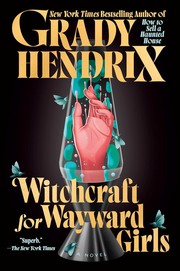
Witchcraft for Wayward Girls
2,077-word summary 9 min read 496 pages in the book
- First published
- 2025
- Publisher
- Berkley Books
- Pages
- 496
- ISBN
- 9780593548981
Reading options
What's inside (9 sections)
The bookmobile
The scene that sold me on this book happens about a quarter of the way in. A bookmobile pulls up to a maternity home for unwed pregnant girls in St. Augustine, Florida, in 1970. The librarian who steps out, Miss Parcae, hands the narrator a spellbook called How to Be a Groovy Witch. It is exactly the sort of gift a fourteen-year-old locked away from the world would want, and it is also, the book slowly makes clear, a transaction. Grady Hendrix has written a horror novel in which the magic is real, the spells work, and the genuinely frightening thing is what the girls' families and doctors and social workers do to them when nobody is watching.
I want to be honest about what kind of book this is. It is a pulpy throwback, loud and sometimes shameless, full of period details and revenge fantasy. Kirkus called it that, and the description fits. But it is also a novel with a real subject. It spends its first quarter on the background noise of 1970, Vietnam, student protests, the Weathermen, the failure of Apollo 13, before it settles into what it is actually about: teenage pregnancy in America before Roe v. Wade. That slow approach annoyed me a little at first. By the time I finished, I understood why it was there. The world these girls are sent away to is a world in crisis, and the crisis is mostly kept out of their sight.
The year the world fell apart
Hendrix spends real time on 1970, and it is worth asking why. The Vietnam War is on the television. Student protests are in the streets, and the Weathermen are a name people say with a mixture of fear and excitement. Apollo 13 fails on its way to the moon, and the whole country watches the rescue. These are not random bits of nostalgia. They establish a world in which adults are constantly failing at the things they claim to be best at, while the young people are left to clean up after them. The men running the country cannot get to the moon and back, cannot end the war, cannot keep the peace, and yet a handful of them feel entirely qualified to tell a fifteen-year-old what to do with her body.
That is the bridge between the book's first quarter and its real subject. The noise of the era gradually resolves into one small, quiet horror: a girl sent away because she is pregnant, and a home whose entire purpose is to make that fact go away before anyone notices. The contrast between the grand national failures and the private ones is deliberate. Hendrix wants you to understand that the same culture that loses a spacecraft over and over also loses girls like Fern. The book's title, with its echo of a craft fair or a coven meeting, is a joke about how ordinary this darkness was meant to seem.
The pacing is slow to get here, and I will admit I checked the page count a few times during those opening chapters. But the detail accumulates. By the time the spellbook appears, the book has made its case that the real supernatural event would be an adult in this story telling the truth and acting on it.
The girl who was renamed
Fifteen-year-old Neva Craven is driven from Alabama to Wellwood House by her furious father. The drive itself is a kind of sentencing. He is ashamed of her, and he is delivering her to a place whose job is to make the problem disappear. At Wellwood she is renamed Fern. The new name is not a kindness. It is part of the system, a way of turning a person into a case that can be processed. She will stay until she gives birth, and then the baby will be handed over for adoption, and then she will be allowed to go home and pretend nothing happened.
Hendrix is very good on the small mechanics of this place. The girls are not physically imprisoned, exactly, but every door leads back to the same expectation. They are to be quiet, thankful and compliant. They are to accept that the decision about their babies has already been made for them. The book's horror does not come from a monster in the attic. It comes from a social worker's calm, rehearsed voice explaining to a frightened teenager that surrender is her only real choice, that she is too young and too poor and too damaged to raise a child. Ian Mond, writing in Locus, put his finger on this: the truest horror in the book is the loneliness, and the relentless pressure put on these girls to give up their children.
The other girls
Fern is not alone for long, and the friendships she forms are the best thing in the novel. Rose is a hippie who wants to keep her child and escape to a commune with him. She is the one girl who treats the pregnancy as a future rather than a problem to be solved. Zinnia is a budding musician with severe morning sickness, which the staff treat with cold indifference. Holly is barely fourteen and mute, pregnant by the family minister, Reverend Jerry, who intends to adopt the baby himself so that his reputation can survive. That last detail is the kind of thing that makes this book hard to put down, because it is so recognizably human in its hypocrisy.
Miss Wellwood runs the home. She is judgmental and cruel-tongued, a matriarch who has made a career out of other people's shame. Dr Vincent is cold and condescending, the kind of doctor who treats a fifteen-year-old in labor as an inconvenience. Hendrix writes these characters broadly, almost cartoonishly at times, and that is part of the pulpy pleasure. You are meant to hate them. When the magic starts, you are meant to cheer.
The girls' situation is made worse by the fact that nobody believes them. When Holly says the minister is the father, she is not believed. When Zinnia says she is sick, she is not treated. The institutional response to each girl is the same: be quiet, comply, and let the adults decide. It is a setup that makes the arrival of a spellbook feel less like a fantasy element and more like the only possible form of justice left.
The spells work
Then the book becomes a revenge story, and it is genuinely fun. Dr Vincent refuses to medicate Zinnia, and shortly afterward he projectile-vomits in the most humiliating way possible. A grotesque curse falls on Miss Wellwood after she forces Rose to give up her child, and the curse is played for both horror and satisfaction. The spells in How to Be a Groovy Witch are not subtle, and Hendrix does not pretend they are. He wrote this book to give these girls weapons, and there is a real glee in watching them use them.
What makes it more than a simple revenge fantasy is the question of the price. Miss Parcae does not hand out magic for nothing. She returns to collect, and the book's later movement is about the girls trying to hide Holly and her baby while the bill comes due. Holly's situation is the most desperate of the four, because Reverend Jerry has not only got her pregnant, he intends to take the child and raise it as his own with his wife. Fern and the others have to hide a fourteen-year-old girl and a newborn inside a home whose staff is already looking for any excuse to punish them. The tension in these chapters comes from the ordinary logistics of concealment, a baby that cries, a door that opens at the wrong moment, a nurse who counts heads.
The climax deliberately undercuts the trope of the cackling evil witch. Hendrix is not content to let the supernatural villain be the source of evil, because he has spent three hundred pages showing you where the evil actually came from. The witch is a mirror, not the monster. When the girls finally confront what Miss Parcae wants from them, the book refuses the easy bargain where magic is simply given to the righteous. They have to decide how far they will go, and what they are willing to become to protect one another. That decision is the real ending of the novel, and it is a good deal more interesting than the curses that precede it.
I liked this part more than I expected to. The book could have settled for a series of set-piece curses and gone home. Instead it asks what it costs to get even, and whether the person who offers you power is any better than the people who took everything else.
What actually terrifies
Kirkus called it a pulpy throwback and argued that the everyday atrocities, not the supernatural ones, are what truly terrify. That is the right reading. The curses are lurid and often funny, but they are not the source of the dread. The dread comes from a father who drives his daughter to a home because she embarrassed him. It comes from a minister who uses a teenage girl and then wants the baby. It comes from a system whose answer to a pregnant fifteen-year-old is to rename her, hide her and take her child. The witchcraft is the outlet. The institutions are the horror.
Hendrix is writing about a specific moment in American history, before Roe, when the options for a pregnant teenager were narrow and mostly controlled by other people. The book does not pretend that the 1970s were a foreign country. The social worker's arguments, the family's shame, the doctor's contempt, all of it has a shape that a modern reader will recognize. This is why the book works as horror rather than as a period piece. The fear is not that a witch might get you. It is that the people who are supposed to help you might decide what is best for you and call it kindness.
The limits of the book
Not everyone was convinced. Stephen Rosenberg of Horror Geek Life questioned whether a male author could fully portray pregnant teenagers, and felt that parts of the book were inaccurate and overstepped the mark. He also thought the witchcraft elements lacked consistency and follow-up, that the rules of the magic shifted when the plot needed them to. There is something to this. The spells are often used as a convenient solution to an immediate problem, and Hendrix is not especially rigorous about how or why they work. If you want a tightly constructed magical system, this is not that book.
The question about perspective is harder to dismiss. Hendrix writes the girls with real sympathy, and he gives each of them a distinct voice and want. But there are moments when the narration feels like a man imagining what pregnancy and shame must feel like from the outside, and the book's energy is so high that it sometimes steamrolls the quieter truth of the situation. I didn't find it dishonest, but I could see why a reader might.
There is also a structural complaint worth making. Once the girls have the spellbook, the book's momentum changes. The slow accumulation of the opening gives way to a series of revenges, and for a while it feels as though Hendrix is working through a list of humiliations and matching each with a curse. That is enjoyable in the moment, but it flattens some of the complexity he set up. The social worker's pressure, which Mond identified as the truest horror, does not get the same sustained attention once the magic starts doing the work. The book is at its best when it lets the ordinary cruelty speak for itself, and a little weaker when it rushes to punish it.
Still, I finished this book in a state of genuine agitation, which is what a horror novel is supposed to produce. The surges of supernatural vengeance are satisfying. The thing that stayed with me afterward was the image of a girl being renamed on arrival, as if a new name could make her somebody else's problem. That is the horror Hendrix is really after, and he gets there.
FAQ
What is Witchcraft for Wayward Girls about?
It is a 2025 horror novel by Grady Hendrix about pregnant teenagers in a 1970 Florida maternity home. One girl receives a spellbook, and the magic becomes a way to fight back against the adults controlling their lives.
Is the horror in the book mainly supernatural?
No. Kirkus and Locus both argued that the everyday atrocities, the loneliness, the shame and the pressure to give up their babies, are what truly terrify. The witchcraft is a pulpy, often funny outlet for revenge.
Who is Miss Parcae?
Miss Parcae is the librarian who arrives on a bookmobile and gives Fern the spellbook. She returns later to collect a price, and the novel uses her to undercut the familiar trope of the evil cackling witch.
Similar books
The Bewitching
A gothic horror novel that moves between 1908 Mexico and 1998 Massachusetts as an old family curse and a folkloric bewitchment repeat across three timelines.
2,332-word summary · 10 min read
Wolf Worm
An illustrator hired to draw parasites in 1899 North Carolina finds her employer's locked shed holds something far worse than insects.
2,404-word summary · 11 min read
The True Confessions of Charlotte Doyle
A sheltered thirteen-year-old sails from Liverpool in 1832 and finds herself the only woman aboard a ship with a charming, dangerous captain.
2,330-word summary · 10 min read

The Boston Girl
Eighty-five-year-old Addie Baum tells her granddaughter how she grew up in Boston's North End, chased education and love, and became the woman she is.
2,439-word summary · 11 min read
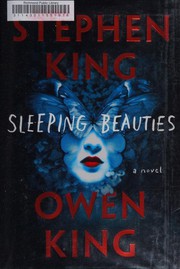
Sleeping Beauties
In a West Virginia town, a strange sickness puts every woman to sleep inside a cocoon, and the men left behind must decide what to do.
2,337-word summary · 10 min read
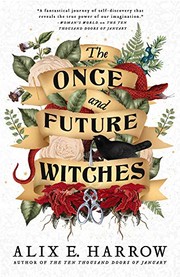
The Once and Future Witches
Three estranged sisters bring witchcraft back to an 1893 city where magic hides in nursery rhymes and the fight for the vote is also a fight for power.
2,132-word summary · 9 min read
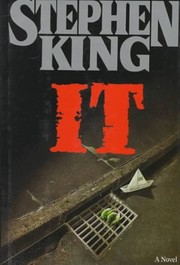
It
Seven friends in Derry face a shape shifting evil as kids in 1958 and again as adults in 1985.
2,229-word summary · 10 min read
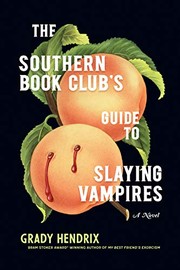
The Southern Book Club's Guide to Slaying Vampires
In 1990s Charleston, book club mom Patricia Campbell suspects charming newcomer James Harris is a vampire preying on neighborhood children.
2,398-word summary · 11 min read
The Hangman's Daughter
In 1659 Bavaria, a hangman ordered to torture an innocent midwife instead investigates the deaths of children marked with a strange tattoo.
2,523-word summary · 11 min read
The Forest of Vanishing Stars
A girl raised in the Polish wilderness uses her survival skills to hide Jewish refugees, until a secret from her own past catches up.
2,250-word summary · 10 min read
John Dies at the End
Two slacker friends, a drug called soy sauce, and a portal to something that wants every universe.
2,382-word summary · 11 min read
Wake Up and Open Your Eyes
A Brooklyn father drives to Richmond to find his parents lost in a cable news trance, in Chapman's splatterpunk horror about possession spread through…
2,381-word summary · 11 min read
Wake
Seventeen-year-old Janie Hannagan is pulled into other people's dreams whenever they sleep near her. A nursing-home job, a secretive boy and a drug bust give…
2,488-word summary · 11 min read
Theft
Gurnah traces three linked lives in Tanzania, where a servant's accusation of theft opens a family history of love, duty and quiet betrayal.
2,454-word summary · 11 min read
The Staircase in the Woods
Twenty-five years after a friend vanished at the top of a staircase in the woods, four estranged adults are summoned back to climb another one.
2,023-word summary · 9 min read
The Pull of the Stars
Over three days in a Dublin maternity ward in 1918, a nurse, a suffragette doctor on the run and a young volunteer face the flu, childbirth and unexpected love.
2,578-word summary · 11 min read
The Paying Guests
A widowed mother and her unmarried daughter take in lodgers in 1922 south London, and a secret affair between Frances and Lilian pulls them into a murder case.
2,661-word summary · 12 min read
The Paris Express
Emma Donoghue turns the real 1895 Montparnasse rail disaster into a crowded historical thriller, following a bomb-carrying anarchist and a carriage of…
2,785-word summary · 12 min read

The Kitchen God's Wife
Amy Tan's second novel pairs a San Jose speech therapist with her Chinese mother, whose account of war, an abusive husband, and a narrow escape comes out in a…
2,896-word summary · 13 min read

The Buffalo Hunter Hunter
A 1912 diary found in a Montana parsonage recounts a Blackfeet man's unraveling after a dying creature's blood turns him undead, in a novel of history and…
2,731-word summary · 12 min read
Nightmares and Dreamscapes
King's 1993 collection runs from a man buried alive in a Cadillac to a town of dead rock stars, mixing horror, science fiction and dark humor across 816 pages.
3,232-word summary · 14 min read
Marina
A fifteen-year-old boarder in 1979 Barcelona follows a singing voice into a ruined mansion and finds a girl, a watch, and a mystery the city has kept buried…
2,352-word summary · 10 min read
Ghost Story
Four elderly friends who trade ghost stories every week find their tales coming true after a fifth member dies in this 1979 horror novel.
2,461-word summary · 11 min read
Endling
A Ukrainian scientist breeds endangered snails from her van and funds the work by posing as a mail-order bride, until a kidnapping plot meets the outbreak of…
3,041-word summary · 14 min read
By the Shores of Silver Lake
Twelve-year-old Laura leaves Plum Creek for Dakota Territory, rides a pony, mourns old Jack, and learns to be eyes for her blind sister Mary.
2,540-word summary · 11 min read
Bringing Down the Duke
In 1879 Oxford, a scholarship student and suffragist is tasked with winning over a powerful duke, only to be undone by the man she must persuade.
2,456-word summary · 11 min read
Bat Eater and Other Names for Cora Zeng
A Chinese American crime scene cleaner in pandemic-era New York is haunted by her sister's racist killing and a string of deaths among East Asian women.
2,014-word summary · 9 min read
The Strain
A silent Boeing 777 lands at JFK with almost everyone aboard dead, and a CDC team finds an old vampire war following it into New York.
2,272-word summary · 10 min read
The Regulators
A suburban Ohio street turns into a violent Western set in this Richard Bachman novel, a mirror to Desperation in which an autistic boy hosts a creature called…
2,259-word summary · 10 min read
Never Flinch
Holly Gibney works two cases at once: a killer promising fourteen deaths and a threat against a feminist writer's lecture tour. King braids them into a…
2,245-word summary · 10 min read