
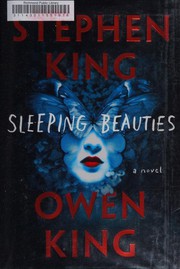
Sleeping Beauties
2,337-word summary 10 min read 702 pages in the book
- First published
- 2017
- Publisher
- Scribner
- Pages
- 702
- ISBN
- 9781501163401
Reading options
What's inside (9 sections)
I will be honest about why I opened this one. I have read most of Stephen King's novels, and I have read Owen King's short fiction, and the idea of the two of them writing a book together sounded like it might be either a treat or a mess. It turned out to be both in places, which is probably the right result for a father and son arguing about gender on paper for seven hundred pages. The book came out in September 2017 from Scribner, runs 702 pages in the first hardcover, and carries both names on the cover. Owen brought his father the original idea, and Stephen King has described it as a dynamite idea. The story is set in a women's prison in West Virginia, and it is about what happens when every woman on earth falls asleep at once.
A woman with a match
The book opens in Dooling, an impoverished little town in the fictional Tri-Counties part of Appalachia. Two men are running a meth lab out of a mobile home. A woman shows up, beats them both to death, sets the lab on fire, and waits calmly to be arrested. The local sheriff, Lila Norcross, takes her in. The woman will not give a real name at first, so people start calling her Evie Black. At almost the same moment, reports begin to come in from around the world about a strange sickness. Women are falling into a deep sleep and waking up wrapped in a kind of cocoon. Anyone who tries to open the cocoons is attacked, and often killed, by the sleeping women, who go into a homicidal rage. The sickness gets a name from the old fairy tale: Aurora.
What I liked about that opening was its cold openness. There is no long scientific explanation and no government press conference. King and King simply drop a strange event into a small place and watch ordinary people try to manage it. Dooling feels like a town the authors know, with its cracked roads, its prison, and its handful of tired institutions. The women's prison at the center of the book is the Dooling Correctional Institute for Women, and it is where the story keeps returning. The first few chapters move between the jail, the sheriff's office, and the road outside town, and the sense of a community with thin resources is strong.
The sleep comes to Dooling
Lila Norcross is the sheriff, a woman who brooks no backtalk and runs on very little sleep herself. Her husband, Clint Norcross, is the chief psychiatrist at the women's prison. He is the sort of therapist the inmates actually trust, because he treats them as people who had bad luck rather than as problems to be solved with exercises that never work. Early in the book he thinks back to why he took the prison job. He had planned a private practice, but his first patient, a man named Paul Montpellier, spent the whole session complaining about being thrown out of his house after being caught having an affair, and Clint decided he could not do that work for a living.
Aurora reaches Dooling and reaches the prison at about the same time Evie is locked up. The women of the town grow desperate to stay awake. There is looting and there are riots. Lila, who has been holding everything together, falls victim herself and is replaced by her chief deputy, Terry Coombs, a man with a drinking problem. Terry is not a leader, and he knows it, but he is the one left standing. He appoints Frank Geary, a former animal control officer with a very short temper, as his second in command. At the prison, Warden Janice Coates fires a guard named Don Peters for sexually harassing the inmates. Peters retaliates by drugging her with Xanax and walking off the job, which leaves Clint trying to protect a shrinking number of women who are still awake.
The middle of the book is full of this kind of institutional unraveling, and it is the part I found most convincing. When a disaster hits a small town, the people with badges and keys suddenly have all the power, and some of them are not good people. The novel is at its best when it stays close to that truth. Clint keeps thinking that in a perfect world this or that woman would never have been arrested, and the book lets him notice how thin the line is between the inmates and the people outside guarding them.
Clint, Evie, and "the Man"
Clint starts interviewing Evie, and the interviews are the philosophical spine of the book. She tells him she is an emissary sent by a being from somewhere else. The being believes that women could build a society without war and abuse, because those things are mostly the work of men. Evie says she has come to test the idea. She calls Clint "the Man," and tells him his job is to protect her for a week or so, after which she will cure the women of Aurora. She can shapeshift and speak to animals like rats without saying a word. Whether she is telling the truth or playing everyone is a question the book keeps alive for a long time.
These conversations are smart on the page but also a little blunt. Evie explains her mission in plain terms, and the novel has a habit of letting her say the theme out loud. I did not mind it as much as I expected, because Clint is a good listener and the argument between them has real stakes. He is a decent man who is being asked to prove that decency is worth saving. The two Kings give him small, human habits that make him more than a mouthpiece. He worries about his son. He thinks about his patients. He gets tired and says the wrong thing at times.
There is a son in the story too. Clint's boy Jared is a teenager who looks and acts like his father, a little insecure and good hearted. Jared and a friend named Mary manage to hide Lila and three other women in an empty house, because they are afraid of what Frank Geary might do with sleeping women as hostages. The newspapers and the television crews are mostly absent from these pages, which I took as a choice. The book stays with the people who have to make decisions in a town where the phones no longer work and the roads are blocked.
Our Place
Here is the strangest and, to me, the most memorable part of Sleeping Beauties. While their bodies sleep in cocoons back in Dooling, the women find themselves together in a version of the town that has been emptied out and half destroyed. They call it Our Place. Lila and Warden Coates take charge, and the women start to rebuild. They cook, they set rules, they grieve the people they left behind. From time to time one of them simply vanishes, and the reason is awful: somewhere in the real world, a man has destroyed her body, so there is nowhere for her to return.
A group goes looking for other survivors and finds a magnificent Tree. The Tree is the doorway between Our Place and the real Dooling. Elaine Nutting, Frank Geary's ex wife, does not want to go back, so she tries to burn it down. Evie sends an inmate named Jeanette Sorley to stop her. Jeanette is serving time for manslaughter after stabbing her violent husband in the crotch with a screwdriver and sitting beside him while he bled to death. Clint believes she acted in self defense, and the book treats her as a woman who did what she had to do. Jeanette wrestles the lighter and a gun away from Elaine and throws the lighter aside. Then she hears leaves rustle, turns with the gun in her hand, and Lila shoots her by mistake. It is a sudden, stupid death, and it is the best thing in the book. There is no grand meaning to it. A frightened woman with a gun makes a mistake, and everyone has to live with it.
I think the Our Place chapters are why this book stayed with me. They are gentle in a way that is unusual for a story this violent, full of women sharing food and making plans and noticing that the town is quieter without men around to start fights. Then the novel yanks that world away, and the loss lands harder than any of the action. The women who vanish from Our Place are a quiet horror too. The book never dwells on them, which is what makes it sting.
Frank Geary's war
Frank Geary is the human antagonist, and the Kings write him as a man who has a private story for every cruel thing he does. When he punches a hole in his wall, he thinks that sometimes you punch a wall to avoid punching the person in front of you. When he yells at his daughter Nana, who is a gifted young artist, he thinks that sometimes you have to yell to be heard. He divides himself into Good Frank and Bad Frank, and Bad Frank is always the one who does the damage. Evie regards him as proof of everything she believes about men. He is also the only animal control officer in town, which the novel uses as a quiet joke about his place in the pecking order.
I have mixed feelings about Frank. He is vivid and funny and horrifying, often in the same paragraph, and the pages he narrates are hard to skip. But his arc runs a long time. He takes over the sheriff's department, deputizes new men including the disgraced guard Don Peters and a classmate of Jared's named Eric Blass, who shows his nature by helping Peters set a homeless woman on fire. Frank and Terry restore a kind of order in Dooling, and Frank begins to imagine he can save the sleeping women by taking Evie from the prison. The novel keeps sending him back to the same lesson, that he is not the hero he thinks he is, and by the third or fourth repetition I was ready for him to be done.
Then the book goes properly wild. Clint and his allies steal weapons from the police station. Frank and Terry gather a posse to assault the prison and capture Evie. During the attack two criminals use a stolen bazooka to blow up part of the station and the prison, killing fifteen women before a former guard named Vanessa Lampley shoots them dead. Terry kills himself out of grief and cowardice. Peters and Blass die. Most of Frank's men desert him, but he reaches Evie's cell. It is a lot, and some of it feels thrown in, but the momentum carried me through.
The bargain at the Tree
At the cell, Clint, Jared, Warden Coates's daughter Michaela, an inmate named Angel Fitzroy, and an elderly volunteer named Willy Burke try to talk Frank out of killing Evie. Evie herself tells him that killing her is the only way to save his family, which is exactly the sort of trap she has been setting all along. Clint finally sees what she is doing. She wants to prove that men are inherently violent and that the world would be better off without them. He turns her own power against her by making her save Willy Burke when his heart suddenly stops, using guilt to force her hand. Frank and the others watch this happen, and they let Evie go back to Our Place. There she gives the women a choice: return to their lives in Dooling or stay. Every one of them votes to go back.
The women wake. Life in the world slowly resumes. And then the book does something I did not expect, which is to refuse a happy ending for the marriage at its center. Lila and Clint have been drifting apart for a long time, and they decide to separate. He takes a job at a prison in the next town and she resigns as sheriff. Lila is still haunted by Jeanette's death. She drives out to the place where the Tree used to stand and asks Evie for a sign. A single brown moth, one of the forms Evie has taken, lands on her hand. That is the last image, and it is a good one: small, quiet, and unresolved.
What the two Kings do with it
The book won the Goodreads Choice Award for horror in 2017 and was nominated for a Bram Stoker Award, and it is easy to see why readers responded. The premise is a big, clean idea that lets a huge cast run around a pressure cooker. The prison setting gives the story real texture, and the best characters, especially Jeanette, Clint, and Frank, are drawn with a care that lifts them out of the allegory. The Guardian called it an epic, colorful story of a global pandemic with a youthful energy, and I think that is fair.
The criticism is fair too. At 702 pages the novel is longer than its idea needs. Evie is described in ways that lean on her body and her sexuality, and she stays more symbol than person. The book's argument about men and women is blunt enough that some readers will feel lectured, and the absence of trans and intersex people is a real gap in a story claiming to speak for women everywhere. When Aurora pulls women out of their jobs and professions, the novel gestures at the consequences without really living in them. If you want a tidy thriller, this will frustrate you. If you want a big, messy, argumentative book that keeps producing memorable scenes long after it should have stopped, it is worth the time.
FAQ
Who wrote Sleeping Beauties?
It is a collaboration between Stephen King and his son Owen King. Owen brought the idea to his father, and both names appear on the cover, though it is cataloged here under Stephen King.
When was Sleeping Beauties published?
Scribner released it in September 2017. The first US hardcover runs 702 pages with ISBN 9781501163401.
Is Sleeping Beauties part of a series?
No. It stands alone with no sequel. A television adaptation was announced and an IDW comic series was published, but the novel itself has no follow-up.
Similar books
Witchcraft for Wayward Girls
In 1970 Florida, a girl sent to a maternity home for unwed mothers finds a spellbook, and the real horror turns out to be what the adults do to her and her…
2,077-word summary · 9 min read
Wake Up and Open Your Eyes
A Brooklyn father drives to Richmond to find his parents lost in a cable news trance, in Chapman's splatterpunk horror about possession spread through…
2,381-word summary · 11 min read
Nightmares and Dreamscapes
King's 1993 collection runs from a man buried alive in a Cadillac to a town of dead rock stars, mixing horror, science fiction and dark humor across 816 pages.
3,232-word summary · 14 min read
Never Flinch
Holly Gibney works two cases at once: a killer promising fourteen deaths and a threat against a feminist writer's lecture tour. King braids them into a…
2,245-word summary · 10 min read
Lisey's Story
Two years after her novelist husband dies, Lisey Landon follows a trail of clues into his childhood and the other world that made him a writer.
1,998-word summary · 9 min read
Everything's Eventual: 14 Dark Tales
Fourteen Stephen King stories shuffled by the deal of a card deck, from the haunted room of 1408 to quiet tales of grief that sting as much as the monsters.
2,000-word summary · 9 min read

If It Bleeds
Holly Gibney faces an outsider plus three more tales of dread.
2,219-word summary · 10 min read
Four Past Midnight
Four novellas about a plane lost in time, a writer haunted, and horrors small and large.
2,584-word summary · 11 min read

Skeleton Crew
King's 1985 collection pairs The Mist with The Jaunt, The Raft, and Survivor Type: 22 stories of Maine dread.
3,209-word summary · 14 min read
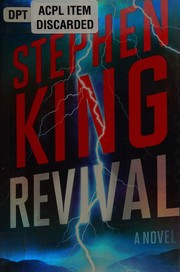
Revival
Jamie Morton shadows preacher Jacobs from boyhood healings to electric cures that open a door best left shut.
2,037-word summary · 9 min read
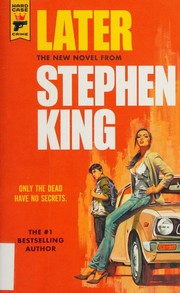
Later
Boy Jamie Conklin sees dead people who must answer truthfully, pulling him into NYPD cases and a drug crew's greed.
2,009-word summary · 9 min read
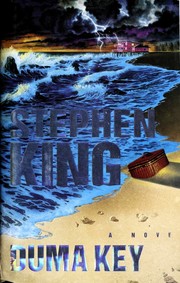
Duma Key
After losing his arm, Edgar Freemantle paints on a Florida island and learns his pictures can open doors for something hungry.
2,530-word summary · 11 min read
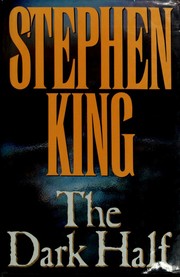
The Dark Half
A Maine novelist buries his violent pen name George Stark, then faces murders that carry his own fingerprints.
2,956-word summary · 13 min read
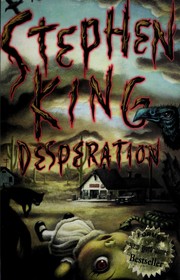
Desperation
Travelers on Highway 50 are hauled into empty Desperation, Nevada, where a possessed deputy serves an old thing in the mine.
2,993-word summary · 13 min read
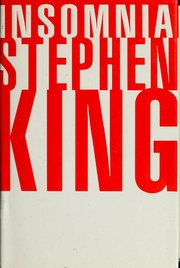
Insomnia
Widowed Ralph stops sleeping in Derry and sees small doctors with scissors deciding who lives and dies.
3,605-word summary · 16 min read
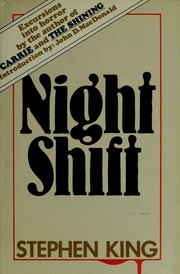
Night Shift
King's first story collection moves from haunted mills to killer cornfields, twenty early tales where ordinary places turn evil.
2,488-word summary · 11 min read
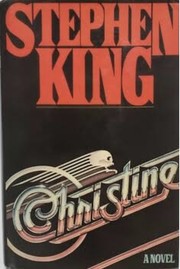
Christine
Misfit Arnie restores a wrecked 1958 Plymouth Fury that takes him over, forcing best friend Dennis and girlfriend Leigh to fight back.
2,106-word summary · 9 min read
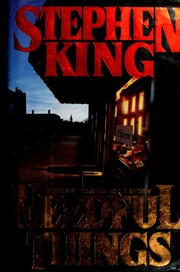
Needful Things
A smiling man sells exactly what you want for cash plus one small cruelty to a neighbor.
2,007-word summary · 9 min read
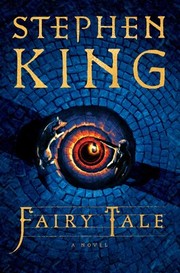
Fairy Tale
A grieving teen cares for a recluse and his old dog, then finds a shed well leading to Empis, a fading world at war.
3,203-word summary · 14 min read
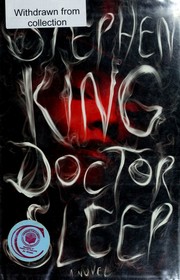
Doctor Sleep
Grown Dan Torrance gets sober in New Hampshire and helps gifted Abra Stone face the True Knot.
2,841-word summary · 13 min read
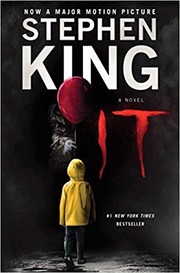
The Outsider
Coach Terry Maitland's DNA and witnesses point to an impossible murder, until Ralph Anderson and Holly Gibney trace it to El Cuco.
2,586-word summary · 11 min read
Pet Sematary
Doctor Louis buries Church and then Gage in ground that returns them wrong, learning dead is better.
2,158-word summary · 10 min read
Carrie
Bullied Carrie White discovers telekinetic powers that turn a cruel prom prank into a night of fire.
2,172-word summary · 10 min read
It
Seven friends in Derry face a shape shifting evil as kids in 1958 and again as adults in 1985.
2,229-word summary · 10 min read
The Shining
The Shining retold: Jack winters at Overlook with Wendy and Danny, REDRUM, hedge maze chase.
2,011-word summary · 9 min read
MaddAddam
Toby and Ren rebuild a camp after the plague while Zeb reveals the past and the Crakers invent a religion around Oryx and Crake.
2,201-word summary · 10 min read
John Dies at the End
Two slacker friends, a drug called soy sauce, and a portal to something that wants every universe.
2,382-word summary · 11 min read

Battle Royale
A Japanese dystopian thriller about a class of students forced to kill one another on an island, and the three who refuse to play the game.
2,266-word summary · 10 min read
Vox
In a near-future America, women are fitted with counters that allow them a hundred spoken words a day. A linguist fights to reclaim her voice and save her…
2,434-word summary · 11 min read
The Staircase in the Woods
Twenty-five years after a friend vanished at the top of a staircase in the woods, four estranged adults are summoned back to climb another one.
2,023-word summary · 9 min read