

Reading options
What's inside (10 sections)
I picked this up because a friend described it in one sentence: a country where women are allowed a hundred words a day. That was enough. Vox was published in the United States by Berkley on 21 August 2018, and it wears its argument on its sleeve from the first page. Christina Dalcher has said she wrote it as a cautionary tale about gender politics and backlash, and about how much of our personhood is tied to our ability to use language. It is a novel built on a single brutal conceit, and much of its pleasure comes from watching a clever woman work out how to live inside it. It also has an ending that many critics thought did not earn itself, which I will get to later.
The hundred-word rule
The premise is simple and awful. In a near-future United States, every woman and girl wears a wrist counter that records her speech. One hundred words a day. Each word past the limit brings an electric shock, and the shocks get worse the further she goes. Before the regime, the average person spoke around sixteen thousand words a day, so the law is not a nudge toward politeness. It is silence by design.
Dalcher shows the rule at work in small scenes rather than in speeches. Books have been taken from women. Pens and email are gone. Girls are taught home economics, physical fitness and simple accounting instead of reading and writing. The government did not arrive overnight, either. Jean remembers the slow creep of it: women's passports quietly invalidated, fundamentalist ideas folded into school lessons, a televised panel of so-called Pure Women blaming feminism for the country's problems. That gradualism is the most convincing part of the world-building. Nobody stormed the gates. The gates were simply closed one at a time.
Jean tested her counter early on, talking freely until the shocks knocked her to the floor. She is a cognitive linguist by training, so the loss of language is a civic outrage to her and something far more personal besides. It is an assault on the thing she has spent her life studying. Dalcher, who has a background in linguistics, clearly cares about the mechanics of it, and the book is at its best when it stays close to what words do for a person.
A house of careful silences
Jean McClellan is forty-three, married, and the mother of four. Her husband Patrick is the president's science adviser, a position that gives the family protection and also makes it a cage. At dinner he asks their six-year-old daughter Sonia only yes or no questions so she will not waste words. Their seventeen-year-old son Steven and the eleven-year-old twins, Sam and Leo, talk as much as they like. Jean stretches her own allowance as far as it will go, and spends her last word of the day on "Goodnight" for Sonia. Bedtime stories are no longer possible, so she hums instead.
The domestic detail is where the book finds its footing. Jean has not always voted, and she never joined the protests that her old friend Jackie Juarez kept organising. Jackie was a sociolinguist who saw the written warning on the wall years earlier, and Jean now regrets not listening. She looks at Patrick and calls him weak, because he has access and influence and seems unwilling to use either. The resentment between them is quiet and constant. It is the kind of anger that builds in a house where nobody can say what they mean.
There is a scene where Sonia wakes screaming from a nightmare and rattles off a string of frightened words. Jean clamps a hand over the child's mouth as the counter hits one hundred. Later, alone in the garden, Jean screams at the men who imposed all this until the shocks intensify and the police come. Patrick has to wrestle her quiet. The next morning she sends Sonia to school without their usual word of love, and the girl's silence is its own accusation. Moments like that land harder than any lecture about tyranny could.
Sonia, Steven and the neighbour's daughter
Sonia is the centre of Jean's fear. She used to be a bright, talkative child. Now she has been taught to treat silence as a virtue, and she comes home proud of a school prize for not speaking at all. Jean once trained her with treats to stay quiet, a Pavlovian trick she regards as the worst thing she has done as a parent. When the counters finally come off, Sonia recovers her speech within days, which is a relief the book earns honestly.
Steven has gone the other way. He wears a blue P pin for the Pure Movement and volunteers at girls' schools to demonstrate the counters. He plans to marry the neighbour's daughter, Julia King, at eighteen under a government incentive programme. Then Steven and Julia are caught having sex, and Steven is the one who reports her. Uniformed men drag Julia from her home, fit her with a zero-word counter and send her to a labour camp. Her mother Olivia records "I'm sorry, Julia" on a Dictaphone, leaves it within earshot and lets the shocks from her own counter burn through her hand to the bone. Jean comes home to find the ambulance outside.
That sequence is the novel at its most upsetting, and also its most blunt. The regime's cruelty is not subtle, but the effect on Steven is more interesting than the spectacle. Seeing his girlfriend shamed on television, and being made to write letters full of slurs at school, begins to crack his certainty. The book treats his change of heart as a slow, awkward thing rather than a switch, which feels right for a teenager raised inside a belief system.
Bobby Myers and the offer from Reverend Carl
The plot kicks into gear when Bobby Myers, the president's brother and closest adviser, suffers a skiing injury that damages the part of the brain responsible for language. He ends up with Wernicke's aphasia, producing only meaningless speech. Before the Pure Movement took over, Jean had been developing a cure for exactly this condition, so Reverend Carl Corbin, the movement's spiritual architect, comes to the house with an invitation.
Jean refuses at first. She is furious about what has been done to her family and not eager to help the people who did it. Then she watches Sonia come home delighted with her silence prize, and she changes her mind. She negotiates three terms: her daughter's counter comes off, Sonia is excused from school, and her former colleague Lin Kwan is assigned to the project. The president agrees. That bargain is the hinge of the story. Jean trades her expertise for her child's voice, and every step after it is shadowed by the question of what else she will trade.
The lab, the lover and the secret envelope
The government lab is staffed under its nominal head, Morgan LeBron, a young scientist who took Lin's chair when she was pushed out. The place is full of expensive equipment and animals, and a large security guard named Poe watches the corridors. Jean's old colleague Lin is there, and so is Lorenzo Rossi, an Italian biochemist with whom Jean had an affair. Within a day of their reunion she realises she is about ten weeks pregnant, and the timing leaves no doubt whose child it is. She calls her parents in Italy, and soon after gets word that her mother has suffered an aneurysm and now has Wernicke's aphasia herself.
The research thread is where Dalcher asks the reader to do some work. Jean opens a top-secret envelope in Patrick's study and finds three project teams listed. Her White team is developing an anti-Wernicke serum. The Gold team is developing a Wernicke serum, with the word anti removed. The Red team is studying water solubility. Put together, the documents suggest the regime intends to reverse-engineer the cure into something that can be put into water supplies to induce aphasia in a population. Jean also notices that the lab's equipment could not have been installed in the few days since Bobby's accident. The project was planned months ahead.
This is a strong stretch of the book, but it is also where the science starts to creak. The steps from a speech disorder to a weapon that can be dosed through drinking water are explained in a way that sounds plausible until you think about it too hard. Dalcher is writing a thriller, not a paper, and most readers will go along. I found myself wanting a little more room for the moral argument and a little less for the technical scaffolding.
Del Ray, the farm and the underground
The resistance arrives through the mail. Del Ray, the neighbourhood postman, is the son of Delilah Ray, an elderly botanist who was meant to be Jean's first human test subject after a stroke. Jean arranges for Sonia to spend a day with Del's wife Sharon and for Mrs Ray to come to the lab for an injection. At the Rays' farm she learns that Del and Sharon have been running an underground operation. He has worked out how to remove counters and has replaced the ones worn by his wife and daughters with decoys. Sharon, who is Black, points out that the Pure Movement will eventually turn on people of colour and anyone in an interracial marriage. The regime's reach is wider than the word counters suggest.
The mailbox turns out to be a dead drop, and Poe arrests Del while he is collecting the envelope Patrick has been leaving there. That same night Patrick tells Jean the truth. He has been passing classified material to the resistance since he watched a colleague executed at Fort Meade. He knows about Lorenzo and the baby, and he does not care. He asks whether Jean would kill to end the regime, and when she says they only need to take away its voice, they start working out how to use the serum against the men at the top.
Patrick's confession is one of the better written parts of the book. His caution earlier in the story reads differently once you know he has been living a double life, and the shift makes sense of the distance between him and Jean. It also gives the climax a personal cost that a purely political plot would have lacked.
The serum, Morgan and the final Monday
The serum works. Jean injects Delilah Ray, and within about ten minutes the old woman speaks coherently for the first time since her stroke. Morgan then throws Jean and Lorenzo out of the lab, only to call them back moments later. He has a second laboratory in the sub-basement, better equipped and stocked with primates, and he has imprisoned Jackie, Lin and Lin's former partner Isabel there in black counters set to zero. If Jean will not make the weaponised serum by Monday morning, someone dies.
Jean builds a counter-operation with Sergeant Petroski, a young guard with an infant daughter who will grow up in a silent world if nothing changes. They learn the serum has to be injected into brain tissue rather than simply poured into water, which changes the plan. Petroski helps free Lin, who performs a trial craniotomy on a sedated chimpanzee. Morgan wakes before they can use the same procedure on him. He grabs a syringe and holds it to Lorenzo's neck. Jean talks him into calling Petroski in, Jackie gets hold of the guard's loosened pistol and passes it over, and Jean shoots Morgan dead.
Poe then reveals he has been working for the resistance all along. He leads the group, including Steven, whom he has pulled from detention in the building, out past security with a letter bearing the presidential seal. They reach the Rays' farm, where Patrick and the younger children are waiting. On Monday morning Patrick drives to a White House meeting with the serum in his briefcase and doses the drinks of the president, Reverend Carl, Bobby and the senior officials gathered there. He does not come back. Poe tells Jean that Patrick ran out of the building and was hit by shots from a rooftop sniper, and that he died smiling.
What I think of the ending
The regime's leaders survive with severe language damage, the country tips into upheaval, and Jackie stays behind to organise resistance and push for elections with real female representation. Julia is freed and reunited tentatively with Steven. Jean cancels the test that would have told her the baby's sex, refusing to let that result decide whether she can stay, and leaves with Lorenzo and all four children. They travel through Canada to southern Italy, where her mother is treated with the anti-Wernicke serum. Sonia chatters away and says she wants to be a veterinarian. Jean watches Italian women talk with their hands and their voices, and says she will return one day, though not yet.
I wanted to love that closing image, and I mostly did. The picture of Sonia talking freely after a life measured in hundreds of words is the payoff the whole book has been earning. But the machinery around it is rushed. Kirkus called the ending surprising but unearned and the least convincing part of the story, and I think that is fair. The White House operation happens off the page, Patrick's death is reported rather than shown, and the political resolution arrives with a speed the earlier chapters did not prepare us for. A book that has been careful about small acts of attention suddenly asks us to accept a very large one without much detail.
That criticism does not sink Vox. What carries it is the patient accumulation of domestic humiliations, the arguments about who gets to speak, and Jean's slow move from resignation to action. Dalcher never lets the reader forget that the counter is a device on a wrist, worn by a real girl who wants to talk about being scared at night. For readers who enjoy speculative fiction with a clear political edge, this is an easy recommendation. For anyone who wants a tidy thriller with airtight mechanics, the ending will likely be the sticking point. I closed it thinking about the friend who recommended it, and about how rarely we notice how much of our lives is made of words we are free to say.
FAQ
What is the hundred-word rule in Vox?
Under the Pure Movement regime, every woman and girl wears a wrist counter that records speech and delivers escalating electric shocks after one hundred words in a day. Books, pens and email are also banned for women, and girls are taught home economics instead of reading and writing.
Is Vox based on real events?
No. It is a work of speculative fiction, and Dalcher has described it as a cautionary tale about gender politics, backlash and how closely personhood is tied to the ability to use language.
Why do critics describe the ending of Vox as rushed?
Kirkus called the ending surprising but unearned and the least convincing part of the novel. The White House operation that topples the regime happens off the page, and the political resolution arrives quickly after a story built on slow, careful detail.
Similar books

Wayward
With Ethan Burke now sheriff, Wayward Pines runs on cameras, fear and a founder's private plan, until a murder forces him to choose between order and the truth.
2,252-word summary · 10 min read
MaddAddam
Toby and Ren rebuild a camp after the plague while Zeb reveals the past and the Crakers invent a religion around Oryx and Crake.
2,201-word summary · 10 min read

The Dream Hotel
A Muslim American archivist lands at LAX and is detained because her sleep implant says she might kill her husband. Lalami's near-future novel follows her into…
2,687-word summary · 12 min read

Iron Widow
Wu Zetian enlists to avenge her sister, kills her pilot, and becomes an Iron Widow in a mecha Huaxia where the machines are built to kill women.
2,444-word summary · 11 min read
I Who Have Never Known Men
Forty women in a cage, one child who remembers nothing, and a nearly empty world above the bunker. Harpman's quiet, unexplained dystopia.
2,025-word summary · 9 min read

The Running Man
Out of work in a broken 2025, Ben Richards enters a televised manhunt where each hour alive pays cash.
2,922-word summary · 13 min read

Pines
A Secret Service agent wakes hurt in Wayward Pines, Idaho, hunting two missing agents, and finds a town that will not let him leave.
2,452-word summary · 11 min read
The One
A DNA test promises perfect love, but five Matches face lies, murder and a hacked database.
2,856-word summary · 13 min read

The Power
Girls gain electric skeins and the world reorders through four witnesses.
2,070-word summary · 9 min read

The Testaments
Aunt Lydia, Agnes and Nicole conspire to bring down Gilead fifteen years later.
2,516-word summary · 11 min read

The Handmaid's Tale
Atwood's The Handmaid's Tale retold: Offred in Gilead, the Commander, Serena Joy, Mayday, and the van.
2,369-word summary · 11 min read
Whisper Network
Four women at a Dallas sportswear company decide to name their boss in an anonymous spreadsheet of bad men, and the office turns on itself.
2,152-word summary · 10 min read

The Atlantis Gene
A geneticist and an intelligence operative chase two kidnapped boys through a global conspiracy about human evolution and a weapon built to cull humanity.
2,369-word summary · 11 min read

The 100
Three centuries after a nuclear war, a hundred teenage prisoners are sent from a failing space colony to test whether Earth is livable again.
2,152-word summary · 10 min read

Battle Royale
A Japanese dystopian thriller about a class of students forced to kill one another on an island, and the three who refuse to play the game.
2,266-word summary · 10 min read
Wake Up and Open Your Eyes
A Brooklyn father drives to Richmond to find his parents lost in a cable news trance, in Chapman's splatterpunk horror about possession spread through…
2,381-word summary · 11 min read

The Last Contract of Isako
On a planet where your job is your worth, a legendary corporate samurai is offered one last contract that turns personal when her worst apprentice sits at its…
2,099-word summary · 9 min read
Sunrise on the Reaping
Twenty-four years before Katniss, sixteen-year-old Haymitch Abernathy is swept into the fiftieth Hunger Games, where District 12 must send four tributes and…
2,198-word summary · 10 min read

Nightmares and Dreamscapes
King's 1993 collection runs from a man buried alive in a Cadillac to a town of dead rock stars, mixing horror, science fiction and dark humor across 816 pages.
3,232-word summary · 14 min read
The Regulators
A suburban Ohio street turns into a violent Western set in this Richard Bachman novel, a mirror to Desperation in which an autistic boy hosts a creature called…
2,259-word summary · 10 min read
State of Fear
In Michael Crichton's 2004 thriller, a lawyer is pulled into a plot in which eco-terrorists stage natural disasters to sell the public on climate catastrophe.
2,292-word summary · 10 min read
Sleeping Beauties
In a West Virginia town, a strange sickness puts every woman to sleep inside a cocoon, and the men left behind must decide what to do.
2,337-word summary · 10 min read
Never Flinch
Holly Gibney works two cases at once: a killer promising fourteen deaths and a threat against a feminist writer's lecture tour. King braids them into a…
2,245-word summary · 10 min read

The House of the Scorpion
A clone raised in a drug lord's poppy fields learns what he was made for and chooses what to do with the life he was given.
2,527-word summary · 11 min read
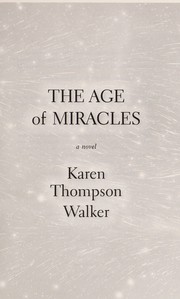
The Age of Miracles
A California girl grows up while the Earth's rotation slows, and ordinary adolescence continues alongside slow catastrophe.
2,417-word summary · 11 min read
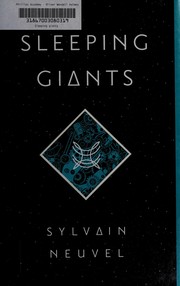
Sleeping Giants
A girl falls into a field and lands in a giant metal hand. Years later a secret team assembles the rest of the machine, and it chooses its own pilots.
2,466-word summary · 11 min read
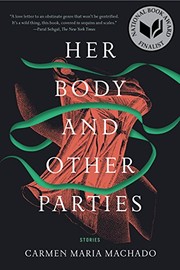
Her Body and Other Parties: Stories
Eight stories where bodies, medicine and old fairy tales get taken apart, with a green ribbon running through the whole book.
2,997-word summary · 13 min read

Divergent: Official Illustrated Movie Companion
An oversize behind-the-scenes guide to the 2014 Divergent film, with casting stories, costume and set design, and scores of photos.
2,524-word summary · 11 min read