
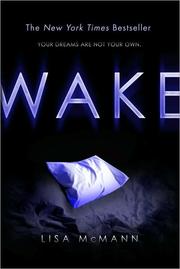
Wake
2,488-word summary 11 min read 210 pages in the book
- First published
- 2008
- Publisher
- Simon Pulse
- Pages
- 210
- ISBN
- 9781416953579
Reading options
What's inside (8 sections)
I picked this up on a whim after seeing the premise described in one line: a teenager who falls asleep gets dragged into other people's dreams. It sounded like a small, strange idea, the kind of book that either works beautifully or falls apart somewhere in the middle. What surprised me was how ordinary the world around that idea feels. Lisa McMann sets her story in a regular high school, with homework, a part time job, and a parent who is not really there, and then drops something impossible right into the center of it. The opening scene is a good example. Janie Hannagan, eight years old and traveling with her mother, blacks out and finds herself in a strange office where a balding man in ratty underwear is being laughed at by his coworkers. She has no idea where she is or how she got there. That moment sets the whole book in motion, and McMann keeps returning to it in flashes.
The novel came out in 2008, published by Simon Pulse, and it is the first of three books about Janie. It is written in a diary like form, with dates and times marking each entry, which took me a little while to get used to. Some of those timestamped sections are only a few lines long. The effect is that you feel you are reading someone's private record rather than a polished novel, and that suits a girl who spends most of her life keeping a secret she cannot explain to anyone.
A girl who cannot stop seeing other people's dreams
Janie is seventeen now, a senior at Fieldridge High School. Her mother is an alcoholic who spends most of her time in her bedroom, drunk or hungover, so Janie has raised herself in the practical sense. She works at Heather Home, a nursing home, to save money for college, and she is trying to chart a way out of a life that offers her very little. That is a familiar setup in young adult fiction, and McMann does not dress it up. What makes it different is what happens whenever someone near Janie falls asleep.
Her ability works without her permission. If a person within a certain distance drifts off, Janie is pulled into that person's dream. Her body goes rigid in the waking world and she can only watch the dream unfold. Some are harmless and embarrassing, like the falling dreams and the naked dreams she mentions with such weariness. Some are intimate in ways she would rather not witness. The range can grow when the dream is a nightmare, which is the part that frightens her most. Inside the dream, the people she finds sometimes ask her for help, and for years she has no idea how to give it.
The isolation is the real cost. Janie cannot tell anyone what she sees because she assumes they will think she is crazy, so she lives at the edge of her own life, careful about sleepovers and careful about where she sits. Classmates notice her strange freezes and start to wonder what is wrong with her. I found this section the most convincing part of the book. The supernatural hook is flashy, but the thing that rings true is the loneliness of carrying an experience you cannot share, and the way a teenager would rather be thought odd than tell the truth.
McMann does not spend much time on the mechanics of how the power works. There is no laboratory explanation and no scientific vocabulary. The dream catching is simply a fact of Janie's life, and the story is more interested in what she does with it than in where it came from. That choice keeps the book moving, though it also leaves some questions unanswered that a more technical writer would have tried to close.
The nightmares that pull her in
The story shifts when Janie starts getting pulled into the dreams of Cabel Strumheller, a loner at Fieldridge High with a reputation for being trouble. His dreams are unlike the ordinary adolescent anxieties she is used to. In one, he becomes a monster with knives for fingers. In others, he is repeatedly killing a middle aged man. Janie cannot shake what she sees, and Cabel notices that she reacts to him in a strange way. He begins to suspect there is more to her than she lets on.
This is where the book stops being a collection of odd episodes and becomes a story with a pulse. A nightmare is a scary thing to witness, but a nightmare that belongs to someone you are starting to care about is worse. Janie is both repelled by the violence in Cabel's dreams and drawn to the person who is having them. She wants to know who the man is and why Cabel keeps dreaming about killing him. The answer, when it comes, is that the man is Cabel's father, who was abusive and who died a few years earlier. The dreams are not a prediction of anything. They are a record of a wound that has not healed.
I liked how McMann handles this reveal. It does not arrive as a single dramatic confession. It builds through the dreams themselves, so that Janie pieces together Cabel's history the same way a reader does, by watching the same frightening scene again and noticing something different each time. The dream sequences do double duty as both supernatural set pieces and a way into a character's past, and that is the book's best idea.
Cabel is not around as much as I expected early on. He is a presence defined by his dreams and his reputation before he becomes a fully realized person, and a fair share of the middle of the book is Janie reacting to him from a distance. For readers who want a romance that develops on the page, that slow burn may feel like a long wait. For readers who like a mystery, the delay works, because Cabel's absence is part of the puzzle.
Miss Stubin and learning what she is
Janie's hours at Heather Home turn out to matter more than the early chapters suggest. There she meets Miss Stubin, an elderly resident who recognizes what is happening to Janie and gives it a name. Janie is a dream catcher. That word changes her understanding of herself, because until then she has experienced her ability only as a burden and a curse. Miss Stubin helps her see that being pulled into someone's dream might also mean being able to help that person resolve what haunts them.
This is the point where the book becomes about control. Janie starts to learn that she is not limited to watching. She can influence what happens inside a dream, and she and Cabel work out a way for him to communicate with her through lucid dreaming once he understands what she can do. The scenes where the two of them figure this out are among the liveliest in the novel, partly because they carry a spark of genuine excitement. Janie has spent her whole life being a helpless witness. Learning that she can take part in what she sees changes the shape of her world.
The friendship between Janie and Miss Stubin is quiet and I think underused. An older person who understands exactly what a younger person is going through is a rich relationship, and McMann gives them some warm moments without overplaying them. I wanted more of Miss Stubin, in part because her history as a dream catcher could have opened up the larger rules of this world. The book stays focused on Janie, though, and the mentor stays in the background.
It has to be said that the early going is uneven. The book opens with a run of flashbacks and repeated scenes of Janie being sucked into dreams, and Publishers Weekly called out that disjointed opening when it reviewed the novel. I felt the same drag for the first several chapters. The scenes are well written on their own, but the repetition before the story really starts testing Janie can feel like the author is showing off a gimmick before getting on with the plot. Stick with it, because the pace picks up sharply once Cabel and Miss Stubin give Janie something to do with her ability.
A relationship built on secrets
Janie and Cabel grow closer during a class trip to Canada, and this is where the romance of the book really lives. It is on that trip that Cabel learns about her ability and helps her keep it private. For the first time, Janie has someone who knows what she is and does not treat her like a freak. That is a big thing for a character who has been alone with her secret since she was eight, and McMann writes the relief of it well. Their attraction is not presented as instant destiny. It comes out of shared knowledge and the simple fact that Cabel can look at her without suspicion once he understands.
Then the pressures of school get in the way. Cabel acquires a reputation as a drug dealer among the wealthy students, and he is often seen at the home of a girl named Shay. Janie watches him seem to pull away, and she has no explanation for it. Rumors do the rest. She lets what she hears override what she has seen in his actions and what he has told her, and the relationship strains under the weight of it.
This part of the story made me a little impatient with Janie. She has direct evidence from Cabel and she chooses to believe the whispers, which is a familiar trope and not a subtle one. But it is also believable for a seventeen year old who has been trained to expect the worst from people. Her secret has taught her that being misunderstood is the normal state of things, so she is ready to believe that Cabel is not who he says he is. The flaw is character based rather than plot based, and it fits her.
Her best friend Carrie Brandt adds another strand here. Carrie spends time with the wealthier crowd, including a girl named Melinda Jeffers who dislikes Janie, and she carries recurring nightmares about her younger brother drowning. Those nightmares tie her to Janie's ability in a painful way, and they pull her into what happens at the end of the book. Carrie is the friend who is close but also drifting, and that tension gives the school scenes some real feeling.
The undercover truth and the dream that solves the case
The turn that resets everything is that Cabel is not a drug dealer at all. He is working undercover with the police on a drug bust, and his connection to Shay is part of that work. His boss is Captain Fran Komiski, who is running the operation. Once Janie learns the truth, the shape of the last third of the book becomes clear. Cabel's distance was not rejection. It was a job he could not explain.
The climax arrives when Cabel and a number of Fieldridge students and parents are arrested on narcotics charges. Janie gets pulled into the dream of Shay's father, who turns out to be the leader of the drug operation. It is an intense dream that lasts for hours, and the experience leaves her so numb that she falls out of her chair. Captain Fran asks her what she saw, hoping the dream will reveal where the drugs are hidden. Janie recounts the details and works out that the stash is sewn inside life jackets on the dealer's yacht.
This ending is the payoff the earlier dream scenes have been quietly setting up. The ability that made Janie a freak becomes the thing that helps solve a crime, and her attention to the small details of a frightening dream gives her a power she has never had before. It is satisfying without pretending to be subtle. A girl who has spent the book on the outside of other people's lives finishes it having contributed something real to the community around her.
After the bust, Janie is given a contract, a scholarship offer, and a paycheck. That is a tidy ending in some ways, almost too neat after everything the book has put her through, but it answers the practical question that has been driving her since the first chapter. She wanted a way to pay for college and a way out of her mother's house. The dream catching did not go away, but it stopped being only a burden. McMann leaves room for what comes next without stopping the story dead.
What I would tell a friend before handing it over
Wake is a satisfying first novel with a slow front half and a strong back half. If you can get past the disjointed opening and the repeated dream episodes, the book rewards you with a mystery that actually uses its unusual premise instead of decorating a standard romance with it. The dream sequences are the reason to read it. They are strange and sometimes uncomfortable, and they give the story a texture that a ordinary high school novel would not have.
The weaknesses are real. Some of the plot twists are shopworn, especially the undercover reveal and the misunderstanding between the leads, and the romance leans on rumors that a more careful character would have checked. Janie's mother is barely a person, more a plot device than a character, and the book never does much with the idea of a mother who is an alcoholic beyond showing her absent. Miss Stubin is interesting enough that I wanted her story expanded. The diary format is a nice touch but it does not add much once the novelty wears off, and some entries feel present only because the format requires them.
None of that stopped me from enjoying it. The book knows what its hook is and keeps finding new things to do with it, moving from embarrassment to horror to investigation without losing the thread of Janie's life. It is a novel about a girl learning that the thing which isolates her might also be useful, and it earns that idea through scenes rather than speeches.
I would hand this to a reader who likes their young adult fiction with a paranormal twist and does not mind a romance that takes its time. I would be careful with a reader who wants a tightly built mystery from page one, because the first chapters wander and the book only finds its rhythm after the dreams start to mean something. For anyone willing to wait, the payoff is a story that is stranger and warmer than the premise suggests, and a heroine who is more than the gimmick she starts out as.
FAQ
What exactly is Janie's ability in Wake?
She is a dream catcher who gets pulled into the dreams of people sleeping within a certain distance of her, a gift she first noticed at age eight. Over the course of the book she learns to control it, influence what happens inside a dream, and even communicate with Cabel through lucid dreaming.
What is the truth about Cabel and the drug plot?
Cabel is not a drug dealer despite the rumors at Fieldridge High. He is working undercover for the police under Captain Fran Komiski, and Janie's glimpse into the dream of the dealer's leader helps reveal that the drugs are hidden in life jackets on a yacht.
Does Wake have a satisfying ending on its own?
It resolves the drug bust and leaves Janie with a contract, a scholarship offer and a paycheck, so the main story does conclude. It is still the first of three books about her, and the slow, repetitive opening chapters ask for some patience before the plot gets going.
Similar books
Paranormalcy
A teenage agent who can see through glamour falls for a shape-shifter and learns the agency she works for is hiding her true nature.
2,041-word summary · 9 min read
The Evolution of Mara Dyer
Back in Miami after the asylum collapse, Mara Dyer is treated at Horizons while Jude, who should be dead, stalks her. Noah stays close as the experiments…
2,577-word summary · 11 min read

Marina
A fifteen-year-old boarder in 1979 Barcelona follows a singing voice into a ruined mansion and finds a girl, a watch, and a mystery the city has kept buried…
2,352-word summary · 10 min read

Born at Midnight
Kylie Galen is sent to a camp for troubled teens and discovers it is a haven for vampires, werewolves, and witches, and that she may be something stranger…
2,310-word summary · 10 min read

The Diviners
In 1920s New York, Evie O'Neill's ability to read objects pulls her into an occult investigation that awakens something far older and more dangerous.
2,045-word summary · 9 min read

The Reckoning
Necromancer Chloe Saunders and her gifted friends raid Edison labs in the Darkest Powers finale, chasing rescue and freedom together as hidden powers break…
2,955-word summary · 13 min read

The Unbecoming of Mara Dyer
Sole survivor of a collapse that killed her friends, Mara Dyer moves to Miami, where visions that come true suggest her grief hides something darker.
2,152-word summary · 10 min read

Silence
Nora wakes in a cemetery with five months missing and a stranger called Jev who feels familiar.
3,615-word summary · 16 min read

Crescendo
Nora and Patch survived book one, but distance, Marcie Millar, and a letter about her father's killer pull them apart.
2,980-word summary · 13 min read
Hush, Hush
Nora Grey's new biology partner Patch is gorgeous, infuriating, and hiding wings he was never meant to keep.
2,137-word summary · 9 min read

Revelations
Schuyler is pulled into the Force household as Silver Bloods rise, and a Conclave gathering in Rio ends in bloodshed.
2,166-word summary · 10 min read

White Hot Kiss
Layla is half Warden, half demon, and one kiss from her steals a soul. A demon prince warns that Hell is hunting her, and she must choose between the clan that…
2,299-word summary · 10 min read

Pumpkinheads
Deja and Josiah have worked the Succotash Hut together every autumn. On their last Halloween shift, she pushes him to chase a crush and they discover something…
2,409-word summary · 11 min read

Just One Day
A carefully planned European tour unravels when a Dutch actor takes Allyson to Paris for one day and vanishes, leaving her a year of searching for answers.
2,561-word summary · 11 min read

Impulse
Three teenagers in a Reno residential hospital tell in free verse how they arrived there after suicide attempts and what recovery costs.
2,030-word summary · 9 min read

Girls in Pants: The Third Summer of the Sisterhood
The four friends face their last summer before college, with art school, an old flame, a guilty conscience and a new baby in the balance.
2,382-word summary · 11 min read

Today Tonight Tomorrow
On the last day of senior year, academic rivals Rowan Roth and Neil McNair team up for a citywide Seattle scavenger hunt and start seeing each other…
2,233-word summary · 10 min read
Tell Me Three Things
A grieving Chicago teen lands in her new stepfamily's Los Angeles mansion, then gets anonymous emails promising to guide her through a brutal private school.
2,292-word summary · 10 min read
Destined
In the ninth House of Night novel, Zoey Redbird takes her fight with Neferet to the High Council while an ancient bull stirs and a vessel built for murder…
2,317-word summary · 10 min read

Dead Ever After
In the final Sookie Stackhouse novel, Sookie is framed for murder, Eric is bound to another vampire, and a choice about Sam may decide her future.
2,388-word summary · 11 min read

What Happened to Goodbye
Mclean has reinvented herself in four towns since her parents divorced. In Lakeview she uses her real name, and for the first time staying put becomes a choice.
2,796-word summary · 12 min read

First Grave on the Right
Charley Davidson is a private investigator in Albuquerque and the grim reaper. When three murdered lawyers come back as ghosts, her two jobs collide.
2,770-word summary · 12 min read

Anatomy: A Love Story
In 1817 Edinburgh, a noblewoman who wants to be a surgeon disguises herself to study anatomy and falls for the grave robber who supplies her with bodies.
2,031-word summary · 9 min read

Dumplin'
Willowdean Dickson enters her town's beauty pageant as a protest and discovers that confidence is harder to keep once she lets someone close.
1,922-word summary · 9 min read

Masquerade
After Cordelia's death, Schuyler flies to Venice to find her exiled grandfather, then returns to the Blue Bloods as they prepare for a masked ball and a hidden…
2,543-word summary · 11 min read

The Awakening / The Struggle
A popular high school girl falls for a vampire, then discovers that his dangerous brother wants her too, in the first two books of the Vampire Diaries series.
2,660-word summary · 12 min read

Cross My Heart and Hope to Spy
Cammie Morgan returns to Gallagher Academy for a second year of spy training, only to fall for a boy from a rival spy school and hunt a mole in her own school.
2,567-word summary · 11 min read

I Kissed Shara Wheeler
Shara Wheeler kisses her rival Chloe Green at prom and disappears, leaving a scavenger hunt that forces Chloe to rethink everything she knew about her.
2,083-word summary · 9 min read

Demonglass
Sophie Mercer spends the summer at the Council's English estate, where two new demons, a suspicious host, and Archer's return complicate her plan to remove her…
2,771-word summary · 12 min read

Origins
Stefan's diary of 1864 and 1888: how he and Damon fell for Katherine, became vampires, and went looking for a killer in London.
2,056-word summary · 9 min read