
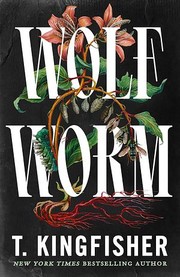
Wolf Worm
2,404-word summary 11 min read 276 pages in the book
- First published
- 2026
- Publisher
- Nightfire
- Pages
- 276
- ISBN
- 9781035052738
Reading options
What's inside (8 sections)
I have come to trust the particular shiver T. Kingfisher writes. Her horror is never content to be only a monster in a dark room; there is usually a museum label on the monster, and someone has taken careful notes. Wolf Worm, the adult pen name of Ursula Vernon, was published by Tor Nightfire on 24 March 2026 as a 276-page paperback. It is a standalone gothic horror set in April 1899 near Siler Station in rural North Carolina, and it is built around a woman whose job is to draw parasites accurately. That combination of exact observation and creeping dread is what made me pick it up, and the book delivers on the odd, specific promise of its title.
The book takes its title from a real insect, and that tells you a lot about how Kingfisher builds fear. The wolf worm is not an invention; it is the larva of a botfly, and the novel treats it with the attention a naturalist would give it. That commitment to the actual natural world is what makes the supernatural turn land hard. When the story starts describing creatures that eat living tissue from the inside, you believe the description because the rest of the book has been so careful about its specimens. Horror built on accurate detail has a way of getting under the skin that a made-up monster never quite manages.
A girl with a suitcase of ink arrives
Sonia Wilson is thirty-three years old and almost completely broke when she steps off the train at Siler Station. She has a suitcase of art supplies and a new job. She has been hired as a scientific illustrator by Dr Matthias Halder, a reclusive entomologist who wants parasitic insects drawn for his work. It is the kind of position that sounds tolerable until you consider the details, and the book wastes no time making them uncomfortable.
The man who meets her at the station is not Halder. It is Asa Phelps, a gaunt religious fanatic who works as Halder's assistant, and his first act is to warn her about a Devil walking in the local woods. Kingfisher does not tell us whether to believe him. That is part of the fairly steady unease of the opening. Phelps is unpleasant and maybe unhinged, but the landscape is strange enough that you cannot simply dismiss him. Rural North Carolina in 1899 is presented as a place of pines, decay and old stories that people still half believe.
There is also the simple matter of Sonia's situation. She is thirty-three, newly arrived, and effectively without money, which means she cannot afford to be fussy about her employer or her lodgings. Kingfisher understands how much of a nightmare is procedural. You take the job because you need it, you accept the odd warning because the man who gives it is the one who met your train, and you keep your attention on the work in front of you. The dread accumulates around the practical details rather than replacing them. Sonia is drawing flies for a living, and she is very aware that this is the best offer she has.
Sonia herself is a good companion for this material. She is prickly, funny and practical, and she notices things. Grimdark Magazine singled out her narration as one of the pleasures of the book, and I can see why. She is not a woman who screams at the first odd noise. She is a woman who needs the work, who keeps her pencils sharp, and who files the strange behaviour of her employer under a category she can think about later.
The house and the people who hold it together
The Halder mansion is decaying when Sonia arrives, and its condition tells you a great deal about the man who lives there. The household runs on the quiet competence of Rose Kent, a Black housekeeper who is clearly the most capable person in the building. Her husband Jackson Kent is a white handyman and storyteller who shares local folklore with Sonia. Their marriage is illegal in the post-Reconstruction South, and the vigilance required to keep it safe is a constant pressure in the background. Kingfisher handles this with care. It is never a decoration or a footnote. It shapes how the couple moves through the world and how carefully they watch the people around them.
The warmth Sonia forms with Rose is one of the genuine strengths of the book, and Grimdark Magazine noted the same about her relationship with Ma Kersey later on. These are not wise women placed in a story to hand the heroine a legend. They are people with their own concerns, and their conversations carry the weight of real acquaintance.
Sonia has been hired to replace Halder's wife, Louisa, a gifted illustrator who fled about a year earlier. The reason is brutal: Halder shot Louisa's lover, Saul Gregor. Louisa ran, and Halder needed someone to draw his specimens. The job itself is to illustrate screwworm flies, botfly larvae and other necrophagic species, creatures that feed on dead or living tissue. Halder speaks about them with a fascination that Sonia correctly reads as unhealthy. He describes the screwworm as a monster that eats living tissue from the inside. It is an odd line for a scientist, because it is not really a description. It is a preference.
Halder's fixation on Louisa's absence is part of the same pattern. He does not keep her room as a shrine or speak of her with guilt. He replaced her, and the replacement is a woman with no money and no bargaining power of her own. Saul, the man he shot, is gone from the household in the way a problem is gone when someone has made it disappear. Kingfisher plants these facts early and then lets the daily routine of the mansion sit on top of them. Rose and Jackson move through the house doing their work, and the reader keeps sensing the shape of the thing nobody will name.
Chickens, a possum and a locked shed
The mystery in Wolf Worm is structural rather than puzzle-box. You do not get a list of clues to assemble so much as a pattern of behaviour that grows harder to explain. Every night Halder makes trips to a locked shed deep in the pines, carrying live chickens. The chickens never come back. Sonia notices. The reader notices. Nobody offers a satisfying account of what happens in the shed.
Then a diseased possum tries to break into Sonia's bedroom and dies on her balcony. Halder dissects it with a manic excitement that pushes past professional interest, and he finds its brain infested with Cuterebra larvae. These are the insects colloquially called wolf worms. The discovery is played as a scientific find, but the energy around it is wrong, and Sonia's growing unease gives the scene its pressure.
While Halder is away in Raleigh presenting his findings, Sonia suffers a malaria relapse. Weak and feverish, she stumbles out to the shed. What she finds inside is the image the book has been circling: chained to a wire-mesh table is a shrunken, mummified figure whose body hosts clusters of pulsating botfly larvae. The figure speaks. Sonia flees and collapses. Kingfisher does not soften this reveal or dress it in ceremony. It arrives as a thing seen by a sick woman who is not prepared for it, which makes it more alarming, not less.
Up to that moment, the book has been content to let the reader suspect. The chickens, the locked shed, the possum with an infested brain, and Halder's excitement during the dissection all point somewhere without saying where. Kingfisher is patient about this in a way that rewards attention. You start to notice that the horrifying thing is not the parasite itself but Halder's relationship to it, his desire to keep a living thing functioning as a host. The shed scene converts a feeling into a fact, and the effect is less like a jump scare and more like finally understanding a joke you have been slowly realizing was never funny.
What the prisoner really is
The truth is that the prisoner is Saul Gregor, the man Halder is supposed to have shot, and he is not wholly human. He is a blood thief, a vampiric being with pharyngeal jaws, accelerated healing and anaesthetic saliva. Kingfisher draws this figure from the folklore of the Lumbee people and Scotch-Irish settlers, and the book later brings in Ma Kersey, a Lumbee healer and midwife, to explain his origins to Sonia. That choice gives the creature a background rather than a random set of powers. He belongs to a tradition of stories, which is a very different thing from being a nihilistic movie monster.
Ma Kersey's arrival matters for the same reason. She is a Lumbee healer and midwife, and when she explains where Saul came from, the explanation arrives as folklore rather than a laboratory report. That distinction is important in a book otherwise full of entomology. Kingfisher is setting two ways of knowing side by side: Halder's jars and slides, and the stories people tell about what walks in the woods. Phelps warned Sonia about a devil on her first day, and he was not entirely wrong. The book never asks you to choose between the scientific account and the older one. It needs both to make sense of what is chained to the table.
Halder has kept Saul alive for more than a year as an immortal host for his parasites. That is the central horror of the book, and it is more disturbing than any simple act of violence. He feeds Saul live animals and, eventually, Phelps himself. The entomologist has turned a person into an environment. Saul's healing keeps him useful, and his anaesthetic saliva means he can be handled, restrained and experimented on. The scientific vocabulary Halder uses throughout the story curdles once you understand what the words have been concealing.
The arrangement breaks apart in a violent cascade. Phelps, now mad with a wolf worm burrowing into his brain, tries to kill Saul because he has decided the prisoner is a devil. Saul kills him in return. When Halder comes back and tries to retake control at gunpoint, Sonia finds a way to distract him long enough for Saul to paralyse him with his saliva and tear out his throat. It is a brutal sequence, and it arrives quickly after the slow burn of the first half. Grimdark Magazine thought a few of these final-stretch twists felt rushed, and I understand the complaint. The machinery of the ending moves fast after a book that has spent so long being patient.
After the shed is demolished
The aftermath is where the book shows its gentler instincts. Sonia, Rose and Jackson stage the deaths as a wild animal attack, an improvised cover story that makes a certain practical sense in that place and time. Louisa returns from hiding and is reunited with Saul. The shed is demolished. The research is published under Sonia's and Louisa's names, with Halder reduced to a footnote. Sonia stays on as a naturalist, which is a quietly satisfying ending for a character who began the book with a suitcase of ink and no money.
There is a neatness to this resolution that may bother some readers. The wicked man is dead, the wronged lovers are together, the women have taken credit for the work, and the monster has been given somewhere to belong. Kingfisher is not writing a bleak book here. She is writing one where competence and loyalty matter, and where the people who paid attention are the ones who get to write the footnote. I found the warmth of that ending welcome after the dread, even if the last few turns could have used more room to breathe.
The novel shares clear thematic ground with Kingfisher's What Moves the Dead and A House with Good Bones, especially in its practical heroine, its naturalistic detail and its decaying settings. Like those books, it trusts that a reader will be more frightened by a body observed closely than by a shadow with teeth. The screwworm described as eating living tissue from the inside lingers longer than any jump scare would.
Who this book is for
If you want a horror novel that treats insects with scientific respect and human cruelty with clear eyes, Wolf Worm is an easy recommendation. The first half in particular is slow in the best way, letting the routine of illustration and the wrongness of Halder's behaviour build together. Sonia's voice carries it, dry and observant, and the relationships she forms with Rose and Ma Kersey give the story a warmth that gothic horror often lacks.
If you want every supporting character fully explored and every final reversal given its own chapter, this may frustrate you. Grimdark Magazine praised the slow burn while wishing the side characters had been lingered with longer, and that seems fair. Rose and Jackson, whose illegal marriage adds a constant background pressure, could each have supported more time on the page. Asa Phelps arrives as a warning and leaves as a casualty, which is a thin arc for a figure who opens the book.
That complaint connects to the book's chief limitation. Kingfisher has a strong feel for a small cast and a closed setting, and she gives us Sonia, Halder and Saul in sharp relief. The people around them sometimes flatten into functions. Phelps exists to deliver a warning and then to be taken over by a worm. Jackson tells stories, Rose keeps the house running, and Ma Kersey arrives with the necessary explanation. Each is drawn with warmth, but warmth is not the same as depth. Still, for a standalone of 276 pages, the trade is understandable. The book knows which story it is telling and mostly refuses to wander from it.
Still, the central image holds. A shrunken figure on a wire-mesh table, hosts to a cluster of pulsating larvae, speaking to a feverish woman who has come looking for the source of the chickens that never come back. Kingfisher knows exactly how to make biology feel like a haunted house, and Wolf Worm is at its best when it lets the specimens do the haunting.
FAQ
Is Wolf Worm connected to T. Kingfisher's other novels?
It is a standalone, though it shares a practical heroine, naturalistic detail and decaying settings with What Moves the Dead and A House with Good Bones.
What is the wolf worm of the title?
It is the Cuterebra larva, a botfly maggot that infests animals. In the story Halder finds them in a possum's brain and uses a captive host to raise them.
How graphic is the horror?
The book leans on body horror, dissection scenes and parasites under the skin, so readers squeamish about insects and living tissue should be cautious.
Similar books

Witchcraft for Wayward Girls
In 1970 Florida, a girl sent to a maternity home for unwed mothers finds a spellbook, and the real horror turns out to be what the adults do to her and her…
2,077-word summary · 9 min read
The Staircase in the Woods
Twenty-five years after a friend vanished at the top of a staircase in the woods, four estranged adults are summoned back to climb another one.
2,023-word summary · 9 min read

The Buffalo Hunter Hunter
A 1912 diary found in a Montana parsonage recounts a Blackfeet man's unraveling after a dying creature's blood turns him undead, in a novel of history and…
2,731-word summary · 12 min read
The Bewitching
A gothic horror novel that moves between 1908 Mexico and 1998 Massachusetts as an old family curse and a folkloric bewitchment repeat across three timelines.
2,332-word summary · 10 min read

Marina
A fifteen-year-old boarder in 1979 Barcelona follows a singing voice into a ruined mansion and finds a girl, a watch, and a mystery the city has kept buried…
2,352-word summary · 10 min read
Ghost Story
Four elderly friends who trade ghost stories every week find their tales coming true after a fifth member dies in this 1979 horror novel.
2,461-word summary · 11 min read

The Tale of the Body Thief
Lestat trades bodies with a psychic thief for one day of mortality and ends up trapped, sick, and hunting his own vampire body.
2,069-word summary · 9 min read

The Historian
A daughter traces her father's search for Dracula through letters and archives across Europe.
3,237-word summary · 14 min read

Mexican Gothic
In 1950 Mexico, glamorous Noemi Taboada leaves Mexico City for High Place after a desperate letter, to rescue cousin Catalina from the chilling Doyles and…
2,523-word summary · 11 min read
What Moves the Dead
Alex Easton arrives at the Usher house to find Madeline dying, the tarn full of fungus, and the local hares refusing to stay dead.
2,586-word summary · 11 min read

Of Love and Other Demons
In colonial Cartagena, a twelve-year-old girl bitten by a rabid dog is locked in a convent, where the priest sent to exorcise her falls in love.
2,258-word summary · 10 min read
John Dies at the End
Two slacker friends, a drug called soy sauce, and a portal to something that wants every universe.
2,382-word summary · 11 min read
Wake Up and Open Your Eyes
A Brooklyn father drives to Richmond to find his parents lost in a cable news trance, in Chapman's splatterpunk horror about possession spread through…
2,381-word summary · 11 min read

Through the Woods
Five horror comics in which sisters vanish into the snow, a bride finds a secret in the walls, and a walk through the woods turns fatal.
2,513-word summary · 11 min read
The Distant Hours
A letter posted in 1941 reaches Edith Burchill in 1992 and draws her to Milderhurst Castle, where three elderly sisters still guard the secret of a stormy…
2,261-word summary · 10 min read

The Cask of Amontillado
A drunken nobleman follows a friend into his family catacombs to taste a cask of amontillado. Poe's 1846 tale turns a wine joke into one of literature's most…
2,916-word summary · 13 min read
Nightmares and Dreamscapes
King's 1993 collection runs from a man buried alive in a Cadillac to a town of dead rock stars, mixing horror, science fiction and dark humor across 816 pages.
3,232-word summary · 14 min read
Bat Eater and Other Names for Cora Zeng
A Chinese American crime scene cleaner in pandemic-era New York is haunted by her sister's racist killing and a string of deaths among East Asian women.
2,014-word summary · 9 min read

Alchemised
A memory-wiped alchemist wakes a prisoner of the regime that won Paladia's civil war, and her captor is the former rival who wants what remains inside her head.
2,596-word summary · 12 min read

The Unknown
A struggling actress joins an isolated film shoot about five women who vanished on a Vermont island in 1926, and the staged haunting turns deeply personal.
2,424-word summary · 11 min read
The Strain
A silent Boeing 777 lands at JFK with almost everyone aboard dead, and a CDC team finds an old vampire war following it into New York.
2,272-word summary · 10 min read
The Regulators
A suburban Ohio street turns into a violent Western set in this Richard Bachman novel, a mirror to Desperation in which an autistic boy hosts a creature called…
2,259-word summary · 10 min read
Sleeping Beauties
In a West Virginia town, a strange sickness puts every woman to sleep inside a cocoon, and the men left behind must decide what to do.
2,337-word summary · 10 min read

Innamorata
A mute necromancer heiress engineers a royal marriage to reach a forbidden library, then falls for the prince she plans to use.
2,464-word summary · 11 min read
House of Hollow
Seventeen-year-old Iris Hollow is used to being stared at. When her sister Grey vanishes, a trail of flowers and hidden doors leads her toward the truth about…
2,514-word summary · 11 min read

The Only Good Indians
Four Blackfeet men who killed a pregnant elk are hunted by her spirit a decade later, and the only person who can end the cycle is a teenage girl who was not…
2,010-word summary · 9 min read

Lisey's Story
Two years after her novelist husband dies, Lisey Landon follows a trail of clues into his childhood and the other world that made him a writer.
1,998-word summary · 9 min read

Anatomy: A Love Story
In 1817 Edinburgh, a noblewoman who wants to be a surgeon disguises herself to study anatomy and falls for the grave robber who supplies her with bodies.
2,031-word summary · 9 min read

Night Film
A disgraced journalist investigates the death of a reclusive horror director's daughter, following a red coat through hospitals, secret clubs, and a family…
2,690-word summary · 12 min read
Once Upon a River
A wounded man stumbles into a riverside inn carrying what appears to be a drowned child who is not quite dead, and the story braids the guesses of everyone who…
2,173-word summary · 10 min read