
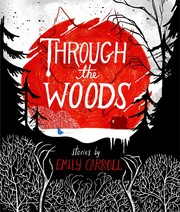
Through the Woods
2,513-word summary 11 min read 208 pages in the book
- First published
- 2014
- Publisher
- Margaret K. McElderry Books
- Pages
- 208
- ISBN
- 9781442465954
Reading options
What's inside (9 sections)
I picked this book up because a friend insisted that a collection of comics could leave me genuinely afraid to walk past a dark doorway at night. I was skeptical. The book is short, 208 pages in the Margaret K. McElderry Books edition published in July 2014, and much of that space is given over to pictures. Emily Carroll is a Canadian cartoonist who made her name online, and this collection gathers five horror stories, four of them new to print and one, "His Face All Red," a webcomic that had already found a large audience. I finished it in an evening and understood my friend's point before I was halfway through the first story.
What surprised me most was how much of the fright comes from what Carroll refuses to draw. A shape at the edge of a panel, an arm, half an outline, a smear of red against a black background. The full horror arrives in your own head. That restraint is the book's greatest strength, and it is also the source of its occasional unevenness, because when a story here does show you everything, the spell can break.
A frame made of a bedroom and a walk home
The book does not begin with a scare. It opens in a dim bedroom, with a child settling in for the night, and it closes in a similar room. Carroll uses these two short pieces to bookend the five main stories, and they do quiet work. The opening puts you in the position of a kid listening for something outside the door. The closing piece pulls back and shows a little girl playing Red Riding Hood, walking through the woods from her father's house to her mother's.
That final image is worth sitting with. Carroll draws the trees as a mix of fairy-tale forest and children's board game, and the child's bedroom carries the same palette as an old bedtime picture book. It is the only warm, whimsical stretch in the whole collection. Then the last line lands, and it is a bleak one: you have to be lucky every single time you walk through the woods, but the monsters only need to get lucky once. Everything that came before snaps into focus around that idea.
The phrase on the back cover, that it came from the woods and most strange things do, is more than a tagline. Four of the five stories draw their menace from trees, caves, and the space beyond the last lit window. The one that does not is also the one that feels least at home here, which I will get to in its place.
Three sisters and a man with a smiling face
"Our Neighbor's House" is the first full story and one of the sharpest. Three sisters, Mary, Beth, and Hannah, are left alone at their family's isolated house in the wilderness when their father goes off hunting. He leaves plain instructions: if he is not back by the third day, they are to pack up and walk to the neighbors' house. He does not come back. The eldest declares him dead. The middle sister, Beth, who narrates, starts seeing a man outside at night, a tall figure in a wide-brimmed hat wearing a smile that shows all his teeth.
What follows is a slow, dread-filled erosion of the sisters' safety. Supplies go missing. The days stretch. One by one the girls are charmed away, each lured out by the same visitor, until a single sister remains. She is the clearest-eyed of them. She notes that the stranger does have the hat and the smile, that it looks impossible for him to do anything else, and that he is plainly not a man. Carroll never confirms what he is. You never get a good look at him, just a sleeve, an outline, the curve of that terrible grin.
The last girl left eventually sets off through the snow to reach the neighbor's house, the place their father told them to go. When she knocks, who should open the door and welcome her in but the man in the hat himself. The ending offers no explanation and needs none. The story understands that a threat you can only half see is worse than one you can name.
A bride, a mansion, and hands in the walls
"A Lady's Hands Are Cold" is the Bluebeard story, dressed in the trappings of a Victorian ghost tale. A young woman leaves her old life to marry a wealthy man chosen for her by her father. He is cold, handsome, and remote, and his great house is magnificent and lonely. Soon she hears singing behind the walls and beneath the floorboards, a sad song that will not stop. She tears the house apart with a hatchet and finds the remains of the man's first wife, dismembered and hidden in the walls. In a gesture that is equal parts compassion and madness, she sews the body back together with red ribbon. The corpse comes back, and it is not grateful.
This is the most visually ambitious story in the collection. Carroll drops most of the panel borders and works in big, sweeping images, with far more color than anywhere else in the book: bright reds and blues and yellows glowing against black. The cold hands of the title belong to the dead first wife, and they close around the living bride with a grip that has nothing gentle in it. The murdered woman is no wronged innocent waiting for justice. She is cruel and furious and bent on revenge, and the new wife, who might have been her victim, gets no sympathy from her.
I have to be honest that this is the one story that did not fully work for me. Several reviewers called it the least fresh of the five, a ghostly Bluebeard retread that feels odd beside the other tales. There is a fair point underneath that. Every other story here lets the evil come out of the woods, while this one shuts the horror inside an opulent house among elaborate wallpaper. The main character never has to get through the woods at all. She only has to get out of that house. It is still striking work, and the image of that ribbon-stitched corpse shambling back to life is hard to shake, but it sits slightly apart from the rest.
The webcomic about two brothers
"His Face All Red" is the story that started it all for Carroll online, and it is easy to see why it traveled. Two brothers live in a small village. One is shy and lacking in confidence. The other is everything the first is not: handsome, outgoing, the owner of a fine cottage and a pretty wife, admired by everyone. A wolf or beast has been taking livestock and terrifying the village, and the brothers go into the woods to hunt it. The overlooked brother sees his chance. He kills the beast, kills his brother, and comes home alone to the praise he has always wanted.
A week later the dead brother walks back into town, unharmed and smiling. His wife is overjoyed. The village celebrates. The murderer, meanwhile, comes apart. He is consumed by guilt and paranoia, watching the man he buried live the life that should have been his. When he goes back to the spot where he hid the body, expecting to find the evidence of his crime, he finds his brother's mangled face staring up at him from the pit. The title makes sense only at that moment, and the realization is a horrible one.
The strength of the story is that it refuses to say what has happened. The returned brother could be a ghost, a creature wearing a dead man's face, or something stranger. Carroll keeps it off balance, and the final panel works as both a cliff-hanger and a full stop. Of all the tales here, this one leans hardest on ambiguity, and I think "Our Neighbor's House" pulls the trick off more cleanly. Here the not knowing sometimes feels like a dodge. Still, the story of a man who gets exactly what he wanted and cannot bear it is a strong one.
Two girls, a fake seance, and something real
"My Friend Janna" might be the weakest of the five, but it has the most interesting relationship at its center. Janna and Yvonne are two girls who run a scam. Janna plays the medium, speaking to the dead for bereaved clients, while Yvonne works the room and makes the spooky sounds. They know it is all a fraud, and they know it hurts the people who come to them, and they cannot seem to stop. This is the kind of mean, small cruelty that Carroll writes well.
Then Yvonne, who is the one who can actually see spirits, notices something hovering around Janna. Something real has attached itself to her friend, picked up somewhere in the woods, and it is making Janna ill. Red veins spread. She grows haggard. Her notebooks fill with strange rhymes and ramblings and drawings, and Carroll gives one of these pages a full two-page spread that is genuinely disturbing. The horror here is less about the ghost than about Yvonne's helplessness. She wants to warn Janna, but she knows Janna will likely read the warning as an attempt to one-up her, or as another lie, since lying to people is what they do. Their friendship is the story's best material, sour and loyal at once.
By the end Janna is consumed and the thing that wore her is looking for another host. My reservation is small but real: Carroll explains how Janna was possessed, through something the girls found in the woods, and that explanation takes some of the mystery away. I thought the story was stronger in the moments when the presence was simply there in plain sight, its shape never quite settled. Across the collection there is a noticeable drift from the unexplained toward the explained, and this story shows that drift beginning.
The longest story, and the one that stayed with me
"The Nesting Place" is the centerpiece, running about sixty pages, more than twice the length of most of the others. Bell is a teenager grieving her mother's death. Her mother used to tell her stories about monsters that burrow inside a person and eat them from the inside out, and Bell carries those stories with her. She feels out of place at boarding school. For the summer she is sent to stay with her older brother Clarence and his beautiful new wife, Rebecca, in a remote manor house surrounded by thick woods. She is warned not to wander into the trees.
The house is wrong in small ways before it is wrong in large ones. Bell's only ally, the housekeeper Madame Beauchamp, disappears. Her dreams fill with sets of teeth that bite and cling even after she wakes. Rebecca is friendly in a way that feels staged, offering dresses that might fit, calling her kiddo. Bell notices loose teeth, strange wounds, whispering at night, a sound like something tearing. Her curiosity eventually pulls her into a cave in the forest, and there the story stops pretending. She finds her new sister-in-law in her true form, and it is a creature that wears human skin and houses worm-like young beneath it.
This is a body-snatcher tale, and Carroll puts the monster on the page in full view. It is a deliberate contrast with the earlier stories, where the evil stayed in the shadows. The creature explains itself. It needs human bodies, it has children to provide for, and it has plans to spread into the city. Bell even learns that her brother is already infected. What makes the story more than a gross-out is Bell herself. She is a sharply realized character, grieving and sharp-tongued, and she wears a leg brace that the book treats as part of who she is without making it the point of the plot. When she confronts the monster, she does not fight it. She tells it a scary story, and talks it out of going to the city. It is a clever, quiet victory, though the ending delivers the customary sting of the genre.
The color work tracks Bell's state of mind. The early pages are charcoal when she thinks about her mother's tales, then a bleak brown at the manor, then vivid color, with red dominating, as the fear and the truth arrive. It is the most complete story in the collection and the one that lingered with me the longest, though I understand why some readers find its full-frontal monster less frightening than the half-glimpsed threats elsewhere.
What the five stories share
Read together, the stories circle a few concerns: jealousy, distrust, the loss of family, and the fear that someone close to you is not who they seem. The woods are the constant. Nearly every path in the collection leads into the trees or back out of them, and the danger almost always waits in that space beyond the last safe light. Carroll's art ties it all together. She letters her own dialogue and narration, and those hand-drawn words sit in the panels as visual elements in their own right. She uses long silent stretches, sudden close-ups, and hard cuts that feel cinematic. Her palette shifts story by story, from earth tones and grey to lurid blue and red, and the red is almost always blood.
The collection is not evenly strong, and I would not hand it to someone expecting five equal gems. Two stories, "Our Neighbor's House" and "The Nesting Place," are excellent. "His Face All Red" is clever and famous for a reason. "My Friend Janna" and "A Lady's Hands Are Cold" have memorable images but weaker underlying stories, and one of them barely uses the woods at all. There is also the matter of audience. The publisher suggests ages fourteen and up, and that seems right. These are stories about dismemberment, parasitic creatures, and children vanishing into the dark, and the pictures do not soften any of it. A younger reader, or someone who wants every mystery solved by the last page, will find the ambiguity frustrating rather than fun.
What I took away from the book was not a single scare but a mood. Carroll understands that the frightening thing is usually the one you cannot quite see, the smile you catch at the edge of a panel, the sound in the wall you cannot place. When she trusts that instinct, the book is genuinely unnerving. When a story starts explaining its monster, some of the fear drains away. Even so, this is a striking first collection from an artist who clearly knows how to use a page, and it left me with exactly the feeling my friend promised: reluctant to walk past a dark doorway alone.
FAQ
How many stories are in Through the Woods, and were they all written for the book?
There are five main horror stories plus a short opening and closing frame. Four of the five were new to print, while His Face All Red began as a popular webcomic that Carroll adapted for the collection.
What is the book's central image or idea?
The woods are the source of nearly all the danger, and the closing line sums it up: you must be lucky every time you walk through them, but a monster needs luck only once. The frame even shows a child playing Red Riding Hood on a walk between her parents' homes.
Is the collection suitable for younger readers?
The publisher suggests ages fourteen and up, and that fits. The stories include dismemberment, parasitic creatures, and children disappearing, and several endings leave their mysteries deliberately unresolved.
Similar books
The Cask of Amontillado
A drunken nobleman follows a friend into his family catacombs to taste a cask of amontillado. Poe's 1846 tale turns a wine joke into one of literature's most…
2,916-word summary · 13 min read
Ghost Story
Four elderly friends who trade ghost stories every week find their tales coming true after a fifth member dies in this 1979 horror novel.
2,461-word summary · 11 min read
Gallant
Mute Olivia Prior returns to Gallant manor where ghouls walk and a shadow Recommends.
2,081-word summary · 9 min read
The Tell-Tale Heart and Other Writings
Mad narrators, Dupin puzzles, mournful poems, and Pym in one Bantam collection.
2,333-word summary · 10 min read

The Complete Works of Edgar Allan Poe
The full Poe shelf in one volume: mad narrators, rotting houses, Dupin, and the Raven.
2,183-word summary · 10 min read
The Sandman, Vol. 4: Season of Mists
Dream travels to Hell and is handed the key to its gates, then every god and demon arrives to argue who should rule.
2,351-word summary · 10 min read

The Arabian Nights: Alf Laylah Wa-Laylah
A frame story about a woman talking for her life holds jinn, sailors, caliphs, and tricksters.
2,338-word summary · 10 min read
We Live Here Now
After a near-fatal fall, a woman moves with her husband to a remote Dartmoor house where strange events happen only when she is alone, and a raven watches from…
2,016-word summary · 9 min read
The Winter People
A century-old ritual for calling back the dead connects a Vermont farmhouse, a girl who came back from the well and a modern investigation into a…
2,037-word summary · 9 min read
The Staircase in the Woods
Twenty-five years after a friend vanished at the top of a staircase in the woods, four estranged adults are summoned back to climb another one.
2,023-word summary · 9 min read
The Buffalo Hunter Hunter
A 1912 diary found in a Montana parsonage recounts a Blackfeet man's unraveling after a dying creature's blood turns him undead, in a novel of history and…
2,731-word summary · 12 min read
The Bewitching
A gothic horror novel that moves between 1908 Mexico and 1998 Massachusetts as an old family curse and a folkloric bewitchment repeat across three timelines.
2,332-word summary · 10 min read
Nightmares and Dreamscapes
King's 1993 collection runs from a man buried alive in a Cadillac to a town of dead rock stars, mixing horror, science fiction and dark humor across 816 pages.
3,232-word summary · 14 min read
Bat Eater and Other Names for Cora Zeng
A Chinese American crime scene cleaner in pandemic-era New York is haunted by her sister's racist killing and a string of deaths among East Asian women.
2,014-word summary · 9 min read
Alchemised
A memory-wiped alchemist wakes a prisoner of the regime that won Paladia's civil war, and her captor is the former rival who wants what remains inside her head.
2,596-word summary · 12 min read
Wolf Worm
An illustrator hired to draw parasites in 1899 North Carolina finds her employer's locked shed holds something far worse than insects.
2,404-word summary · 11 min read
The Wind Through the Keyhole
Sheltering from a killing storm, Roland tells his ka-tet a tale of his youth, then a boy's fairy tale that mirrors his own loss.
2,504-word summary · 11 min read
Innamorata
A mute necromancer heiress engineers a royal marriage to reach a forbidden library, then falls for the prince she plans to use.
2,464-word summary · 11 min read
House of Hollow
Seventeen-year-old Iris Hollow is used to being stared at. When her sister Grey vanishes, a trail of flowers and hidden doors leads her toward the truth about…
2,514-word summary · 11 min read
What Moves the Dead
Alex Easton arrives at the Usher house to find Madeline dying, the tarn full of fungus, and the local hares refusing to stay dead.
2,586-word summary · 11 min read
The Tale of the Body Thief
Lestat trades bodies with a psychic thief for one day of mortality and ends up trapped, sick, and hunting his own vampire body.
2,069-word summary · 9 min read
Night Film
A disgraced journalist investigates the death of a reclusive horror director's daughter, following a red coat through hospitals, secret clubs, and a family…
2,690-word summary · 12 min read
Chainsaw Man, Vol. 1: Dog and Chainsaw
A broke teenage devil hunter and his chainsaw dog get a second life, a government leash, and a fight that stops mid-swing in Fujimoto's horror comedy.
2,584-word summary · 11 min read
A Head Full of Ghosts
A broke Massachusetts family lets a reality TV crew film their daughter's exorcism, and fifteen years later the only survivor tries to explain what really…
2,588-word summary · 12 min read
Her Fearful Symmetry
Twins Julia and Valentina inherit a London flat above Highgate Cemetery from an aunt they never met, then find a ghost in it and a family secret.
2,057-word summary · 9 min read
The Lottery
In Jackson's 1948 story, a village draws lots to keep the corn heavy, and the chosen person is stoned by her neighbors.
3,080-word summary · 14 min read
Her Body and Other Parties: Stories
Eight stories where bodies, medicine and old fairy tales get taken apart, with a green ribbon running through the whole book.
2,997-word summary · 13 min read
Locke & Key, Vol. 1: Welcome to Lovecraft
After their father is murdered, the Locke children move into a haunted family estate where keys unlock doors to ghosts, other places, and dangerous secrets.
2,019-word summary · 9 min read
House of Salt and Sorrows
Annaleigh Thaumas investigates her sister's death in a cursed island manor where the balls are illusions and the sea god is always listening.
2,025-word summary · 9 min read
The Wasp Factory
Iain Banks's 1984 debut follows Frank Cauldhame, an isolated sixteen-year-old on a Scottish island, as his brother's escape and a family secret unravel his…
2,248-word summary · 10 min read