
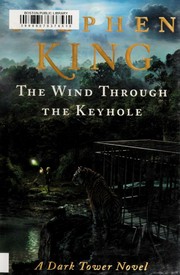
The Wind Through the Keyhole
2,504-word summary 11 min read 322 pages in the book
- First published
- 2012
- Publisher
- Scribner
- Pages
- 322
- ISBN
- 9781451658903
- Series
- The Dark Tower (#4.5)
Reading options
What's inside (7 sections)
I came back to the Dark Tower because of a number that is not a whole number. The Wind Through the Keyhole is usually shelved as book 4.5, a late addition written years after the seventh volume closed the series, and set between Wizard and Glass and Wolves of the Calla. King first floated the idea in 2009, after readers had spent five years arguing about his ending, and officially announced it in March 2011. The result appeared in 2012: a limited edition from Donald M. Grant in February, then a Scribner hardcover in May. The Scribner edition I read runs 322 pages. It is a book written by someone returning to his own invention with nothing left to prove, and it shows.
The artwork for the volume came from Jae Lee, the main illustrator on Marvel's Dark Tower comics, which is a nice bit of casting for a book built out of stories within stories. King had mentioned the idea in interviews as early as 2009, describing a set of modern fairy tales that kept growing until it turned into a novel. In December of that year he put a poll on his website asking readers what he should write next. The Wind Through the Keyhole did not win; Doctor Sleep did. Both books eventually appeared, and the loss probably did the smaller book a favor, since it arrived without the weight of being the answer to a question nobody had stopped asking.
A river, a ferryman, and a storm
The novel opens with Roland Deschain and his ka-tet on the road to the Tower, coming to a river with no bridge. An old man runs a ferry and takes them across. He tells them that a starkblast is on the way, a freezing storm that can turn everything it touches to ice, and that they will find shelter in a building a few miles ahead. They get there just in time. Inside, with the wind worrying at the walls, Roland does what gunslingers in this series do best: he tells a story.
Roland travels with the small group that has become his family over the course of the series, and the old certainties about who belongs in it have been tested. King gives them very little to do in the opening chapters beyond crossing the river and finding shelter. That is deliberate. The novel is built as a tall tale told by a man who has outlived most of his own story, and the people in the room mostly exist to listen, to doubt, and to be frightened when the wind gets loud enough. The storm itself is a real threat, a wall of cold that flattens everything in its path, but it also functions as a clock. The story has to last until morning.
The first layer is called "The Skin-Man." It reaches back to Roland's youth, after his mother, Gabrielle Deschain, has died. His father sends him west with his friend Jamie De Curry to the town of Debaria, where something is killing people. The Skin-Man is said to be a shape-shifter who takes animal form at night and goes on murderous rampages. Roland and Jamie take a train, but it derails short of Debaria, and they finish the trip on horseback. On the way they pass through Serenity, a community of women where Roland's mother lived after a breakdown following her affair with Marten Broadcloak, who is the sorcerer Randall Flagg in another name. The women have heard of the killings and give the two boys what they know.
This is familiar territory for King, and the pleasure is in the small gears of the machine. Roland is not yet the hard man who will walk into the Tower. He is a teenager with a father's orders and a friend at his side, and the story keeps letting the older Roland look back at that younger self with something like pity. The framing device gives the book its shape: a storm outside, a fire or a lamp inside, and a voice that will not stop until the light comes back.
Debaria and the blue ring
In Debaria, Roland and Jamie work with Sheriff Hugh Peavy. They work out that the killer is probably a salt miner from a village nearby, since the attacks have a pattern and the men there have access to horses. A fresh attack overnight leaves one survivor, a small boy named Bill whose father is dead. Roland reads the ground and sees that the killer rode away, so he sends Jamie to the salt mines to gather every miner who owns a horse or can ride one.
While they wait, Roland does a trick with one of his spare rounds of ammunition and hypnotizes Bill. The boy remembers seeing the killer in human form after one attack, but only saw his feet. There was a blue ring tattooed around one ankle. Roland knows what that means: time in the prison at an abandoned military barracks further west, land that fell to John Farson, the man they call the Good Man. He puts Bill in a cell at the sheriff's station and plans to walk every suspect past him. If Bill cannot pick out the killer, the killer may panic and run.
King spends real time on the mechanics of the investigation, and the best of it is the moment with the bullet. Roland holds a spare round up where the boy can see it, talks him down into a trance, and gets a description he could never get by asking questions. The blue ring is the kind of clue that makes this part of the book feel like a western: a mark from a prison the world has forgotten, in a territory that went over to John Farson a generation ago. The threat out at the farm, the crowd of miners assembling in town, and a boy sitting in a cell waiting to be asked to look, all of it moves with the clean purpose of a story that knows exactly how long it needs to be.
That wait produces the third layer of the book. Roland tells Bill a story his mother used to read to him from the Magic Tales of the Eld, and he calls it "The Wind Through the Keyhole." King has said he thought of writing a few modern fairy tales and watched the idea grow until it became a novel. You can feel that origin in this section. The story does not advance the hunt for the Skin-Man at all. It exists because a boy is frightened and a young man needs to keep him talking until help arrives.
Tim Ross and the Covenant Man
The inner tale belongs to a boy named Tim Ross. He lives with his mother, Nell, in a forgotten village that lives in fear of the annual visit from the Covenant Man, who collects the property taxes. Tim's father is dead, said to have been killed by a dragon while chopping trees in the woods. Nell cannot pay the taxes, so she marries Bern Kells, her husband's best friend and business partner, who moves into the house. Kells drinks heavily and abuses both Tim and Nell. When the Covenant Man comes to collect, he pulls Tim aside in the woods and tells him the truth: Kells killed Tim's father, not any dragon. With a scrying bowl he shows Tim what Kells has been doing to Nell, and the beating leaves her blind.
The Covenant Man promises that if Tim comes back to the woods, he will give him the magic to restore her sight. Armed with a gun his schoolteacher gave him, Tim goes in. A mischievous fairy named Armaneeta leads him into a swamp, where a dragon and other creatures nearly finish him. He survives because of the gun and because a group of swamp people mistake him for a gunslinger. They take him across to the far side and give him a small mechanical talking device made by the Old People, the kind of artifact this series loves to leave lying around.
At a Dogan, Tim finds a caged tyger with a key around its neck. A starkblast is coming, and Tim works out that the Covenant Man has laid a trap. Instead of running, he befriends the tyger, and the two ride out the storm together under a magical blanket. In the morning the tyger reveals itself as Maerlyn, a white magician who was caged by black magic. Maerlyn gives Tim a potion for his mother's blindness and sends him home on the flying blanket. Nell sees again. Kells comes at Tim, and Nell kills him with her late husband's ax.
The middle story keeps finding ways to echo the frame without announcing them. Tim is a boy sent into danger by a man who claims to be helping him, much as Roland was sent west by his father with a mission he did not understand. The swamp people take Tim for a gunslinger because of the gun at his belt, which is both a joke and a quiet statement about how thin the title can be. The mechanical talking device from the Old People is pure Dark Tower furniture, a remnant of a higher technology that the world has forgotten how to make. And the tyger in the cage, wearing its key in plain sight, is the sort of image King has been returning to his whole career: the thing you need is already in the room, you just have to get close enough to it.
The tale has the clean logic of the best fairy stories: the false story about the dragon gives way to the true story about the stepfather, and the thing that was caged turns out to be the thing that saves you. It also echoes the outer plot in ways King does not underline. Tim loses a father and gains a dangerous stand-in for one. Bill loses a father and is about to be offered a home by strangers. Roland loses his mother and carries a note she left for him that will complicate everything he thinks he knew about why she came apart.
The silver bullet and the note from Serenity
Back in Debaria, Jamie returns with the salt mine suspects. Bill picks out the Skin-Man by the blue ring and an associated scar. The killer changes into a snake and kills two people before Roland puts him down with a silver bullet he made when they first arrived in town. Roland and Jamie ride back to Serenity, where the women agree to take Bill in. They also hand Roland a note his mother wrote during her stay. In it, Gabrielle says that Marten foretold that Roland would one day kill her, and that the knowledge slowly broke her. She asks him to forgive her affair with Marten and her betrayal of Gilead.
Roland does not get a clean answer from the note. Gabrielle writes that Marten told her what her son would one day do, and that the knowledge ate away at her until she could not stay in Gilead. She asks for forgiveness for the affair and for the betrayal of the city they lost. It is a hard thing to hand a son in an envelope, and the book is smart enough not to let Roland absorb it in a single paragraph. The women of Serenity have kept the letter for years, waiting for the right moment to give it back, and their decision to take Bill in follows from the same instinct. They have seen what a broken mother can leave behind, and they intend to make something different of the boy.
That note is the emotional weight of the book. The hunt for a monster turns out to have been a way of circling a family wound, and the monster's tattoo leads to a place tied to the man who destroyed Roland's parents. When the storm finally passes, it has leveled every structure around them except the shelter. They pack up and go back to the road. Nothing in the larger quest has changed, but Roland has been made to say a few things aloud that he had kept quiet for decades.
A light touch, and a few compromises
The reception has been kinder than the book's odd position might suggest. Kevin Quigley noted that it keeps the quest structure of the early novels while picking up the series' late preoccupation with the nature of fiction, which makes it a bridge between the two halves. Zack Handlen thought it was better than other parts of the sequence, saying that where earlier books got bogged down trying to make sense of everything, this one has a light, easy touch. James Kidd of The Independent called it "a triptych of novellas nesting inside one another" and was less impressed by the prose, which he described as a mix of pithy folk wisdom and cod Shakespeare.
There is also the matter of the title story itself. "The Wind Through the Keyhole" is presented as a tale from the Magic Tales of the Eld, and it plays like one, with a wicked stepfather, a helpful beast, a magical object, and a storm that arrives on cue. King is clearly enjoying the constraints. He lets the swamp creatures and the Covenant Man threaten Tim without ever fully explaining them, which is how fairy tales work and also how this book decides what counts as an answer. Readers who want every mechanism laid out will find the vagueness frustrating, and readers who came for the Tower will notice that the Tower itself is barely mentioned in the middle hundred pages.
I think both reactions are fair. The nesting structure is the whole point, and it works better than it should. Three stories, each sheltering the next, give the book the feel of someone talking through a long night, and the shift from western pursuit to fairy tale to family confession keeps the pace fresh. The prose does have that slightly arch register Kidd complained about, especially when characters start speaking in aphorisms, and the middle fairy tale runs longer than its place in the frame quite justifies. The villain called the Covenant Man never becomes as vivid as he should, and the mechanics of the Skin-Man's transformation are left conveniently vague.
For a reader who bounced off the later Dark Tower books, this is probably the most welcoming entry in the sequence. You do not need the whole history to follow it, and it ends exactly where it begins, with people walking toward a tower they cannot see. For a reader looking for the book that explains the series, it will not do that job. It is a story about telling stories, and its best moments come when a frightened boy stops looking at the door and starts listening.
FAQ
When was The Wind Through the Keyhole published?
It appeared in 2012, with a limited edition from Donald M. Grant in February and a Scribner hardcover in May. The Scribner edition runs 322 pages with ISBN 9781451658903.
Where does it fit in The Dark Tower series?
It is book 4.5, set chronologically between Wizard and Glass and Wolves of the Calla, though it was written after the seventh novel.
Do I need to read the rest of the series first?
Not really. The book stands on its own as a story about a boy, a storm, and two nested tales, though series readers will catch the references to Roland's mother and Marten Broadcloak.
Similar books
More from The Dark Tower first, then related titles.
The Gunslinger
Roland chases the man in black across desert to the tower, losing Jake and learning ka is a wheel.
2,071-word summary · 9 min read
The Drawing of the Three
Wounded on a beach, Roland pulls two strangers from New York through doors to survive and keep moving toward the Tower.
3,252-word summary · 14 min read
The Waste Lands
Jake rejoins ka tet through Lud toward Blaine riddle ride.
2,072-word summary · 9 min read
Wizard and Glass
Stuck on a deadly train, Roland tells of Susan Delgado and how the tower took his youth.
1,938-word summary · 9 min read
Wolves of the Calla
Roland and his ka tet defend a farming town from robotic Wolves while Father Callahan offers a deadly magic ball.
2,331-word summary · 10 min read
Song of Susannah
Mia takes Susannah to 1999 New York to bear a chap while Roland meets his author in Maine.
2,051-word summary · 9 min read
The Dark Tower
Roland and his ka-tet storm the Breakers prison and cross harsh lands toward the Tower, where Roland must face what waits at the top and learn the price of his…
2,897-word summary · 13 min read
The Magician's Land
Exiled from Fillory, Quentin takes a teaching job at Brakebills, joins a crew of magical thieves, and must help rebuild a dying world to finish the trilogy.
2,204-word summary · 10 min read

Water Moon
A woman inherits a Tokyo pawnshop that trades in regrets, finds her father gone and one glowing bird freed, and crosses into another world to learn what her…
2,087-word summary · 9 min read
This Kingdom Will Not Kill Me
A grocery delivery driver wakes in a fantasy capital she knows from an unfinished trilogy, only to discover she cannot die.
2,339-word summary · 10 min read
The Winter of the Witch
Vasya returns to a burning Moscow, bargains with the Bear and the spirit of Midnight, and leads the old spirits into the battle that will decide Russia.
2,000-word summary · 9 min read
The Lost Metal
Wax Ladrian returns to stop his sister's plot to smuggle a magical bomb into Elendel, in the conclusion of Mistborn's second era.
2,038-word summary · 9 min read
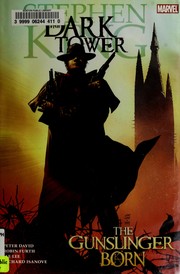
The Gunslinger Born
A Marvel graphic novel adapting the flashback of Wizard and Glass: a fourteen-year-old Roland earns his guns, loves Susan Delgado and first sees the Dark Tower.
2,010-word summary · 9 min read

The Everlasting
A broken scholar is sent into the past to live the legend of Sir Una Everlasting, only to find that the story demands her death and that he is writing the lie.
2,464-word summary · 11 min read
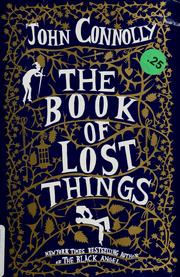
The Book of Lost Things
A twelve-year-old boy grieving his mother's death slips through a crack in the garden wall into Elsewhere, where fairy tales and a fading king guard the secret…
2,441-word summary · 11 min read
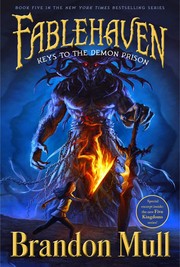
Keys to the Demon Prison
The fifth and final Fablehaven book sends Kendra and Seth Sorenson across secret preserves to keep the last keys to the demon prison out of rival hands.
2,251-word summary · 10 min read
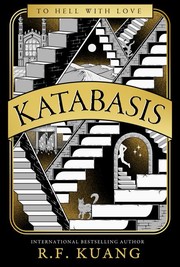
Katabasis
Kuang sends a Cambridge doctoral magician into the underworld to fetch the supervisor she killed, all for a letter of recommendation. Academic satire turns…
2,374-word summary · 11 min read
Golden Fool
FitzChivalry Farseer returns to Buckkeep as a servant and a grieving Skillmaster, teaching Prince Dutiful while court intrigue, the Piebalds and a…
2,583-word summary · 11 min read
Fool's Fate
Prince Dutiful must kill a dragon to secure his betrothal, and FitzChivalry Farseer is caught between the Fool and Chade over Icefyre's fate.
2,247-word summary · 10 min read

Innamorata
A mute necromancer heiress engineers a royal marriage to reach a forbidden library, then falls for the prince she plans to use.
2,464-word summary · 11 min read

Inkdeath
The final Inkworld novel sends Mo into the land of the dead, leaves Meggie choosing between two boys, and ends the Adderhead's immortality with three written…
2,062-word summary · 9 min read

Secrets of the Dragon Sanctuary
Kendra is replaced by a plant copy and held by the Society, while Seth steals a unicorn horn so the family can enter a dragon sanctuary.
2,590-word summary · 12 min read

Lioness Rampant
Alanna searches for the Dominion Jewel with the Shang Dragon, then returns to Tortall to face Duke Roger at Jonathan's coronation.
2,478-word summary · 11 min read

Magician's Gambit
Garion and his companions cross haunted Maragor and the caves beneath Rak Cthol to recover the Orb of Aldur.
2,391-word summary · 11 min read
Enchanters' End Game
Garion marches toward Torak while Ce'Nedra leads the West's army in the final Belgariad volume, where prophecy and war meet.
2,557-word summary · 11 min read
Fool's Errand
FitzChivalry Farseer has lived in exile for fifteen years. When Prince Dutiful vanishes before his betrothal, Fitz returns to Buckkeep to find him, with a wolf…
2,606-word summary · 12 min read
The Sword of Shannara
A young half-Elf and a company of companions set out to recover a magic sword before the Warlock Lord destroys the Four Lands.
2,474-word summary · 11 min read

The Hazel Wood
Alice Proserpine has spent her life running from bad luck. When her mother vanishes, she follows a trail of fairy-tale clues to her grandmother's estate and…
2,064-word summary · 9 min read
House of Salt and Sorrows
Annaleigh Thaumas investigates her sister's death in a cursed island manor where the balls are illusions and the sea god is always listening.
2,025-word summary · 9 min read
The Girl in the Tower
Vasya rides out disguised as a boy, rescues kidnapped girls, and rejoins her siblings in Moscow, where a hidden sorcerer and the Grand Prince's court close in.
2,801-word summary · 12 min read