
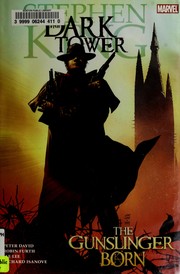
The Gunslinger Born
2,010-word summary 9 min read 208 pages in the book
- First published
- 2007
- Publisher
- Marvel Comics
- Pages
- 208
- ISBN
- 9780785121442
- Series
- The Dark Tower: Beginnings (#1)
Reading options
What's inside (9 sections)
A young Roland
This is a graphic novel, and it has a complicated set of credits. Stephen King's name is on the cover and he served as creative and executive director. Robin Furth plotted and adapted the story, Peter David wrote the script, and Jae Lee and Richard Isanove made the art. It was published by Marvel in 2007, first as a seven-issue miniseries and then as a collected hardcover. The story adapts the flashback section of King's novel Wizard and Glass, the fourth book in the Dark Tower sequence.
I picked it up because the site has most of the Dark Tower novels and this is a piece of the same world. It is the first volume of the Beginnings comics, followed by The Long Road Home. You do not need to have read the novels to follow it, though you will miss the weight of certain moments. The book is a prequel about how a boy named Roland Deschain became a gunslinger, and how an obsession that would consume his life first took hold.
The frame is familiar to readers of The Gunslinger. Roland is crossing the Mohaine Desert, pursued by the man in black, and he looks back on his youth. The man in black is Marten Broadcloak, the court wizard and counselor who is an agent of the Crimson King and is also known as Randall Flagg. Roland's memories are dominated by treachery: Marten's betrayal, the death of his mother, and the choices that made him the last gunslinger. The book moves between the desert and Gilead with a confident visual rhythm, using the art to carry transitions that a novel would need paragraphs to explain.
The test
The first major event is Roland's manhood test. He is fourteen, and he must fight his mentor Cort to earn his guns. It is a ritual with real stakes, and the book gives it a physical intensity that the prose novel can only suggest. When it is over, his father Steven reveals that he already knew about the affair between Marten and Roland's mother. The knowledge changes the meaning of everything that follows. Roland has not merely been betrayed by a wizard. His father knew, and said nothing.
The night after the test brings Roland's first experience with a woman and the first stirring of his obsession with the Dark Tower. These two things are linked in the book's structure. The tower is not an abstract ambition that arrives from nowhere. It emerges in the same moment as desire, loss and the sense that there is something beyond the life he has been raised for. That is a shrewd piece of adaptation. Peter David understands that the tower has to be felt before it can be understood.
Steven Deschain then sends Roland, Cuthbert Allgood and Alain Johns east to Hambry in the Barony of Mejis. Officially they are surveying resources. Secretly they are investigating John Farson's rebellion, which is spreading through the outer baronies. The three young men are a ka-tet in the making, and the book spends its best pages on their friendship. Cuthbert is funny and reckless, Alain is steady and perceptive, and Roland is already the one who makes the hard decisions.
Hambry
In Hambry they meet Mayor Thorin and Chancellor Rimer. The town's leaders have quietly shifted their allegiance to Farson, who is called the Good Man by those who support him. The apprentices are watched from the moment they arrive. Roland meets Susan Delgado, the mayor's promised concubine for Reaping Day, the local harvest festival, and falls in love with her. She is the heart of the book. The romance is handled with a sweetness that is unusual for this world, which makes its ending much harder.
The three apprentices clash with the Big Coffin Hunters, a group of enforcers led by Eldred Jonas, a failed gunslinger, with Roy Depape and Clay Reynolds. After a bar fight, the Hunters mark them for death. From here the plot tightens. Farson's men have seized weapons of the Great Old Ones and are using oil from the Mejis plant to power them for war against the Affiliation. What looked like a survey mission is now the center of a rebellion.
Cuthbert accuses Roland of cowardice when he chooses to stay in Hambry with Susan rather than leave with his friends. It is one of the book's strongest emotional beats, because Cuthbert is right. Roland's love for Susan makes him willing to risk the people who traveled with him. The ka-tet splinters, and the consequences are immediate. This is the moment when the boy becomes the man the novels will show us: capable of great feeling and already capable of putting a desire above the people who trust him.
The world of Hambry is given a great deal of texture. Reaping Day is not just a background festival; it is a mechanism of power. Susan has been promised to the mayor as his concubine for the harvest, which means her body is being used to seal a social arrangement. Her love for Roland is an act of defiance against a system that has already decided what she is for. The Charyou Tree, the burning figure at the center of the festival, becomes the image of her fate in the last issue. When she is burned as a sacrifice, the book is not introducing a new horror. It is showing you the logical conclusion of a town that has always treated her as an object to be given and taken.
The artwork does a lot of work in these chapters. Jae Lee draws people as long, watchful figures in rooms full of shadow, and Richard Isanove's colors make the whole place feel sun-bleached and brittle. It is the right visual language for a town where everyone is concealing an allegiance. The Big Coffin Hunters are drawn with a heavy, blocking physicality that makes them seem unavoidable. Even the horses look like they know more than they should.
Rhea and the Glass
The witch Rhea of the Cöös receives Maerlyn's Grapefruit, the pink Wizard's Glass, from Jonas. She uses it to spy on Roland and Susan, and nearly hypnotizes Susan into cutting off her hair. It is a genuinely creepy sequence, and the art makes the Glass feel like an eye that is watching. Rhea is one of the most unpleasant figures in the Dark Tower world, and this book gives her plenty of room.
Mayor Thorin is murdered by Roy Depape and Chancellor Rimer by Clay Reynolds, and the apprentice gunslingers are framed for both deaths. Susan frees Roland, Alain and Cuthbert from jail, and they hide with a mentally disabled boy named Sheemie. Rhea uses the Glass to betray Susan's location to Reynolds, who kills Olive, the mayor's wife, and recaptures Susan. The machinery of the trap is now complete.
Meanwhile the Affiliation, including Roland's father Steven, is lured into a fatal trap in the Shaved Mountains, where the Great Old Ones' oil-fueled weapons are brought to bear. It is a large-scale battle rendered in a few pages, and the book makes it feel like the end of an era. Gilead's old order is being destroyed while three young men fight a private war in Hambry.
Roland and his ka-tet ambush Farson's henchmen, killing Depape and Jonas. Roland takes the Wizard's Glass and sees his future in it, which is the moment the Dark Tower becomes his overriding obsession. They blow up the oil tankers at George Latigo's camp and lure Farson's men into Eyebolt Canyon, setting fire to the brush and driving them into a thinny. The action is swift and clear. Jae Lee's art is at its best in these sequences, using shadow and unusual panel shapes to make the world feel unstable.
Susan
The ending belongs to Susan. She is burned at the stake as a Charyou Tree harvest sacrifice for colluding with Roland. It is a brutal conclusion to the romance, and the book does not soften it. Roland survives. His friends survive. The rebellion is damaged. Susan does not. That is the shape of the story, and it tells you what kind of a world this is.
The original issues also carry prose backup stories, which are more than filler. There is Vannay demonstrating the power of the Beam, the story of Maerlyn's Rainbow and the birth of the Crimson King, the origin of the gunslingers' guns, Maerlyn's Laughing Mirror, the origins of Rhea and Jonas, and the history of the Charyou Tree. These pieces deepen the world in ways the main plot cannot, and they are worth reading rather than skimming. For a book about a boy learning to carry a gun, a surprising amount of its substance is about stories and how they are passed on.
The backup stories deserve more than a footnote. The piece on the origin of the gunslingers' guns explains a tradition that the main narrative simply assumes. The account of Maerlyn's Rainbow and the birth of the Crimson King pushes the mythology back before Roland's world existed. The histories of Rhea and Jonas give two villains the kind of past that the main story has no room for. Read together, these backups make the collection feel less like an adaptation of a single book and more like an entry point into the whole sequence. They are also a reminder that Robin Furth, who plotted the adaptation, was working from a deep knowledge of King's world. She is credited less prominently than David or King, but the structure of the book suggests she did much of the architectural work.
How it reads
I thought the adaptation was strong. Peter David has the difficult job of compressing a long flashback into seven issues, and he keeps the emotional line clear. The friendship between Roland, Cuthbert and Alain survives the compression, which is the most important thing to preserve. The visuals by Jae Lee and Richard Isanove are stylized rather than realistic, all long shadows and angular faces, and they suit a world that is falling apart. The color work on the Wizard's Glass and the fire in Eyebolt Canyon is particularly effective.
There are problems. If you have not read Wizard and Glass, the stakes of the Affiliation and Farson's rebellion will feel thin. The book assumes you know who these people are and why the fall of Gilead matters. The prose backups help, but they are backups. There is also a certain stiffness in the dialogue when the characters are explaining the larger mythology. Peter David is better with conflict than with exposition, and the book occasionally stops to tell you what the Crimson King is.
The page count depends on the edition. The 2007 Marvel hardcover collects all seven issues and is recorded at around 240 pages, while the 2018 Gallery 13 reissue is listed at 208. The reissue retitled it as part of Stephen King's The Dark Tower: Beginnings, which is why you may see it under a longer name. It is the same book.
Why it matters
What stays with me is the figure of Roland at fourteen, fighting his teacher for the right to carry guns, while his father watches and says nothing about the betrayal that shaped them both. The book is about inheritance in the darkest sense. He does not choose the life of a gunslinger so much as he is handed it, along with a father's silence and a wizard's treachery. Susan's death teaches him the last lesson: the world will take what you love, and the only thing you can do is keep walking toward the tower.
That is the material the novels have been working with all along. This volume gives it a clean, visual telling, and it is a good place to see how the mythology was assembled. It is not a substitute for Wizard and Glass. It is a companion to it, and a handsome one.
FAQ
Who wrote The Gunslinger Born?
Stephen King is credited as creative and executive director, Robin Furth plotted and adapted the story from Wizard and Glass, Peter David wrote the script, and Jae Lee and Richard Isanove made the art. It is usually catalogued under Peter David's name.
Do I need to have read the Dark Tower novels first?
Not to follow the plot, but much of the weight comes from knowing the novels. The book assumes familiarity with Farson, the Affiliation and the significance of Gilead's fall.
Is this the same as Wizard and Glass?
No. It adapts only the flashback section of that novel, in which a young Roland remembers Hambry and Susan Delgado. The 2007 Marvel edition collects seven issues and includes prose backup stories.
Similar books
More from The Dark Tower: Beginnings first, then related titles.
The Magician's Land
Exiled from Fillory, Quentin takes a teaching job at Brakebills, joins a crew of magical thieves, and must help rebuild a dying world to finish the trilogy.
2,204-word summary · 10 min read
This Kingdom Will Not Kill Me
A grocery delivery driver wakes in a fantasy capital she knows from an unfinished trilogy, only to discover she cannot die.
2,339-word summary · 10 min read

The Lost Metal
Wax Ladrian returns to stop his sister's plot to smuggle a magical bomb into Elendel, in the conclusion of Mistborn's second era.
2,038-word summary · 9 min read
The Devils
A monk inherits a church agency full of dangerous prisoners while a street thief is claimed as Troy's heir. Abercrombie's grimdark fantasy begins with monsters…
2,314-word summary · 10 min read
Saga, Volume 4
Book Two opens with Alana and Marko trying to raise Hazel in hiding on Gardenia, while a vengeful robot kidnaps Prince Robot IV's newborn son.
2,003-word summary · 9 min read
Kushiel's Dart
Born with a scarlet mote in her eye, Phèdre nó Delaunay is sold into servitude, trained as a courtesan and spy, then thrown into a conspiracy that threatens…
2,789-word summary · 12 min read
Keys to the Demon Prison
The fifth and final Fablehaven book sends Kendra and Seth Sorenson across secret preserves to keep the last keys to the demon prison out of rival hands.
2,251-word summary · 10 min read
Golden Fool
FitzChivalry Farseer returns to Buckkeep as a servant and a grieving Skillmaster, teaching Prince Dutiful while court intrigue, the Piebalds and a…
2,583-word summary · 11 min read
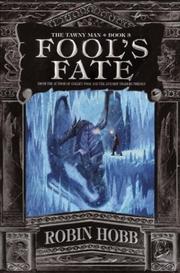
Fool's Fate
Prince Dutiful must kill a dragon to secure his betrothal, and FitzChivalry Farseer is caught between the Fool and Chade over Icefyre's fate.
2,247-word summary · 10 min read

The Wind Through the Keyhole
Sheltering from a killing storm, Roland tells his ka-tet a tale of his youth, then a boy's fairy tale that mirrors his own loss.
2,504-word summary · 11 min read

The Desert Spear
Peter V. Brett's 2010 sequel moves the fight to Krasia, where spear-armed warriors hunt demons nightly and a rival rises to challenge the Warded Man.
2,283-word summary · 10 min read
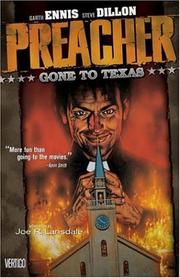
Preacher, Volume 1: Gone to Texas
A faithless Texas preacher bonded with Genesis sets out to find God, joined by Tulip O'Hare and an Irish vampire named Cassidy.
2,414-word summary · 11 min read
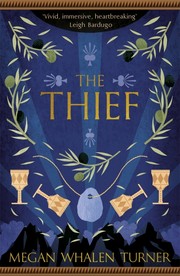
The Thief
A boastful young thief is pulled from a prison to steal a legendary stone for the king's magus, and the story he tells about himself is not the whole story.
2,514-word summary · 11 min read
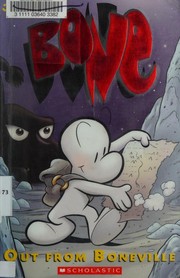
Bone, Vol. 1: Out from Boneville
Three cartoon cousins are run out of Boneville, separated by locusts, and dropped into a valley where rat creatures and an old grudge are waiting.
2,155-word summary · 10 min read
The Icebound Land
Captured and enslaved in Skandia, Will fights a drug that erases him while Halt and Horace cut a bloody road through Gallica to bring him home.
2,088-word summary · 9 min read
Secrets of the Dragon Sanctuary
Kendra is replaced by a plant copy and held by the Society, while Seth steals a unicorn horn so the family can enter a dragon sanctuary.
2,590-word summary · 12 min read

Lioness Rampant
Alanna searches for the Dominion Jewel with the Shang Dragon, then returns to Tortall to face Duke Roger at Jonathan's coronation.
2,478-word summary · 11 min read
Magician's Gambit
Garion and his companions cross haunted Maragor and the caves beneath Rak Cthol to recover the Orb of Aldur.
2,391-word summary · 11 min read
Homeland
Drizzt Do'Urden is born into the cruel drow city of Menzoberranzan, where his father teaches him to fight and to doubt everything his family believes.
2,303-word summary · 10 min read
Enchanters' End Game
Garion marches toward Torak while Ce'Nedra leads the West's army in the final Belgariad volume, where prophecy and war meet.
2,557-word summary · 11 min read
The Chalice of the Gods
Percy needs three recommendation letters from three gods to apply to college, so his first quest is recovering a stolen chalice from the god of old age.
2,106-word summary · 9 min read
Nettle & Bone
Marra, a princess in a convent, leaves to save her abused sister, but first she must finish three impossible tasks: a bone dog, a nettle cloak, moonlight in a…
2,061-word summary · 9 min read
The Ship of the Dead
Magnus and his crew sail to the edges of the Norse worlds to stop Loki from launching Naglfar, the ship of the dead.
2,426-word summary · 11 min read
Fool's Errand
FitzChivalry Farseer has lived in exile for fifteen years. When Prince Dutiful vanishes before his betrothal, Fitz returns to Buckkeep to find him, with a wolf…
2,606-word summary · 12 min read
The Sword of Shannara
A young half-Elf and a company of companions set out to recover a magic sword before the Warlock Lord destroys the Four Lands.
2,474-word summary · 11 min read
Saga, Volume 3
Marko, Alana, and Hazel hide on the planet Quietus with the reclusive author who inspired their romance, while assassins and a prince close in.
1,989-word summary · 9 min read
The Magician King
Quentin rules a peaceful Fillory until a golden key strands him on Earth, while Julia's brutal road from hedge witch to demigod rewrites the whole story.
2,431-word summary · 11 min read
The Stonekeeper
After their father's death, Emily and Navin chase a monster into a hidden world to save their mother, and Emily's great-grandfather's amulet offers power at a…
2,753-word summary · 12 min read
The Sandman, Vol. 2: The Doll's House
Rose Walker dreams open as Dream hunts his missing creations and the Corinthian.
2,338-word summary · 10 min read
Pawn of Prophecy
Farm boy Garion learns sorcerers watch him as an old Orb wakes.
2,331-word summary · 10 min read