
Reading options
What's inside (9 sections)
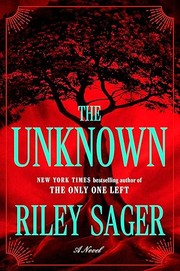
I picked this one up because the cover promised a locked-island gothic, and the first chapter delivered exactly that: a woman arriving on a remote island to make a film about five women who vanished there a century earlier. The Unknown was published in 2026 by Dutton, runs 368 pages, and carries ISBN 9798217044092. It is Riley Sager's tenth novel under that name, and it is built around two disappearances set a hundred years apart. What I did not expect was how much of the book would turn out to be about acting, and about what people will believe when they are frightened in a group.
A film crew on an island with an old ghost story
The premise is a performer's nightmare and a horror fan's delight. Director Ronan Peters is making a film called Darkness. It tells the story of the 1926 vanishing of five women from New Avalon, a remote island on Lake Faraday in Vermont. According to the island's legend, the women were spiritual mediums gathered around a figure named Ruth Hume Semple. They vanished after a séance unleashed something supernatural. All that was left behind were five dresses hanging from an old oak tree and the diary of one of the women, Daisy Rue.
Ronan runs the production like a cult leader, or at least like a director who has read too many books about Method acting. Phones are surrendered. Electricity is restricted. The cast and crew will spend a week on the island with no easy way off. This is the kind of setup where a reader immediately starts guessing who will disappear first, and Sager knows it. He gives the isolated-production rule a practical excuse, then lets the isolation do what isolation always does in this genre: turn small frictions into large suspicions.
The cast is a convenient bundle of egos and grudges. There is Violet Wright, a veteran star with a long memory. There are Julianne Brown and Heather Benchley, and there is Susie Hutchinson, who is abrasive from her first scene and clearly enjoys being disliked. Producer Loretta Zeverin handles the logistics, the kind of person who is always checking whether the boat is still running. A working actor will recognize the hierarchy immediately, from the star with the trailer to the crew member quietly counting the hours.
There is a film-inside-a-film quality to these early pages that I enjoyed. The cast is making a movie about a haunting, which means every prop and every line of dialogue has two meanings at once. A dress hanging in a tree is scenery for the film and evidence for the legend. A séance is a rehearsal and a genuine attempt to contact something. Sager keeps both possibilities alive, and that doubleness is the source of the book's best unease. Even Loretta Zeverin, who seems purely practical, becomes more interesting once you realize she has been placed on the island to watch the others.
Marin Keane, the actress nobody recognizes
The point of view character is Marin Keane, a struggling actress whose career high point is an eczema commercial. That detail is funny for about half a page and then sad, because it tells you exactly how Marin measures her own worth. She is always almost working, always one audition from being forgotten. When Ronan Peters offers her the role of Daisy Rue, she takes it.
There is one warning she ignores. The part was originally cast with an actress named Lindy Garrett, who tells Marin not to go. It is the kind of warning that exists in thrillers solely so the protagonist can override it, and Marin does. Her reasons are professional and personal at once: this is the biggest role she has been offered, and she needs to believe she is someone who can carry a film. That need is the engine of the whole book. Marin wants to be seen, and the story keeps asking what she will trade for it.
Her guilt has an older source. When Marin was four, her sister Molly drowned in the family pool. Marin has carried that since childhood, a vague, unshakeable sense that she should have done something. Sager does not over-explain it. He lets it surface in the way Marin half believes she sees Molly around the island, a figure at the edge of a scene that she cannot quite make out. The drowning is the private wound that makes the public haunting feel personal to her.
Daisy's diary and the voice called Azra
The novel's best structural choice is to alternate Marin's present-day chapters with Daisy Rue's 1926 diary. The diary sections are the quieter, stranger half of the book. They describe Daisy arriving at New Avalon and meeting the women who have gathered there: Katrina Fiske, Jonquil Collins, Mrs Minafer, and others around Ruth Hume Semple. The prose takes on a period texture that sets it apart from Marin's sections, and the contrast keeps the two timelines distinct. Daisy's entries have a diary's intimacy, the sense of a young woman writing down what she has seen before she forgets it. Katrina Fiske, Jonquil Collins and Mrs Minafer each get a few sharp strokes, enough to make the reader understand the small hierarchy of the group around Ruth Hume Semple. I found myself caring about these women in the way I cared about the film crew, which made the later questions about what really happened in 1926 feel personal rather than academic.
Into the diary comes a force called Azra, something that speaks during the séances. Azra warns Daisy that she will be last. That single line does an enormous amount of work. It gives the diary a countdown and gives the reader a question to carry across a century: what happens to the woman who is last? The answer the book eventually offers is more complicated than a ghost story, and the complicated answer is both the strength and the weakness of the final stretch.
Marin, reading the diary on the island, discovers that Ronan has invented an ending for it. The real diary is incomplete. Ronan has supplied a conclusion that suits the film he wants to make. This is the moment when the idea of performance starts to infect the mystery itself. If the diary has been edited, then the legend has been shaped, and if the legend has been shaped, then perhaps the haunting has been shaped too. Sager plants this early enough that a careful reader can start pulling at the thread long before the official reveal.
The island starts to bite
Once a health emergency strands the crew, the atmosphere tightens. With the boat unable to leave and no outside help coming, the island stops being a location and starts being a container. Strange noises come from nowhere. Daisy-wheel symbols appear, marked in places where nobody admits to marking them. Séances are staged, first as rehearsal and then as something harder to dismiss. The health emergency matters because it removes the easy exit. Before it, every strange sound could be explained away by people who wanted to go home. After it, the cast has no choice but to keep interpreting the signs together. Sager is good at the physical business of fear: the creak of a floorboard in a cottage, the sudden certainty that a door was left open, the way a group of tired people will agree on a story simply because nobody wants to be the one who says it out loud.
The disappearances come in a deliberate order. Susie goes first, the abrasive one nobody will miss immediately, and a dress appears hanging from the old oak tree, just as it does in the legend. Ronan is seen entering her cottage, and he explains it away by claiming she tried to seduce him. The claim is self-serving and everybody knows it, but the production limps on. Heather and Julianne vanish next, and the pattern starts to feel less like a haunting and more like a message aimed at one person.
What struck me here is how quickly the group manufactures a supernatural explanation. The island, the dresses, the diary, the symbols, the noises: they all point toward Azra, and the cast has a ready-made story to fit every new frightening fact. Sager is interested in the psychology of that. People who are scared together will build a shared explanation out of whatever materials they have, especially when each of them arrives with a private grief that makes the explanation feel true.
The grief everybody brings to the island
That private grief is the book's real subject for a while. Marin has Molly, the sister in the pool. Other characters carry their own losses, and Sager lets those losses leak into the séances. The group does not just fear Azra. It wants Azra to be real, because a supernatural explanation would give shape to grief that otherwise has none. If a voice can speak from beyond, then a dead sister or a lost mother is not entirely gone.
This is the most interesting idea in The Unknown, and it is also where the book starts to overreach. Marin's half-sightings of Molly are genuinely unsettling because they are so plausible. A person who has carried a childhood guilt will see what she expects to see in a dark cottage. The novel understands that. But it also keeps stacking one trauma on top of another until the emotional logic starts to feel engineered, as though every character has been assigned a wound for the séance scene to exploit.
Still, the device works for a while. The séances become a place where the cast's private griefs and the public legend feed each other. Marin, who began the book desperate to be noticed, finds herself at the centre of a story that is beginning to notice her for the wrong reasons. The question of what she wants, which starts as career ambition, quietly becomes a question about whether she wants to be believed.
The con, and what Violet was really after
The turn comes when Marin finds evidence that the missing women are alive. The haunting has been staged. The entire production was a trap for Ronan, engineered by Violet and a small group of people connected to a woman named Elise Haines. Ronan had filmed himself having sex with Elise and circulated the recording. Elise died by suicide. She was Violet's secret daughter.
Elise Haines is the key to that section, and Sager gives her the kind of off-page weight that a good thriller villain deserves. Ronan filmed himself having sex with her, circulated the recording, and left her to live with what he had done. Her suicide is the fact that turns a group of pranksters into something more deliberate. Violet's grief has been sitting in the room the whole time, disguised as professional caution, and the reveal lets you see every earlier scene differently. Her watchfulness was not the wariness of an older actress. It was the patience of a mother building a case.
That changes the meaning of everything that came before. The fake haunting was not a prank or a publicity stunt. It was designed to frighten Ronan into confessing what he did to Elise. The dresses, the noises, the symbols, the diary's invented ending: all of it was a trap built around a man who made a career out of other people's vulnerabilities. Violet's performance as the veteran star, calm and watchful through every strange event, turns out to have been the most important performance in the book.
I found this reveal satisfying in a straightforward way. It pays off the acting theme. The whole novel has been about people playing roles, and the person playing the most convincing role was the one quietly assembling the evidence. At a final séance, Violet appears to be possessed by Daisy and then stabs Ronan with an ice pick. Marin helps move the body so that his death looks accidental. It is a grim little piece of theatre, and the book treats it as exactly that: one last scene before the cameras are gone.
The second reveal and what got left in the lake
Then Sager does something riskier. He rewrites 1926. Semple's hidden journal and remains found beneath a structure show that the five women were bound up with Azra Kovacic, a psychiatric patient, and that several figures in Daisy's diary were fragments of a fractured mind, Daisy among them. In other words, the historical mystery gets a psychological explanation, not a supernatural one. Violet throws the journal into the lake, refusing to let the story be told.
This is where a lot of readers part company with the book. The late pileup of revelations is engineered to keep you guessing, and it does, but the psychological explanation of the historical mystery arrives rushed. A century of atmosphere, of dresses on an oak tree and a voice promising that Daisy will be last, gets resolved in a few brisk pages about a fractured mind. The finale feels overstuffed, as though Sager had three good endings and could not bring himself to cut any of them.
What stayed with me was not the explanation but the choice Marin makes with the evidence. She keeps Susie's camcorder SD card. When someone asks what she wants, she says she wants to be known. After a book about a woman who was almost known for an eczema commercial, that line lands. Four years later, Marin is an Oscar-nominated star, Ronan's death has been ruled an accident, and the film was never made. A 1931 photograph of a woman named Zara McCutcheon, who resembles Daisy, hints that something of her survived the lake and the journal and the official story.
That final photograph is either a clever last turn or a cheap tease, depending on how much you trust the book's appetite for one more mystery. I leaned toward clever. The Unknown is at its best when it is about performance and evidence, about how a story can be assembled to make people believe almost anything. When it tries to explain its century-old ghost with a case file, it loses some of the atmosphere that made the island worth visiting. I would still recommend it to anyone who likes a gothic thriller with a strong sense of place. Just go in expecting the last fifty pages to be busier than the first three hundred.
FAQ
Is The Unknown based on a true story?
No. The 1926 vanishing of five mediums from New Avalon and the island on Lake Faraday are fictional. Sager built the gothic setup from the conventions of island mysteries and stage thrillers.
What is Azra in the book?
Azra begins as the name of a voice that speaks during the 1926 séances in Daisy's diary and warns her she will be last. The final reveal connects it to Azra Kovacic, a psychiatric patient, and to the fractured mind behind parts of the diary.
Why does the ending divide readers?
The book stacks several reveals in its last section, including a psychological explanation for the historical mystery. Many readers found that rush overstuffed, while others enjoyed how performance and evidence are woven together.
Similar books
The Tenant
A marketing VP loses his job and rents out a room, and his Manhattan brownstone becomes a trap built from planted evidence, old identities and staged…
2,264-word summary · 10 min read
The Divorce
A Long Island mother is evicted by her hedge-fund husband on their anniversary, and a twisty custody fight hides an older secret about her son.
2,227-word summary · 10 min read
The Last Time I Lied
Fifteen years after her cabin mates vanished at Camp Nightingale, painter Emma Davis returns as an art teacher and digs into lies about that night.
2,633-word summary · 12 min read
The Only One Left
Caregiver Kit tends mute Lenora Hope accused of 1929 family murders.
2,592-word summary · 12 min read

Forever Odd
Six months after Stormy's death, Odd Thomas tracks a kidnapped friend to a decaying hotel and faces a cultist who wants his gift.
2,308-word summary · 10 min read
You Are Not Alone
A lonely New Yorker witnesses a subway suicide and falls in with the dead woman's friends, where a makeover and a framed murder hide a hidden mastermind.
2,588-word summary · 12 min read
The Staircase in the Woods
Twenty-five years after a friend vanished at the top of a staircase in the woods, four estranged adults are summoned back to climb another one.
2,023-word summary · 9 min read
The Maid's Diary
A cleaner who snoops through her wealthy clients' lives finds a secret that could destroy them, while a detective investigates a bloody waterfront house with…
3,459-word summary · 15 min read
The Lies I Tell
A con artist returns to Los Angeles to ruin the man who took her family's home, while a journalist who has hunted her for ten years closes in.
2,201-word summary · 10 min read
The Bewitching
A gothic horror novel that moves between 1908 Mexico and 1998 Massachusetts as an old family curse and a folkloric bewitchment repeat across three timelines.
2,332-word summary · 10 min read

Marina
A fifteen-year-old boarder in 1979 Barcelona follows a singing voice into a ruined mansion and finds a girl, a watch, and a mystery the city has kept buried…
2,352-word summary · 10 min read
The Anniversary
Alex Finlay's standalone revisits May 1 in a Nebraska town for ten years as two former classmates close in on the May Day Killer.
2,237-word summary · 10 min read
Night Film
A disgraced journalist investigates the death of a reclusive horror director's daughter, following a red coat through hospitals, secret clubs, and a family…
2,690-word summary · 12 min read

Bad Luck and Trouble
A deposit of $1,030 summons Jack Reacher back to his old army unit, which is being picked off one name at a time.
2,366-word summary · 11 min read

One of Us Is Dead
In Buckhead, Atlanta, five women narrate a murder among manicures, fundraisers, and social warfare. Jeneva Rose's 2022 thriller is a gossipy revenge fantasy…
2,471-word summary · 11 min read

The Woods
Twenty years after two teenagers were murdered and two vanished at summer camp, prosecutor Paul Copeland identifies a fresh corpse as one of the missing.
2,490-word summary · 11 min read

The Redbreast
Harry Hole chases an ageing sniper through modern Oslo while two Norwegian volunteers on the Eastern Front carry a fifty-year-old betrayal toward a royal…
2,453-word summary · 11 min read
Razorblade Tears
Two ex-con fathers, one Black and one white, hunt their murdered sons' killers in a Richmond that never gave the boys a fair shake.
2,880-word summary · 13 min read
The Heiress
A missing heiress returns to claim a mansion full of letters and lies.
2,362-word summary · 10 min read
The Villa
Two friends house-sit a haunted Italian villa tied to a 1974 rock murder while their own bond frays.
2,243-word summary · 10 min read
Later
Boy Jamie Conklin sees dead people who must answer truthfully, pulling him into NYPD cases and a drug crew's greed.
2,009-word summary · 9 min read
Fool Me Once
Widowed Maya sees murdered husband on nanny cam and digs into family lies.
2,104-word summary · 9 min read
My Husband's Wife
Artist Eden Fox returns from a run to find her key fails at Spyglass and her husband claims a stranger is his wife in Hope Falls.
2,437-word summary · 11 min read
You Shouldn't Have Come Here
Grace books a remote Wyoming ranch Airbnb to reset, but her attentive host Calvin blurs hospitality, attraction, and threat until twists reframe it.
2,515-word summary · 11 min read
The Death of Mrs. Westaway
Broke tarot reader Hal claims a Cornish inheritance and finds attic locks and lies.
3,313-word summary · 15 min read

His & Hers
Alice Feeney's His & Hers retold in full: newsreader Anna, detective Jack, a murdered woman, His and Hers chapters, and a twisty end that splits readers.
3,207-word summary · 14 min read
Behind Her Eyes
A single mother falls for her psychiatrist boss and befriends his wife, until lucid dreaming reveals a darker game inside their perfect marriage. A final twist…
3,365-word summary · 15 min read
Luckiest Girl Alive
Ani FaNelli reinvents herself as a glossy New Yorker, but a documentary about her Bradley past threatens to expose everything.
2,222-word summary · 10 min read
The Turn of the Key
A nanny writes from prison about a smart Highland house, four girls, and the night one child died.
3,207-word summary · 14 min read
Odd Thomas
A twenty year old fry cook who sees the dead tries to stop a mass shooting in his desert town.
3,797-word summary · 17 min read