
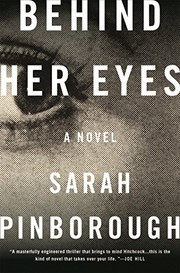
Behind Her Eyes
3,365-word summary 15 min read 320 pages in the book
- First published
- 2017
- Publisher
- Flatiron Books
- Pages
- 320
- ISBN
- 9781250111180
Reading options
What's inside (8 sections)
I picked up Behind Her Eyes because a friend told me the last fifty pages would make me want to throw the book across the room. She meant it as praise. Sarah Pinborough published it with Flatiron Books in 2017, a 320 page thriller that starts like a familiar affair story and ends somewhere much stranger. I went in expecting secrets and lies in London flats and late night texts. I got that, plus lucid dreaming and a trick that forced me to reread the first chapters. I still have mixed feelings about it, which seems to be the normal reaction.
The setup pulls you fast. Louise is a single mother living in London with her young son Adam. She works part time as a secretary, she worries about money and childcare and dating, and she feels stuck in a loop of school runs and tired evenings. One rare night out, she meets a man in a bar. They talk easily. There is a kiss outside and a sense that something might start. Then he leaves when his wife calls. Louise feels embarrassed and a little bruised. On Monday she learns the man is David, her new boss. He is a psychiatrist at a clinic practice. He is married. That bar kiss now hangs over every workday.
Louise tries to keep distance. She needs the job. David tries to stay polite and cold. That lasts about a week. They fall into an affair that is exciting and wrong in the usual ways. Stolen lunches. Messages checked too often. Guilt after. Louise tells herself she will stop. She does not stop. At the same time, she runs into Adele, David's wife, by chance in town. Adele is lovely and lonely and oddly open. She suggests coffee. Then friendship. Soon Louise is the other woman and the new best friend at once, which is as uncomfortable as it sounds. I kept thinking someone would get caught in the first hundred pages. Pinborough lets the tension sit instead.
What makes the book different is how much time it spends inside Adele's head. Chapters switch between Louise in the present and Adele looking back. Adele seems perfect from outside. Pretty house, thin and graceful, devoted wife who gave up a lot for David. Up close she is anxious and watchful. She writes things down. She smiles when David watches and cries when he does not. She tells Louise her marriage is hard and that David controls her. She says he checks her phone and limits her friends and once had her stay in a clinic for sleep problems. Louise, who already distrusts David a little because he is married and lying, believes her. I believed her too for a long while.
Meeting David and Adele in London
The early London chapters work because the details feel lived in. Louise shares a small flat with Adam, trades school pickup with a neighbor, drinks too much wine on weeknights, and smokes when stressed. Her friend Sophie tells her to end the affair. Louise nods and then texts David anyway. David is careful at work and warmer outside it. He says he loves Louise but cannot leave Adele yet. He says Adele is fragile. He says there are medical reasons to stay close. Louise hates hearing that and keeps asking for more time.
Adele enters Louise's daily life through small kindnesses. Gym classes. Coffee after. A walk with the dog. Adele has few friends and much free time. She asks about Adam, she remembers names, she gives Louise a spare key at one point and tells her to drop by. The flat David and Adele share is neat and quiet and a little cold. Adele keeps it perfect. She cooks simple meals, she folds blankets, she looks out the window a lot. David comes home late. You feel the lack of ease between them. Adele flinches at small sounds. David speaks to her like a doctor at times, calm and flat.
Pinborough does not rush the affair plot. She shows the boring parts that make affairs last. Waiting for a reply. Cancelled plans because Adam is sick. A lunch that feels thrilling just because it is normal. A row because David missed a call. Louise knows she should feel worse about Adele. She does feel bad, but she also likes being wanted by two people at once. David wants her body and her attention. Adele wants her company and her loyalty. For a lonely parent, that double pull is strong. I found Louise frustrating here, and I think that is on purpose. She makes selfish calls and then frames them as confusion.
Work scenes add pressure. Louise answers phones and types letters for David's practice. She hears patients in the waiting room. She watches David be kind and steady with others while being evasive with her. A colleague notices late hours. Louise lies badly. David warns her to be careful. Adele, meanwhile, keeps asking light questions that are not quite light. How is work. Is David kind to you. Does he talk about home. Louise answers with half truths and feels sick after. The triangle tightens without anyone shouting.
Friendship with Adele and the flat with the well
The middle of the book leans into female friendship, which surprised me. I expected catfight scenes. Instead there are long afternoons where Adele and Louise just talk. Adele tells stories about her childhood and about meeting David. She says she was wild once and then life narrowed. She talks about sleep trouble that started years ago. Night terrors that left her screaming. A fear of the dark that never quite left. Louise, who has her own bad sleep since the divorce, listens hard. They compare tricks for getting through the night. Warm milk. Reading. No phones late.
Adele gives Louise a notebook for dreams. She says writing dreams down helps with anxiety. Louise humors her at first, then gets into it. Adele seems pleased in a way that feels a bit too pleased. She checks what Louise wrote. She praises recall. She suggests trying to stay aware inside a dream, to notice you are dreaming and steer a little. Louise laughs. Adele does not laugh. She says it helped her when she felt trapped. She says David hates this talk and calls it nonsense, which is why she stopped telling him. That detail lands. David the psychiatrist would want pills and schedules, not dream journals.
There is also the old house thread. Adele grew up partly around a country estate with a well on the grounds, a place tied to summers before her parents died in a fire. She speaks about it in pieces. A big house with creaking floors. Woods nearby. A friend from that time named Rob, who was close to her when she was young and troubled. Louise hears these bits out of order and tries to fit them together. Adele changes the subject when Rob comes up too directly. David never mentions Rob. When Louise asks David about Adele's past, he shuts down and says Adele confuses things. That only makes Louise more curious.
I liked these chapters for mood, though they run long. There are many coffees and many small warnings that go nowhere yet. Adele says David watches her. David says Adele lies. Louise believes whoever spoke last. Adam gets less page time for a stretch, which felt off since he is her reason for caution. Sophie fades too. The book narrows to three adults circling each other in flats and parks. If you love slow dread, this part works. If you want plot speed, you may skim. I skimmed a little around the gym scenes and did not feel I lost much.
Lucid dreaming and the second door
Around the second third, the dreaming plot turns from background color to engine. Adele teaches Louise a simple routine. During the day, check whether you are awake by looking at your hands or a clock twice. Ask if this is a dream. At night, when you realize you are dreaming, try to stay calm and stay inside it. Do not wake yourself. Walk around. Open doors. Louise practices and starts having clear dreams where she can move through her flat while her body sleeps. It feels freeing. For a woman with little control by day, control by night is heady.
Adele adds a stranger idea. She says some people can go further than dreams and actually send their mind out while the body rests. She keeps the language plain, almost shy, as if she expects Louise to mock her. Louise half believes and half enjoys the game. In dreams Louise sees a corridor with doors. Most doors open onto dream scenes that shift and fade. Adele hints there is a second door that matters more, a way to step outside the dream and into the night itself. She warns Louise not to rush it. She says fear can snap you back or leave you shaken. Louise, stubborn when curious, keeps trying on her own.
David's view of all this stays cold. He tells Louise that Adele has a history of sleep issues and stays at a clinic in the past. He says indulging strange sleep ideas will harm her. He frames Adele as ill and himself as patient. Louise hears care and control mixed together. She starts watching David for signs. Does he count Adele's pills. Does he lock doors. Does he speak to her like a husband or a warden. Small moments read both ways, which is clever. A hand on Adele's back can be kind or guiding. A question about where she went can be love or surveillance.
I want to stay general on mechanics here because the book stays a bit foggy on purpose. Pinborough gives images more than rules. The sense is that practice plus strong feeling lets a person hover near sleep and look in on real places. Tiredness helps. Habit helps. Need helps most. Louise gets better fast, which Adele both encourages and seems to envy. There are scenes where Louise drifts over London streets and sees lights and roofs and wakes with her heart pounding. She tells Adele. Adele asks careful questions about what she saw and how long she stayed. Those talks made my skin prickle on reread.
Rob, night terrors, and the clinic past
Adele's past arrives in fragments that finally form a shape. As a teen after her parents died, Adele spent time at the country house with Rob, a friend from the estate who became like family. Rob had his own troubles and a sharp sense of humor that cut through grief. They were close in the way lonely kids get close. They shared cigarettes and jokes and fear. Both had bad sleep. Both had night terrors that left them crying out. An older man connected to the house taught them the same dream tricks Adele later teaches Louise. Stay aware. Hold steady. Use the doors.
Rob matters because he loved Adele and Adele loved him, though not in a simple dating way. He depended on her. She felt guilty about needing space. When Adele later met David, who was training as a doctor and seemed stable and kind, Rob felt left behind. There was a row about the future. There was jealousy on both sides. Then Rob died. The book holds back the exact facts for a long time, and I will keep them light here. What matters is that Adele links Rob's death to herself and to the dreaming practice. She believes something she did in that half sleep state had real effects. That guilt never leaves her.
The clinic stay follows. After Rob's death and more broken nights, Adele spent time under psychiatric care. David was part of that world and later became her husband. Adele describes nurses and locked doors and a doctor's calm voice telling her to rest. She describes David as rescuer at first. He listened. He did not flinch at her strange talk. He married her and promised a quiet life. Over years that care hardened into watchfulness. At least that is Adele's telling. David's telling is that Adele never fully steadied and that he stayed out of duty and fear of what she might do.
Louise hears both versions and tries to play peacemaker. She tells David to be kinder. She tells Adele to stand up for herself. She sleeps with David and then drinks tea with Adele and hates herself a little more each week. Adam notices her distraction. He acts out at school. Louise promises to do better and then checks her phone under the table. This is where many readers turn on Louise. I did. She is not cruel, but she is self absorbed. She frames the affair as love and the friendship as help, while using both to fill her own empty evenings. Pinborough does not excuse her. She lets Louise narrate her excuses until they sound thin.
There is a good stretch where Louise tries to test who lies. She asks Adele for dates and details. She asks David about Rob and the clinic. She looks for records and finds little. She watches Adele take pills and wonders if David overmedicates her. She watches David delete messages and wonders what else he hides. The past stays blurry, which feels true to how families keep pain. No one shows Louise a clean file. Everyone offers memory with an angle. I found this more scary than the dreams. Two smart people telling opposite stories, and Louise in the middle choosing based on who touched her last.
The marriage cracks open
In the last third before the twist, events speed up. Louise starts seeing things in dreams that point to the house and the well. Adele grows thinner and more urgent. She talks about leaving David. She asks Louise for help finding a flat. David grows colder and more direct. He tells Louise the affair must pause. He says Adele is worse and needs him home. Louise feels used and angry. She pushes David for truth about Rob. David finally says Adele's illness includes confusion about what is real, and that Rob's death broke something that never healed. Adele says David keeps her drugged and small because he fears she will leave and tell people what he did.
A small incident with Adam raises stakes. Louise fears Adele's strangeness might touch her son. Nothing graphic happens, but Louise pulls back from Adele for a few days and feels guilty about it. Adele notices at once. She apologizes too much. She brings gifts. She cries and says everyone leaves. Louise softens, because Adele crying is hard to watch. David uses that softness as proof Louise cannot see clearly. He asks Louise to stop seeing Adele. Louise agrees and then keeps seeing Adele. The lies stack until a normal week feels operatic. Work, school, bedtime, secret drinks, secret calls.
The dreaming gets bolder too. Louise practices alone and gets further down the corridor. She learns to hold steady when fear spikes. She starts to sense that Adele is also out at night, moving with more skill and purpose. There are passages where Louise feels watched in sleep, as if someone stands just behind her dream self. She wakes gasping with her hands clenched. She tells herself it is stress. She tells Adele part of it and holds back part. Trust frays. Both women start editing what they share. I liked this shift. The student catching up to the teacher changes every talk.
Fair criticism belongs here because the middle to late stretch repeats beats. Another secret coffee. Another deleted text. Another dream where Louise almost grasps something and wakes. Pinborough circles the same fears to build mood, and mood does build, but plot stalls. A tighter cut of fifty pages would help. Also, David stays thin as a character for too long. He is handsome and closed and tired. We learn his motives late, which keeps suspense but makes the affair feel lopsided. Louise risks everything. David risks a frown. I wanted one scene where David's home life cracked open earlier, just to balance sympathy.
Still, the slow burn pays off in dread. By the time Louise decides she must choose and confront, I felt tired in a good way, like I had lived those late nights with her. The well keeps returning in talk. The country house keeps returning. Rob's name hangs over Adele's flat like smoke. You start to suspect the supernatural thread is not garnish. It is the main course. And you start to fear Adele in a way Louise refuses to do, because Louise needs Adele to be the victim so her own role feels cleaner.
The ending twist and why it splits readers
Here is the part to read with care if you hate spoilers. I will keep it brief and focus on shape rather than every shock. Past this point the book stops being a marriage thriller and shows its hand as a body swap story. The dreaming skill was never only dreams. Skilled people can leave their bodies and enter another body that is empty in sleep. Rob learned it first. Adele learned it next to him. What looked like grief and illness was also practice and hunger. The past deaths make new sense in this light. So does Adele's fear of sleep and her talk about doors.
The final reveal is that the Adele we met is not Adele in the way we assumed. Rob, dying and desperate not to vanish, took Adele's body long ago and left Adele to die in his own failing form. Then Rob as Adele met David, married him, and lived as a woman for years while hiding the truth. David sensed wrongness without knowing the full shape. He tried to manage it with pills and clinics and rules. Late in the book, Rob as Adele takes Louise's body during sleep and leaves Louise trapped where Adele had been stuck. The last pages show Rob in Louise's life with Adam, playing mother, while David belatedly grasps what happened and cannot prove it.
I admire the nerve of it and see why it splits readers. On one hand, clues were planted. The focus on hands and habits, the odd ease Rob as Adele has with male gaze details, the fear of being caught asleep, the well as a grave that had to stay hidden. On reread those bits click loudly. On the other hand, the twist bends the rest of the book. Louise looks foolish for missing signs. David looks both victim and jailer. And Rob's long con needs much acceptance about how bodies and memory work. If you grant the premise, the end is chilling. If you do not, it feels like a trick laid over a domestic plot that did not need it.
My take sits in the middle. The last chapters are propulsive and creepy in a way the middle is not. The image of a parent looking at a child with borrowed love stayed with me. But I wish Pinborough had let Louise be sharper earlier so the trap felt earned rather than sprung. Louise spends so long as a go between that her final helplessness reads as punishment for the affair more than result of a plan. Friends who love the book say that moral sting is the point. Friends who hate it say the supernatural turn breaks trust. Both views make sense to me now.
Should you read it. If you enjoy twisty thrillers and do not mind a slow middle, yes, with the warning that the end goes full supernatural. Go in knowing the affair plot is only half the story. Pay attention to sleep talk and to who watches hands. Notice when Adele steers Louise toward practice and when she pulls back. You will still be surprised, I think, because the book misdirects with sympathy so well. Just do not expect a neat courtroom or divorce ending. Expect a quiet house, a sleeping body, and a door left open that should have stayed shut.
FAQ
When was Behind Her Eyes published?
Flatiron Books published it in 2017. The first US edition runs 320 pages and the ISBN is 9781250111180.
Who are the main characters?
Louise, a single mother and secretary, David, her psychiatrist boss, and Adele, his wife who befriends Louise.
Is Behind Her Eyes part of a series?
No. It is a standalone thriller by Sarah Pinborough with no sequel.
Similar books

Lisey's Story
Two years after her novelist husband dies, Lisey Landon follows a trail of clues into his childhood and the other world that made him a writer.
1,998-word summary · 9 min read

Lullaby
A reporter discovers that a poem in a children's book kills anyone who hears it, and his attempt to destroy every copy turns into a road trip through grief,…
2,147-word summary · 10 min read

The Talented Mr. Ripley
A small-time con man is sent to bring a rich man's son home from Italy and decides to become him instead. Highsmith's amoral classic of the first antihero.
2,074-word summary · 9 min read

The Woods
Twenty years after two teenagers were murdered and two vanished at summer camp, prosecutor Paul Copeland identifies a fresh corpse as one of the missing.
2,490-word summary · 11 min read
Everything's Eventual: 14 Dark Tales
Fourteen Stephen King stories shuffled by the deal of a card deck, from the haunted room of 1408 to quiet tales of grief that sting as much as the monsters.
2,000-word summary · 9 min read

This Present Darkness
A pastor and reporter face demons over Ashton while angels answer prayer.
2,384-word summary · 11 min read

The Heiress
A missing heiress returns to claim a mansion full of letters and lies.
2,362-word summary · 10 min read

If It Bleeds
Holly Gibney faces an outsider plus three more tales of dread.
2,219-word summary · 10 min read

Hannibal
Lecter hides in Florence while Starling and Verger close in from both sides.
2,590-word summary · 12 min read

Four Past Midnight
Four novellas about a plane lost in time, a writer haunted, and horrors small and large.
2,584-word summary · 11 min read

Eileen
A prison clerk in 1964 falls for a counselor before a violent break.
2,481-word summary · 11 min read
Horns
Accused of killing Merrin Williams, Ig Perrish wakes with horns that force strangers to confess their darkest sins.
2,264-word summary · 10 min read

Revival
Jamie Morton shadows preacher Jacobs from boyhood healings to electric cures that open a door best left shut.
2,037-word summary · 9 min read

NOS4A2
Vic McQueen's bike finds lost things through a bridge, pitting her against Manx's Rolls-Royce ride to Christmasland.
2,060-word summary · 9 min read

Later
Boy Jamie Conklin sees dead people who must answer truthfully, pulling him into NYPD cases and a drug crew's greed.
2,009-word summary · 9 min read

Fool Me Once
Widowed Maya sees murdered husband on nanny cam and digs into family lies.
2,104-word summary · 9 min read

The Dark Half
A Maine novelist buries his violent pen name George Stark, then faces murders that carry his own fingerprints.
2,956-word summary · 13 min read

Rosemary's Baby
A young couple's dream apartment in the Bramford turns dark when helpful neighbors and a trusted doctor take over Rosemary's pregnancy.
2,665-word summary · 12 min read

My Husband's Wife
Artist Eden Fox returns from a run to find her key fails at Spyglass and her husband claims a stranger is his wife in Hope Falls.
2,437-word summary · 11 min read

Dead in the Water
After Damon survives drowning, one strange memory of a dead boy pulls him back toward death again and again to find the truth.
2,358-word summary · 10 min read

You Shouldn't Have Come Here
Grace books a remote Wyoming ranch Airbnb to reset, but her attentive host Calvin blurs hospitality, attraction, and threat until twists reframe it.
2,515-word summary · 11 min read

The Whisper Man
Widower Tom Kennedy moves with his son Jake to Featherbank, where a child killer called the Whisper Man once hunted. When boys vanish again, Tom must face old…
2,492-word summary · 11 min read

The Last Time I Lied
Fifteen years after her cabin mates vanished at Camp Nightingale, painter Emma Davis returns as an art teacher and digs into lies about that night.
2,633-word summary · 12 min read
No Exit
Snowed in at a rest stop, Darby Thorne finds a kidnapped girl locked in a van and must guess which stranger owns it before help can arrive.
2,680-word summary · 12 min read
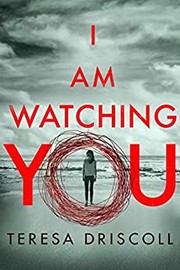
I Am Watching You
A florist watches two schoolgirls chat with ex cons on a train and stays silent. A year later one girl is still missing and someone starts watching her.
2,939-word summary · 13 min read

His & Hers
Alice Feeney's His & Hers retold in full: newsreader Anna, detective Jack, a murdered woman, His and Hers chapters, and a twisty end that splits readers.
3,207-word summary · 14 min read

An Anonymous Girl
Jessica takes a paid ethics study in New York and falls under Dr. Shields's control, until tasks and lies pull both women toward a dangerous reversal.
2,421-word summary · 11 min read

Thinner
A Connecticut lawyer escapes punishment after a fatal crash, then an old Romani father lays a wasting curse on him and the pounds start falling off.
2,502-word summary · 11 min read
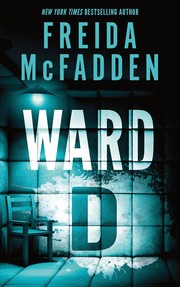
Ward D
A med student hides her own psych past while working a locked night shift where meds vanish and doors open.
2,042-word summary · 9 min read