
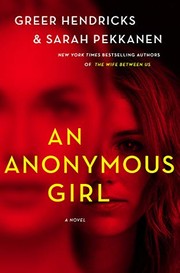
An Anonymous Girl
2,421-word summary 11 min read 375 pages in the book
- First published
- 2019
- Publisher
- St. Martin's Press
- Pages
- 375
- ISBN
- 9781250133731
Reading options
What's inside (7 sections)
I picked up An Anonymous Girl on a weekend when I wanted something fast and a little mean. I had heard it described as a thriller about therapy and obsession, and that hooked me. I like New York stories where money pressure makes people say yes to things they should refuse. This one starts exactly there. I read the first fifty pages standing in my kitchen because I kept telling myself one more chapter. By the end I had a lot of feelings, some good and some annoyed, which is pretty normal for me with this kind of book.
The edition I am summarizing here is the 2019 St. Martin's Press edition, cited at 375 pages. That matters because this is a long thriller that takes its time early and then rushes late. I will walk through the whole story in order, including the turns, because that is what these summaries are for. I will also flag where it dragged for me.
A makeup artist who needs cash
Jessica is young and broke in New York. She works as a makeup artist, which sounds glamorous until you hear about the schedule. She goes to early calls and late touch ups. She deals with brides and photographers and assistants who change plans without warning. She is good at reading faces. She notices when someone is nervous or lying or trying too hard. That skill matters later.
Her money situation is tight. Rent and bills keep pressing in. She thinks about her family back home and feels guilty for not having more to show. She has a boyfriend who cares about her, but the relationship feels thin in places. She keeps small secrets from him. Not huge lies at first. Just the kind of smoothing over people do when they feel embarrassed about cash or choices.
Then she hears about a paid ethics study. A client mentions it, or she sees a flyer, depending on how you remember the setup. The point is simple. Answer questions about morality and behavior. Get paid for your time. It sounds easy. It sounds like sitting in a room and checking boxes. Jessica signs up because the pay would help and because she is curious. She tells herself it is harmless research.
I liked this opening because it felt true. I have taken dumb side gigs for money. I have answered surveys and sat through awkward interviews. Jessica does not seem reckless here. She seems tired and practical. She wants help with bills and this looks like a clean way to get it. That makes what comes next more unsettling. She is not chasing danger. Danger finds her through a clipboard.
Dr. Shields and the quiet room
Dr. Lydia Shields runs the study. Or she is introduced as Dr. Shields, calm and polished and very sure of herself. Her office feels controlled. Soft voice. Direct eye contact. Questions that sound simple and land hard. She asks Jessica about honesty and loyalty and what she would do in tricky spots. She watches how Jessica answers as much as what she says.
Jessica is picked out of the group. Shields tells her she gave interesting answers. She offers follow up sessions for more pay. Private meetings. Deeper questions. Jessica says yes. The money helps, and there is also flattery in being chosen. Someone smart thinks you are interesting. That is a powerful pull when you feel invisible in your daily work.
The early sessions feel like therapy mixed with a job interview. Shields asks about Jessica's childhood and her parents and her romantic life. She asks about times Jessica lied or bent rules. She frames it as research into ethics. Jessica answers honestly at first, then starts editing. She senses judgment even when Shields smiles. She wants to look like a good person. Who would not?
What got under my skin here was the power gap. Shields has degrees and a nice office and total calm. Jessica has an hourly schedule and debt. Shields controls the questions and the pay. She can pause and stare and let silence do the work. Jessica fills the silence because most of us do. I kept wanting to tell her to leave. I also understood why she stayed. When someone offers you cash to talk, and rent is due, you talk.
There is also a strange intimacy building. Shields remembers details. She repeats Jessica's words back to her. She acts warm in a way that feels personal, not clinical. Jessica starts to wonder if Shields actually likes her. That confusion is the point. The study stops feeling like research and starts feeling like a relationship. A lopsided one.
Questions turn into tasks
After the surveys, Shields starts giving Jessica tasks outside the office. Little assignments. Go to a place and observe someone. Wear something specific. Start a conversation with a stranger. Report back what happened. Shields calls them behavioral experiments. She says they help her understand real choices instead of survey answers alone.
At first the tasks feel awkward but not scary. Jessica is used to blending in. As a makeup artist she knows how to be friendly fast. She can talk to people in chairs for an hour. So she does the tasks. She tells herself it is still for the study. She likes the extra money. She likes that Shields praises her when she follows through.
Then the tasks get more personal. They involve clothes and appearance in ways that make Jessica uncomfortable. They involve approaching people she does not know and keeping secrets about why. They involve going to events where she feels out of place and pretending she belongs. I am keeping this general on purpose because the book piles on specific dares and I do not want to misremember one and call it the key one. The pattern is what matters. Each task asks a bit more. Each report gives Shields more material to use.
Jessica starts lying to cover the tasks. She tells her boyfriend she is working when she is doing something for Shields. She tells friends partial truths. She checks her phone too much. She waits for messages from Shields the way you wait for a text from someone you should not be dating. The secrecy becomes its own rush. That scared me more than any single dare.
Shields also pushes on boundaries around privacy. She asks about Jessica's phone and contacts and habits. She frames curiosity as science. Jessica shares more than she plans to. Later she realizes how much Shields now knows. Where she goes. Who she talks to. What she wants. It is a slow leak. You do not notice how much you have told until the other person repeats it back and you feel exposed.
Bold truth I kept coming back to: Jessica thinks she is being tested, but she is being shaped.
I found this middle section both gripping and frustrating. Gripping because the tasks create constant tension. Will she get caught. Will she back out. Frustrating because Jessica keeps saying yes long after I would have quit. I had to remind myself that manipulation rarely looks obvious from inside. It looks like praise and money and attention. By the time you feel trapped, you have already agreed ten times.
Husbands and stories that do not match
Around the same time, Jessica starts learning more about Shields outside the office. There is a husband in the picture. There are cracks in the polished marriage story Shields tells. Jessica sees tenderness and then coldness. She hears versions of events that do not line up. She wonders if Shields is happy at home or performing happiness.
Jessica also has her own mess. She has not been fully honest with her boyfriend. She has not been fully honest with Shields either. She tells small lies to look better and then has to remember them. The book uses alternating viewpoints, so we also spend time in Shields's head. Shields sounds controlled and smart and hurt. She has her own account of her marriage and her work. She believes she has reasons for what she does. That does not make her right, but it makes her feel human instead of cartoon evil.
The manipulation goes both ways after a point. Jessica starts holding back and testing Shields. Shields starts pushing harder and watching closer. Phone calls get tense. Meetings feel like chess. Each woman tries to get the other to admit something first. I liked those scenes. They felt like two people in a small room with too much unsaid.
There is a stretch about a funeral and about following people and about pretending to be someone you are not. I will not lay out each beat as fact because I read this a while ago and I do not want to invent a scene that belongs to a different thriller. What I remember clearly is the feeling. Grief used as cover. Public places where private games play out. Jessica wearing a role like makeup, trying to keep it from smudging.
The marriage thread is where the book wants you to ask who is using whom. Is Shields studying Jessica, or is she recruiting her, or punishing her. Is Jessica a subject, or a stand in for someone else, or a threat. The answers shift. People who seemed steady start to look shaky. People who seemed honest admit to staging parts of their story. That is the fun of the genre, and this book leans into it hard.
I should say I guessed one turn early and missed another completely. I thought I knew what Shields wanted from Jessica, and I was partly right and mostly wrong. The book plants clues in plain sight. A comment about loyalty. A question about what you would forgive. A look that lasts too long. On reread in my head, those moments glow. On first read, I slid right past a couple of them.
The turns and the fallout
In the last third the pace jumps. Secrets come out fast. Jessica learns that Shields has been less honest than she claimed about her marriage and her motives. Shields learns that Jessica has been less innocent than she seemed. Both women have used lies as tools. Both have told themselves the lies were needed.
There are confrontations in apartments and offices and public spots where neither can yell without being seen. There are phone messages that change meaning once you know the context. There are moments where Jessica has to decide whether to go to police or handle it herself or walk away and hope it stops. Walking away sounds simple. It is not simple when someone knows your secrets and you know theirs.
I will keep the final reversals general to avoid spoiling the exact mechanics wrongly. The shape is this. Jessica tries to take back control by exposing or tricking Shields. Shields tries to keep control by using what she documented in the study. The husband's role looks different at the end than at the start. People survive, but trust does not. The ending is not tidy. It is more like a pause after a fight where both sides are bleeding and pretending they are fine.
Did it satisfy me. Partly. I liked that neither woman gets to be the pure victim. I liked that the book lets Jessica be smart in the final stretch after letting her be passive for a long stretch. I liked one quiet scene near the end where Jessica looks at her own face and sees how much performing she has done, for clients and for Shields and for herself. That image stuck with me.
What bugged me was the pileup. There are a lot of twists in the last eighty pages or so. Each one asks you to rethink an earlier scene. One or two reframes would have felt sharp. Four or five made me tired. I started skimming to find out which betrayal was the real one. When everything is a trick, tricks stop landing. I wanted the book to pick its best reversal and sit with it.
The other issue for me was likability. Jessica can be selfish and careless with other people's feelings. Shields can be cold and cruel while calling it research. I do not need heroes in thrillers, but I need someone to root for, even a little. For long stretches I watched both women the way you watch strangers argue on the subway. Interested, but not invested. Jessica won me back late when she stopped making excuses. Shields never fully won me over, which may have been the point.
Pacing is uneven too. The setup is slow. Surveys and sessions and small tasks take up a lot of room. Some readers will love the slow burn. I mostly wanted it to move faster. Once the tasks cross a line, the book flies. Then the ending throws so much at you that you need to catch your breath. A tighter middle and a calmer finale would have helped.
Still, I get why this book hit in 2019. It taps into real fears about privacy and consent and power. We hand over data for gift cards and study pay. We answer personal questions for apps and forms. We trust professionals because they sound calm. This book asks what happens when that trust is used against you. It also asks how lying, even small lying, gives other people material to control you. Those ideas stayed with me longer than any single twist.
If you like psychological thrillers set in New York with female leads and mind games, this will scratch the itch. Go in knowing the start is slow and the end is busy. Do not expect a cozy mystery or a police procedural. Expect two smart women circling each other, both keeping score, both sure they are the one who sees clearly. Expect to feel uncomfortable about how easily attention can feel like care.
I finished it late at night and sat for a while thinking about boundaries. When would I have quit the study. After the second private session. After the first task that involved lying to someone I love. I want to believe I would walk out early. Reading Jessica made me less sure. That unease is the best thing the book does. It asks who is lying. It also asks why we want to be chosen, even by the wrong person, and what that wanting costs.
FAQ
Who wrote An Anonymous Girl and when was it published?
Greer Hendricks and Sarah Pekkanen wrote it, published in 2019 by St. Martin's Press.
Is An Anonymous Girl part of a series?
No, it is a standalone psychological thriller about Jessica and Dr. Shields in New York.
How long is the cited edition?
The cited edition runs 375 pages.
Similar books

Six Years
A professor who promised to forget the woman he loved sees her husband's obituary and discovers that the wedding, the marriage, and the woman herself may never…
2,076-word summary · 9 min read

Night Film
A disgraced journalist investigates the death of a reclusive horror director's daughter, following a red coat through hospitals, secret clubs, and a family…
2,690-word summary · 12 min read

The Best of Friends
Three lifelong friends discover their teenage sons were hiding more than anyone knew after a night that leaves one dead, one in a coma and one silent.
2,040-word summary · 9 min read
The Drowning Woman
Living in her car in Seattle, Lee saves a wealthy stranger from drowning. The friendship that follows draws her into abuse, murder, and a plan to disappear.
2,578-word summary · 11 min read

Girl, Forgotten
A rookie US marshal guards a judge with a stalker and ends up reopening the 1982 prom-night murder of the judge's pregnant daughter.
2,111-word summary · 9 min read
When No One Is Watching
Sydney Green watches her Brooklyn block's Black residents vanish one by one in Cole's Edgar-winning thriller about gentrification as a crime scene.
2,165-word summary · 10 min read
The Talented Mr. Ripley
A small-time con man is sent to bring a rich man's son home from Italy and decides to become him instead. Highsmith's amoral classic of the first antihero.
2,074-word summary · 9 min read
The Younger Wife
A Melbourne surgeon announces he is divorcing his wife, who has Alzheimer's, to marry a woman his daughters' age, and the family's buried violence surfaces.
2,127-word summary · 9 min read

The Boy from the Woods
Wilde, found feral in a New Jersey forest in 1986, hunts for a missing teenager while a senator's secrets tear a wealthy town apart.
2,270-word summary · 10 min read

Hannibal
Lecter hides in Florence while Starling and Verger close in from both sides.
2,590-word summary · 12 min read

Eileen
A prison clerk in 1964 falls for a counselor before a violent break.
2,481-word summary · 11 min read
Keep It in the Family
Mia and Finn renovate a long empty house and find seven children hidden in the attic.
2,270-word summary · 10 min read
Every Last Secret
A wealthy wife tracks a possible affair, but dinners, therapy, and a sudden death expose buried secrets across two polished suburban marriages and force her to…
2,687-word summary · 12 min read
Bring Me Back
Finn lost Layla at a French rest stop twelve years ago. Now engaged to her sister Ellen, he faces sightings, emails and Russian dolls that reopen everything.
2,912-word summary · 13 min read
The Other Mrs.
A Chicago family inherits a house on a Maine island, then a neighbor is found murdered. Kubica's 2020 thriller builds to a final reframe.
2,267-word summary · 10 min read
The Cousins
Three cousins work at their rich grandmother island resort while digging into why their parents were cut off.
2,565-word summary · 11 min read
Reconstructing Amelia
A grieving lawyer mother reopens her teen daughter's alleged suicide at an elite Brooklyn school, uncovering bullying and secrets.
2,032-word summary · 9 min read
Pieces of Her
After her mother kills a mall shooter with shocking skill, Andy Oliver uncovers a hidden 1980s past of radicals and wealth.
2,791-word summary · 12 min read
What Lies in the Woods
Naomi returns after Olivia vanishes to face what happened in the woods at eleven.
2,213-word summary · 10 min read
The Storm
A struggling innkeeper, a returning murder suspect, and a true crime writer collide as another hurricane bears down on the Alabama coast.
2,349-word summary · 10 min read
The Last House Guest
A year after her best friend dies in Littleport, Maine, a local woman finds a hidden phone that reopens the case.
2,596-word summary · 12 min read
The First Time I Saw Him
Five years after Owen vanished, Hannah and Bailey have rebuilt in California until Owen walks into her exhibition and danger returns.
2,407-word summary · 11 min read
Such a Clever Girl
Fifteen years after the Tanners vanished, Aubrey returns at 30 as a new disappearance forces three women to face old secrets.
2,203-word summary · 10 min read
Strangers in the Villa
A strained couple in a Spanish villa takes in guests who refuse to leave.
2,208-word summary · 10 min read
Someone We Know
A teen burglar, two unsigned apology letters, and a murdered neighbor wife turn a quiet suburb paranoid.
2,743-word summary · 12 min read
My Lovely Wife
A bored suburban couple murders together until one victim unspools them.
2,421-word summary · 11 min read
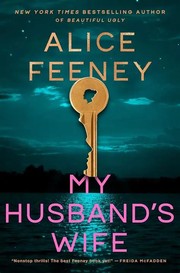
My Husband's Wife
Artist Eden Fox returns from a run to find her key fails at Spyglass and her husband claims a stranger is his wife in Hope Falls.
2,437-word summary · 11 min read
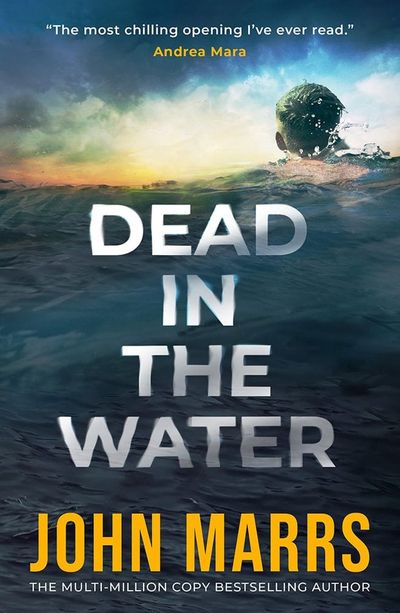
Dead in the Water
After Damon survives drowning, one strange memory of a dead boy pulls him back toward death again and again to find the truth.
2,358-word summary · 10 min read
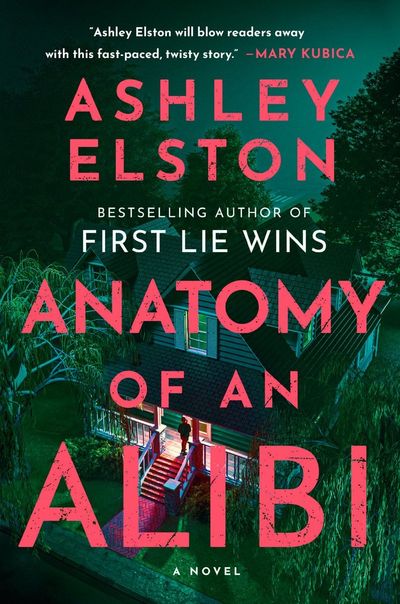
Anatomy of an Alibi
Two Louisiana women swap lives for twelve hours to spy on a husband, then he turns up murdered and only one of them has an alibi.
2,278-word summary · 10 min read
All the Little Houses
In 1980s Longview, Texas, social queen Charleigh and daughter Nellie guard mean-mom secrets when a new family threatens their empire.
2,206-word summary · 10 min read