
Reading options
What's inside (8 sections)
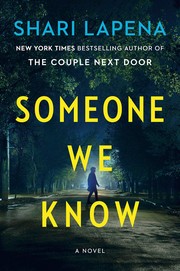
I picked this one up right after An Unwanted Guest, mostly because I wanted another quick Lapena fix. That book had trapped me in a snowy hotel with a killer, and I finished it in two sittings. So I walked into Someone We Know expecting the same kind of locked room pressure. What I got instead was something slower and, in a way, meaner. A sunny suburb. Trim lawns. People waving from driveways. And underneath all of it, everybody lying.
That contrast is the whole engine here. The book came out in 2019 from Pamela Dorman Books, and it runs just under 300 pages in hardcover. I read it fast, the way you read all of her books, in short chapters that keep nudging you to read one more. But I want to be honest up front about how I felt at the end. I admired the machinery. I did not love the people. By the last fifty pages I was still turning them quickly, and also slightly tired of everyone on the street. That split feeling stayed with me, and it shapes everything I am going to tell you.
The setup is simple, and Lapena puts it on the table early. In a leafy suburb in upstate New York, in the Hudson Valley area, a sixteen year old boy has been sneaking into his neighbors' houses. He does not steal. He looks around. He gets into their computers. And his mother finds out.
The confession at the Sharpes' kitchen table
Olivia Sharpe is having coffee on a Saturday morning in October when her world tilts. Her son Raleigh has something to tell her and her husband Paul, and none of them enjoy the telling. They sit down at the kitchen table. Chairs scrape the floor. Raleigh admits he has been breaking into houses around the neighborhood.
He swears he never took anything. That detail matters to him, as if it makes the whole thing a prank instead of a crime. He describes it as a rush, testing himself to see if he could get in and out without being caught. He is good with technology, and part of the thrill was cracking passwords and poking through other people's files once he was inside their homes. To him it was a game. To his parents it is a disaster wearing a teenager's face.
Paul blows up. Olivia goes cold with worry. They do what sensible parents with money do. They take Raleigh to a criminal lawyer. The advice they get is blunt. Say nothing. Tell no one. Breaking and entering is a serious charge, and a confession now could wreck the boy's life. The lawyer points out that no one knows, nothing was stolen, and silence is the safest move.
Olivia cannot live with that. This is the decision that lights the fuse for the entire book. Paul wants to bury it. Raleigh promises he will never do it again, and he means it in the way teenagers mean things, which is to say mostly. Olivia nods along at home and then quietly disobeys. She writes anonymous letters of apology and slips them under doors. She does not sign them. She does not tell her husband or her son. She thinks she is doing the decent thing, and in a narrow sense she is. In every wider sense, she is pouring gasoline around and walking away with a match still warm in her pocket.
Two letters nobody signed
Raleigh admits to entering two houses, though the reader starts to suspect there were more. Olivia writes to both. One letter goes to Carmine Torres, an older widow who lives nearby. The other goes to the home of Robert and Amanda Pierce, a younger couple down the street.
Lapena shows us both letters landing, and both scenes are small gems of suburban dread. Carmine finds a plain envelope inside her front hall and reads it standing up. She is appalled. Someone has been inside her house, a stranger moving through her rooms while she was out. And yet she cannot help feeling a tug of pity for whoever wrote the note. Imagine being the mother of that boy, she thinks. Imagine carrying that around. She wants to know who sent it, and the wanting spreads like a stain.
Robert Pierce finds his letter at the bottom of his own stairs and reads it with a different face. His marriage is already strained. His beautiful young wife Amanda has been distant, and there are things he does not say out loud. A letter confessing that some teenager was creeping through their house lands in that atmosphere like a stone in a pond. Ripples go everywhere.
Nobody knows who wrote the letters. That is the point, and also the problem. An unsigned apology answers nothing. It only announces that something happened. On a street where people already watch each other a little too closely, two mystery letters turn watchfulness into suspicion. Neighbors start comparing notes. Who got one. Who did not. What the boy might have seen. Olivia told one friend about Raleigh, because keeping a secret that big alone was more than she could stand, and that choice will come back to bite her hard. Secrets told to one friend on a street like this belong to the whole street by the weekend.
A husband reporting his wife missing
Running alongside the letters is the second thread, and it is darker. The book opens with a killing. A man with a hammer. A woman who does not survive. Lapena does not name them in that prologue. She just shows it, fast and ugly, and then cuts away to ordinary life. You carry that scene with you through the sunny chapters that follow, and it poisons them in the best way.
Then Robert Pierce walks into a police station on a Monday morning to report his wife missing. Amanda left for work on Friday morning, he says. That was the last time he saw her. She had told him she was spending the weekend with her friend Caroline Lu. He called Caroline. Caroline says they never had plans. She says she has not actually talked to Amanda in a while.
The officer on duty is not impressed. Adults walk away all the time, he tells Robert. Maybe she is seeing someone. Maybe she lied about the weekend because the marriage is bad. Robert insists Amanda would tell him, which tells the reader more about Robert than about Amanda. He files the report. He goes home. He waits.
Lapena is very good at this part, the portrait of a man trying to look like a grieving husband while something colder leaks through. Robert is controlled. He is a little too composed, then a little too angry. He watches the police the way a man watches a test he has not studied for. From the first chapters the reader files him under suspicious, and Lapena knows you filed him there. She spends the rest of the book daring you to keep him there or move him out.
Amanda's body is eventually found, and the detail is grim. She is in the trunk of a car pulled from the water. She was twelve weeks pregnant when she died. That fact lands on the street like a second murder. Suddenly this is not only about a missing wife. It is about a mother who will never be one, a husband who may or may not have known, and a neighborhood full of people who all had opinions about Amanda Pierce.
Because Amanda, it turns out, was not well liked. Beautiful, flirty, restless, the kind of newcomer who rearranged the air on the street just by moving in. The affairs come out in layers. Amanda was sleeping with more than one man in the neighborhood. Each revelation arrives like clockwork. A new lover, a new suspect, a new round of interviews where some sweating husband says yes, he was sleeping with her, no, he did not kill her.
What Raleigh found inside those houses
This is where the two threads knot together, and it is the smartest thing in the book. Raleigh did not only walk through rooms. He read files. He learned passwords. He saw the inside of marriages from the inside of hard drives. Bank statements. Messages. Photos that were never meant for anyone else. A sixteen year old boy ended up holding more genuine knowledge about his neighbors than any adult on the street, and he has no idea what to do with any of it.
Lapena doles out Raleigh's discoveries slowly, and each one rearranges the suspect list. One house hides money trouble. Another hides drinking. Another hides a marriage held together by habit and property values. Raleigh himself is an interesting creation. He is not a bad kid written as an excuse, and not a monster either. He is bright, arrogant in the specific way of clever teenage boys, and genuinely shaken once he understands what his game cost. I liked him more than almost anyone else here, which is a strange thing to say about a burglar, but there it is. At least his guilt points in the right direction. He did something wrong, he knows it, and he wants to face it. Compare that to the adults, who mostly want to face nothing.
The hacking angle could have felt gimmicky, and partly it does. Raleigh cracks into protected computers with an ease that made me raise an eyebrow more than once. Real security does not fold that fast for a bored kid. But I forgave it, because the point was never the technical realism. The point was the oldest suburban fear there is. You lock your doors. You set your passwords. You still have no idea who has already been inside.
Olivia's letters keep echoing through this section. She confided in her friend Glenda about Raleigh, woman to woman, and Glenda told. Of course Glenda told. On this street, telling is what people do. By the time Amanda is dead, half the neighborhood has heard some version of the story about the Sharpe boy, and the versions get worse with each retelling. Some people think Raleigh saw the killer. Some think Raleigh is the killer. A boy who started the book as a secret becomes the street's favorite theory, and Olivia has to watch her attempt at honesty curdle into danger for her own son.
A whole street of suspects
The middle of the book is a long parade of maybe. Lapena walks you from door to door, and every door opens on a reason.
Robert, the husband, with his temper and his strange flatness. One neighbor after another describes Amanda in ways that make Robert look worse. Then the other husbands take their turns in the light. Men who swore they barely knew Amanda turn out to have known her very well indeed. Alibis get checked and rechecked. Stories shift. A man who said he was home was not home. A man who said it meant nothing clearly thought it meant something. The police take statements and search the water and the woods, but honestly the cops are furniture here. This is not a procedural. The detectives do their jobs without ever becoming people, and the real investigation happens over coffee and fences and whispered phone calls.
Carmine earns her own spotlight in this stretch, and she is fun to read even when she goes too far. The widow who got the letter appoints herself the street's conscience and part time detective. She watches. She asks questions that are not hers to ask. She corners people. There is something touching in it, a lonely woman insisting that the truth matters, and something pushy too. A few of her scenes tipped over for me into behavior no real person would risk, knocking on doors and demanding answers from grieving families. But I understood why Lapena kept her in motion. Somebody had to say the rude true things out loud.
What drags, if I am being fair, is the repetition. The structure becomes a loop. New affair surfaces. New suspect sweats. Suspect cleared or half cleared. Repeat. Around the two thirds mark I could feel the pattern, and feeling the pattern in a thriller is a small betrayal. The chapters are short and the voices are distinct, so the pages keep moving, but the movement starts to feel like circling. A tighter middle, one fewer lover, would have made the whole book hit harder. As it stands, the parade of guilty men blurs, and when the true shape of things finally shows, part of the impact leaks away because you have already suspected everybody twice.
There is also the likability question, and I will not dodge it. Almost no one on this street is someone you would want at dinner. The cheaters lie. The gossips chew. The protective parents protect the wrong things. Amanda herself is written as a problem other people react to more than as a full person, which is a common thriller habit and still a pity. When a victim exists mostly as a list of affairs, the grief in the book feels thin. I kept thinking about the twelve weeks pregnancy detail, which should devastate, and how quickly the plot files it as one more clue. That efficiency is Lapena's gift and her limit. She moves so fast that sorrow never gets to sit down.
Confessions and the final sting
I will tread carefully here, because the last stretch is the part Lapena fans read for, and it deserves to land fresh. What I can tell you without spoiling the turn is the shape of it. As the police close in, people start confessing. Not one person. More than one. Each confession is meant to shield someone else, a husband covering a wife, a parent covering a child, a friend covering a friend. The statements stack up and contradict each other, and the result is a fog where guilt looks shared even though the hammer was held by one hand.
That fog is the point, and it is clever. A street that spent the whole book trading secrets ends it by trading blame, generously, suicidally, out of love. Lapena peels the confessions back one by one until the real sequence shows through, and the earlier scenes replay in your head with new lighting. A flat line from Robert reads differently. A kind act from a neighbor reads differently. A detail you skimmed, something about timing, something about who knew what and when, clicks into place.
Then, after the main reveal settles, Lapena adds one last sting in the tail. I admired it even as I questioned it. It reframes a relationship you thought you understood and sends you back to rethink a handful of scenes. Readers who like every thread tied off may find one question left deliberately loose. One small question never gets its clean answer. I know some readers hated that. I did not mind it much. Life on a street like this does not tie off neatly, and a book about partial knowledge ending with partial knowledge felt honest to me, even if it also felt like a tease.
So where does that leave Someone We Know among Lapena's shelves? Below The Couple Next Door for me, which remains her tightest trap, and about level with A Stranger in the House. The highs are real. The premise of the burglar boy is excellent, the letters are a perfect guilt machine, and the portrait of gossip as a physical force is uncomfortably true. Anyone who has lived on a street where news travels faster than cars will recognize this place. The lows are real too. The middle circles, the victim stays thin, the police stay flat, and the crowd of the guilty starts to feel assembled rather than discovered.
Read it for the momentum and the neighbors, not for deep character study. Read it on a weekend when you want short chapters and rising dread and a finale that makes you flip back pages. Then, when you close it, look out your own window at your own quiet street. Lapena's trick, the one that works every time, is making you wonder what your neighbors know about you. And what you would do if a letter with no signature slid under your door tomorrow morning.
FAQ
When was Someone We Know published?
It was first published in 2019 by Pamela Dorman Books. The hardcover runs 292 pages with ISBN 9780525557654.
Who are the main characters in Someone We Know?
Olivia, Paul and their teenage son Raleigh Sharpe, Robert and Amanda Pierce, the widow Carmine Torres, and Amanda's friend Caroline Lu.
Is Someone We Know part of a series?
No, it stands alone. It shares an author and suburban suspense themes with The Couple Next Door but no characters carry over.
Similar books
An Unwanted Guest
Ten guests snowed in at Mitchell's Inn wake to a death on the stairs, then another, with no way to call out.
2,650-word summary · 12 min read
Not a Happy Family
After a bitter Easter dinner, Fred and Sheila Merton are found dead and their three adult children each hold a motive.
3,764-word summary · 17 min read

Six Years
A professor who promised to forget the woman he loved sees her husband's obituary and discovers that the wedding, the marriage, and the woman herself may never…
2,076-word summary · 9 min read

3rd Degree
The third Women's Murder Club novel follows a San Francisco terror cell and a three-day killing schedule, and it costs the club a member.
2,685-word summary · 12 min read

The Best of Friends
Three lifelong friends discover their teenage sons were hiding more than anyone knew after a night that leaves one dead, one in a coma and one silent.
2,040-word summary · 9 min read

Girl, Forgotten
A rookie US marshal guards a judge with a stalker and ends up reopening the 1982 prom-night murder of the judge's pregnant daughter.
2,111-word summary · 9 min read

The Boy from the Woods
Wilde, found feral in a New Jersey forest in 1986, hunts for a missing teenager while a senator's secrets tear a wealthy town apart.
2,270-word summary · 10 min read

The Club
A luxury island resort for the rich turns deadly when secrets, staff and guests collide.
2,386-word summary · 11 min read
Keep It in the Family
Mia and Finn renovate a long empty house and find seven children hidden in the attic.
2,270-word summary · 10 min read
Every Last Secret
A wealthy wife tracks a possible affair, but dinners, therapy, and a sudden death expose buried secrets across two polished suburban marriages and force her to…
2,687-word summary · 12 min read
Bring Me Back
Finn lost Layla at a French rest stop twelve years ago. Now engaged to her sister Ellen, he faces sightings, emails and Russian dolls that reopen everything.
2,912-word summary · 13 min read
The Other Mrs.
A Chicago family inherits a house on a Maine island, then a neighbor is found murdered. Kubica's 2020 thriller builds to a final reframe.
2,267-word summary · 10 min read
The Cousins
Three cousins work at their rich grandmother island resort while digging into why their parents were cut off.
2,565-word summary · 11 min read
Reconstructing Amelia
A grieving lawyer mother reopens her teen daughter's alleged suicide at an elite Brooklyn school, uncovering bullying and secrets.
2,032-word summary · 9 min read
Pieces of Her
After her mother kills a mall shooter with shocking skill, Andy Oliver uncovers a hidden 1980s past of radicals and wealth.
2,791-word summary · 12 min read
What Lies in the Woods
Naomi returns after Olivia vanishes to face what happened in the woods at eleven.
2,213-word summary · 10 min read
The Storm
A struggling innkeeper, a returning murder suspect, and a true crime writer collide as another hurricane bears down on the Alabama coast.
2,349-word summary · 10 min read
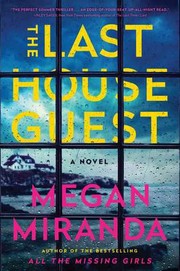
The Last House Guest
A year after her best friend dies in Littleport, Maine, a local woman finds a hidden phone that reopens the case.
2,596-word summary · 12 min read
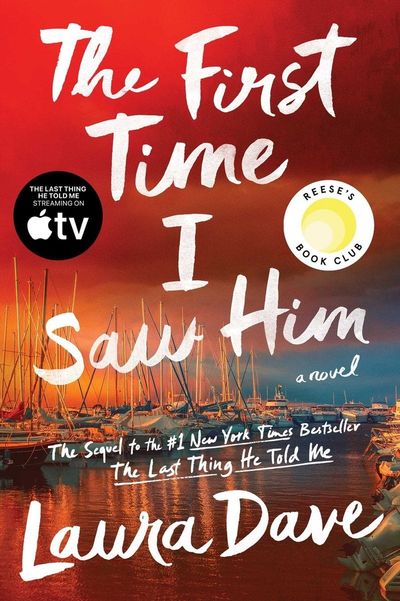
The First Time I Saw Him
Five years after Owen vanished, Hannah and Bailey have rebuilt in California until Owen walks into her exhibition and danger returns.
2,407-word summary · 11 min read
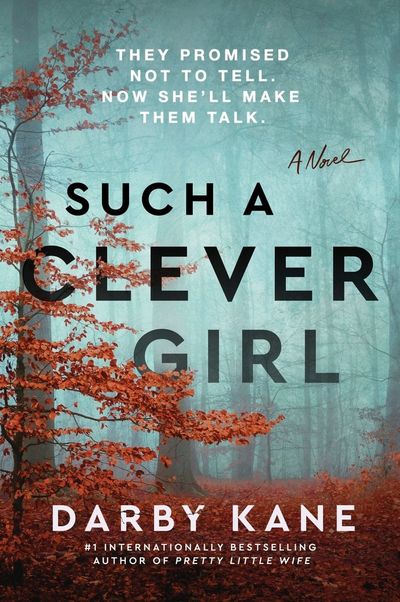
Such a Clever Girl
Fifteen years after the Tanners vanished, Aubrey returns at 30 as a new disappearance forces three women to face old secrets.
2,203-word summary · 10 min read
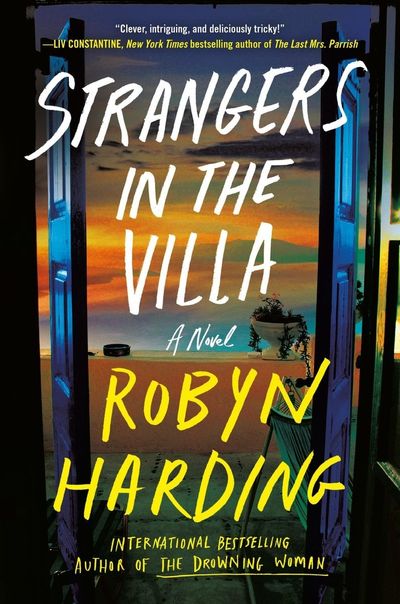
Strangers in the Villa
A strained couple in a Spanish villa takes in guests who refuse to leave.
2,208-word summary · 10 min read

My Husband's Wife
Artist Eden Fox returns from a run to find her key fails at Spyglass and her husband claims a stranger is his wife in Hope Falls.
2,437-word summary · 11 min read

Jar of Hearts
At sixteen Geo helped bury her best friend. Fourteen years later the body is found, she goes to prison, and the killing starts again.
2,389-word summary · 11 min read

Anatomy of an Alibi
Two Louisiana women swap lives for twelve hours to spy on a husband, then he turns up murdered and only one of them has an alibi.
2,278-word summary · 10 min read
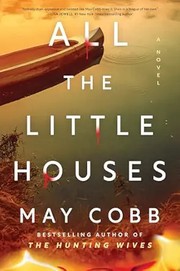
All the Little Houses
In 1980s Longview, Texas, social queen Charleigh and daughter Nellie guard mean-mom secrets when a new family threatens their empire.
2,206-word summary · 10 min read
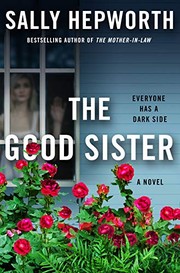
The Good Sister
Twin sisters share a careful arrangement until a plan to have a baby pulls old family secrets into view.
3,255-word summary · 14 min read
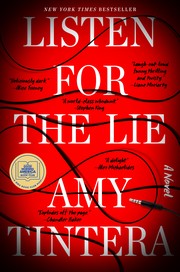
Listen for the Lie
Lucy Chase cannot remember the night her best friend Savvy died in Plumpton, Texas, until a true crime podcast pulls her back.
2,160-word summary · 10 min read
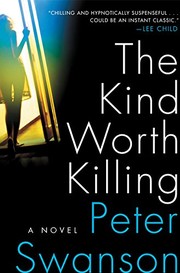
The Kind Worth Killing
A plane seat chat about murder becomes a pact, then a game where no one tells the full truth.
2,080-word summary · 9 min read
Pretty Little Liars
Four girls get texts from dead Alison a year after she vanished, and secrets start leaking.
1,922-word summary · 9 min read
All the Missing Girls
Told backwards over fifteen days, a woman probes two disappearances ten years apart in her hometown.
2,064-word summary · 9 min read