
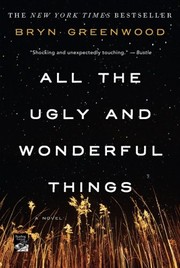
All the Ugly and Wonderful Things
2,429-word summary 11 min read 432 pages in the book
- First published
- 2016
- Publisher
- St. Martin's Griffin
- Pages
- 432
- ISBN
- 9781250153968
Reading options
What's inside (8 sections)
A friend handed me this book with a warning that stuck. She said she kept putting it down because it made her angry, then kept picking it back up because she needed to know Wavy would be okay. That matched my own reading pretty well. I started it on a Saturday morning thinking I would sample a chapter or two, and by dinner I was still on the couch, annoyed at half the adults in the story and rooting hard for a girl who barely speaks above a whisper at first.
This is the 2016 novel from St. Martin's Griffin, the edition that runs 432 pages. It follows Wavy, a girl growing up in rural Kansas with parents lost to meth, and Kellen, an older biker and ex-con tied to her family who becomes her protector from the time she is small. The story is told through rotating narrators, so we see the same events from Wavy, from Kellen, and from people around them. I will say up front that the central relationship becomes controversial as Wavy grows older, and I kept my distance from anything graphic here on purpose. This summary keeps intimate details general and focuses on neglect and survival.
A brief content note before I go further. This book includes child neglect, drug use and dealing, gun violence, death, and a disputed age-gap relationship that many readers find upsetting. There is also courtroom pressure and family conflict. If those subjects are hard for you, skip this one or read with care. What follows describes the plot in order, including the ending in broad terms.
The girl who learned to go quiet
Wavy is small when we meet her, thin and watchful, living in a house where the adults are often awake at the wrong hours and asleep when she needs them. Her mother drifts through rooms and her father moves between schemes, and the air in the house feels wired and sour. Food runs out. Clothes go unwashed. Wavy learns to be silent because noise draws attention, and attention in that house rarely brings anything good. What hit me hardest in these early pages was not one big scene but the pileup of small ones. She eats ketchup packets. She tries to wash herself in a sink. She waits by a window.
Kellen shows up in this stretch as a man doing rough work for her father. He has done time. He rides with bikers. He looks like trouble to everyone on the outside, and in some ways he is. But around Wavy he does something nobody else does. He notices she is hungry. He brings food. He fixes a door, carries her across a messy room, sits with her while she eats. Greenwood writes these moments plainly, which makes them land harder. There is no big speech about rescue. A man hands a kid a sandwich and stays until she finishes it.
School becomes a second lens on the neglect. Wavy is behind, wary of touch, quick to flinch. A teacher notices the signs any teacher would notice. Dirty clothes, missed meals, bruises explained badly. The school tries in fits and starts, and I found those chapters painful because they felt true to how systems work. One person cares a lot, another follows a form, a third decides the family deserves privacy. Nothing connects fast enough to change the home.
Kellen and the strange safety he offers
Kellen is the hardest character to sit with, and Greenwood knows it. On paper he is exactly the person a parent should keep away from a child. He has a record. He moves drugs. He answers to dangerous men. Yet inside the house he acts more like a parent than either parent does. He teaches Wavy small practical things. How to be safe around men who are high. How to stay out of a room. How to ask for food without getting hit for asking. My stomach turned at how useful those lessons were.
The bond between them grows in a way that made me uneasy even when nothing physical was happening. Wavy attaches to the one steady person she has. Kellen attaches to the one person who seems to see him as something other than muscle. They spend long hours together while her parents are gone or checked out. He drives her places. He waits while she sleeps. Her relatives notice and read it in different ways, and the rotating voices help here. One narrator calls it kindness. Another calls it ownership. A third calls it love. The book lets those views sit side by side without settling them, at least early on.
There is a stretch where Kellen tries to pull back, and I thought those were among the strongest pages. He knows how it looks. He knows how it could go wrong. He tells himself to keep his distance, then finds Wavy alone again with no food or heat and folds. Greenwood does good work showing a man who keeps making the same choice and calling it protection. I believed his care was real. I also believed he was blind to the shape it was taking, and the book wants you to hold both thoughts at once.
Violence circles the family business through this whole middle part. Debts, threats, guns left where guns should never be. Wavy sees too much and says too little. Kellen absorbs blows meant for others and hands a few out himself. The Kansas setting matters here. Long roads, scattered houses, a shop or church where gossip travels fast and help travels slow. People know something is off at Wavy's house. Few want a fight with her father. The neglect is allowed to continue because the adults around it keep minding their own yards.
Many voices, one damaged house
The rotating narrators could have felt like a trick, but for me they were the point. Wavy tells parts of the story in a flat, careful voice. She reports what happened more than how it felt, which fits a kid who learned that feelings get punished. Kellen tells other parts with guilt running under every sentence. He explains his reasons, then doubts them mid paragraph. Around them come shorter turns from relatives, teachers, a nurse, a sheriff type figure, and others who cross the family path.
What those side voices add is failure from every direction. A relative offers shelter but attaches strings. A school official files a note that goes nowhere. A neighbor brings a casserole and leaves without asking why the lights stay off. Nobody in these pages is a cartoon villain except maybe the drug trade itself. They are tired, scared, rule bound, or convinced the family will sort itself out. I recognized that pattern from real life. Harm that everyone half sees can go on for years.
The structure also slows time in a way I liked at first and tired of later. We stay inside small scenes for a long while. A meal, a ride, a night when the power cuts out. Greenwood piles domestic detail until you feel the weight Wavy carries. Then a sharp event breaks through, an arrest or a hospital visit or a fight, and the voices argue about what it meant. That rhythm builds dread well. You start to brace every time a car pulls into the drive.
One voice I kept waiting for was Wavy's mother, seen clearly from the inside. We get flashes of her past and her wants, but she stays blurry. Maybe that is honest, since addicts in this story hide even from themselves. Still, I wanted one chapter that stayed with her longer, without excuses and without the filter of other people judging her. Her absence as a full narrator leaves a hole in the family picture.
Growing up and the line the book crosses
As Wavy moves into her teens, the story shifts from neglect toward the relationship that makes this novel famous and argued over. I am going to stay general here on purpose. Wavy grows older. Kellen remains fixed as her person. Feelings that read as loyalty and shelter in childhood start to read as romantic attachment. The book presents this as mutual and caring, and that framing is exactly what splits readers. Some accept the story on its own terms. Others, myself included at times, feel the book asks too much patience for a bond with such a lopsided start.
Greenwood does not rush this part, which made it harder to read rather than easier. There are long quiet scenes of the two of them keeping house, talking late, leaning on each other after scares. Wavy grows sharper and bolder. She talks back to teachers. She makes plans. Kellen grows more torn. He serves time away from her, comes back altered, tries to set limits and fails. The law sees the situation in plain categories. Wavy sees it as the only steady love she has known. The gap between those views drives the back half.
I appreciated that the book never pretends the outside world approves. Police, social workers, and relatives press in. There are hearings and orders and spells of separation. Wavy runs, hides, lies to protect Kellen. Kellen lies to protect Wavy. Each lie costs them help they actually need. I found myself frustrated with both of them in a way that felt human rather than plotted. They are not fighting the system because they hate rules. They are fighting it because every rule feels like another adult deciding what Wavy should feel.
At the same time, I wish Greenwood had let a firmer counter voice stay on the page longer. There are characters who name the power gap clearly, but they fade or get proved wrong by events. That choice tilts sympathy toward the couple and leaves readers who feel alarmed with fewer places to stand inside the story. Care can be real and still grow in soil that was never safe, and I wanted the novel to sit with that sentence longer instead of moving past it toward reunion.
What the ending wants you to feel
Without giving away every beat, the last portion pushes toward consequences and then toward a kind of chosen family. People get hurt. Someone dies. Custody and criminal cases force choices that cannot be undone. Wavy has to decide who she trusts when every adult claims to know what is best for her. Kellen has to decide whether loving someone means staying or leaving. The final scenes reach for hope without pretending the past washes clean.
I will admit the ending worked on me even as I argued with it. Seeing Wavy speak plainly, ask for what she wants, and refuse to be passed around felt earned after so many silent chapters. Seeing Kellen accept limits felt overdue and right. Greenwood gives them work, bills, small routines, the boring stuff that neglected kids rarely get to practice. There is warmth in watching two people try to live quietly after years of noise. I closed the book hoping they would make it, which surprised the part of me that had spent pages taking notes in the margins.
But hope is doing heavy lifting here. The novel asks you to believe that damage can be outgrown by devotion, and real life is messier than that. Therapy, money trouble, community judgment, the pull of old habits, all of that gets touched lightly or skipped. I did not need a bleak finish. I needed a few more pages showing how they would handle the next hard year, not only the relief of this one. The book chooses feeling over follow through, and your patience for that choice will decide how you rate it.
What stayed with me and what dragged
The best of this novel is Wavy herself. She is specific and strange in ways that feel observed rather than assembled. She loves order, counts things, hoards food long after she is fed, flinches at kindness before she trusts it. Her voice never begs for pity. She states facts and lets the reader supply the ache. Kellen, for all my doubts about him, is also drawn with care. His shame, his work ethic, his clumsy tenderness around Wavy, all of it reads as one complicated person rather than a symbol.
The Kansas background helps too. Greenwood knows farmhouses in winter, the smell of a kitchen after a cook, the way a small town tracks who owes whom. Class sits inside every scene without speeches about it. Wavy is poor in ways that shape her teeth, her grades, her chances. Kellen is poor in ways that shape his options when trouble calls. The drug economy is not set dressing. It decides who eats and who answers the door.
Now the drag. The middle sags. Scenes repeat with small changes, another missed meal, another threat, another rescue, until the effect dulls. Some side characters stay flat. The aunt who might have been a bridge, the caseworker who might have been a mirror, the biker friends who blur together, they enter, speak their theme, and exit. A tighter cut of maybe sixty pages would have kept the pressure up. I also struggled, as noted, with how the romance is framed. Greenwood writes neglect with clear eyes and writes this bond with softer ones, and that softness can feel like approval even when the text claims doubt.
Would I press this into another friend's hands the way it was pressed into mine. Only with the same warning attached. If you want a comfortable read, skip it. If you want a story about how a child survives when parents vanish into drugs, and how the person who saves her may also fail her, this one will stay under your skin. I think about Wavy still, months later, standing at a sink trying to get clean with cold water. That image carries more moral weight than any hearing scene. It reminds me that the first harm here was not romance at all. It was hunger, cold rooms, and adults who looked away.
A last practical note. Read the author note and take your time with the courtroom and separation chapters. They move fast after a slow build and they decide a lot. Keep track of who narrates each chapter, since motives shift with the voice. And if you finish feeling torn between anger and tenderness, that split is the book doing what it meant to do, even when parts of it wobble.
FAQ
Who are Wavy and Kellen in All the Ugly and Wonderful Things?
Wavy is a neglected girl raised by meth addicted parents in rural Kansas. Kellen is an older biker and ex-con tied to her family who feeds and protects her from childhood, and their bond becomes the center of the book.
Does this book have content warnings I should know about?
Yes, and this part matters. The book centers a controversial age-gap relationship, plus child neglect, drug use, and violence. Greenwood keeps intimate scenes general and non-graphic, but the subject is disturbing and meant for adult readers.
When was the book published and how long is it?
It was first published in 2016 by St. Martin's Griffin. The edition cited here runs 432 pages, and the story is told through rotating narrators.
Similar books

Flight Behavior
Dellarobia Turnbow is stuck in a Tennessee farm marriage until a valley full of monarch butterflies, and the scientist who comes to study them, force her to…
2,051-word summary · 9 min read

Silas Marner
A falsely accused weaver hoards gold in Raveloe until a stolen hoard and an abandoned child remake his narrow life.
2,699-word summary · 12 min read

Howards End
Forster's 1910 novel follows two families, a house in Hertfordshire, and a burned note, asking whether money and feeling can ever be connected.
2,187-word summary · 10 min read

Fathers and Sons
Arkady brings the nihilist Bazarov home to his father's estate, and a generational argument turns into love, a duel, and an early death.
2,192-word summary · 10 min read

Unaccustomed Earth
Lahiri’s second story collection follows Bengali families in America and abroad, tracing the quiet distances between parents and children, spouses, and the…
2,333-word summary · 10 min read

The Age of Miracles
A California girl grows up while the Earth's rotation slows, and ordinary adolescence continues alongside slow catastrophe.
2,417-word summary · 11 min read

Peace Like a River
An asthmatic boy in the early 1960s narrates his family's search for his older brother, who is accused of two killings and has escaped custody.
1,969-word summary · 9 min read

We Are Okay
Marin fled San Francisco after her grandfather vanished and stopped answering anyone. When Mabel visits her college dorm, she has to say what happened.
2,253-word summary · 10 min read

The Chosen
A shattered pair of glasses in a 1944 Brooklyn softball game starts a friendship between a Hasidic boy and his Orthodox neighbor, and their fathers pull them…
2,443-word summary · 11 min read

A Spool of Blue Thread
Four generations of the Whitshank family in Baltimore, and the silences, resentments and quiet love they hand down without ever saying so.
2,408-word summary · 11 min read

This Is How You Lose Her
Yunior cycles through love affairs and betrayals in nine linked stories, tracing the damage he does and the family history behind it.
2,195-word summary · 10 min read

And Every Morning the Way Home Gets Longer and Longer
An elderly grandfather, his son, and his grandson share memories and fears as the old man's mind begins to fade, in a short novel about grief and love.
2,078-word summary · 9 min read
A Painted House
In 1952 Arkansas, seven-year-old Luke Chandler picks cotton with his family and learns how quickly poverty, violence, and adult secrets can end a childhood.
2,060-word summary · 9 min read

The Tiger's Wife
A young doctor in a war-scarred Balkan country chases the stories her grandfather left behind, including a deathless man and a deaf girl who loved an escaped…
2,232-word summary · 10 min read

The Story of Edgar Sawtelle
A mute boy on a Wisconsin dog-breeding farm relives Hamlet as his uncle returns, his father dies in the barn, and the dogs inherit what is left.
2,392-word summary · 11 min read

Olive, Again
Elizabeth Strout returns to Crosby, Maine, as Olive Kitteridge marries Jack Kennison, confronts her son, and faces old age, grief, and small-town judgment.
2,333-word summary · 10 min read
We Were the Mulvaneys
After a rape following a school dance, the Mulvaneys, a family that believed it was blessed, comes apart over fifteen years. Narrated by the youngest son.
2,094-word summary · 9 min read
The Lost Man
A man is found dead at a lone grave in the Queensland outback, his car stocked and kilometres away. His brother works out the last day and the family behind it.
2,036-word summary · 9 min read
Foster
A girl spends a summer with relatives on a Wexford farm and is cared for properly for the first time. A spare novella about family and what children notice…
2,043-word summary · 9 min read
The Most Fun We Ever Had
Four Sorenson sisters orbit perfect parents hiding old cracks.
2,590-word summary · 12 min read

The Accidental Tourist
Grieving Macon writes travel guides for haters of travel, then Muriel intrudes.
2,252-word summary · 10 min read

Kitchen
Orphan Mikage finds home in a kitchen with Yuichi and Eriko after loss.
2,597-word summary · 12 min read
Case Histories
A Cambridge PI takes three cold cases that tangle with his own loss.
2,465-word summary · 11 min read
The School for Good Mothers
A mother sent to a reform school fights to keep her daughter under cold surveillance and strict rules.
2,114-word summary · 9 min read

The Perfect Nanny
A trusted nanny kills two children, and the book traces how love and class hid warning signs.
2,200-word summary · 10 min read

Song of Solomon
Milkman Dead leaves Michigan to hunt for family gold and finds instead the old song of his ancestor Solomon.
2,465-word summary · 11 min read
White Noise
Jack Gladney teaches Hitler studies, flees a chemical cloud with his family, and chases a drug for dread in DeLillo's funny and bleak 1985 novel of…
2,768-word summary · 12 min read
The Signature of All Things
Botanist Alma Whittaker grows up in Philadelphia trade wealth, studies mosses, marries distant Ambrose Pike, and sails to Tahiti seeking how species change.
2,535-word summary · 11 min read

The Round House
At thirteen, Joe Coutts hunts for his mother's attacker when the law stalls, in Louise Erdrich's National Book Award novel of family, jurisdiction, and revenge…
2,391-word summary · 11 min read