
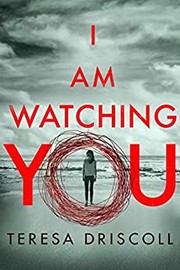
Reading options
What's inside (8 sections)
I picked this one up because the opening question hooked me more than the cover did. What would it take to make you intervene with strangers in public? I like to think I would say something. Reading Ella Longfield talk herself out of it, then live with that choice for a year, made me less sure.
The book came out in 2017 from Thomas and Mercer, and it became one of those Kindle chart thrillers people passed around and argued about. I can see why. The setup is simple and awful, and the rest of the story keeps circling back to that one train ride. It is told in short chapters from several angles. Ella speaks in first person as The Witness. Others get third person labels: The Father, The Friend, The Investigator, plus brief Watching sections from someone unnamed. That structure annoyed plenty of readers. It sometimes annoyed me too. Still, once I accepted the rhythm, I kept turning pages because every household in the story seemed to be hiding one more thing.
The train ride Ella cannot stop replaying
Ella Longfield is a florist in her forties, living in Devon with her husband Tony and their seventeen year old son Luke. She runs a small shop with the shabby chic look she has worked hard to build. She is on the train to London when she notices two schoolgirls across the carriage. They are Anna Ballard and her best friend Sarah Headley, both sixteen, from Cornwall, on their first solo trip to the city to celebrate finishing exams.
Two young men sit near them and start chatting. They are friendly in that easy way that makes everyone relax a little. Their names are Karl and Antony. Ella listens without meaning to, the way you do on trains, catching bits about where they are headed and what they plan to do that night. Then one of the men says they have just come out of prison. He says it casually, almost as a joke, carrying a rubbish bag instead of a suitcase.
That detail changes the temperature for Ella. She is a mother. She starts imagining phone calls she could make. She does not know the girls, but she hears enough to work out Anna lives on a farm. She thinks about finding the parents somehow, warning them, telling the girls to be careful, alerting the guard.
What stops her is uncomfortable to read, and I think Driscoll means it to be. Ella watches Sarah slip off toward the cafe car and later the toilet area with Antony. She concludes the girls are willing participants, even reckless ones, and she feels judged and then judgmental in return. She tells herself they are not innocent children, that stepping in would be overreacting, that she is tired and should mind her own business. She gets home, sleeps badly after drinking too much, and wakes to the television news. A girl from that train is missing. Beautiful, green eyed Anna Ballard did not come home after a night out in London.
Ella does go to the police. She gives her account of Karl and Antony and the plans to meet at a nightclub. Her name gets out. Strangers online and in the press call her cold for not acting sooner. That public shaming becomes a shadow over her shop and her marriage. Tony stands by her, mostly, but he is practical and frustrated, and Ella can feel the distance growing when she checks the street or jumps at the phone.
A year later, with no answers
The story jumps forward a year. Anna is still missing. Karl and Antony have vanished, and the police theory that the ex cons took her has stalled. Ella has started getting anonymous postcards in the mail. Short, threatening lines that blame her. Watch yourself. I do. She hides some of them at first, which is a mistake that makes everything worse.
An anniversary television appeal is coming. Barbara Ballard, Anna's mother, is helping organize a vigil and pushing for coverage. Barbara blames Ella openly for not making a call on the train. Henry Ballard, Anna's father, is quieter but no less broken. He is a farmer in his forties on a sprawling Cornwall property passed down in his family, topping up income with holiday rental cabins. He spends hours with the animals and the repair jobs. He keeps replaying the last sharp exchange he had with Anna before London.
Their older daughter Jenny, eighteen and very close to Anna, carries guilt of her own for pulling out of the London trip at the last minute. The core friend group around the sisters includes Paul, who also dropped out of the trip, and Tim Blackhouse, nineteen, the son of local single mother April Blackhouse. Tim practically grew up at the Ballard farm, eating there, helping out, accepted as a steady extra brother. Barbara has a soft spot for him.
Sarah, meanwhile, is barely holding together. She was the last friend to see Anna that night, and she has never given the full story. At school she gets bullied about her sexual behavior, which poisons how she talks to police. She is afraid of being judged, and that fear shapes every answer she gives. When the anniversary coverage builds, she overdoses on pills and ends up in hospital. It scares everyone and it resets the questions. What did Sarah actually see after the club? Why did she and Anna fight?
Ella, rattled by the postcards and by the feeling of being watched in her own shop, hires private investigator Matthew Hill. Matthew is in his thirties, ex police, now working private jobs while waiting on the birth of his first child with his wife Sally. He left the force after a bad incident with a young suspect that left him scarred and guilty in ways he does not discuss easily. He still has a contact in the police, Melanie Sanders, who passes him what she can. Matthew is patient where Ella is spiraling. He tells her to take the postcards to the police properly and to stop trying to solve the stalking alone. Ella listens, then does not quite listen, which felt true to someone running on shame and little sleep.
The father who was not where he said he was
Henry gets his own chapters, and they are heavy. He loves his daughters and he loves the farm, but his marriage to Barbara has been strained for a long time. He disliked how Anna was pulling away, hungry for London and music theatre and a bigger life after landing a lead in a school show. He also carries older grief about his own parents and the weight of keeping the estate going.
The police learn Henry lied about the night Anna disappeared. He said he was home. He was not. That lie sits in the middle of the book like a stone. I suspected him for a stretch. Was he in London? Did he follow the girls?
The answer is smaller and sadder than murder, though it still damages the family. Henry was with April Blackhouse, Tim's mother, that night. They had been having an affair. April is busy, stretched thin, rarely home to cook proper meals, which is part of why Tim attached himself to the warmer Ballard kitchen. Henry's alibi checks out once Matthew and the police press him, but by then Barbara knows, Jenny knows, and the house feels even emptier. Henry's secrecy did not kill Anna, but it wasted time and trust when both were scarce.
I had mixed feelings about these sections. Henry's grief reads as real. He replays chores to avoid thinking. He cannot face Barbara's organized hope. Still, the chapters circle the same ground, and I started skimming a little, waiting to get back to Sarah or Matthew.
The friend who did not tell everything
Sarah Headley is the hardest character to sit with, and probably the most important after Ella. She is bright, doing well at school despite a modest background, and she loves Anna without always liking who Anna is becoming. London was supposed to be fun and grown up. Instead it turned into a night of drinking, flirting, jealousy, and a sharp fight outside the nightclub.
Sarah tells police she lost Anna in the crowd and could not find her. That is true as far as it goes. What she leaves out matters. She does not describe the argument fully. She does not explain why she let Anna walk off alone. She is terrified that if she admits to drinking, to going off with Antony earlier, to shouting at her friend, people will decide she deserved what happened or that she caused it.
There is more underneath. Sarah suspects her own father. Bob Headley, estranged from the family, was in London for work that night and texted Sarah about meeting at his smart hotel. Bob abused Sarah when she was a child, a fact her mother Margaret refused to face and her older sister Lily confronted by leaving home. Lily now lives in a religious commune under the name Saffron, wearing loose clothes and bracelets that hide old scars. Sarah grew up watching her mother blame Lily for breaking the family. So Sarah learned to stay quiet.
When Sarah finally reports her father, the police check him out and clear him. He is a creep in the history that matters, but not Anna's killer. That distinction is painful. It means Sarah carried suspicion for a year, with reason, and still has no answer for where her friend went. Her overdose is not written as a plot trick. It reads as exhaustion. She moves later to live with Lily and work toward her A Levels, away from both parents, which is one of the few decisions in the book that feels like clean air.
Fair warning: Driscoll includes cruel school gossip about Sarah and some ugly language other characters use about girls who drink and hook up. A few of Ella's early thoughts about Sarah fall into that trap too. I found those passages unpleasant in a way that seemed deliberate, to show how judgment shuts girls up, but if slut shaming as a theme bothers you, this book leans on it rather than skirting it.
The investigator, the postcards, and the men from the train
Matthew Hill holds the procedural thread. He is expecting a daughter, Amelie, with Sally, and fatherhood sharpens how he hears these cases. He interviews Ella carefully, maps the postcards, asks who benefits from scaring her. At first Ella assumes Barbara is sending them. It would make sense. Barbara has blamed Ella from the start, and grief can curdle into harassment.
Matthew proves that theory wrong. Barbara is angry, not sneaky. She eventually asks Matthew to pass an apology to Ella for blaming her unfairly, which is a small grace note I appreciated. The real stalker is more careful. Someone tries the door of Ella's shop. Someone stands too long across the street. Ella feels watched while arranging bouquets, while locking up, while walking to her car. Tony wants her to stop working alone. Luke, her son, takes it a step further and advertises for a shop manager so his mother is not alone all day.
Meanwhile the Karl and Antony lead collapses in a strange way. Karl is traced to a town in Spain, seen with a blonde young woman. For a brief, terrible moment everyone thinks it might be Anna, alive. Matthew looks closely at a photograph and says no. The woman is not Anna. Karl is arrested, and it becomes clear the two ex cons had nothing to do with the disappearance after the club. They were a scare on the train, not the answer. I liked this turn even though it frustrated me. It forces the story off the easy track. If not the obvious strangers, then who in the familiar circle knew enough to get Anna alone?
That is when Matthew starts rechecking who was actually on that train. Memories from a year ago are soft. People remember Karl and Antony because Ella named them. They forget quieter passengers. Ella visits Barbara's house for the funeral planning conversation no one wants to have, sees a framed photo on the wall, and freezes. Tim. Tim Blackhouse was on the train too.
She had not registered him at the time. He was background, a local lad with his head down. Once she says it out loud, Matthew moves fast. Tim has just answered Luke's advertisement for the shop manager job in Devon. He is in the area, polite, keen, available. The police head that way. Before they arrive, Tim attacks Luke in the shop. Luke fights back and knocks Tim out cold. The police walk into the aftermath and arrest Tim. Luke ends up in physical therapy with injuries that take time to heal. Ella's guilt shifts shape. Her son was hurt because her search for help brought the watcher closer.
What really happened to Anna
The final section reframes the Watching chapters. Tim had been obsessed with Anna for years. He took secret photographs of her. He tracked her routines. He told himself he loved her and that the Ballard family was his real family. On the night she vanished, after her fight with Sarah outside the club, Tim found Anna alone and upset. He offered calm and a plan. Come back to his London flat, he said, then they would go collect Sarah. Anna, tired and drunk and worried about her friend, agreed.
At the flat, Anna saw the pictures. Walls or files of herself, taken without her knowing, the proof that this was not kindness. She tried to leave. Tim choked her to death. He kept her body in a freezer. Later, intrigued by Ella's public link to the case, he started watching Ella as well, sending the postcards, lingering near the shop, feeding on the fear he caused. When Luke advertised the job, Tim saw a rival as well as an opening. He and Luke had once been on the same nature hike as Tim and Anna years earlier, a Ten Tors style challenge Luke barely remembers. Tim convinced himself Luke had been interested in Anna too.
It is a grim reveal, and I did not guess Tim until late. Looking back, there were small signs. His constant presence at the farm. His closeness to Barbara. His availability whenever the family needed help. But Driscoll keeps him soft and helpful for most of the book, and the short Watching sections are too vague to identify him fairly. Some readers call this a cheat. I understand that reaction. The clues are more about character access than evidence. You could not have solved it from photos or timelines because you never see the flat until the end.
The police ask why Tim fixed on Ella, and the answer is simple and chilling. She was the only stranger who remembered that day clearly enough to be dangerous.
Barbara asks Ella to do the flowers for Anna's funeral, asking for something that reflects Anna's youth and joy rather than the horror of the ending. That scene worked for me. Two women who blamed each other sit with the same loss. Ella arranges the bouquet the way she arranges everything, stem by stem, trying to get it right when nothing else can be made right.
The book closes without courtroom fireworks. Tim's trial is ahead. Luke is healing. Sarah is with Lily, studying, trying to build a life outside Cornwall gossip. Henry and Barbara remain together in the house but not really together, if that makes sense. Matthew goes home to Sally and the baby, carrying another case that ended too late.
Is it a great thriller? Parts of it are. The train opening is strong. The guilt premise holds. Matthew is good company, decent and observant without turning into a superhero. The look at how witnesses get blamed online feels current even years later.
There are real weaknesses, and I want to name them plainly. The point of view shifts can feel choppy. Ella's first person chapters repeat her defense of that night until I wanted to shake her and hug her at the same time. Some domestic detail goes long. I did not need a full lesson in bridal bouquets or cabin repairs when Anna is missing. The middle sags before the Tim reveal.
I still think the book is worth reading if you like missing person stories driven by ordinary failures rather than mastermind villains. It asks an uncomfortable question and does not let Ella off easy. She should have called. She knows it. The people around her know it. Yet the story also shows that one call might not have changed the nightclub fight, the walk outside alone, or Tim waiting nearby. Guilt is not the same as cause. That distinction stayed with me longer than the twist.
If you go in expecting nonstop action, you may be bored in stretches. If you go in expecting a careful account of how families and witnesses bend under a disappearance, with a nasty sting at the close, this will keep you up late. It kept me up, even when I was muttering at Ella, even when I guessed wrong about Henry and Bob and Karl. I closed it thinking less about who took Anna and more about how quickly I judge girls on trains, mothers in shops, fathers who lie, friends who shut down. That self check felt like the point.
FAQ
When was I Am Watching You published?
Thomas & Mercer published it on October 1, 2017. The standard paperback runs 287 pages and the ISBN is 9781542046596.
Who are the main characters?
Ella Longfield, the florist witness; Anna Ballard, the missing sixteen year old; Sarah Headley, her best friend; Henry and Barbara Ballard, her parents; and Matthew Hill, the private investigator.
Is I Am Watching You part of a series?
No. It is a standalone thriller, though investigator Matthew Hill appears again in Driscoll's novel The Friend.
Similar books

The Beach House
A young valet is beaten to death at a Hamptons party, and his law-student brother spends a year building a case against the family that covered it up.
2,049-word summary · 9 min read

The Woods
Twenty years after two teenagers were murdered and two vanished at summer camp, prosecutor Paul Copeland identifies a fresh corpse as one of the missing.
2,490-word summary · 11 min read

The Heiress
A missing heiress returns to claim a mansion full of letters and lies.
2,362-word summary · 10 min read
Dead in the Water
After Damon survives drowning, one strange memory of a dead boy pulls him back toward death again and again to find the truth.
2,358-word summary · 10 min read
The Night She Disappeared
Two teen moms vanish one night, and two years later a writer finds notes in the woods.
1,993-word summary · 9 min read

The Good Girl
Taken from a bar, Mia vanishes into a snowy cabin winter while police read absences.
2,017-word summary · 9 min read
The Inmate
A nurse takes a prison job and faces the ex who she helped convict for murder years ago.
2,060-word summary · 9 min read
The Housemaid
The Housemaid retold: Millie cleans for the Winchesters, locked doors, twists in Long Island.
2,000-word summary · 9 min read

What She Knew
Rachel lets her eight-year-old son run ahead in a Bristol park, and the nine-day search turns her into a suspect in the public eye.
2,952-word summary · 13 min read

Six Years
A professor who promised to forget the woman he loved sees her husband's obituary and discovers that the wedding, the marriage, and the woman herself may never…
2,076-word summary · 9 min read

Rules of Prey
Minneapolis detective Lucas Davenport hunts a killer who leaves a new rule at every scene and treats murder as a game of wits.
1,914-word summary · 9 min read

4th of July
Lindsay Boxer shoots two armed teenagers in self-defense, faces a wrongful-death trial, and spends her leave chasing a string of throat-slashing murders in…
2,192-word summary · 10 min read

61 Hours
A bus crash strands Jack Reacher in a snowbound South Dakota town where a drug gang, a corrupt police force, and a single witness are on a collision course.
2,227-word summary · 10 min read

Still Missing
A realtor is abducted at a Vancouver Island open house and held for more than a year. Told through therapy sessions, the novel follows her escape and the hunt…
2,466-word summary · 11 min read

Bad Luck and Trouble
A deposit of $1,030 summons Jack Reacher back to his old army unit, which is being picked off one name at a time.
2,366-word summary · 11 min read

3rd Degree
The third Women's Murder Club novel follows a San Francisco terror cell and a three-day killing schedule, and it costs the club a member.
2,685-word summary · 12 min read

Worth Dying For
Reacher stops for one night in rural Nebraska and finds a family that runs the county, a missing girl and a shipment worth killing for.
2,021-word summary · 9 min read

Tinker, Tailor, Soldier, Spy
Retired spymaster George Smiley is brought back to find a Soviet mole inside British intelligence, and the trail leads through old friends, old betrayals, and…
2,092-word summary · 9 min read

The Best of Friends
Three lifelong friends discover their teenage sons were hiding more than anyone knew after a night that leaves one dead, one in a coma and one silent.
2,040-word summary · 9 min read

Say You're Sorry
A widowed prosecutor defends the teenager accused of killing her babysitter, uncovering a small town's secrets and a killer hiding in plain sight.
2,116-word summary · 9 min read
Ghosted
After seven perfect days with Eddie, Sarah is ghosted, and her search for answers uncovers a secret tied to the accident that changed both their lives.
2,011-word summary · 9 min read

Echo Burning
Reacher hitches a ride with a Texas woman who wants her abusive husband killed, then has to prove she did not murder him when he comes home.
2,209-word summary · 10 min read
The End of Her
A sleep-deprived mother of twins faces a stranger's accusation that her husband murdered his first wife in Shari Lapena's domestic suspense novel.
2,383-word summary · 11 min read

Strange Sally Diamond
Sally Diamond takes her dying father's joke literally and burns his body, then learns her whole childhood was built on a kidnapping and a lie.
2,411-word summary · 11 min read

Girl, Forgotten
A rookie US marshal guards a judge with a stalker and ends up reopening the 1982 prom-night murder of the judge's pregnant daughter.
2,111-word summary · 9 min read
When No One Is Watching
Sydney Green watches her Brooklyn block's Black residents vanish one by one in Cole's Edgar-winning thriller about gentrification as a crime scene.
2,165-word summary · 10 min read

The Boy from the Woods
Wilde, found feral in a New Jersey forest in 1986, hunts for a missing teenager while a senator's secrets tear a wealthy town apart.
2,270-word summary · 10 min read
Without Fail
Reacher is asked to test vice presidential security by planning to kill.
2,084-word summary · 9 min read
Things We Do in the Dark
A comedian kills her husband, then a podcaster digs up her teen murder past.
2,427-word summary · 11 min read

The Widow
A widow of a suspected criminal faces reporters and police while hiding what her marriage really cost.
2,599-word summary · 12 min read