
Reading options
What's inside (9 sections)
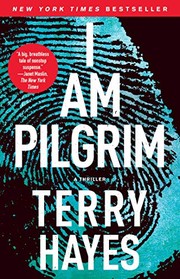
A friend handed me I Am Pilgrim on a long flight and said it was the only thriller that ever made him miss his connection. I laughed at the time. Then I missed my own connection in the book, if that makes sense, because I kept reading past boarding. Terry Hayes published it in 2013 as his debut novel, with the US edition from Atria in 2014 running 624 pages, and it reads like the work of someone who spent years writing screenplays and decided to spend all of it at once. It is the first book in a series called Pilgrim, though for years it stood alone. I went in expecting a standard spy chase. What I got was part murder mystery, part life story of a terrorist, part travelogue through safe houses and border towns, and part race against a biological weapon.
The setup pulls two strangers toward each other from opposite ends. In America, a man who used to run a secret intelligence division has retired to write crime novels under a pen name. He calls himself Pilgrim, a code name taken from his old life, and he thinks he is done. In the Middle East and Europe, a Saudi known as the Saracen has spent decades preparing a single act of revenge against the United States. Their paths cross because of a murder in a cheap New York hotel, a young woman found dead in a bathtub of acid, her face and hands destroyed so she cannot be named. The police are stuck. Someone in Washington remembers that Pilgrim once wrote a book about forensic technique that described exactly this kind of killing. He gets the call. He does not want to go. He goes.
I will walk through the book in order, since the structure is half the fun, and I will keep forensic and medical specifics general where memory cannot carry the detail.
A spy who retired into crime writing
Pilgrim narrates, and his voice is the first thing to get used to. He is dry, tired, and precise. He tells you early that he once led a small American intelligence unit so secret that few people knew it existed. He recruited agents, ran operations no one would ever read about, and then watched the unit shut down when politics changed. The details of his service stay vague in the way of many thrillers. Code names. Cutouts. A mission in Paris that went wrong. A woman he loved and lost. Hayes gives you enough to respect the man without pinning him to real agencies or real events.
What makes him unusual is the retirement plan. Instead of fading out, Pilgrim wrote a true crime book about forensic pathology under another name, drawing on cases he had studied. The book flopped commercially but became a quiet reference for cops and criminals both. That choice drives the plot. When the hotel murder copies a technique from his book, the police assume the killer read it. Pilgrim has to consider a worse idea. The killer may have learned it the same place he did, from real case files, which means training and patience rather than fandom.
I liked this opening because it gives Pilgrim a reason to be good at two jobs at once. He thinks like a spy and like a detective. He notices what a room says about money. He notices what a wound says about tools. He notices what a lie says about fear. Hayes lets him explain his thinking in plain steps, and those passages read like a skilled friend talking you through a puzzle. A stain here means the body was moved there. A missing item here means the killer knew what tests would follow. That procedural calm carries the first hundred pages.
His personal life stays thin by design, a lost love and guilt over dead agents, and the call back is reluctant on both ends, which I found refreshing.
A body in a cheap New York hotel
The murder itself is grim, so I will keep it brief. A young woman is found dead in a hotel bathroom. The tub has been filled with acid. Her face is gone. Her fingertips are gone. Her teeth suggest work that might identify her, but the killer thought of that too. The room shows planning. No useful prints. Cleaning products chosen with knowledge. A timeline built around checkout hours and shift changes. The detective on the case is competent and stuck, and honest enough to say so.
Pilgrim walks the room and sees what others missed. He reconstructs the killer's height and habits from small signs. He questions the hotel staff in a way that gets answers without threats. He pulls at the victim's last days through receipts and sightings rather than through speeches. What he finds points away from a jealous boyfriend or a robbery and toward someone who kills for practice or for cover. The woman was not the point. Her silence was the point. She saw something, or she was used by someone who needed a dead end.
This stretch is the best pure mystery writing in the book. Hayes knows hotels. He knows how maids work, how clerks remember faces, how cameras miss corners, how cash moves without names. The New York chapters feel reported rather than imagined, and they move fast for a 624 page novel. I read them fast and trusted the book completely. A critic could say Pilgrim reads too much from too little, and that critic would have a point that will grow louder later. Here, though, the deductions feel earned because the clues are physical and the logic is shown step by step.
The case turns when Pilgrim ties the victim to a man who does not officially exist, and following that thread pulls him out of New York toward a figure American intelligence has chased for years. The hotel room was a small crime. The shape behind it is large.
I should note the violence level for anyone sensitive to it. The book opens with a dissolved body and does not get gentler. Later chapters include torture, beatings, and descriptions of wounds and disease that Hayes writes in plain language. Nothing feels cartoonish. That is what makes it hard to shake. If you read thrillers for the puzzle but skip the rough pages, you will be skipping a fair amount here.
The Saracen and the making of an enemy
Every other chapter or so, Hayes leaves Pilgrim and tells the life of the Saracen, and these sections are the reason the book sticks in memory. The Saracen is born into privilege in Saudi Arabia, the son of a wealthy family, raised with religion, educated abroad, humiliated by an event in his youth that turns him against both his father and the West. Hayes keeps the early biography general enough to feel like a type and specific enough to feel like a person. School in Lebanon. Medical training. Exposure to war. A growing belief that America props up corrupt rulers and kills Muslims without cost.
The turn comes through Afghanistan and the anti Soviet fighting, then through later wars that confirm him. The Saracen trains, fights, watches friends die, learns patience from men who think in decades. He becomes a doctor of sorts, useful in camps and prisons, good with his hands and calm under pressure. He also becomes a planner. Where other fighters want a gun and a crowd, he wants a single blow that America cannot answer with bombs. He studies history, disease, and American habits. He waits for science to catch up with his anger.
Hayes writes these chapters with more sympathy than I expected. That does not mean approval. The Saracen does terrible things and orders worse. But Hayes lets him love his family, grieve his losses, and argue his case in terms that go beyond slogans. He resents the way Western power treats Arab lives as cheap. He resents his own country's rulers for taking American money while preaching faith. His answer is monstrous, but his questions are not stupid, and the book is stronger for letting both sit on the page. Readers who want a cartoon villain will be disappointed. Readers who want to understand how a smart man talks himself into mass murder will find a lot to sit with.
Two bonds explain his method, a father whose wealth he reads as rot and a commander who taught him that discipline beats rage, and by the present he feels less like a henchman and more like Pilgrim's mirror.
If there is a flaw in this section, it is length. The biography runs long, with detours through schools and camps that sometimes repeat the same lesson about humiliation and resolve. I found myself admiring the ambition while wishing an editor had cut fifty pages. Still, when the Saracen finally sets his plan in motion, the wait pays off. You believe this man would spend years on one attack, because you watched him spend years becoming someone who could.
A plan built on plague and patience
The Saracen's plan is the center of the book, and Hayes reveals it slowly, so I will stay general to avoid spoiling the mechanics. In broad terms, the Saracen wants to bring a contagious disease into the United States through a carrier who will not be stopped at a border. He studies old outbreaks, modern vaccine gaps, and the way Americans travel and gather. He tests his ideas in remote places. He uses his medical skill to solve practical problems of storage and transfer. The goal is not a bomb that kills hundreds. It is a seed that kills thousands and panics millions.
What chilled me was the ordinariness of the delivery, one healthy looking person walking through the right door, and Pilgrim's horror at it is quiet rather than loud.
The middle becomes a race to find the carrier and the route, fought through false papers and switched faces across Europe, and Hayes writes those chases with a screenwriter's sense of place.
This is also where the coincidences start to pile up, and fair criticism belongs here. Pilgrim happens to know the right specialist. The team happens to find the right record before it is wiped. A stranger happens to remember the right face. Taken one by one, each break feels fine. Taken together over 624 pages, they create a sense that the plot only moves because luck keeps handing Pilgrim keys. I kept reading because the momentum covered the gaps, but after I finished, the gaps were what I remembered. A tighter book would have let him earn two or three of those breaks through mistakes by the other side rather than luck on his.
The other strain is competence. Pilgrim is good at nearly everything he tries, and so is the Saracen, which can make the contest feel sealed off from real life, where people misread rooms and miss flights.
Turkey, Syria, and the long chase
The last third moves east, to Turkey and the Syrian border, and the book changes temperature. The clean hotel forensics give way to dust, crowds, and men with guns who do not wear uniforms. Pilgrim goes in under cover, posing as part of the messy world of smugglers and fixers who move people across lines for cash. Hayes writes this terrain well. You can feel the heat, the tea glasses, the waiting. The tradecraft here is social rather than technical. Who vouches for you. Who watches the door. How much to pay and how fast to leave.
Without spoiling the turns, the chase narrows to a few people in a small area, and the large plot suddenly becomes intimate. A house. A clinic. A boat. A young woman caught between men who see her as a tool. Pilgrim has to act with incomplete facts and no backup, and for the first time he looks genuinely outmatched rather than merely outnumbered. The Saracen has chosen ground he knows, among people who fear him, and every stranger might be his. Those chapters gave me the tight chest feeling I want from a thriller. The puzzle solving of New York becomes body level here. Breathe. Listen. Move.
Hayes stages the action in bursts rather than set pieces, fast and costly, and I guessed one late turn while missing the other completely, which felt about right for a mystery that plays fair but not soft.
The disease thread tightens at the same time. I will not describe the exact agent or the exact method, both because the book layers possibilities and because specifics matter less than the shape. What matters is that the Saracen has solved the hard parts and is down to the last human steps, while Pilgrim is still one fact short. That gap, one fact, carries a hundred pages. Hayes fills them with interrogations, break ins, and a grim stretch involving captivity and pain that some readers will find too much. I found it hard to read and hard to defend as necessary, though it does show what both sides will pay. Your tolerance for that stretch may decide how you feel about the whole book.
Bloat, luck, and brutality: what drags
Let me be plain about the weaknesses, because a 624 page debut invites them. The book is too long. Hayes has material for a great 450 page thriller and stretches it with backstory, travel detail, and procedural asides that repeat what the action already showed. I noticed it most in the middle, where a chapter would end on a sharp fact and the next chapter would open by explaining that fact twice. Readers who love immersion will not mind. Readers who like lean plots will fidget, and I fidgeted more than once.
The reliance on luck, which I mentioned earlier, grows with length. Pilgrim meets exactly the person who knows the obscure thing. Records survive exactly long enough to be read. The Saracen's complex plan survives contact with reality because no one in his chain makes a dumb, human error until the plot needs one. Hayes tries to cover this with Pilgrim's narration, having him admit when a break was lucky, and that honesty helps. But admitting a coincidence does not remove it. By the final hundred pages I had stopped counting and just rode the current, which is fun in the moment and thin afterward.
The brutality deserves its own note. Beyond the opening acid bath, the book includes torture scenes on both sides, beatings written in close detail, and a willingness to hurt sympathetic characters to prove stakes. Some of that serves the theme. Both Pilgrim and the Saracen believe ends can justify means, and Hayes wants you to feel the cost of that belief. Some of it felt like habit from screenwriting, where pain stands in for drama. I winced through two scenes that could have ended sooner without losing meaning. If you avoid books with extended torment, this is not your book, however strong the puzzle is.
There is also a familiar politics to question. The book treats American intelligence as flawed but fixable, and its Muslim characters range from decent allies to fanatics with little middle ground outside the Saracen himself. Hayes gives the Saracen real grievances and ignores easy slogans, which lifts the book above many of its peers. Still, the wider frame is Western and security minded. The threat is foreign, the savior is American, and the collateral falls elsewhere. Readers who notice that pattern in espionage fiction will notice it here too, even if Hayes handles it with more care than most.
The ending and why the door stays open
The climax brings the two lines together in a way I will not spoil beyond shape. Pilgrim and the Saracen finally share ground rather than trading chapters. The carrier, the disease, and the route all converge on a single window of time. Pilgrim has to stop a walking person, not defuse a ticking box, which keeps the tension human. He cannot shoot the problem from far away. He has to get close, be sure, and live with being sure. Hayes writes this stretch with unusual restraint after so much sprawl, and the book is better for it. Short scenes. Little talk. Choices with costs.
What I admired is that the ending does not pretend one stopped plot fixes the world. People Pilgrim cares about are gone. Institutions take credit and learn little. The Saracen's grievances do not die with his plan, and Pilgrim knows it. The final chapters let him sit with that knowledge rather than celebrating. For a commercial thriller, that sourness felt honest. It also sets up the series without a cheap tease. Pilgrim survives, changed and tired, and the door stays open because men like him do not get clean exits.
Should you read it. If you like long thrillers where procedure matters, where a detective reads a room for twenty pages and you enjoy every minute, say yes with the warnings attached. It is long, lucky, and rough in places. If you want lean tradecraft or a careful portrait of intelligence work without supermen, look elsewhere. For me the Saracen chapters alone justified the time. I have read many thriller villains who want money or power. Few felt as patient, as learned, and as human as this one, and his story gave the chase a weight most books in this lane never reach.
I finished the last page late, tired in the good way, and thought about how Hayes used his screen years. The book cuts like film. Short scenes. Clear images. Dialogue that explains without stalling. That training is also its limit, since scenes sometimes resolve too neatly and people sometimes speak their motives too plainly. Yet the core held for me: a retired man who thought words had replaced action, and a driven man who thought murder could answer history, walking toward each other across 624 pages until only one walks away. I am glad I stayed on the plane with them, missed connection and all.
FAQ
When was I Am Pilgrim published?
Terry Hayes published it in 2013 as his debut novel, with the US Atria edition following in 2014. Before that he was known as a screenwriter.
Is I Am Pilgrim part of a series?
Yes. It is Pilgrim number 1. A follow-up called The Year of the Locust was announced and long delayed, so this book still stands alone for most readers.
Does the book include violent content?
Yes. It includes murder scenes, torture, sexual violence mentioned in passing, and terrorist attacks. The summary keeps these parts general but does not hide them.
Similar books
More from Pilgrim first, then related titles.

What She Knew
Rachel lets her eight-year-old son run ahead in a Bristol park, and the nine-day search turns her into a suspect in the public eye.
2,952-word summary · 13 min read

The Beach House
A young valet is beaten to death at a Hamptons party, and his law-student brother spends a year building a case against the family that covered it up.
2,049-word summary · 9 min read

Six Years
A professor who promised to forget the woman he loved sees her husband's obituary and discovers that the wedding, the marriage, and the woman herself may never…
2,076-word summary · 9 min read

The Trespasser
A Dublin Murder Squad detective investigates a staged dinner-party killing and finds a cover-up that reaches into her own department.
2,051-word summary · 9 min read

Rules of Prey
Minneapolis detective Lucas Davenport hunts a killer who leaves a new rule at every scene and treats murder as a game of wits.
1,914-word summary · 9 min read

The Late Show
Exiled to the LAPD night shift after accusing her supervisor, Renée Ballard keeps two cases that were meant to be handed off at dawn: a brutal assault and a…
2,563-word summary · 11 min read

4th of July
Lindsay Boxer shoots two armed teenagers in self-defense, faces a wrongful-death trial, and spends her leave chasing a string of throat-slashing murders in…
2,192-word summary · 10 min read

The Camel Club
Four Washington misfits witness a murder on Roosevelt Island and stumble into a conspiracy that reaches the Oval Office, with a hostage president and a nuclear…
2,354-word summary · 10 min read

61 Hours
A bus crash strands Jack Reacher in a snowbound South Dakota town where a drug gang, a corrupt police force, and a single witness are on a collision course.
2,227-word summary · 10 min read
The Last Mile
Melvin Mars is hours from execution for his parents' murder when another man confesses, and FBI cold case detective Amos Decker goes looking for the trap.
2,746-word summary · 12 min read

Still Missing
A realtor is abducted at a Vancouver Island open house and held for more than a year. Told through therapy sessions, the novel follows her escape and the hunt…
2,466-word summary · 11 min read

Bad Luck and Trouble
A deposit of $1,030 summons Jack Reacher back to his old army unit, which is being picked off one name at a time.
2,366-word summary · 11 min read

3rd Degree
The third Women's Murder Club novel follows a San Francisco terror cell and a three-day killing schedule, and it costs the club a member.
2,685-word summary · 12 min read

Worth Dying For
Reacher stops for one night in rural Nebraska and finds a family that runs the county, a missing girl and a shipment worth killing for.
2,021-word summary · 9 min read
Tinker, Tailor, Soldier, Spy
Retired spymaster George Smiley is brought back to find a Soviet mole inside British intelligence, and the trail leads through old friends, old betrayals, and…
2,092-word summary · 9 min read

Say You're Sorry
A widowed prosecutor defends the teenager accused of killing her babysitter, uncovering a small town's secrets and a killer hiding in plain sight.
2,116-word summary · 9 min read
Finlay Donovan Knocks 'Em Dead
Someone has put a contract on Finlay Donovan's ex-husband, and the novelist and her nanny have to find the hitman before the school pickup.
1,990-word summary · 9 min read

Echo Burning
Reacher hitches a ride with a Texas woman who wants her abusive husband killed, then has to prove she did not murder him when he comes home.
2,209-word summary · 10 min read
The Survivors
Kieran Elliott returns to Evelyn Bay twelve years after a storm killed his brother, and a young woman's murder forces the town to face what it has concealed.
2,571-word summary · 11 min read

Girl, Forgotten
A rookie US marshal guards a judge with a stalker and ends up reopening the 1982 prom-night murder of the judge's pregnant daughter.
2,111-word summary · 9 min read

The Woods
Twenty years after two teenagers were murdered and two vanished at summer camp, prosecutor Paul Copeland identifies a fresh corpse as one of the missing.
2,490-word summary · 11 min read

The Redbreast
Harry Hole chases an ageing sniper through modern Oslo while two Norwegian volunteers on the Eastern Front carry a fifty-year-old betrayal toward a royal…
2,453-word summary · 11 min read
The Poet
A crime reporter investigates his twin brother's apparent suicide and uncovers a killer who leaves Edgar Allan Poe quotes behind, in the novel that took…
2,020-word summary · 9 min read

The Boy from the Woods
Wilde, found feral in a New Jersey forest in 1986, hunts for a missing teenager while a senator's secrets tear a wealthy town apart.
2,270-word summary · 10 min read
Razorblade Tears
Two ex-con fathers, one Black and one white, hunt their murdered sons' killers in a Richmond that never gave the boys a fair shake.
2,880-word summary · 13 min read
Broken Harbor
A family is found slaughtered in a half-built Dublin estate where no one broke in, and star detective Scorcher Kennedy must explain the holes in the walls.
2,308-word summary · 10 min read

Without Fail
Reacher is asked to test vice presidential security by planning to kill.
2,084-word summary · 9 min read
Triptych
A GBI agent with dyslexia hunts a rapist while two Atlanta cops hide pasts.
2,576-word summary · 11 min read

Things We Do in the Dark
A comedian kills her husband, then a podcaster digs up her teen murder past.
2,427-word summary · 11 min read

The Widow
A widow of a suspected criminal faces reporters and police while hiding what her marriage really cost.
2,599-word summary · 12 min read