

Thinner
2,502-word summary 11 min read 309 pages in the book
- First published
- 1984
- Publisher
- NAL Books
- Pages
- 309
- ISBN
- 9781444723557
Reading options
What's inside (7 sections)
I picked up Thinner because I wanted to see what Stephen King sounded like when he was trying not to sound like himself. The book came out in 1984 from NAL Books under the name Richard Bachman, and the first hardcover ran about 309 pages. At the time no one outside the publisher was supposed to know that Bachman was King working under a pen name. A bookstore clerk figured it out by comparing styles and copyright records, and sales jumped once the secret broke. Knowing that backstory helped me read the book in the right frame. This is King stripping away the big Maine mythology and the large casts he was known for, and trying a leaner, meaner kind of horror story about guilt and payback.
Billy Halleck is the kind of man who is used to getting his way without having to ask twice. He is a successful lawyer in a comfortable Connecticut town, married to Heidi, father to a teenage daughter named Linda. He is also very heavy, the kind of heavy his doctor warns him about every year. Billy likes rich food and the ease that comes from knowing the judge and the police chief socially. He tells himself he is a decent man. He works hard, he loves his family, and he has never thought of himself as corrupt. That self image is important because the whole book is about watching it crack.
A careless afternoon and a death on the street
The accident happens on an ordinary day when Billy is driving with Heidi beside him. She is being affectionate and playful in the front seat, and Billy takes his eyes off the road for a moment at exactly the wrong time. An old Romani woman is crossing the street. She does not move fast. Billy does not brake in time. The car strikes her and she dies from the impact.
What follows matters more than the crash itself. Billy is clearly at fault in the moral sense. He was distracted, he was driving, and a pedestrian is dead. But the legal system around him moves to protect him. The police chief is a friend. The judge who hears the case is a friend. There is a suggestion that Billy had been drinking, or at least that his attention was nowhere near the road, yet the hearing is brief and kind. He walks away without punishment. Heidi is relieved. Billy tells himself the worst is over.
King, writing as Bachman, does a good job here of making Billy sympathetic and repulsive at once. You can feel his shock after the impact. He is not a cartoon villain. He shakes for hours afterward and keeps seeing the street in his mind. At the same time, he lets his connections do the work. He does not insist on a full inquiry. He does not visit the family of the dead woman. He accepts the easy outcome because the easy outcome is available. That choice sits at the center of everything that comes later.
The Romani group is only passing through town. They camp on the edge of things, keep to themselves, and already face suspicion from locals. The dead woman was old and well loved within her family. Her father is Tadzu Lemke, a very old man with a failing nose and failing health who carries real authority among his people. He watches the court proceedings and understands exactly what has happened. The town has closed ranks around one of its own.
The old man outside the courthouse
As Billy and Heidi leave the courthouse, Tadzu Lemke is waiting outside. He does not shout or attack. He steps close to Billy, touches his cheek with one finger, and lays a wasting curse on him. The curse gives the novel its title. It is a single wish that Billy will grow thinner and thinner without stop.
Two other men from the town receive curses as well. The judge who dismissed the case and the police chief who helped shape the report are both marked in their own ways. Billy does not take any of this seriously at first. He is a modern American lawyer. He does not believe that a touch on the face can change his body. He goes home and tries to put the whole ugly business behind him.
This is where the book finds its engine. At first the curse looks like good luck. Billy starts losing weight. For a man who has been told for years to shed fifty pounds, the early drop feels like a gift. Heidi is pleased. Billy buys new belts. He jokes about it with friends. He goes to his doctor for a checkup and hears what he wants to hear. Keep doing whatever you are doing.
Then the loss does not stop. Billy keeps eating normally. He eats rich meals, snacks at night, drinks with lunch. The scale keeps moving down anyway. Ten pounds, then twenty, then more. His clothes hang loose. His face looks drawn. Friends stop congratulating him and start asking if he is sick. Heidi moves from pride to worry. The doctor runs tests and finds no clear cause. That shift from welcome change to quiet fear is handled well. King understands how quickly a small strange event can poison ordinary life when no one can explain it.
Billy tries to reason his way out. He changes diets. He stops dieting entirely. He sees specialists. He counts calories in secret and gains nothing. The body keeps burning itself away. Sleep gets thin. His temper shortens. He and Heidi fight about money and about whether he should take time off work. Linda watches her father shrink and does not know what to say. The house that felt safe starts to feel like a waiting room.
Losing weight when stopping is not possible
The middle of the book follows Billy as he slides from denial into dread. He is a rational man, or thinks he is, and rationality becomes a trap. Every test comes back normal. Every theory fails. He cannot sue anyone. He cannot argue his way out in a courtroom. For the first time in his adult life, influence does not help.
He goes back to the judge and the police chief to compare notes. Both men are suffering in their own ways, and neither wants to talk openly about a curse. The judge has developed skin trouble that will not heal. The chief has broken out in painful sores. They are proud men who built careers on control, and they hate admitting that something outside the law is hurting them. Billy realizes he is on his own.
He starts looking for the Romani camp. The group has moved on, as traveling groups do, and no one in town is eager to help him find them. Billy drives around, makes phone calls, pays for tips. He learns fragments. The camp moves through New England and upstate New York. Tadzu Lemke is old and sick but still leads his family. No one wants to cross him. Billy considers going to the papers or the police, then understands how mad that would sound. A successful lawyer claiming that an old man cursed him by touching his face would end his career faster than any illness.
What I found effective here is how ordinary Billy stays. He does not become a hero. He bargains, then blames Heidi for distracting him in the car, then hates himself for blaming her. He thinks about leaving town. He thinks about suicide and pushes the thought away. He keeps working even as his suits need constant tailoring. King keeps the horror close to daily life. The fear is not about monsters jumping from closets. It is about stepping on a scale each morning and seeing a lower number when you ate a full dinner the night before.
There is a fair criticism to make about this stretch. The book repeats the weigh in scene a few times too many. Billy steps on the scale, feels a flash of hope, then argues with Heidi about what to do next. Then the cycle comes around again with slightly lower numbers. The repetition is the point, since wasting is repetitive, but after the third or fourth round I started skimming to get back to the plot. A shorter middle would have kept the tension tighter. Still, the slow grind wears you down in a way that fits Billy. You feel stuck with him.
Richie Ginelli gets involved
When Billy runs out of legal and medical answers, he turns to the one friend who operates outside those systems. Richie Ginelli, who goes by Ginelli, is an old acquaintance with ties to organized crime. He is loud and loyal in his own rough code, and completely willing to scare people. Billy has helped him in the past with legal trouble. Now Billy asks for help finding the camp and forcing Tadzu Lemke to lift the curse.
Ginelli changes the temperature of the book. Until he arrives, Thinner is a quiet story about a man fading in the suburbs. Ginelli brings cars and threats. He treats the curse as real because he has seen enough strange things to respect fear. He sends men to track the camp. He leans on gas station owners and motel clerks. He shows up at the camp himself and tries a mix of bribes and menace. At first it almost works. The Romani do not want a war with the mob. Some of them are willing to talk.
But Tadzu Lemke will not bend. He believes his daughter was killed and the killer bought his freedom. From his view, Billy has never shown true remorse, only panic about his own body. Ginelli answers that refusal by raising the pressure. He vandalizes trailers, beats up men from the camp, uses slurs and threats, tries to starve them out of town. The book does not hide that Ginelli is bigoted and brutal. Billy knows it and goes along anyway because he is desperate. That moral stain spreads to Billy. He wanted justice to bend for him after the accident. Now he wants fear to bend other people for him.
The alliance between Billy and Ginelli gives the novel its most readable chapters. Ginelli is vivid on the page, full of stories and crude jokes, and his confidence lifts Billy for a while. Billy eats steak dinners again. He sleeps better knowing someone dangerous is on his side. For a short stretch you almost think the plan will work. Then the retaliation starts. The camp fights back in ways Billy did not expect. Shots are fired. Men are hurt on both sides. Ginelli, who seemed untouchable, learns that threats mean less to people who have already lost a mother and a grandmother.
I should note that the portrayal of Romani people in this book feels dated and unfair, and that is worth saying plainly. King wrote the novel in the early nineteen eighties, and the camp scenes lean on stereotypes about fortune telling, curses, and outsiders who live by separate rules. Tadzu Lemke himself is drawn with more dignity than the minor characters around him, and his anger is understandable, but the group as a whole is painted from the outside. Modern readers will notice that. It does not ruin the central idea about guilt, yet it limits the book. A story about prejudice keeps using the same prejudice for color.
What it takes to pass the curse along
The last part of the book turns on a terrible choice. After months of pressure and blood, Tadzu Lemke agrees to meet Billy. He is dying, angry, and tired of the war Ginelli started. He tells Billy there is a way to move the curse off himself, but the price is cruel. The wasting can be transferred into a pie, baked with blood and attention, and then eaten by someone else. Whoever eats the pie takes the curse. There is no trick that destroys it. It can only be handed on.
Billy takes the pie. He means to give it to Heidi. His thinking has curdled by this point. He has lost so much weight that his body aches. He blames Heidi for the distraction in the car that started everything. He tells himself she shares the guilt because she was playful when she should have watched the road. He also suspects, with thin evidence, that she has been unfaithful while he was sick. Love has thinned along with his body. He wraps the pie and brings it home as a gift.
What happens in the house is the bleakest part of the novel and I will keep it brief to avoid graphic detail. Billy means the pie for Heidi, yet his daughter Linda eats some as well. Heidi eats some after. Billy understands too late that his revenge plot has poisoned his own family. When he sees that both of them have eaten, he cuts himself a slice and eats too, choosing to share the fate rather than walk away clean. The ending does not offer forgiveness or a lesson learned.
That final turn is why readers still argue about Thinner. Some find it honest. A man who used privilege to escape blame tries to use cunning to escape consequence, and learns that consequence spreads. Others find it hollow, since Billy never truly faces what he did. He only trades suffering. I land somewhere in the middle. The ending fits the Bachman mode, which was always colder than the King mode. Bachman books tend to close without warmth. This one closes with a man eating his own cooking in every sense, and daring the reader to pity him.
As horror, Thinner works best when it stays close to Billy scale and mirror. The early chapters about clothes that no longer fit and friends who stop asking questions carry more dread than the shootouts later on. As a moral story, it is blunt. Powerful men bend rules, then call it bad luck when the bill arrives. Ginelli is the clearest example. He thinks money and guns answer everything until they meet grief that does not scare. The judge and the chief are smaller versions of the same lesson. They helped bury a death and then each carried a private rot.
I would not call this King finest novel. The middle drags, the camp scenes rely on old stereotypes, and Billy is hard to care about for long stretches by design. But the core image holds. A man who wanted to be thinner gets exactly what he asked the universe for, without limit and without mercy. The prose is plain and fast, the Connecticut suburbs feel real, and Ginelli livens every scene he enters. If you want King at his most sympathetic, look elsewhere. If you want a short, sour parable about what happens after you talk your way out of blame, this one still bites.
FAQ
When was Thinner first published?
NAL Books published Thinner in 1984 under the name Richard Bachman, with the first hardcover running about 309 pages.
Is Richard Bachman really Stephen King?
Yes. King used Richard Bachman as a pen name for several early novels, and Thinner was the 1984 book that exposed the connection.
Is Thinner part of a series?
No. It stands alone, though it is often collected with other Bachman novels such as The Bachman Books.
Similar books

Lullaby
A reporter discovers that a poem in a children's book kills anyone who hears it, and his attempt to destroy every copy turns into a road trip through grief,…
2,147-word summary · 10 min read
Everything's Eventual: 14 Dark Tales
Fourteen Stephen King stories shuffled by the deal of a card deck, from the haunted room of 1408 to quiet tales of grief that sting as much as the monsters.
2,000-word summary · 9 min read

This Present Darkness
A pastor and reporter face demons over Ashton while angels answer prayer.
2,384-word summary · 11 min read

If It Bleeds
Holly Gibney faces an outsider plus three more tales of dread.
2,219-word summary · 10 min read
Four Past Midnight
Four novellas about a plane lost in time, a writer haunted, and horrors small and large.
2,584-word summary · 11 min read
Horns
Accused of killing Merrin Williams, Ig Perrish wakes with horns that force strangers to confess their darkest sins.
2,264-word summary · 10 min read

Revival
Jamie Morton shadows preacher Jacobs from boyhood healings to electric cures that open a door best left shut.
2,037-word summary · 9 min read
NOS4A2
Vic McQueen's bike finds lost things through a bridge, pitting her against Manx's Rolls-Royce ride to Christmasland.
2,060-word summary · 9 min read

Later
Boy Jamie Conklin sees dead people who must answer truthfully, pulling him into NYPD cases and a drug crew's greed.
2,009-word summary · 9 min read
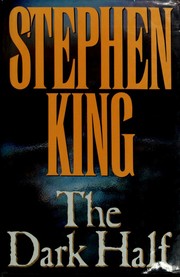
The Dark Half
A Maine novelist buries his violent pen name George Stark, then faces murders that carry his own fingerprints.
2,956-word summary · 13 min read

Rosemary's Baby
A young couple's dream apartment in the Bramford turns dark when helpful neighbors and a trusted doctor take over Rosemary's pregnancy.
2,665-word summary · 12 min read
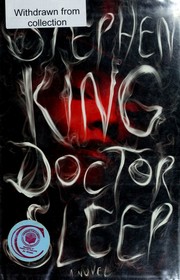
Doctor Sleep
Grown Dan Torrance gets sober in New Hampshire and helps gifted Abra Stone face the True Knot.
2,841-word summary · 13 min read
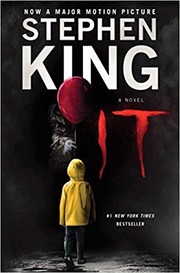
The Outsider
Coach Terry Maitland's DNA and witnesses point to an impossible murder, until Ralph Anderson and Holly Gibney trace it to El Cuco.
2,586-word summary · 11 min read
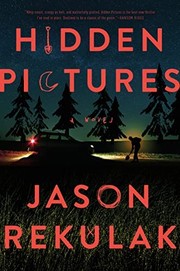
Hidden Pictures
Nanny Mallory sees Teddy drawings predict a murder in New Jersey.
2,332-word summary · 10 min read
The Shining
The Shining retold: Jack winters at Overlook with Wendy and Danny, REDRUM, hedge maze chase.
2,011-word summary · 9 min read

The Tale of the Body Thief
Lestat trades bodies with a psychic thief for one day of mortality and ends up trapped, sick, and hunting his own vampire body.
2,069-word summary · 9 min read

The Only Good Indians
Four Blackfeet men who killed a pregnant elk are hunted by her spirit a decade later, and the only person who can end the cycle is a teenage girl who was not…
2,010-word summary · 9 min read
Lisey's Story
Two years after her novelist husband dies, Lisey Landon follows a trail of clues into his childhood and the other world that made him a writer.
1,998-word summary · 9 min read

Night Film
A disgraced journalist investigates the death of a reclusive horror director's daughter, following a red coat through hospitals, secret clubs, and a family…
2,690-word summary · 12 min read
The Troop
A Boy Scout troop on a Canadian island takes in a stranger who cannot stop eating, and the worm inside him turns a camping trip into a war.
2,457-word summary · 11 min read

Locke & Key, Vol. 1: Welcome to Lovecraft
After their father is murdered, the Locke children move into a haunted family estate where keys unlock doors to ghosts, other places, and dangerous secrets.
2,019-word summary · 9 min read
The Last House on Needless Street
A lonely man, a cat and a mysterious neighbor pull you into a house full of buried trauma.
2,627-word summary · 12 min read

The Guardians
A innocence lawyer reopens a prison murder where the wrong man waits on death row.
2,564-word summary · 11 min read
The Chalk Man
Childhood chalk codes lead to a murder that follows friends thirty years later.
2,350-word summary · 10 min read
Relic
A museum beast kills during an exhibition while an agent investigates.
2,066-word summary · 9 min read

Hannibal
Lecter hides in Florence while Starling and Verger close in from both sides.
2,590-word summary · 12 min read

Full Dark, No Stars
Four novellas about revenge where ordinary people do terrible things and live with it.
2,646-word summary · 12 min read

The Call of Cthulhu and Other Weird Stories
Seventeen tales from Dagon to Innsmouth, led by Cthulhu, the Colour, and the Whisperer, in S. T. Joshi careful Penguin edition with notes and corrected texts.
2,593-word summary · 12 min read

The Call of Cthulhu
A professor's papers link a sculptor's dreams, a Louisiana cult raid, and a sailor's voyage to a sleeping god under the sea.
2,530-word summary · 11 min read

The Broken Girls
A journalist revisits her sister's murder while a restored boarding school gives up a girl missing since 1950.
2,579-word summary · 11 min read