
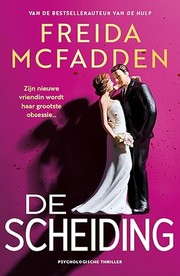
The Divorce
2,227-word summary 10 min read 368 pages in the book
- First published
- 2026
- Publisher
- Poisoned Pen Press
- Pages
- 368
- ISBN
- 9781464249631
Reading options
What's inside (8 sections)
A house full of bodies
Freida McFadden opens The Divorce with a prologue that shows a house full of bodies and asks, in effect, how the narrator will explain them to the police. It is a brazen way to begin a 2026 domestic thriller from Poisoned Pen Press, and it works on the reader like a dare. You know the destination is violence. You do not know who will be standing in the wreckage or how they got there. That gap keeps the whole book humming.
McFadden is a writer who understands the commercial thrill of a withheld answer. The prologue gives away the outcome while hiding the logic, and that combination is hard to resist. You keep reading not to find out what happened but to find out how it could have happened to these particular people.
The narrator who inherits this scene is Naomi Roth, a stay-at-home mother on Long Island. She gave up a medical career to raise five-year-old Teddy, though the book is careful to note that she was a crystal healer rather than a doctor. That small correction matters. It tells you that Naomi has been living inside a story about herself, and that the story is about to be taken apart. Her husband, Jeremy, runs a hedge fund, and the money in the household is his.
The detail about the crystal healing is worth pausing over. Naomi is not a fraud in the ordinary sense; she believes in what she does. But the book places that belief next to Jeremy's hard-edged financial world, and the contrast sets up a question the whole novel keeps asking: who gets to decide which version of reality counts?
The anniversary and the eviction
The turning point arrives on the couple's anniversary, in a scene that is less romantic than administrative. Jeremy locks Naomi out of the house. He says there are renovations. He packs her things and moves her into his parents' apartment. The next day he asks for a divorce.
It is a brutal piece of staging, and McFadden leans into it. Jeremy does not merely leave. He drains their accounts, cancels her cards, and hires every family lawyer in town. Naomi is left with almost nothing and with the eccentric Ezra Fletcher as her only real support. The imbalance is the point. This is a book about how quickly a person can be stripped of the things that make a life feel solid, and about how the legal system can be used as a weapon by whoever has more money.
There is also a quiet cruelty in the way Jeremy frames the divorce as a favor. He presents the eviction as practical, even reasonable, and the book lets that framing sit unchallenged for a while. It takes time for Naomi, and for the reader, to see it as the first move in a campaign.
What struck me is how calmly the eviction is done. There is no shouting match, no dramatic confrontation in the doorway. There is a locked door and a set of packed bags, and that is somehow more upsetting. McFadden understands that the scariest domestic threats often arrive wearing the clothes of ordinary procedure. I also noticed how little Naomi fights the logistics at first. She is not passive by choice; she is exhausted, and the book treats exhaustion as a real force. When people are stripped of money and status, their capacity to object shrinks, and McFadden tracks that shrinkage carefully.
The other woman and the Scarsdale story
Naomi learns about Jeremy's new love, Veronica Chesson, whom everyone calls Ronnie. She is younger, and she once worked for the Simingtons in Scarsdale. The housekeeper there has a story: Ronnie slept with the husband and pushed his wife down the stairs. It is the kind of gossip that gets repeated as fact, and McFadden uses it to make you distrust whichever version of Ronnie you are being handed at any given moment.
The Scarsdale story is planted early and pays off later, but its real function is to make uncertainty feel normal. By the time Veronica's own chapter arrives, you have heard so many conflicting accounts that you no longer know which details to trust. That is exactly where McFadden wants you.
Mediation delivers a lopsided result. Jeremy gets full custody of Teddy and pays no child support. Another divorced mother, Cora Janzen, helps Naomi navigate the wreckage. Naomi's homemade kombucha starts to seem poisoned, a small domestic detail that slowly curdles into something sinister. At Teddy's birthday party Naomi shows up drunk, is arrested, and ends up with a restraining order against her. By then it looks as though Jeremy has won cleanly and Naomi has lost everything.
The restraining order is the worst of it, because it turns Naomi into a threat in the eyes of the law. She is now the person who cannot come near her own son, and the book makes you feel the absurdity of that. A mother who has done nothing but lose is recast as a danger.
These middle chapters are the strongest stretch of the book for me. The menace lives in objects and routines: a drink that tastes wrong, a packed suitcase, a birthday party that turns into a public humiliation. When McFadden stays close to the daily texture of Naomi's life, the threat feels like it could be happening on an ordinary street. Cora Janzen deserves a mention here. As another divorced mother, she gives Naomi a place to stand when everything else is collapsing. Their conversations are among the few stretches where the book slows down and lets Naomi be a person rather than a plot position. It is not much, but in a thriller this fast it registers.
Ronnie's half of the story
Then the point of view flips to Veronica, and the book changes shape. Six years earlier she gave birth at home to a son named Dominic. Her boyfriend Clay drove off with the baby after a drug relapse. Because there was no hospital record, no one believed the child was hers. That detail is quietly brutal. Without a piece of paper, Veronica's own body and memory count for nothing. The book keeps returning to the idea that official documents decide who is a mother and who is not, which is a sharp thing to put at the center of a domestic thriller. A friend traced a forged birth certificate to Naomi's mother, Lorraine, who worked in city records.
The conclusion Veronica reaches is the book's central secret: Teddy is Dominic. Naomi took him from Clay's car, put Jeremy's name on the fake certificate, and swapped a paternity swab for one taken from Jeremy's Alzheimer's-stricken father. A DNA test at the party confirms it.
It is a huge reveal, and McFadden has clearly been building every odd detail toward it. The mother who seemed to be losing her mind turns out to have been protecting a stolen child. That reframe is handled with some skill, because the earlier scenes of Naomi's unraveling suddenly read differently. Her drunkenness, her paranoia, her insistence that something is wrong, all of it takes on a second meaning once you know what she is hiding.
The DNA test at the party is the hinge. A single piece of evidence collapses the story Naomi has built and hands Veronica the truth she has been chasing for six years. McFadden places it in a crowded, noisy setting, which makes the revelation feel public rather than private. That choice matters, because Teddy's parentage was always the thing everyone had an interest in controlling.
The shift in viewpoint is also the book's main structural gamble. You spend the first half certain that Naomi is the victim and Jeremy the villain, and then the ground moves. It is an effective piece of misdirection, even if some of the pieces were visible from the start. I had mixed feelings about this structure. On one hand, the flip gives the book its energy and makes the second half genuinely tense. On the other, it means that roughly half the novel is written with a secret the reader is not allowed to share, and some of Naomi's behavior in that half is shaped by information we are denied. McFadden manages it well enough, but the trick is doing a lot of work.
The cellar, the fire, and the roof
Back in the present, the story turns physical and ugly. Naomi clubs Veronica with a rock, ties her in the wine cellar, and cuts her hair. When Ezra arrives and hears screams, Naomi pushes him down the stairs. Veronica says Naomi plans to burn the house down. Ezra is alive, though, and he knocks Naomi unconscious before she can escape the fire she sets. Veronica and Teddy climb to the roof and are rescued. Naomi and Ezra appear to die.
It is a violent, claustrophobic sequence, and it delivers the picture the prologue promised. What it does not fully deliver is a clean accounting of every body in that house. The prologue's question lingers after the answer is supposed to have been given, which is one of the criticisms leveled at the book. The fire, the cellar, and the roof create a strong visual climax, but the logistics of who ends up where are less tidy than the imagery.
Ezra is the surprise of the sequence. He has spent the book as an eccentric, almost a comic figure, and then he turns out to be the person who physically stops Naomi. That switch is abrupt, but it is the kind of abruptness the genre trades in. What saves it is that the fire itself is terrible and specific, a domestic space turned lethal in minutes.
The epilogue that rewrites everything
The last word belongs to Jeremy. Clay tracked Naomi down, so Jeremy learned that Teddy was not his son. He paid to have Clay killed in a staged overdose, and he had been gaslighting Naomi all along, including the poisoned kombucha and a stabbed toy elephant, to get rid of her too. The villain, it turns out, was the calm man with the lawyers.
This ending asks you to reread Jeremy's every gesture. The renovations, the lawyers, the missing money, the custody demand: none of it was clumsiness or greed. It was preparation. McFadden has been careful to keep Jeremy polite throughout, and that politeness is what makes the final reveal land. He is the sort of man who never raises his voice because he does not have to. That calm is what makes the epilogue so irritating in the best way. You want to reach back into the earlier chapters and shake Naomi, to tell her that the polite man in the good suit is the one to fear. McFadden has hidden him in plain sight, and the reveal rewards a careful reader while still managing to shock.
This final turn is very much McFadden's method: it arrives late and it rearranges everything that came before it. Kirkus said she "outdoes herself" here, and there is a real pleasure in how aggressively the book keeps turning. Publishers Weekly was less kind, faulting "too many far-fetched twists and undermotivated double-crosses," and I think that is a fair complaint. Some of the reversals feel engineered for surprise rather than grown from character. The stabbed toy elephant, for instance, is a vivid detail, but its placement in the puzzle feels more arranged than discovered. Still, I have to respect the ambition of the turn. Many domestic thrillers settle for one villain and one betrayal. This book keeps finding new layers of calculation, and it refuses to let the reader rest in a comfortable interpretation. Even when I did not believe a particular reversal, I was rarely bored.
Reviewers also noted flat characters, and there is some truth to it. Several people here are functions first and people second: the housekeeper with the damning story, the lawyer with the tactics, the friend with the useful connection. Cora Janzen and Ezra Fletcher have the most texture among the supporting cast, and even they are asked to serve the plot more than their own lives.
I still had a good time. The book is at its best when it stays close to the domestic details, the kombucha, the toy elephant, the packed suitcases, because those are the moments when the menace feels like it could happen next door. When it starts stacking coincidences, it loses some of that credibility. That is the trade the book offers. It is loud, fast, and full of surprises, and it asks you to accept a certain amount of coincidence in exchange for momentum. The title turns out to be more literal and more ironic than it first appears. The divorce is real, and it is also a performance staged by a man who wants his wife gone before she can learn what he has done. McFadden uses the word to point at a legal process and at a kind of calculated unmaking. Readers who come to McFadden for that will know what they are getting. Readers looking for a quieter study of a marriage coming apart should look elsewhere, because this book treats divorce as the opening move in a very different kind of story.
FAQ
Is The Divorce part of a series?
No, it is a standalone domestic thriller published by Poisoned Pen Press in 2026. It has no link to McFadden's other books as a series.
Who is telling the story?
The narration begins with Naomi Roth and later flips to Veronica Chesson, with a final chapter given to Jeremy. Each voice revises what the previous one seemed to establish.
Is the ending a twist?
Yes. The epilogue reveals that Jeremy learned Teddy was not his son, arranged Clay's death and was gaslighting Naomi to remove her.
Similar books
The Tenant
A marketing VP loses his job and rents out a room, and his Manhattan brownstone becomes a trap built from planted evidence, old identities and staged…
2,264-word summary · 10 min read

You Are Not Alone
A lonely New Yorker witnesses a subway suicide and falls in with the dead woman's friends, where a makeover and a framed murder hide a hidden mastermind.
2,588-word summary · 12 min read
The Lies I Tell
A con artist returns to Los Angeles to ruin the man who took her family's home, while a journalist who has hunted her for ten years closes in.
2,201-word summary · 10 min read

My Husband's Wife
Artist Eden Fox returns from a run to find her key fails at Spyglass and her husband claims a stranger is his wife in Hope Falls.
2,437-word summary · 11 min read
We Live Here Now
After a near-fatal fall, a woman moves with her husband to a remote Dartmoor house where strange events happen only when she is alone, and a raven watches from…
2,016-word summary · 9 min read
The Maid's Diary
A cleaner who snoops through her wealthy clients' lives finds a secret that could destroy them, while a detective investigates a bloody waterfront house with…
3,459-word summary · 15 min read
Blood Orange
A criminal barrister with a drinking problem takes on her first murder case and finds the defendant's story mirroring her own crumbling marriage in this sharp…
2,469-word summary · 11 min read
The Unknown
A struggling actress joins an isolated film shoot about five women who vanished on a Vermont island in 1926, and the staged haunting turns deeply personal.
2,424-word summary · 11 min read

The Widow
A widow of a suspected criminal faces reporters and police while hiding what her marriage really cost.
2,599-word summary · 12 min read
Every Last Secret
A wealthy wife tracks a possible affair, but dinners, therapy, and a sudden death expose buried secrets across two polished suburban marriages and force her to…
2,687-word summary · 12 min read
Bring Me Back
Finn lost Layla at a French rest stop twelve years ago. Now engaged to her sister Ellen, he faces sightings, emails and Russian dolls that reopen everything.
2,912-word summary · 13 min read

Strangers in the Villa
A strained couple in a Spanish villa takes in guests who refuse to leave.
2,208-word summary · 10 min read
The Wives
A woman who sees her husband only on Thursdays tracks down his other wives and learns her marriage is not what she believed.
2,454-word summary · 11 min read
Dear Debbie
Advice columnist Debbie Mullen loses her job, tracks her husband's secrets, and decides it is time for payback against those who wronged her.
2,432-word summary · 11 min read
Never Lie
Newlyweds snowed in at a missing psychiatrist's house find tapes of patients.
3,849-word summary · 17 min read
Whisper Network
Four women at a Dallas sportswear company decide to name their boss in an anonymous spreadsheet of bad men, and the office turns on itself.
2,152-word summary · 10 min read
The Moonlight Child
On a cold January night, Sharon Lemke sees a child washing dishes in a neighbour's kitchen and decides she cannot ignore it.
2,169-word summary · 10 min read
The Secret of Secrets
Robert Langdon travels to Prague with Katherine Solomon, a scientist whose work on consciousness has made her a target. A dream, a bomb and a killer called the…
2,251-word summary · 10 min read
The Love of My Life
Emma loves her husband Leo and their little girl. Then Leo, an obituary writer, starts filing the facts of her life, and the woman he thinks he married begins…
2,803-word summary · 12 min read
The Cellar
Abducted in her small English town, sixteen-year-old Summer is locked in a cellar with three other girls. Their captor calls himself Clover and wants a perfect…
2,551-word summary · 11 min read
Eight Perfect Murders
A Boston bookseller's old blog post listing eight perfect fictional murders becomes the blueprint for a real killer, and the narrator knows more than he admits.
2,292-word summary · 10 min read

Broken Country
A historical love story built like a thriller: a farmer's wife in 1968, a son lost two years before, and the return of the man who once broke her heart.
2,461-word summary · 11 min read

The Flight Attendant
A flight attendant wakes in a Dubai hotel beside a dead man she may have killed, and spends the rest of the novel lying to everyone who could help her.
2,496-word summary · 11 min read
The Anniversary
Alex Finlay's standalone revisits May 1 in a Nebraska town for ten years as two former classmates close in on the May Day Killer.
2,237-word summary · 10 min read

What She Knew
Rachel lets her eight-year-old son run ahead in a Bristol park, and the nine-day search turns her into a suspect in the public eye.
2,952-word summary · 13 min read

Six Years
A professor who promised to forget the woman he loved sees her husband's obituary and discovers that the wedding, the marriage, and the woman herself may never…
2,076-word summary · 9 min read

Still Missing
A realtor is abducted at a Vancouver Island open house and held for more than a year. Told through therapy sessions, the novel follows her escape and the hunt…
2,466-word summary · 11 min read

Bad Luck and Trouble
A deposit of $1,030 summons Jack Reacher back to his old army unit, which is being picked off one name at a time.
2,366-word summary · 11 min read

The Pilot's Wife
Kathryn Lyons's husband dies in a plane crash, and the investigation reveals a secret life that forces her to rethink their marriage.
2,006-word summary · 9 min read

The Best of Friends
Three lifelong friends discover their teenage sons were hiding more than anyone knew after a night that leaves one dead, one in a coma and one silent.
2,040-word summary · 9 min read