
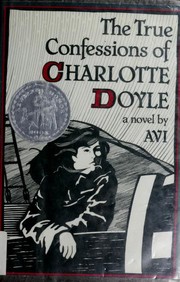
The True Confessions of Charlotte Doyle
2,330-word summary 10 min read 226 pages in the book
- First published
- 1990
- Publisher
- Orchard Books
- Pages
- 226
- ISBN
- 9780531058930
Reading options
What's inside (9 sections)
I picked this one up because of its first line, which is not a first line at all but a warning. The book opens with Charlotte Doyle, grown now, telling the reader that what follows is a true account and that she has set it down so it "is worth relating even if it did happen years ago." That little frame did something to me. Here is a thirteen-year-old girl in 1832 who already knows she is going to be a story, and who insists on the right to tell it in her own words. Avi published the novel in 1990 with Orchard Books, and it reads like an adventure tale written by someone who also wanted to argue about who gets to write history. It won a Newbery Honor the next year, along with the Golden Kite and the Boston Globe-Horn Book Award, and it has stayed in print partly because it is hard to say exactly what kind of book it is. Part shipboard survival story, part coming-of-age novel, part quiet argument about class and gender.
The warning at the front of the diary
The whole novel is presented as Charlotte's journal, or rather as her later account of a journal she kept at sea. She begins by warning the reader that the tale may seem unbelievable, and she defends the telling of it before she has told a word of what happened. That choice matters. Avi gives us a narrator who knows she is narrating, a girl shaping her own legend even as she lives it. The voice is cool, formal, a little older than the events, and it stays that way from the first page to the last even while Charlotte herself changes completely.
That gap between the voice and the girl is the source of much of the book's best tension. The Charlotte who writes these pages has been through a mutiny and a murder trial and has overseen the burial of a man she loved like a friend. The Charlotte who first steps onto the ship is a sheltered upper-class daughter who believes that good manners and a kind face tell you everything you need to know about a person. She tells us both stories at once. When she later records in the log that Captain Jaggery fell to his death, she knows perfectly well that the official version will flatter him, and she lets it stand. The reader sees the gap. Charlotte sometimes does not, or chooses not to. Avi is trusting his audience to notice the difference between an honest girl and an honest account.
A passenger who should not be there
The story begins in early summer of 1832. Charlotte is being sent from Liverpool to her family's home in Providence, Rhode Island, after a few years at school in England. Her escort, Mr. Grummage, puts her aboard the merchant ship Seahawk, and almost immediately everyone makes clear that she is not supposed to be there. She is the only passenger and the only female on the vessel. The crew mutters. The sailors say a woman at sea means bad luck, and they are not subtle about it. Charlotte's education has taught her to expect courtesy from men, so she assumes the uneasiness is about something else.
Her family background does most of the work here. Avi takes care to show how narrow Charlotte's world is. She knows the rules of drawing rooms and the proper way to address a gentleman. She has no idea how a ship works or what a crew does when the captain is not looking. She has been raised to be decorative and obedient, and she arrives on the Seahawk carrying those habits like luggage. The sailors' suspicion contains plenty of sexism, but it is a class judgment as well. She is a rich girl who has never done a day's labor, and they can smell it on her.
Mr. Grummage insists she sail anyway, which is the first of several decisions by adults that put Charlotte in danger and then leave her to deal with it. Once he is gone, she is alone among strangers who would just as soon she were not there. That isolation is the engine of the plot. There is no one to appeal to, no adult who can be trusted, and no authority that will believe her account of things.
A dirk, a warning, and a charming captain
The first person to treat Charlotte as a person rather than a problem is Zachariah, a Black sailor who gives her a dirk for protection. He also warns her about the captain, a man named Jaggery. Charlotte does not believe him. This is the novel's central mistake, and Avi lets it sit for a long time before she understands the cost of it.
Captain Jaggery is charming in the way that only a confident man can be charming to a young girl who has been taught to value good manners. He speaks to her gently, treats her as a sort of confidante, and tells her that if she ever sees anything suspicious she must come to him at once. Charlotte is flattered. She is also, quietly, in the beginning stages of a crush, though Avi is too careful to say so. What she reads as kindness is a method of control. Jaggery wants a witness who is loyal to him, and he picks the one person on board whose naivety makes her useful.
The crew's resentment comes to a head when Charlotte discovers a round robin, a paper signed in a circle so that no single name can be singled out, which is a sign of mutiny. She rushes to tell Jaggery, exactly as he instructed. He acts quickly and has the ringleader, a sailor named Cranick, killed. Charlotte thinks she has done the right thing. In fact she has handed a violent man the excuse he needed to tighten his grip on the ship. The scene is one of the clearest in the book because Avi does not soften it. Jaggery's gratitude is real, and so is the fear he inspires, and Charlotte is too inexperienced to tell them apart.
Mutiny and the whipping of Zachariah
The turning point comes after the round robin. Jaggery and his first mate, Mr. Hollybrass, decide that Zachariah must be made an example of. They sentence him to fifty lashes. Charlotte watches, and what she sees strips away the last of her illusions about the captain. Zachariah is strapped and whipped while the crew is forced to look on, and Charlotte, driven by something she does not fully understand yet, grabs at the whip to stop it. In the struggle she accidentally strikes Jaggery in the face.
That single accidental blow changes everything. Jaggery's vanity is wounded along with his pride, and he turns his rage on Zachariah, who is whipped far beyond the sentence. The beating is described plainly and it is not pleasant reading. Zachariah is left for dead. A funeral is held. Charlotte, who had begun to trust Zachariah as the one honest person on the ship, is now certain she has helped kill him, and the guilt is what pushes her into the next phase of the story.
What I admire here is that Avi does not let Charlotte off the hook. She meant well when she reported the round robin and she meant well when she grabbed the whip, but good intentions have made a bad situation worse. She is not a child in the sense of being innocent. She is a child in the sense of being responsible for acts whose consequences she cannot yet imagine. That is a harder and more interesting thing to write.
The hurricane and the body of the first mate
After the captain withdraws his protection, Charlotte feels she has no choice but to take Zachariah's place among the crew. To earn the right, she has to climb to the top of the tallest mast and come back down, which she does in front of the whole ship. It is a physical test, and it is also a kind of declaration. She is no longer a passenger. When Jaggery learns what she intends, he strikes her across the face, and she vows that when they reach port she will tell the courts what he has done.
The hurricane arrives soon after. Avi writes it as a full-force storm, with the Seahawk pitching and the crew fighting to keep her afloat. Charlotte falls from the ratlines and is saved by a man she believes is Zachariah, though she has just attended his funeral. The rescue is the first hint that the death which seemed final was not final at all.
Then comes the discovery that turns the adventure into a crime story. The first mate, Mr. Hollybrass, is found stabbed in the back with the dirk Zachariah gave Charlotte. The captain orders her thrown into the brig. She has the weapon, she has the motive, and she has already threatened to expose him. The case against her is neat, which is exactly why it feels wrong. Avi understands that a frame-up works best when the evidence is almost convincing.
Trial in the brig and three choices
In the brig Charlotte finds Zachariah, very much alive, hidden away since the beating that was meant to finish him. He has been waiting for a moment like this. With his help she escapes, and the two begin to plan how to seize the ship. Charlotte means to steal the captain's guns and take his place. By this point she has gone from a girl who would not contradict a gentleman to a girl planning a takeover, and Avi makes the change feel earned through a series of small, panicked decisions rather than one grand conversion.
Jaggery finds her before she can act. In their confrontation he tells her that he killed Hollybrass, removing the last doubt about who is guilty. Then he offers her three choices, which is one of the more unusual scenes in a children's novel. She can kill him and live with the disgrace. She can return to her proper place as a woman and let everything go back to the way it was. Or she can accept her fate and be hanged for a murder she did not commit. She refuses all three and runs.
I keep coming back to that moment, because it is the clearest statement of what the book is about. Jaggery is not simply a villain who wants her dead. He is offering her the old bargain: safety and respectability in exchange for silence. Charlotte's refusal is what makes the ending possible. Avi identified Jaggery as a kind of protagonist in his own reading of the book, and said the story was an implicit criticism of capitalism. This scene shows what he meant. The captain's power rests on his ability to decide what a person is worth, and Charlotte's whole journey is a refusal to accept his valuation.
The fall of Captain Jaggery and the choice at the end
Jaggery pursues Charlotte in front of the crew and, in the chaos, goes over the side of the ship. He is crushed to death below. Zachariah leads the sailors in naming Charlotte as captain, though she serves mostly as a figurehead because she has no real experience. They reach Providence twelve hours later, and the girl who arrives is, on the surface, the same girl who left. She puts her old clothes back on and intends to say nothing about what happened.
Her father reads the journal. He is appalled, burns the diary, and grounds her for a week, which is a small, domestic punishment for an enormous set of experiences. That is Avi's quiet joke and also his sharpest criticism. The family that sent her away cannot hear what she has become. They want the daughter they recognized before the voyage, and when she will not perform that role, they try to erase the record. So Charlotte does the thing that finally breaks the pattern. One night she leaves the house and returns to the Seahawk to sail with Zachariah and the crew.
The ending is the part of the book that has drawn the most argument, and I think both sides have a point. Avi has said that Charlotte's rejection of her family was a choice for freedom and essential to the story. It is certainly the most satisfying ending the plot could have given her. But critics such as Anne Scott MacLeod have argued that Avi gives Charlotte a sensibility too modern for 1832, making her a time traveler in her own culture, and that a real girl of her class and time would not have had the choices she takes. There is something to that. The crew accepts her as captain with a speed that feels more hopeful than historical, and because Charlotte is the only non-working-class person left alive when Jaggery dies, the book can be read as challenging gender roles while leaving the class system neatly in place. A sheltered rich girl ends up in charge of working men, and the story treats that as a happy ending.
Still, I finished it glad that the ending refuses the tidy moral. Charlotte does not go home transformed into a better daughter. She goes back to the sea. The novel is at its best when it keeps that awkward truth in view, when it lets a girl be both privileged and brave, both naive and honest, and lets the reader decide which parts of her story are the true confessions. That is a more demanding thing to ask of a book for readers of nine and up than a simple lesson about courage, and it is why the book has lasted longer than many of its more comfortable contemporaries.
FAQ
Is The True Confessions of Charlotte Doyle based on a true story?
No. Avi invented Charlotte and the voyage, though he set it aboard a merchant ship crossing from England in 1832. The novel won a Newbery Honor in 1991.
Is it suitable for younger readers?
Avi wrote it for readers in grades five through eight, and it earned a Newbery Honor in 1991. Be aware that the whipping of Zachariah and the murder trial are described plainly.
Why does Charlotte's father burn her journal?
He is appalled by what she wrote about the voyage and wants to erase the change it records. He grounds her for a week, which only pushes her to leave home and return to the ship.
Similar books
North Sun, or, the Voyage of the Whaleship Esther
In 1878 New Bedford, a worn-out captain is sent north after a whaleship and the son-in-law of a powerful whaling family who chose to stay in Alaska.
2,314-word summary · 10 min read

Witchcraft for Wayward Girls
In 1970 Florida, a girl sent to a maternity home for unwed mothers finds a spellbook, and the real horror turns out to be what the adults do to her and her…
2,077-word summary · 9 min read
Pinocchio
A wooden puppet with a talent for trouble gets chance after chance to become a real boy. Collodi's 1883 original is stranger, darker and funnier than the…
2,600-word summary · 12 min read

The Boston Girl
Eighty-five-year-old Addie Baum tells her granddaughter how she grew up in Boston's North End, chased education and love, and became the woman she is.
2,439-word summary · 11 min read

Little Town on the Prairie
In the spring after the Long Winter, fifteen-year-old Laura sews shirts, studies for a teaching certificate, and helps send her blind sister Mary to college.
2,071-word summary · 9 min read
This Tender Land
Four orphans flee a harsh Minnesota boarding school in 1932 and canoe toward St. Louis, meeting farmers, healers, and drifters along the way.
2,972-word summary · 13 min read
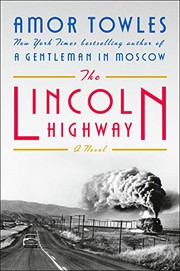
The Lincoln Highway
Emmett and Billy plan California in 1954, but two escapees steal their car and drag them east to New York.
2,954-word summary · 13 min read
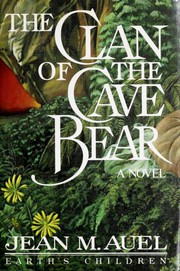
The Clan of the Cave Bear
A Cro-Magnon girl orphaned by disaster grows up with a Neanderthal clan, learning their medicine and customs while testing their limits.
3,684-word summary · 16 min read
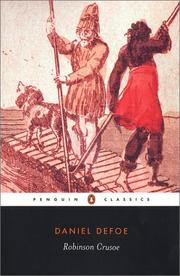
Robinson Crusoe
Shipwrecked near South America, Crusoe spends 28 years farming, building, praying, and facing who he becomes alone.
2,520-word summary · 11 min read
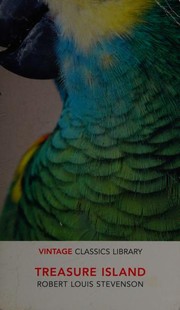
Treasure Island
Jim Hawkins finds Flint's map, sails with Squire Trelawney's crew that hides pirates, and learns Long John Silver is both cook, friend, and mutineer.
2,179-word summary · 10 min read
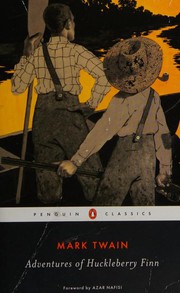
The Adventures of Huckleberry Finn
Huck Finn fakes his death, floats the Mississippi with the runaway Jim, and tears up the letter that would betray him. Twain's river classic, its cons and…
2,605-word summary · 12 min read
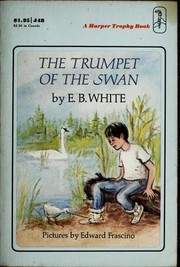
The Trumpet of the Swan
A mute trumpeter swan learns to read, write, and play a stolen trumpet to win a mate, in E.B. White's quiet 1970 tale of a boy who watches.
2,309-word summary · 10 min read
The Teacher of Nomad Land
In 1941 Iran, an orphaned boy straps a chalkboard to his back and sets off to teach nomads, hoping to keep his little sister with him.
2,534-word summary · 11 min read
The Forest of Vanishing Stars
A girl raised in the Polish wilderness uses her survival skills to hide Jewish refugees, until a secret from her own past catches up.
2,250-word summary · 10 min read

Seascraper
In a rain-swept English coastal town, a young shrimp scraper is drawn in by a stranger claiming to be a film director scouting locations.
2,544-word summary · 11 min read
Theft
Gurnah traces three linked lives in Tanzania, where a servant's accusation of theft opens a family history of love, duty and quiet betrayal.
2,454-word summary · 11 min read
The Woman Who Rides Like a Man
Newly knighted, Alanna heads south into Tortall's desert, where a broken sword and a dead shaman leave her responsible for a rebel tribe and three Gifted…
2,894-word summary · 13 min read

The Secret of the Old Clock
The first Nancy Drew novel: a sixteen-year-old detective follows a clue hidden in a clock to overturn a will and restore a family's inheritance.
2,011-word summary · 9 min read
The Pull of the Stars
Over three days in a Dublin maternity ward in 1918, a nurse, a suffragette doctor on the run and a young volunteer face the flu, childbirth and unexpected love.
2,578-word summary · 11 min read
The Paying Guests
A widowed mother and her unmarried daughter take in lodgers in 1922 south London, and a secret affair between Frances and Lilian pulls them into a murder case.
2,661-word summary · 12 min read
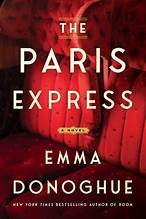
The Paris Express
Emma Donoghue turns the real 1895 Montparnasse rail disaster into a crowded historical thriller, following a bomb-carrying anarchist and a carriage of…
2,785-word summary · 12 min read

The Kitchen God's Wife
Amy Tan's second novel pairs a San Jose speech therapist with her Chinese mother, whose account of war, an abusive husband, and a narrow escape comes out in a…
2,896-word summary · 13 min read
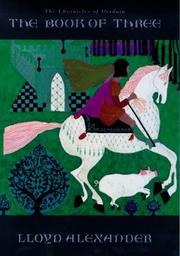
The Book of Three
A restless assistant pig-keeper in mythical Wales chases his escaped oracle pig and finds himself beside Prince Gwydion in a war against the Lord of Annuvin.
2,019-word summary · 9 min read
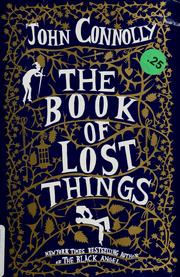
The Book of Lost Things
A twelve-year-old boy grieving his mother's death slips through a crack in the garden wall into Elsewhere, where fairy tales and a fading king guard the secret…
2,441-word summary · 11 min read
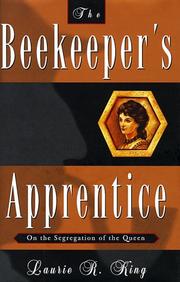
The Beekeeper's Apprentice
In 1915 a bookish fifteen-year-old American girl stumbles across a retired Sherlock Holmes keeping bees on the Sussex Downs, and talks him into taking her on…
2,215-word summary · 10 min read

My Side of the Mountain
Sam Gribley leaves a crowded New York apartment for the Catskills, builds a home in a tree and trains a falcon to help him survive.
2,242-word summary · 10 min read
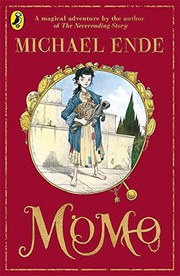
Momo
A girl with a gift for listening takes on grey-clad thieves who persuade a city to save its time, in Michael Ende's 1973 fable about efficiency and attention.
2,275-word summary · 10 min read

Hawaii
Michener tells the history of the Hawaiian islands in six sweeping sections, from volcanic origins to statehood, through the lives of those who arrived.
2,295-word summary · 10 min read

Endling
A Ukrainian scientist breeds endangered snails from her van and funds the work by posing as a mail-order bride, until a kidnapping plot meets the outbreak of…
3,041-word summary · 14 min read
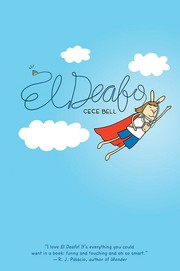
El Deafo
A deaf girl in a world of rabbits turns her bulky Phonic Ear hearing aid into a superhero identity while searching for a true friend.
2,515-word summary · 11 min read