
Reading options
What's inside (8 sections)
The first thing I remember about My Side of the Mountain is not the falcon or the tree house. It is the smell of woodsmoke, because George writes about fire the way some writers write about weather. I read this copy as an adult after lending it to a child who never gave it back, and I was surprised by how much of it I had kept without knowing it. The book is nominally about a twelve year old boy who runs away to the Catskills. It is really about learning to be alone without pretending that being alone is the point.
I had forgotten how funny it is in places. Sam is solemn about his plans and very practical about his body, and the two tones sit side by side without comment. He will spend a page working out how to make a fire and half a page deciding what to wear. I remembered none of that from my first reading. What I had remembered was the feeling of the mountain, which is the part George clearly wanted to last.
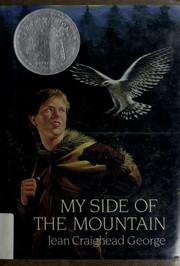
The story was published in 1959 by E. P. Dutton and was written and illustrated by Jean Craighead George herself. The edition I read is the Dutton reissue with 177 pages and ISBN 9780525443926. It earned a Newbery Honor in 1960 and has been on library shelves ever since, including a long stretch on mine. It was also named an American Library Association Notable Book, placed on the Hans Christian Andersen Award honors list, given a Lewis Carroll Shelf Award citation in 1965 and awarded the George G. Stone Center for Children's Books prize. In 2007 the National Education Association put it on its list of teachers' top hundred books for children, and School Library Journal ranked it among the great children's novels a few years later. That is a lot of honours for a book about a boy in a tree, but they are not misplaced.
A film followed in 1969, though it moved the setting to Toronto and the Notre Dame Mountains, which is not the same book in any meaningful way. George later returned to Sam Gribley in On the Far Side of the Mountain and Frightful's Mountain, but the first novel stands on its own.
A boy in a tree during a blizzard
George opens in the middle of things. Sam Gribley is huddled in a tree house during a hard winter storm with a peregrine falcon called Frightful and a weasel called the Baron. Then she backs up and tells us how he got there. That structure is doing quiet work. We meet the result first, a boy who has made a home in a tree, and only afterwards learn how much trial and error went into it.
Sam is twelve and lives in a cramped New York City apartment with his parents and eight brothers and sisters. He has heard about an abandoned family farm in the Catskills near Delhi, New York, and he decides to go there by himself. His father does not believe the boy can look after himself, but he lets him go anyway, with the instruction to tell someone in town if he makes it. That permission is the most generous act in the book. Nobody sends him away. He is simply taken seriously enough to be allowed to try.
I keep coming back to the number of siblings. Eight brothers and sisters explain more than one page of this novel. Sam does not run away because he is mistreated. He leaves because there is no room, no quiet and no way to be a person among so many people. The mountain offers him space first and everything else second. George understands that a child can want privacy as fiercely as an adult, and she never treats the wish as a phase. The first chapter after the flashback shows him reading everything he can find about wilderness survival in the city library before he goes, which makes the trip feel planned rather than impulsive.
Learning the mountain
Sam's first attempt is a mess. He cannot find the farm at first, and his book learning from the New York City Public Library turns out to be thinner than he hoped. He meets a man called Bill living in a cabin, who teaches him to make a fire, and a librarian named Miss Turner in Delhi who tells him where the old Gribley land actually is. When he finds it, the farmhouse is gone. There is land, a stream and trees, and not much else.
The next stretch is a catalogue of small discoveries, and it is the part I loved most as a child and trust more as an adult. Sam forages for plants and traps animals for food. He hollows out the inside of a tree by burning it slowly, which is a technique I had assumed was made up until I read how carefully he describes it. He builds a box trap. He learns what a poached deer carcass can become: smoked meat, a hide, clothes. Nothing arrives ready made. Every meal and every garment is the result of a decision and a few hours of work.
That is the book's great strength. George does not write survival as a set of heroic gestures. She writes it as a long series of chores, some of them dull, some of them dangerous, and she makes the dull ones interesting. I found myself paying attention to how Sam stores food in hollow trunks and how he watches a raccoon digging for mussels in the creek. The natural detail is exact without becoming a lesson. There is no quiz at the end.
Frightful and the Baron
Sam decides he wants a falcon. He reads about falconry at the local library, then takes a chick from a peregrine's nest and names it Frightful. The bird becomes his hunting partner and, in a way, his income. When a forest ranger sees the smoke from Sam's fire and comes looking, Sam hides in the woods for two days and waits for the trouble to pass. He also catches a weasel in his box trap, which he calls the Baron for the grand way it moves. The weasel is not a pet in the usual sense, and George is honest about the awkwardness.
The raccoon he calls Jesse Coon James teaches him where to find shellfish. Sam watches the animal work the creek and copies it. That pattern repeats throughout the book. Sam's education comes from other creatures more often than from people, and the book treats that as ordinary rather than magical. When he needs deerskin clothing, another poached deer provides it. When he needs to understand winter, he watches how animals behave in the cold and in the snow.
There is a small moral tangle here that I did not notice as a child. Sam's venison comes from deer killed illegally by other people, and he takes the carcasses. He does not kill the deer himself, but he is not exactly innocent either, and George leaves the awkwardness in place. The same is true of the falcon chick. He takes it from a nest because he wants it, and then he spends the rest of the year learning what a responsibility he has assumed. Children's books of that era were often tidier about right and wrong. This one lets a boy want something badly and then live with the consequences.
I should add a word about the title character, because the mountain is not scenery. It is the thing that tests him. The Catskills in this book have weather, steep ground, hunger and a kind of indifference that is more honest than cruelty. Sam's relationship with the place changes over the year from admiration to something closer to partnership. He learns what it will give and what it will not.
Bando, the professor and the winter
A man turns up at the tree house one day, and Sam assumes he is a bandit, which is where the name Bando comes from. The man is actually an English professor who has got lost in the woods. He stays for ten days, and in that time he helps Sam build a raft, fish, make jam and carve a whistle from a willow branch. He promises to come back at Christmas. He is the closest thing the book has to a second parent, and his arrival is also a reminder of what Sam has left behind.
Winter brings the book's genuinely frightening scene. Sam builds a clay fireplace and insulates his home so well that he traps the fumes inside. He suffers carbon monoxide poisoning and barely gets out alive. I read that passage twice, once with a child's idea that it was an adventure and once as a parent, and the second reading was much less comfortable. George never softens it. A mistake like that could kill a person, and the book says so.
He goes into town just before Christmas and meets Tom Sidler, a local teenager who makes fun of his appearance. Bando returns with newspaper articles about the wild boy living in the forest. Sam is startled to discover that other people have been watching him, and that his private experiment has become a story. Then his father arrives on Christmas Day. Their reunion is short and unsentimental, which is the right tone for this book. Sam has survived the season, and he has learned that surviving is not the same as being fine. He cures a vitamin deficiency by eating liver, and the detail stays with me because it is so unglamorous.
Bando's ten days in the woods are among the warmest pages, and they are also the ones where Sam is most obviously a child. He shows off. He wants the professor to see the tree house and the traps and the smoke hole, and he wants someone to ask him questions that he can answer. The willow whistle Bando makes is a small thing, but Sam keeps it. I think the book understands that a gift like that carries more weight than any amount of advice. When Bando promises to return, he gives Sam something to count on through the cold months, which may be the most useful thing anyone gives him all year.
Spring visitors and the last page
In spring a local teenager called Matt Spell turns up hoping to be a reporter. Sam does not want an interview, so he offers a deal: Matt can come and live with him for a week if he keeps the location secret. Matt agrees and then breaks his word, which costs Sam something. Bando comes back and helps build a guest house. Tom Sidler visits too, and Sam realises during that visit how badly he wants company. The people he has been avoiding are the people he misses.
In June his family arrives at the Gribley land. His father announces that they are moving there. Sam is pleased at first, then upset, because the arrival means the end of his self sufficiency. The final pages hold both feelings at once. He wants the mountain and he wants his family, and George refuses to choose between them. That is a more grown up ending than the premise suggests, and it is the reason the book has lasted. A lesser version would have let him stay alone and called it freedom.
What holds up, and what does not
The reviews from 1959 were strong. The New York Times called it a delightful flight from civilization with real feeling for the woods, and Zena Sutherland wrote that Sam's change from an impulsive child into a mature young adult was wholly convincing. Ruth Hill Viguers predicted in The Horn Book that children would read it for years, which turned out to be accurate. The book gathered a Newbery Honor, an American Library Association Notable Book citation and a Lewis Carroll Shelf Award, and it has stayed in print for a reason.
Not every reader has been won over. Mary Harris Russell noted in 1999 that Sam speaks in a tone more measured than most teenagers, and that this grates on some people. She is right. Sam narrates like an adult looking back, and if you come to the book expecting a child's voice you will be disappointed within a page. I have come to think of that as a design choice rather than a failure. The voice is what lets George describe a weasel or a blizzard with such precision, and precision is the whole point. There is also a strand of the book where the animals behave with a neatness that feels arranged for the story. Frightful is a bird, not a friend in the human sense, and the novel sometimes forgets that.
What I keep returning to is the question the ending asks without stating. Sam goes home to his family, but he does not become a different person. He brings the mountain back with him in the form of skills and habits and a way of noticing things. Robert F. Kennedy Junior once said the book inspired him to become a falconer. I understand the pull. After finishing it I wanted to know the name of every bird over my street, which is the most useful thing a children's book can leave behind.
FAQ
Is My Side of the Mountain based on a true story?
No. It is a work of fiction, written and illustrated by Jean Craighead George and first published by E. P. Dutton in 1959.
Does the book have sequels?
George later wrote On the Far Side of the Mountain and Frightful's Mountain, returning to Sam Gribley and Frightful. This novel stands alone.
What award did it win?
It was a Newbery Honor book in 1960 and an American Library Association Notable Book, among other citations.
Similar books
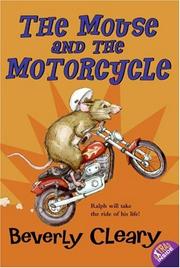
The Mouse and the Motorcycle
A bored mouse named Ralph finds a boy's toy motorcycle in a hotel room and starts a secret life of night rides, mishaps, and unlikely friendship.
2,254-word summary · 10 min read
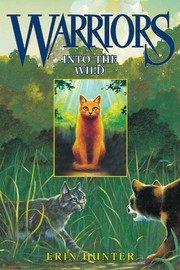
Into the Wild
Housecat Rusty joins ThunderClan and learns clan law before war.
2,597-word summary · 12 min read
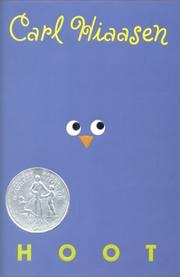
Hoot
Roy tracks a shoeless boy to save burrowing owls from a pancake house.
2,290-word summary · 10 min read
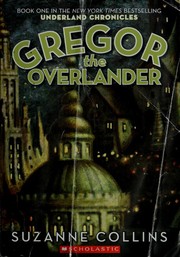
Gregor the Overlander
Gregor follows Boots down a grate into the Underland and a war prophecy.
2,516-word summary · 11 min read
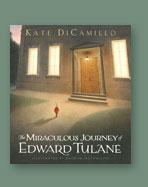
The Miraculous Journey of Edward Tulane
A china rabbit lost at sea learns to love through owners kind and cruel across many years.
2,002-word summary · 9 min read
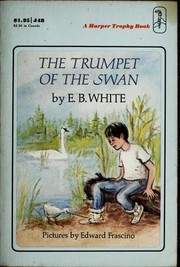
The Trumpet of the Swan
A mute trumpeter swan learns to read, write, and play a stolen trumpet to win a mate, in E.B. White's quiet 1970 tale of a boy who watches.
2,309-word summary · 10 min read
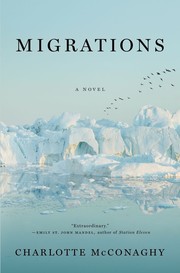
Migrations
A woman released on parole travels to Greenland to follow the last Arctic terns on a final migration toward Antarctica.
2,296-word summary · 10 min read
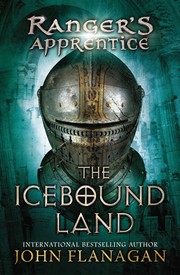
The Icebound Land
Captured and enslaved in Skandia, Will fights a drug that erases him while Halt and Horace cut a bloody road through Gallica to bring him home.
2,088-word summary · 9 min read
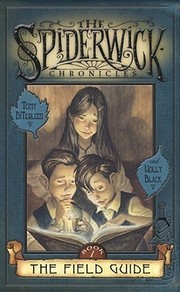
The Field Guide
Three siblings move into a creepy Maine estate, anger a brownie, and find a forbidden guide to the fairy world in the first Spiderwick book.
2,033-word summary · 9 min read
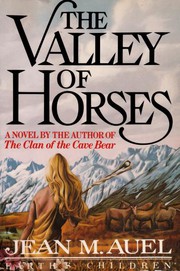
The Valley of Horses
Exiled from the Clan, Ayla survives alone in a hidden valley, tames a horse and a cave lion, and nurses a wounded stranger back to life.
2,311-word summary · 10 min read
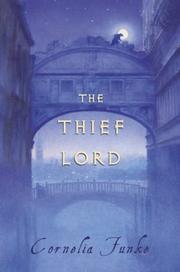
The Thief Lord
Orphaned brothers join a gang of Venice street kids and a masked Thief Lord, chasing a magic merry-go-round that can change a person's age.
2,040-word summary · 9 min read
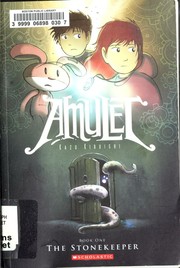
The Stonekeeper
After their father's death, Emily and Navin chase a monster into a hidden world to save their mother, and Emily's great-grandfather's amulet offers power at a…
2,753-word summary · 12 min read
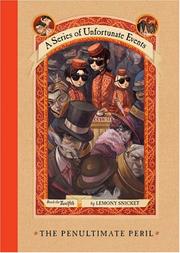
The Penultimate Peril
Baudelaires as concierges in a hotel sort friends from foes before the end.
2,234-word summary · 10 min read
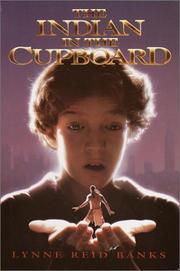
The Indian in the Cupboard
Omri learns a key turns plastic Little Bear into a live Iroquois man.
2,228-word summary · 10 min read
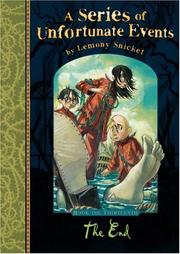
The End
Baudelaires wash on an island where others decide what safe means.
2,320-word summary · 10 min read
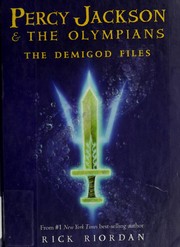
The Demigod Files
Three Percy Jackson side quests plus camp maps, cabin guides, interviews, and god profiles set before the final battle.
2,498-word summary · 11 min read
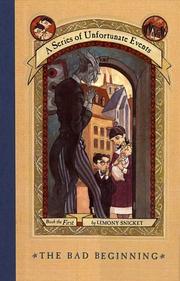
The Hostile Hospital
The Baudelaires hide in half-built Heimlich Hospital, uncover a thirteen-page file hinting a parent survived, and flee Olaf's surgery trap through fire.
2,658-word summary · 12 min read
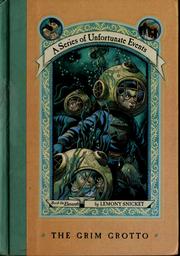
The Grim Grotto
Snicket eleventh Baudelaire book, Sept 2004 HarperCollins, 323 pages: the Queequeg crew, Gorgonian Grotto fungus, Fiona choice, and Sunny wasabi cure that…
2,789-word summary · 12 min read
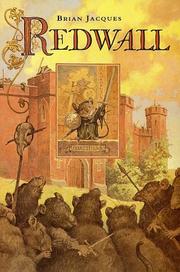
Redwall
A novice mouse hunts for Martin the Warrior's lost sword while Cluny the Scourge besieges Redwall Abbey.
2,727-word summary · 12 min read
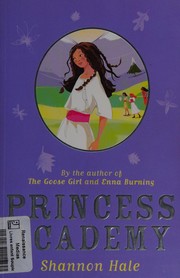
Princess Academy
Miri leaves her Mount Eskel quarry home for Princess Academy, where quarry songs, books, and a bandit siege shape her fight for fair trade, a school, and a…
2,441-word summary · 11 min read
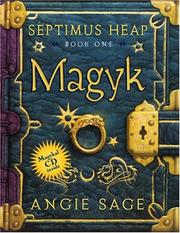
Magyk
A baby found in snow, a lost seventh son, and a run for the Marram Marshes as Marcia Overstrand shields two children from DomDaniel.
2,604-word summary · 12 min read
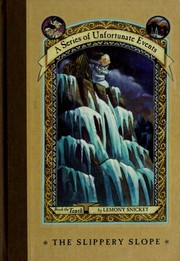
The Slippery Slope
Violet and Klaus climb icy peaks to rescue Sunny while Quigley and V.F.D. ruins change what they know.
2,678-word summary · 12 min read
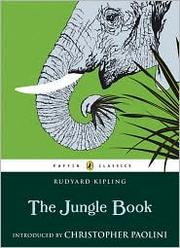
The Jungle Book
Mowgli, raised by wolves in the Seeonee Hills, learns the Law from Baloo and Bagheera while Shere Khan circles. Kipling's 1894 story collection.
2,799-word summary · 12 min read
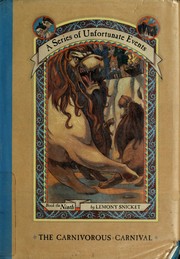
The Carnivorous Carnival
Baudelaires hide as carnival freaks to find V.F.D. clues, facing lions, Olaf, and a fateful cliff split.
2,027-word summary · 9 min read
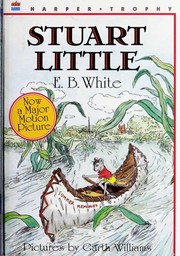
Stuart Little
A two-inch boy in a New York family befriends a canary, loses her, and drives off alone to find her.
2,591-word summary · 12 min read
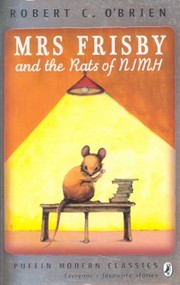
Mrs. Frisby and the Rats of NIMH
A widowed mouse races the spring plow to save her sick son Timothy, and finds help from the intelligent rats of NIMH hiding under the rosebush.
3,159-word summary · 14 min read
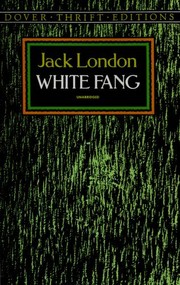
White Fang
A wild wolfdog grows through hunger and cruelty toward a hard earned trust in one patient man.
2,540-word summary · 11 min read
The Wind in the Willows
Mole, Rat, Badger, and Toad mess about in boats, lose themselves in the Wild Wood, and retake Toad Hall.
2,033-word summary · 9 min read
Island of the Blue Dolphins
Left alone on San Nicolas Island for eighteen years, Karana builds shelter, faces wild dogs, and finds company with Rontu.
2,559-word summary · 11 min read
Watership Down
Hazel leads a small band of rabbits from a doomed warren to Watership Down, where survival means facing snares, farms and General Woundwort.
2,550-word summary · 11 min read