
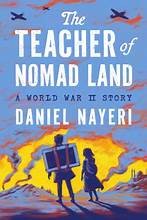
The Teacher of Nomad Land
2,534-word summary 11 min read 192 pages in the book
- First published
- 2025
- Publisher
- Levine Querido
- Pages
- 192
- ISBN
- 9781646145669
Reading options
What's inside (9 sections)
I picked this one up because of an award citation, which is a strange reason but an honest one. The National Book Foundation had singled out a 2025 novel about a boy in occupied Iran who carries a chalkboard into the mountains, and the image stuck with me. A war story whose main tool is a slate and a stick of chalk. It turned out to be stranger and more moving than the tidy summary suggests, and it wears its 192 pages lightly.
Daniel Nayeri published The Teacher of Nomad Land with Levine Querido on 16 September 2025. It won the 2025 National Book Award for Young People's Literature, earned a Newbery Honor in 2026, and made Kirkus Reviews' list of the best books of 2025. That is a stack of honors for a short book about children hiding from soldiers. The prizes matter here less as a badge than as a sign that the book does something unusual with a familiar subject, and that critics kept reaching for unusual words to describe its voice.
Nayeri was born in Iran, spent time as a refugee, and immigrated to Oklahoma when he was seven. He has worked as a literary agent, an editor, and a publisher. You can feel that history in the book, not as explanation but as instinct. He writes about displacement from the inside, and about a corner of the Second World War that most young readers never encounter. It helps to know that background, though the book never asks you to read it as a coded memoir. It is a novel first, written for children, and it earns its feelings through the story rather than through the author's biography.
A war most readers never see
The year is 1941. German armies are rolling across Europe, and Iran is officially neutral. That neutrality does not spare it. British forces occupy the country from one direction and Soviet forces from the other, and the occupation is very much the Anglo-Soviet invasion that has just cost Babak his father.
Isfahan is full of soldiers. Teahouses are crowded, Nazi spies move through the alleyways, and the atmosphere is one of those tense, watchful places where a child learns quickly which grownups to trust. It is a setting the book treats as ordinary life rather than backdrop. Soldiers in the street, rumors in the market, a family trying to stay together. That is the air the children breathe from the first chapter.
That choice is part of what makes the novel distinctive. Many war books for young readers arrive at the familiar fronts: the beaches, the camps, the blitzed cities. Nayeri goes somewhere else. Iran under dual occupation is a place with its own language, its own geography, and its own reasons for fear. The book trusts readers to follow along without a map handed to them in advance, and it is willing to let a young audience sit with things it does not fully explain.
Babak is twelve or thirteen. His little sister is Sana. Their father is dead, and the two of them are orphaned in a country where officials have the power to separate children like them. That fear, more than any army, is what sets the plot in motion. The grownup world is not exactly against them, but it is organized in a way that has no room for two unaccompanied children. Babak understands this with the clarity that only a child in that position could have.
The chalkboard plan
Babak's solution is practical in the way that only a desperate child's plan can be. Their father worked as a teacher to the nomads. Babak will take that job. He straps a chalkboard to his back, fills a satchel with textbooks, and sets off with Sana into the Zagros Mountains to find the Bakhtiari tribes on their annual trek.
The detail of the chalkboard is the book's best invention. It is heavy and awkward and a little ridiculous for a boy of that age to carry, and that is exactly the point. He cannot fight, he cannot argue with soldiers, and he cannot make the occupation go away. He can teach. The board is his credential and his shield at once, a sign he shows the world to explain why two children are traveling alone. It gives him a role in a situation where he has no power.
Sana is along for the whole thing, which keeps the story from becoming a lone-child adventure. The bond between them is the engine of the book. Babak is not trying to become a hero for its own sake. He is trying to keep his sister with him, and teaching is the route he has found to do it. That motivation is simple to state and unusually steady in practice. Every step of the plan bends toward the same goal: keep the two of them together.
The Zagros Mountains and the Bakhtiari migration give the novel its physical shape. This is a story of movement, of walking with a caravan and trying to keep up with people whose lives are older and larger than the war pursuing them. Nayeri gives the landscape real texture without turning it into a travelogue. The nomads are not a backdrop for the children's quest; they are a people with their own rhythms, and Babak has to fit himself into those rhythms if his plan is going to work.
There is something quietly funny in the premise too. A boy with textbooks and a slate assumes that being a teacher is mostly a matter of showing up and knowing your lessons. Children will recognize that kind of confidence, and adults will recognize how quickly real life corrects it. The book lets the idea shine for a moment before the mountain knocks it around.
A false start on the mountain
The plan does not work at first. Babak's first attempt at teaching falters, and the leader of the caravan tells him to go back to Isfahan. It is a small defeat that could end a lesser book. Here it is the hinge that sends the children back down into danger, and it does so without a speech or a moment of doubt from Babak that lasts too long. He adjusts, which is what the book keeps asking of him.
Wandering through the mountains toward the city, Babak and Sana run into a Nazi hunting a Jewish boy named Ben. The spy is looking for one child among many, and the siblings have the bad luck to be in the wrong place at the wrong time. They evade him, which is a relief that does not last, because the reason he is hunting becomes the next problem. Nayeri does not linger on the spy's point of view. He stays with the children, and the threat is felt the way a child would feel it: as a shape at the edge of things, never fully understood.
Finding Ben changes the shape of the story. He is trying to reach Tehran, and from there he hopes to sail to Israel. Now there are three children on the move and one armed adult behind them. The adventure story that had been about a boy pretending to be a teacher becomes a chase, and the chalkboard has to do double duty. Ben's presence also sharpens the book's moral edges without making them simple. He is a Jewish child in a country occupied by a German enemy, and Babak's willingness to help him is the kind of choice the novel treats as natural rather than heroic.
Three children, five languages
What Babak does with the board during the flight is the heart of the book. He uses it to communicate across the languages of the people they meet: Persian, Bakhtiari, German, Hebrew, English. A mark on a slate becomes a way to ask a question, warn someone, or offer a lesson to a stranger who speaks nothing like you. The same object that got him taken seriously as a teacher now becomes a tool for getting three children through a country that wants to sort them into categories.
This is where the novel's idea about education stops being an abstract theme and becomes a plot device. Babak teaches in the middle of running for his life. He does not wait for a safe classroom or a proper school. The point is not that schooling solves the war, because it plainly does not. The point is that a child who can teach has a way of reaching people that a soldier with a gun does not. Nayeri is careful not to oversell it. The chalkboard helps, but it does not make the spy disappear or turn the occupation into something benign.
The language mixing is one of the pleasures of the book. Nayeri lets words from different tongues sit side by side, and the chalkboard makes the gaps between them visible. Readers who like books about how language works will find a lot to notice here, especially in how quickly a written symbol can do what a spoken word cannot. A word on a board can be pointed at, copied, and carried away. It is a small, stubborn bridge between people who have every reason to misunderstand each other.
The chase itself is brisk and often tense. A spy follows, the children improvise, and the stakes stay clear without being inflated. Nayeri writes action with short, clean sentences and lets the fear show in small physical details rather than in shouting. The National Book Foundation's citation called the language "simultaneously spare and incredibly powerful," and that seems exactly right for a book that can turn a few words into a scare. School Library Journal praised the artfully detailed setting and the values embodied in Babak's determination to teach others, which is a fair way to put what the book is doing. The setting is detailed because the detail is doing emotional work.
Why the chalkboard matters
Underneath the chase, this is a book about the power of education and the possibility of empathy between people of different creeds and nations. Those are large claims, and the novel earns them by keeping them small. Empathy here is one child writing a word so another child can understand. Education is a boy with a heavy slate on his back refusing to stop teaching. The book never pretends that these things are grand gestures. They are habits, and the habit is the point.
The judges who awarded the National Book Award stressed how unusual the book is among war novels. There are many books about the Second World War, they wrote, but this one is unlike the others, telling a story of empathy and survival that gets at something core in being human. Their citation pictured Babak "equipped with only a giant chalkboard and an equally immense heart," navigating a country occupied by outsiders while fighting to keep his sister with him and to survive the war, "all with chalk in hand." That phrasing could easily sound like marketing, but it happens to describe the book accurately.
Nayeri's own life sits behind that choice. He knows what it is to leave a country as a child and arrive somewhere new with a different language. The book never turns into a lecture about tolerance, because the author trusts the story to carry it. A boy who teaches a stranger is doing the work, and the reader is left to notice what it means. That restraint is one of the reasons the novel feels honest even when its plot gets convenient.
Critics responded to that combination of warmth and craft. Kirkus gave it a "GET IT" review and praised the way education and empathy light the way even in perilous circumstances. The New York Times praised the authenticity of the characters, saying you can hear their breath when they speak. The Horn Book called it stirring and emotionally rich, a suspenseful and profound novel that illuminates a lesser-known front of the war, and Publishers Weekly called it heart-piercing. The agreement across those reviews is about voice more than plot. Readers keep noticing how the book sounds and how much it fits into so few pages.
Where the book is thin
The criticisms are real, though they are modest. This is a middle-grade novel, and it keeps the political complexities of the Allied occupation at arm's length. The British and Soviet presence is a fact of life in the book, and the story is not interested in untangling the geopolitics behind it. Readers looking for a full account of why Iran was occupied, or what the occupying powers wanted, will need to go elsewhere. The book is content to show one child's view of the occupation, which is both its strength and its limit.
The escape plot also leans on some convenient coincidences. Children run into exactly the people they need to run into, and the spy's movements sometimes feel arranged for maximum pressure rather than realism. In a 192-page book that moves this fast, that is easy to forgive, but it is worth naming. The story is built as an adventure first, and the machinery shows if you look for it. Readers who need their plots airtight may find themselves noticing the strings.
The short length is a strength and a limit. Nayeri does not overstay, and the pacing rarely drags. At the same time, the setting feels sketched in places where a few more pages could have made the Bakhtiari trek and the occupation feel fuller. The book knows what it is and sticks to it, which is more than can be said for many award winners. It is hard to be too annoyed at a novel that ends when it should.
Who should read it
This is a strong choice for younger readers, especially ones who think war stories all look the same. It gives them a hero who wins by teaching rather than fighting, and a corner of the war that almost never appears in children's fiction. Teachers will find plenty to use, from the language theme to the questions about what makes a stranger an enemy. It is the sort of book that can start a real conversation without announcing that it is educational.
Adult readers should not be put off by the young protagonist. The book is short enough to read in a sitting, and its ideas about displacement and empathy are not simple. It is the kind of novel that leaves you thinking about the boy and his chalkboard long after the last page, not because of a twist but because of the plain, stubborn image of a child teaching his way through a war.
That image is what I keep coming back to. Babak does not defeat the occupation. He does not save everyone. He keeps his sister close, he writes words on a board for people who cannot understand each other, and he refuses to stop being a teacher even while running. For a book about a war most readers barely know, that is a memorable way to end up caring.
FAQ
Is The Teacher of Nomad Land based on real history?
It is historical fiction set in 1941 Iran during the Anglo-Soviet occupation. Nayeri draws on his own Iranian and refugee background, and the book depicts a real and rarely shown corner of the Second World War.
What awards did The Teacher of Nomad Land win?
It won the 2025 National Book Award for Young People's Literature and earned a 2026 Newbery Honor. Kirkus Reviews also named it one of its best books of 2025.
Is this book only for children?
It is written for middle-grade readers and runs just 192 pages, but its themes of displacement, empathy, and survival give adult readers plenty to consider. Its spare, intense prose drew praise from adult critics as well.
Similar books
A Long Walk to Water
Two eleven-year-olds in southern Sudan, twenty-three years apart: a Dinka boy fleeing war and a Nuer girl walking hours for water, until their stories meet at…
2,217-word summary · 10 min read
The Orphan's Tale
A Dutch teenager rescues a Jewish baby from a death train and joins a German circus, where a Jewish aerialist teaches her to fly.
2,943-word summary · 13 min read
The Power of One
A boy in apartheid South Africa decides to become welterweight champion of the world, and the novel follows every mentor, fight, and loss that gets him there.
2,145-word summary · 10 min read

Bud, Not Buddy
A ten year old orphan in the Depression walks to find a jazzman he thinks is his father.
2,568-word summary · 11 min read
Code Name Verity
In 1943 France, captured agent Verity writes a confession for von Linden to buy time. Her pilot friend Maddie survives the crash and searches for her by…
2,690-word summary · 12 min read
The Island of Sea Women
On Jeju island, haenyeo divers Young-sook and Mi-ja share decades of friendship strained by war and massacre.
2,204-word summary · 10 min read
Schindler's List
Womanizing profiteer Schindler spends a fortune typing over a thousand Jews onto factory lists.
2,048-word summary · 9 min read
City of Thieves
Two boys cross siege Leningrad to find eggs for a colonel's cake.
1,985-word summary · 9 min read
Salt to the Sea
Four refugee teens cross frozen Prussia toward a doomed ship that history barely remembers.
2,094-word summary · 9 min read
Cold Mountain
Wounded deserter Inman walks home to Ada as the Civil War ends, while she learns to keep a mountain farm in North Carolina with tough Ruby.
2,314-word summary · 10 min read
Between Shades of Gray
In 1941, fifteen-year-old Lina is deported from Lithuania to Siberia and uses her drawings to survive and send word to her father.
2,263-word summary · 10 min read
Lilac Girls
Three women meet across World War II: a New York volunteer, a Polish courier turned prisoner, and a German camp doctor.
2,731-word summary · 12 min read
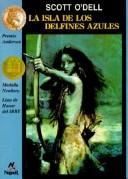
Island of the Blue Dolphins
Left alone on San Nicolas Island for eighteen years, Karana builds shelter, faces wild dogs, and finds company with Rontu.
2,559-word summary · 11 min read
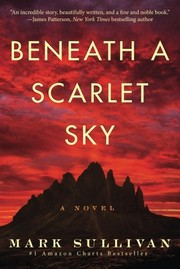
Beneath a Scarlet Sky
Pino Lella guides Jews over Alps then drives for Nazis in Milan.
2,271-word summary · 10 min read
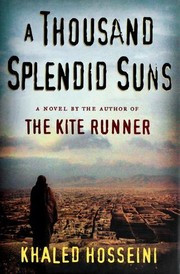
A Thousand Splendid Suns
Splendid Suns retold: Mariam and Laila share Kabul house, war, Rasheed, escape and return.
1,957-word summary · 9 min read
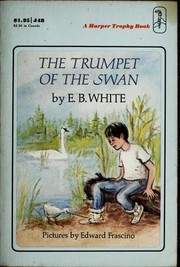
The Trumpet of the Swan
A mute trumpeter swan learns to read, write, and play a stolen trumpet to win a mate, in E.B. White's quiet 1970 tale of a boy who watches.
2,309-word summary · 10 min read

The Pianist
A Polish pianist endures the Warsaw Ghetto, the Umschlagplatz, and life hidden in the ruins of the 1944 uprising, until a German officer asks him to play.
2,481-word summary · 11 min read
The Long Haul
Greg Heffley's summer road trip goes sideways with a towed boat, a live pig, and a family in a purple van.
2,311-word summary · 10 min read

The Last Bookshop in London
A woman who has never cared for reading takes a job in a dusty London bookshop as the Blitz begins, and finds her place in it.
2,264-word summary · 10 min read
The Forest of Vanishing Stars
A girl raised in the Polish wilderness uses her survival skills to hide Jewish refugees, until a secret from her own past catches up.
2,250-word summary · 10 min read
She Who Became the Sun
A peasant girl takes her dead brother's name and becomes Zhu Chongba, climbing from a Buddhist monastery toward a fractured China's throne.
2,170-word summary · 10 min read
I Must Betray You
In 1989 Romania, a seventeen-year-old is forced to inform on an American diplomat's family and records the truth in a hidden notebook.
2,258-word summary · 10 min read
What Is the What: The Autobiography of Valentino Achak Deng
Dave Eggers retells the life of Valentino Achak Deng, a Lost Boy of Sudan, in the refugee's own voice, from a burned village to a robbery in Atlanta.
2,840-word summary · 13 min read
The Book of Three
A restless assistant pig-keeper in mythical Wales chases his escaped oracle pig and finds himself beside Prince Gwydion in a war against the Lord of Annuvin.
2,019-word summary · 9 min read
The Beekeeper's Apprentice
In 1915 a bookish fifteen-year-old American girl stumbles across a retired Sherlock Holmes keeping bees on the Sussex Downs, and talks him into taking her on…
2,215-word summary · 10 min read
Sunrise on the Reaping
Twenty-four years before Katniss, sixteen-year-old Haymitch Abernathy is swept into the fiftieth Hunger Games, where District 12 must send four tributes and…
2,198-word summary · 10 min read
My Side of the Mountain
Sam Gribley leaves a crowded New York apartment for the Catskills, builds a home in a tree and trains a falcon to help him survive.
2,242-word summary · 10 min read
Endling
A Ukrainian scientist breeds endangered snails from her van and funds the work by posing as a mail-order bride, until a kidnapping plot meets the outbreak of…
3,041-word summary · 14 min read
El Deafo
A deaf girl in a world of rabbits turns her bulky Phonic Ear hearing aid into a superhero identity while searching for a true friend.
2,515-word summary · 11 min read
Birdsong
A love affair in Amiens before the First World War and a granddaughter's search through encoded journals decades later, joined by the tunnels of the Somme.
2,041-word summary · 9 min read