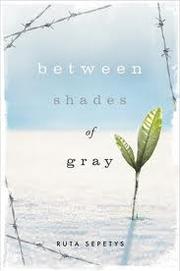
Between Shades of Gray
2,263-word summary 10 min read 352 pages in the book
- First published
- 2011
- Publisher
- Philomel Books
- Pages
- 352
- ISBN
- 9780399254123
Reading options
What's inside (8 sections)
I picked up Between Shades of Gray because a friend who teaches middle school told me her students finish it in two days and then go quiet. That sounded right for a book about a subject I knew almost nothing about. I knew about the Holocaust from school and books and films. I did not know much about the Soviet deportations from Lithuania in 1941. Ruta Sepetys published this novel in 2011 with Philomel Books, 352 pages in the hardcover edition tied to ISBN 9780399254123, and it was her first novel. It was later reissued under the title Ashes in the Snow, which is also the title of the film version. I read the Philomel edition in paperback over a weekend, and I kept stopping to look up maps of places I had never tried to place before, like Kaunas and the Altai region and Trofimovsk near the Laptev Sea.
The story follows Lina Vilkas, fifteen, who wants to go to art school. She lives in Kaunas with her mother Elena, her younger brother Jonas, and her father Kostya, a university rector who is often away. On the night of June 14, 1941, Soviet officers bang on the door and give the family twenty minutes to pack. Lina grabs drawings and a few clothes. Elena grabs food and blankets and documents. Jonas, only ten, grabs a favorite book and his shoes. Kostya is not home. He has already been taken with other men to a separate prison camp. From that first chapter the book moves fast and stays close to Lina, who narrates in short present tense bursts, as if she is writing down what she sees before she forgets it.
What pulled me in was not only the history but the way Sepetys uses small concrete things to carry it. A warm potato. A stolen shoe. A handkerchief with a stitched message. A drawing folded into a coat lining. Lina is an artist, so she notices faces and light and hands. That habit becomes the engine of the book. When she cannot speak safely, she draws.
The night they come
The opening is the strongest part of the novel. Lina is on the eve of a normal summer, annoyed with her cousin, thinking about a boy, worrying about an art program. Then boots on the porch. Three men enter, one Lithuanian and two Soviet, with a list. Elena stays calm in the way mothers do when calm is the only tool left. She speaks politely, asks for time, packs bread and salt and coats while Lina stands frozen. Jonas asks where Papa is. No one answers him directly.
Sepetys is good at the small cruelties of that night. Neighbors watch from windows and do not open doors. A family on the same street is loaded onto a different truck. A woman begs to bring medicine for her baby and is told no. Lina remembers the smell of her house as she leaves, soap and paper and her father pipe smoke, and that detail stayed with me longer than any speech about politics. The officers inventory their apartment as if the family has already stopped owning it. Elena hides valuables in coat hems and shoes, including jewelry and a little money, because she understands before her children do that food will soon matter more than papers.
At the train station the family learns Kostya has been taken to a men prison camp. They see him briefly across a fence, thin already, shouting names and an address. Elena shouts back. Guards push people apart. Lina tries to memorize his face. That separation shapes the rest of the book. Lina spends months trying to get word to him through drawings and smuggled notes, and the question of whether he is alive gives her a reason to keep recording dates and places.
I found this section painful in a direct way. The focus stays on procedure, lists and trucks and shouted orders, which makes it feel researched rather than staged. The flaw is a habit that continues through the book. Lina often tells us that something felt like a warning. That foreshadowing can feel heavy, as if the narrator does not trust us to feel dread on our own.
The cattle car north
The family is packed into a cattle car with about forty others, including a Jewish boy named Andrius Aras and his mother, a fussy woman called Mrs. Raskunas, a bald man who shouts and steals, a school principal, a pastor, and a young mother named Ona with a baby. The car has one small barred window, a hole in the floor for waste, and almost no water. The train moves for weeks. People sleep sitting up. Lice spread. Ona baby weakens. Tempers break.
Lina sketches the people around her to stay sane. She draws Jonas sleeping with his mouth open. She draws Elena holding Ona baby so Ona can rest. She draws Andrius with his collar up, watching her. These early drawings are private, a way to hold onto faces. Later they become messages. That shift is gradual and believable. At first Lina draws because she is an art student and that is what she does with fear. She copies hands because hands are hard and keep her mind busy.
Andrius enters here as more than a love interest. He is seventeen, angry, useful. His father was a political figure, so other deportees blame him. He smokes when he can get cigarettes, steals food when he must, and helps Lina pass notes. Their bond grows through small exchanges, a crust of bread, a pencil stub, a warning about which guard takes bribes. I liked that Sepetys lets them be teenagers inside horror. They flirt awkwardly. They argue about whether drawing helps anyone. Andrius teases Lina about her serious artist face. Lina notices the scar on his lip. Romance never takes over, which is right, but it gives both of them a reason to protect someone outside family.
The train chapters are full of specific scenes. Elena trades a wedding ring for a bucket of water at one stop. The bald man steals Ona potato and Elena confronts him without shouting. Jonas collects buttons and lines them up like soldiers. Ona baby dies, and the mother refuses for a day to let the body be taken. That passage is brief and plain, and stronger for it.
Sepetys keeps bodies and smells at a distance here, which suits readers from about twelve up. The restraint lets the facts land without turning pain into spectacle.
Altai and the Urals
After the train, the families are split. Women and children are sent to work in the Altai region, in a beet and potato collective, while many men remain in prison camps farther north. Lina, Elena, Jonas, Andrius, and his mother end up in a mud hut with a dirt floor, assigned daily quotas for digging and hauling. Pay is in bread grams tied to output. Fall below quota and bread shrinks. Miss days sick and bread stops.
Sepetys shows forced labor through routine rather than set pieces. Wake before light. Thin soup. Walk to fields. Dig until hands bleed. Queue for bread. Mend clothes. Sleep curled together for warmth. Elena works extra shifts to cover for Jonas when he coughs. Lina learns to steal potato peelings without being seen. Andrius learns which foreman will look away for a bribe. Mr. Stalas, an older man who knows farming, teaches Jonas how to pace himself and how to hide a few beets in his boots. Ulyushka, a Lithuanian woman who collaborates with the guards for extra food, steals from others and reports complaints. She is not a cartoon villain. She is hungry and frightened and willing to trade neighbors for soup, which makes her harder to dismiss.
Two scenes from this middle stretch stayed with me. Elena gives most of her bread to Jonas and Lina for three days and faints in the field. In another, Lina draws a map of the camp from memory, and a guard beats Andrius instead of her when Andrius claims it is his. Sepetys handles it by focusing on aftermath rather than blows, Andrius split lip, his mother crying silently, Lina washing blood with snow water.
Andrius and the drawings
Lina art changes function halfway through. At first it is witness. Then it becomes mail. She starts drawing portraits of guards and their sweethearts in exchange for paper and favors. She copies camp layouts on the backs. She hides notes in drawings meant for her father, using agreed signs, a bird for hope, a face for location, dates worked into shading. A priest and a sympathetic guard help move some pages toward the men camp. Not all arrive. Some are confiscated. One is returned torn.
This is the most original thread in the book, and Sepetys bases it on real practices. Deportees did hide messages in linings and drawings, and families did try for years to trace prisoners through such scraps. Lina also draws to remember Kaunas, her father study, the library stairs, Jonas laughing before the arrest. When paper runs out she draws in dirt with a stick and wipes it away, which broke my heart in a quiet way. The habit says she believes someone will one day want to see what happened, even if she does not survive to show it.
Her bond with Andrius deepens through this work. He becomes her lookout and courier, distracting guards while she sketches, carrying folded pages in his shoe. There is a scene where he brings Lina a stub of charcoal wrapped in cloth, still warm from his pocket, and she cries because no one has given her a gift in months.
Bold truth in this section is simple. Art does not save them. What it does is keep Lina a person rather than a number, and it gives others proof they were seen. Mrs. Aras asks for a drawing of her husband from memory. The pastor asks Lina to draw his church. Those small requests show how portraiture restores names in a place built to erase them.
What survival costs
As winter closes in, the group is moved farther north by barge and truck toward Siberia, eventually to Trofimovsk near the mouth of the Lena River above the Arctic Circle. Conditions worsen sharply. Huts are unfinished. Firewood is scarce. Rations fall to a few hundred grams of bread. Fishing through ice becomes work for children because their hands fit the holes. Jonas, now thin and coughing, learns to check nets with Andrius. Lina learns to sew boots with fish skin and thread pulled from sacks.
Elena weakens through this final stretch. She has given away food for months and nursed others through fevers. She snaps at Lina once about wasted paper. She cries when she thinks the children sleep. But her core holds. She insists on schooling, making Jonas recite multiplication and Lithuanian poems, and on sharing soup evenly. Those habits sound small until you see how they keep people from turning on each other.
Deaths come faster here. The pastor dies. A baby born on the barge lives only days. Burials are in frozen ground too hard to dig, so bodies wait under snow. Lina stops drawing faces for a while because every face she draws disappears. She draws hands instead, dozens of hands holding bowls and tools. When spring comes, rescue is not a liberation scene. It is a slow administrative shift and a letter that finally arrives about Kostya. I will not spoil the exact news, but it fits the historical record, where many men in prison camps did not return.
What I admired is that Sepetys lets survival feel random rather than earned. Kind people die. Selfish people sometimes live. Elena choices save Jonas more than once, yet luck decides as much as courage, which guard is on duty, which hut gets a stove that works.
What works and what strains
This is a strong first novel with real research behind it, and it earns its place in classrooms. The voice is clear and steady. Jonas grows from a scared ten year old who hoards stones into a boy who shares bread and works nets in freezing water, and Sepetys never rushes that change. The camp routines, the bribes, the bread math, all feel lived in.
The strains are worth naming. Foreshadowing is the main one. Lina says things like I should have paid attention so often that tension leaks. Second, some secondary figures stay flat. The bald man is mostly greed. Ulyushka is mostly betrayal with one late soft beat. Third, language sometimes leans sweet in hard places. Teen readers may not mind. Adult readers may notice.
None of that stopped me from recommending it. I finished with a better map in my head of what happened to Baltic families after the Soviet occupation. If you teach this book, pair it with a short history of the 1941 deportations so students see where Sepetys compressed time and softened detail for a young audience.
For readers who came through the film Ashes in the Snow, the novel gives more of Elena and Jonas and the drawing messages, and more time in Altai before the far north. Names and order match, though the film shortens the middle labor months. Either entry leads to the same shock, that this happened to schoolgirls and farmers and librarians within living memory, and that art made from stubs and scraps helped some of them hold on.
FAQ
Was Between Shades of Gray published under another title?
Yes. It was later reissued as Ashes in the Snow, which is also the title of the film adaptation.
Is the book based on true history?
Yes. It draws on Soviet deportations of Lithuanians in 1941 and Siberian labor camps, with an author note on research.
Similar books
More like Between Shades of Gray →
Life After Life
Ursula Todd dies and restarts through wars, flus, and bad marriages.
2,060-word summary · 9 min read

Cold Mountain
Wounded deserter Inman walks home to Ada as the Civil War ends, while she learns to keep a mountain farm in North Carolina with tough Ruby.
2,314-word summary · 10 min read

Beneath a Scarlet Sky
Pino Lella guides Jews over Alps then drives for Nazis in Milan.
2,271-word summary · 10 min read


The Summer of Broken Rules
Meredith plays Assassin at Vineyard wedding a year after sister Claire died.
2,288-word summary · 10 min read

The Kill Order
Mark survives flares and Flare virus as WICKED forms thirteen years before maze.
2,129-word summary · 9 min read