

Yellow Crocus
2,094-word summary 9 min read 238 pages in the book
- First published
- 2010
- Publisher
- CreateSpace Independent Publishing Platform
- Pages
- 238
- ISBN
- 9781470171797
- Series
- Yellow Crocus (#1)
Reading options
What's inside (8 sections)
The thing that was never hers
The book opens with a grown woman looking back. Lisbeth tells us plainly that Mattie was never truly hers. Her family owned her, in the legal language of 1830s Virginia, but Mattie's deepest affections lay somewhere else entirely. The novel is Lisbeth's account of a love between two women that the law called property and that the world had no name for. It is a historical novel about slavery, but it is also, stubbornly, a love story, and that combination is what makes it both affecting and occasionally uncomfortable.
Laila Ibrahim self-published the book in 2010, and it has since found a steady readership through book clubs and word of mouth. The story begins on April 14, 1837. Twenty-year-old Mattie is an enslaved field hand who is summoned to the big house by twelve-year-old Emily, the house maid, because her mistress is in labor. Before she goes, Mattie hands her own infant son Samuel to her elderly grandfather Poppy. She arranges for her sister Rebecca to nurse him. She has no idea how long she will be separated from him. That small exchange, made in the dark before the story really begins, is the emotional key to everything that follows.
The room upstairs
In the upstairs bedroom the doctor uses forceps to deliver a purple, motionless baby girl. There are tense moments before the infant finally wails, and the doctor takes credit for what modern medicine has done. Mattie is ordered to nurse the child, who has no name yet, and is told she must call her Miss Elizabeth. The baby will be Lisbeth.
The housekeeper, Mrs. Gray, installs Mattie in a tiny windowless anteroom off the nursery. She lays down rules: use the rear stairs when unaccompanied, do the laundry only once a week, discard the head rag. She tells Mattie that becoming a house slave is a rare privilege. Ibrahim writes these scenes with a careful, almost quiet precision. There is no shouting. The cruelty is administrative. A woman who has just been taken from her own child is told to be grateful for a smaller room.
Through the window Mattie watches Poppy carry Samuel toward Rebecca's cabin so he can be fed. She weeps with longing. In a moment of raw hatred she covers the newborn Lisbeth's mouth and nose with her hand, and then pulls her hand away. She refuses to hurt the child. That gesture, the hand that stops itself, is the moral center of the novel. Mattie is not presented as a saint. She is a young mother whose own baby has been taken away, and for one second she wants to make someone else pay. Then she prays for Samuel and for the strength to care for Lisbeth.
The years in between
What follows is a long, patient account of two lives growing up side by side. Lisbeth absorbs Mattie's world: prayer, songs, black-eyed peas, and the search for yellow crocuses in the spring. The crocus of the title is a small, early flower, something that appears when the ground is barely warm. It is the right emblem for a book about things that survive in bad conditions.
Lisbeth is lonely in the big house. Her mother Ann is overwhelmed, and her father is distant and slave-owning. Mattie becomes more family to her than her biological relatives are. When Lisbeth visits the slave quarters she finds a lively, loving community there, and the visits draw the two women closer. Ibrahim is careful to show both sides of that arrangement. Lisbeth's affection is real, but it exists inside a system in which Mattie can be beaten and sold. The girl who slips away to the quarters can go back to a warm bed. Mattie cannot.
Prayer is the thread that holds Mattie's days together. She prays for Samuel and for strength to care for Lisbeth, and she sings to the child in the language of the quarters. Those songs are one of the ways Lisbeth inherits a world her parents would rather she did not know about. Years later, when she is being prepared for the life of a plantation wife, the songs and the prayers and the taste of black-eyed peas are still in her. Ibrahim is good at showing how a person can be formed by someone whose social position is supposed to make that formation impossible. The child of the big house learns how to see from the quarters, and there is no going back.
As Lisbeth grows older she becomes increasingly aware of the gulf between her life and Mattie's, and of the expectations her parents have for her future. The shift is gradual. At first she simply loves the woman who sang to her. Later she begins to understand what it means that Mattie has to curtsey to her. That understanding is painful, and it is the beginning of Lisbeth's education.
Separation and escape
Mattie becomes pregnant again after a visit from her husband Emmanuel and is sent back to the quarters, which leaves Lisbeth devastated. The birth of Mattie's second child rekindles a plan the couple had long postponed: escape north. Emmanuel and Samuel run away. Mattie is suspected of complicity, beaten for information, and reveals nothing. She returns to her duties while secretly planning her own flight.
These are the hardest chapters in the book. Ibrahim does not linger over the violence, but she does not look away from it either. What struck me is the way Mattie's resolve is presented as ordinary. She does not give a speech about freedom. She keeps working, keeps nursing, keeps listening for news of her son, and waits for the chance to leave. The book's argument about slavery is made through the daily logistics of survival rather than through argument.
The escape plot is handled with the same attention to timing and risk. Mattie has to keep behaving like the composed house servant Mrs. Gray expects while making arrangements that could get her killed if discovered. Every extra glance from an overseer, every question about where she has been, carries weight. Ibrahim understands that for an enslaved person, resistance is mostly a matter of managing other people's attention. The novel never turns Mattie into an action heroine. She is a mother doing something dangerous because staying has become impossible.
Meanwhile Lisbeth is drawn into the concerns of her class: dances, dresses and suitors. Her mother is running a kind of marriage campaign, maneuvering her toward Edward Cunningham, the son of the wealthiest plantation owner nearby. Lisbeth resists in the only way available to her. She finds herself attracted not to Edward but to the poorer, kinder Matthew Johnson. This is the conventional romance strand of the novel, and it works well enough, though it is clearly secondary to the story of the two women.
Mattie eventually escapes with her baby, leaving Lisbeth a memento she treasures. The separation is not a tidy farewell. It is the kind of leaving that has to be done without warning, because a goodbye might give something away. Lisbeth is left with an object and a hole in her life, and the book does not rush to fill either.
What Lisbeth learns about the world she was raised for
The turn that changes Lisbeth's life comes years later. She discovers Edward sexually assaulting one of the enslaved women. It is a brutal scene, and its function is to make abstract knowledge concrete. Lisbeth has known in a general way what the system permits. Seeing it happen to a particular person makes it impossible to continue with the life she was being prepared for.
She breaks off her engagement to Edward, marries Matthew Johnson, and the couple moves north. This is the point at which Lisbeth stops being a passive beneficiary of Mattie's love and starts making choices of her own. The choices are not grand in the political sense. She marries a man her mother did not choose, she leaves the plantation, and she refuses a future built on the assumption that some people's bodies belong to others. In the context of the novel that is a great deal.
About a year later, Lisbeth is having a difficult first childbirth. A neighbor summons the local midwife, who turns out to be Mattie. Mattie recognizes Lisbeth immediately. Lisbeth does not recognize her. As she is about to pay the midwife after the birth, she realizes who is standing in front of her. There is a moment of indecision, and then she knocks at Mattie's front door.
The reunion scene works because Ibrahim refuses to make it easy. Mattie has built a life in the north. She has a home with a front door, and a profession, and a child she kept with her. Lisbeth arrives as a patient, then as a woman trying to understand who this person is. There is a gap of years and a difference of world that no amount of affection can close in a paragraph. The book lets them sit with that. It lets the younger woman do the awkward, humble thing of asking to come inside.
That ending is the book at its best. There is no embrace, no explanation, no sudden restoration of the old closeness. Mattie welcomes her in. The bond endures, but it has been altered by the years and by what each woman has endured. Lisbeth has to come to Mattie as a visitor, in a free state, and ask to be let in. The power in the relationship has shifted, and neither of them knows quite how to stand in the new arrangement.
The structure is worth noting too. By letting adult Lisbeth frame the story, Ibrahim tells us from the first page that the child in the big house survives and that the woman she loved does not belong to her. That foreknowledge changes how the early scenes read. Every moment of comfort between them carries the shadow of the legal fact underneath it. The book is not trying to surprise us with the outcome of the relationship. It is asking us to understand how such a relationship could exist at all.
What the book does well and where it strains
The novel's great strength is that it insists on the humanity of everyone in it, including the people the system is designed to flatten. Mattie is a mother, a wife, a worker, a woman with a temper and a faith and a plan. Lisbeth is not written as a noble savior. She is a child who loves someone, then a young woman who has to learn what that love meant. The lesser characters, Poppy, Rebecca, Emily, Mrs. Gray, are drawn with enough specificity to feel like people rather than functions.
The book's title flower keeps returning at the right moments. It is not a symbol that is explained to the reader, which is a strength. Lisbeth simply remembers searching for the crocuses with Mattie, and the memory carries the whole history of their early years without needing a paragraph of interpretation. When the story reaches its last chapters and the two women stand in the same room again after so much time, the flower is still doing its quiet work. I closed the book thinking about how little the novel needs to say in order to be understood.
The dialect can be difficult, and Ibrahim uses it unevenly. Some of the enslaved characters speak in a heavy transcription that slows the reading and, for a modern audience, risks turning into costume. The romance with Matthew is also the weaker half of the book. It follows a familiar shape and never quite earns the same emotional investment as the relationship between the two women. There are moments, too, when the prose reaches for a lesson and states it too plainly, particularly in the late scenes involving Edward.
I found myself most moved by the small things: the hand that covers the baby's mouth and then stops, the yellow crocuses Lisbeth searches for, the memento Mattie leaves behind. Those details do more work than the large plot turns. The book's claim, finally, is that love across a line the law declared absolute is neither sentimental nor simple. It is something two people build out of the hours they are given, and then have to survive being separated from. The last scene, with Lisbeth standing outside a door she has to knock on, understands that better than any reunion speech could.
FAQ
Is Yellow Crocus based on a true story?
It is a work of historical fiction, not a documented account of specific people. Author Laila Ibrahim set it in 1830s Virginia and built the story around the relationship between an enslaved wet nurse and the child she raises.
Is there a sequel to Yellow Crocus?
Yes. Ibrahim followed it with Mustard Seed. The original was self-published in 2010 and later reissued, which is why different editions show different dates and page counts.
What does the yellow crocus symbolize in the book?
It is a small flower that appears early in spring when little else is growing, and Lisbeth searches for it with Mattie. It stands for the affection and endurance that survive in harsh conditions.
Similar books
More from Yellow Crocus first, then related titles.
Theft
Gurnah traces three linked lives in Tanzania, where a servant's accusation of theft opens a family history of love, duty and quiet betrayal.
2,454-word summary · 11 min read
The Tea Girl of Hummingbird Lane
A Chinese tea farming mother gives up a daughter who later seeks roots.
2,607-word summary · 12 min read

The Kitchen God's Wife
Amy Tan's second novel pairs a San Jose speech therapist with her Chinese mother, whose account of war, an abusive husband, and a narrow escape comes out in a…
2,896-word summary · 13 min read
Carnegie's Maid
An Irish immigrant answers to a dead woman's name and lands a job as lady's maid in Andrew Carnegie's Pittsburgh household, where her mind for business draws…
2,271-word summary · 10 min read

The Japanese Lover
A Polish refugee and the son of a Japanese gardener fall in love in San Francisco in 1939, then keep the affair secret for nearly seventy years.
2,286-word summary · 10 min read

Little Earthquakes
Four Philadelphia women meet during pregnancy and discover that new motherhood is nothing like the plan, while friendship becomes the thing that holds them…
1,997-word summary · 9 min read

Mrs. Everything
Two Jewish sisters in Detroit grow up, apart and together, across seven decades of American life, from the 1950s to the 2016 election.
2,362-word summary · 10 min read
Summer Island
A radio advice host hides a scandal, and the estranged daughter hired to write about it agrees to care for her at the family's island house.
2,325-word summary · 10 min read
News of the World
Captain Kidd carries captive Johanna home across 1870 Texas.
2,571-word summary · 11 min read
Anne's House of Dreams
Newlyweds Anne and Gilbert start in a seaside house with kind neighbors.
2,465-word summary · 11 min read
The Bonesetter's Daughter
A ghostwriter translates her mother's hidden Chinese memoir and learns the truth about Immortal Heart, Precious Auntie, and a family curse.
2,720-word summary · 12 min read
My Name Is Lucy Barton
Hospitalized for weeks, Lucy Barton is visited by her estranged mother, stirring memories of Amgash poverty, marriage, and becoming a writer.
2,934-word summary · 13 min read
Winter Garden
Two sisters keep a deathbed promise: hear their cold mother's Russian fairy tale to the end, and find besieged Leningrad inside it.
2,983-word summary · 13 min read
Homegoing
Half sisters Effia and Esi lines span Ghana to America across centuries.
2,552-word summary · 11 min read
The Light Between Oceans
Lighthouse keeper Tom Sherbourne and Isabel raise a boat baby on Janus Rock and face her true mother on shore.
2,818-word summary · 13 min read

The Nix
A stalled novelist and community college professor goes looking for the mother who left him and finds a radical activist whose rock thrown at a governor made…
2,214-word summary · 10 min read
Perfect Match
A Maine prosecutor shoots the priest she believes abused her son, then faces a trial that questions what justice can mean.
2,241-word summary · 10 min read
Palaver
A mother shows up uninvited at her estranged son's Tokyo apartment, and the two spend the weeks before Christmas talking their way toward something like…
2,465-word summary · 11 min read
Love Forms
A Trinidadian mother sent away at sixteen returns to the loss of her daughter forty years later, in Claire Adam's quiet, longlisted novel.
2,153-word summary · 10 min read
Left Neglected
A busy mother suffers left neglect after a car crash, forcing her family and her own attention to rebuild a slower life.
2,201-word summary · 10 min read

Kiss the Sky
Rose Calloway signs her family up for a reality show to save her fashion line, and her old rival Connor Cobalt keeps pace.
2,178-word summary · 10 min read
I Must Betray You
In 1989 Romania, a seventeen-year-old is forced to inform on an American diplomat's family and records the truth in a hidden notebook.
2,258-word summary · 10 min read

Three Days in June
A Baltimore mother loses her job, and her ex-husband turns up with a rescue cat, in Anne Tyler's short, funny novel about the three days around her daughter's…
2,867-word summary · 13 min read
The Zahir
A bestselling novelist's wife vanishes from their Paris home, sending him on a search that becomes a reckoning with his own marriage and attention.
2,433-word summary · 11 min read
The Witch of Portobello
A journalist collects testimony from those who knew Athena, a woman born in Transylvania who became a dancer and teacher in Portobello. Coelho keeps her fate…
2,499-word summary · 11 min read
The Salt King
Sent back to the salt-mining town he fled, a Jesuit priest investigates miracles that turn pilgrims into pillars of salt. Pulley adds a slow-burning queer…
2,214-word summary · 10 min read
The Night Watchman
A Chippewa night watchman in 1953 North Dakota recognizes a bill as an attempt to end tribal recognition, while a young woman searches for her missing sister…
2,036-word summary · 9 min read
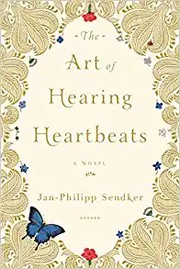
The Art of Hearing Heartbeats
When a New York lawyer vanishes, his daughter follows an old love letter to Burma, where a stranger narrates the story of the father she never knew.
2,950-word summary · 13 min read
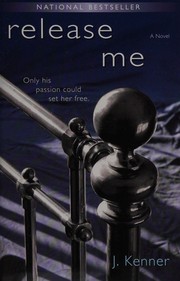
Release Me
A guarded engineering graduate newly arrived in Los Angeles is used as bait at an art gala, then offered a million dollars to pose for a powerful man's private…
2,070-word summary · 9 min read
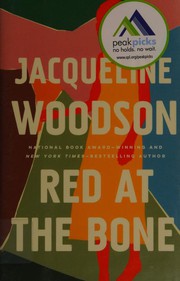
Red at the Bone
A girl's coming-of-age ceremony in a Brooklyn brownstone opens a family story shaped by Tulsa, teenage pregnancy, class and a second tragedy on September 11.
2,108-word summary · 9 min read